3 MIN READ
Interior
Written By
G2G Team
Published
June 10, 2026
The moment you walk into a navy blue living room, something shifts. The air feels cooler, richer, more deliberate. Navy has that rare quality among colors: it carries the depth of a late evening sky but the structure of a classic suit — bold without shouting, dramatic without overwhelming. Unlike trendy accent walls in sage or terracotta that come and go, navy has anchored luxury interiors for decades and shows no sign of stepping aside.
For homeowners searching for a living room that feels both timeless and distinct, navy blue is one of the most rewarding directions you can take. It works across styles — from crisp Hamptons coastal to moody Art Deco to pared-back Scandinavian — and it behaves beautifully with metals, naturals, and neutrals alike. The key is understanding how to balance its visual weight. Navy absorbs light, so the textiles, lighting, and surrounding finishes you choose will determine whether the result reads as cozy and enveloping or dark and heavy. Get the balance right and the payoff is a room that feels both grounded and deeply glamorous.
These 19 navy blue living room ideas cover every level of commitment: full walls, statement sofas, painted ceilings, bold rugs, and subtle accent pieces. Whether you’re renovating a Victorian terrace, refreshing a modern open-plan space, or rethinking a rental apartment’s single communal room, there’s a version of navy that fits. Work through these ideas and find the one that turns your living room into the boldest, most elegant space in the house.
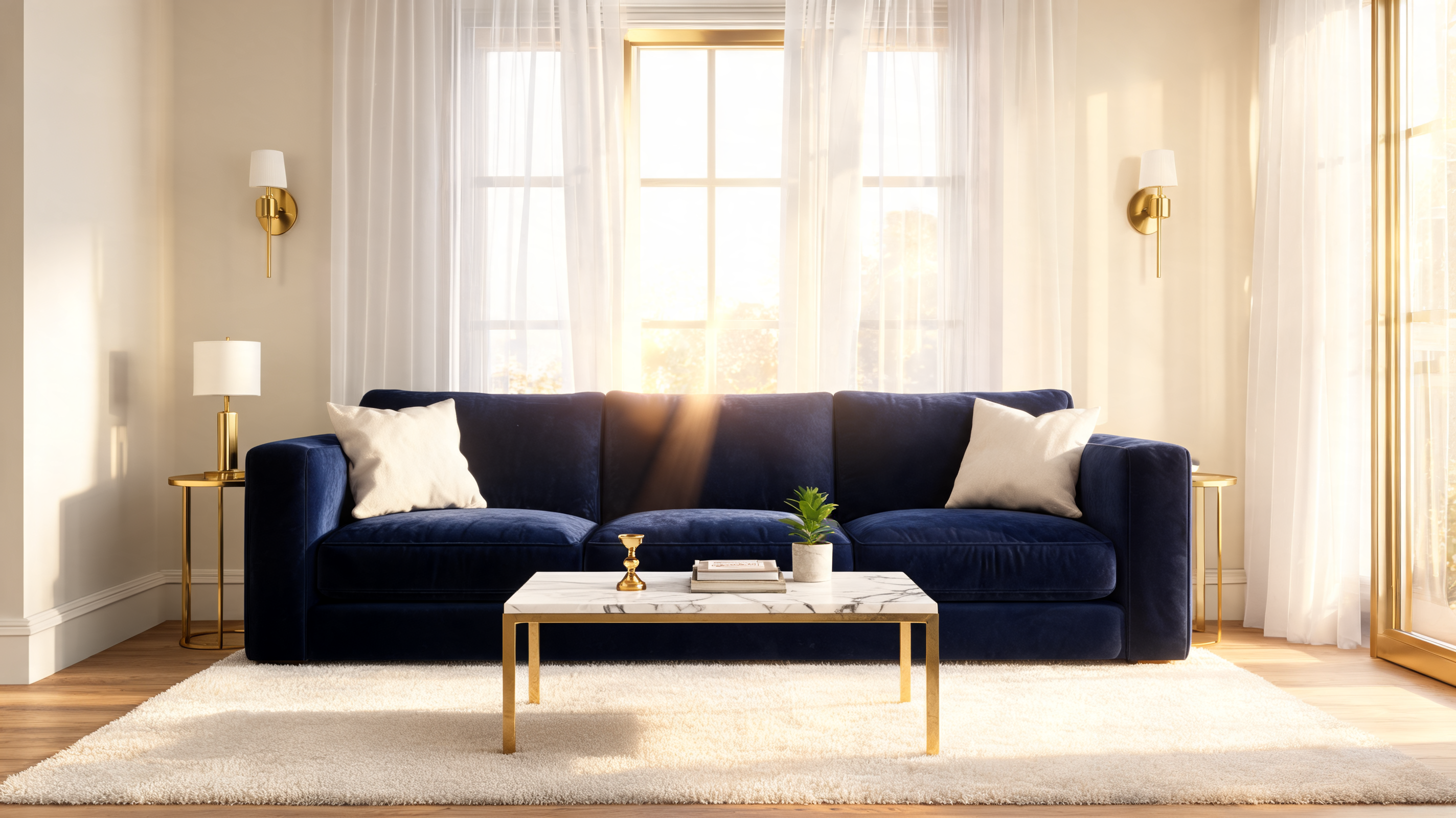
There are sofas that furnish a room, and then there are sofas that define it. A navy blue velvet sofa is decisively the latter. Velvet’s tight pile creates a color depth that changes throughout the day: in bright morning light it reads as a vivid cobalt-adjacent navy; in the low amber glow of evening lamps, it deepens to near-midnight. That light responsiveness is exactly what makes velvet the ideal fabric for bold colors — the sofa never looks the same twice. Pair a deep blue three-seater with a wool rug in warm ivory or aged oatmeal. The contrast anchors the sofa without fighting it. Add brass or antique gold cushion covers in a mix of sizes and textures for warmth, and a round marble-top coffee table to introduce lightness at eye level. The sofa’s feet matter too: turned legs in walnut or pale oak keep the whole piece grounded in warmth rather than coldness. Pull the sofa slightly away from the wall — about 20cm — to give it breathing room and make the room feel more considered. Velvet does require some maintenance (a lint roller, occasional steaming), but its richness is remarkably difficult to replicate in any other fabric at any price point.
Wall-to-wall navy is the maximum commitment, and when executed well, the payoff is a room that feels straight out of a design magazine. The trick lies entirely in the trim. Warm white — not bright, cold white — on skirting boards, architraves, and ceiling roses creates a hard visual boundary that prevents the navy from swallowing the room. Bright white would feel clinical and jarring against dark walls; warm white (think Benjamin Moore’s White Dove or Farrow & Ball’s All White) bridges the gap between traditional and contemporary. Choose a navy with true blue undertones rather than green: Farrow & Ball’s Hague Blue or Benjamin Moore’s Newburyport Blue both reward with their complexity and depth. On a standard ceiling, paint it in the same warm white to preserve a sense of height. Place a large pale rug — cream, oatmeal, or bleached linen — across the floor, and choose furniture with light-coloured frames to balance the walls’ visual weight. In north-facing rooms, warm-spectrum floor lamps are essential to prevent the navy from reading as cold and oppressive after dark. A large mirror on one wall amplifies light and makes the space feel twice the size.
Built-in bookshelves flanking a fireplace are one of interior design’s great classic configurations — but painting them in navy blue takes the look from pleasant to undeniably striking. The navy gives the shelves a theatrical, library-like quality that white or pale grey simply cannot achieve. Books become objects of art against the dark background: their spines create accents of red, gold, cream, and green that would entirely disappear against lighter paint. Style the shelves with intention — mix spines-out books with stacked horizontal rows, add a ceramic vase here, a brass candlestick there, a small framed print leaning against the back panel. The fireplace surround, ideally in white marble or pale stone, becomes the room’s focal anchor against the dark built-ins. An existing white-painted surround reads even more brilliantly against navy surrounds. If your built-ins don’t yet exist, this is the upgrade worth budgeting for: floor-to-ceiling navy joinery on both sides of a chimney breast is a single investment that transforms a room’s character entirely. This treatment works in both period properties and modern apartments — even contemporary flat-panel joinery looks exceptional when painted in deep navy. Add warm picture lighting above each shelf to prevent the dark surfaces from feeling gloomy in evening hours.
Before a single wall is painted, textiles can shift a living room’s entire mood. Layering navy and cream fabrics — in different weights, weaves, and textures — creates a coastal feeling that references sea and sand without resorting to anchors or seashells. Start with a cream or natural linen sofa as your base (or cream slipcovers over an existing piece). Add navy through cushions in a deliberate mix of fabric types: a chunky navy knit, a crisp navy stripe in cotton canvas, a navy velvet bolster. Bring in a navy blue throw over one arm in a lighter, loosely-woven linen weave. Underfoot, a jute or sisal rug in natural tan reinforces the sandy element and adds the organic texture that elevates the whole palette. The ratio matters enormously: aim for roughly 70 percent cream and warm neutrals to 30 percent navy. Window treatments in cream or off-white linen panels complete the layered, sun-washed feel. This approach works especially well for homeowners who want the visual presence of navy but hesitate to commit to bold paint — the color tells the full story through soft furnishings alone, and it can be edited, swapped, and refreshed without any renovation at all.
Wainscoting — the practice of paneling the lower portion of a wall, typically to chair-rail height — is one of the most effective architectural upgrades a living room can receive, and navy is its most elegant color partner. Painting the wainscoting panels in deep navy while keeping upper walls in a warm neutral (pale greige, warm white, or even a very light blush) creates a sophisticated two-tone effect that adds both color and architectural interest without overwhelming the room. The color division at chair-rail height follows a natural visual logic: our eyes register the lower third of a room differently from the upper, and a bold anchoring color at the base adds weight and groundedness without oppressing the ceiling. Choose paneling with clean recessed lines for a modern interpretation, or raised moulding profiles for a period feel. Paint skirting boards in the same navy to extend the effect and ground the floor plane. Above the rail, hang framed artwork in gold frames — sepia photographs, botanical prints, abstract canvases — that bridge the navy base with the neutral upper wall. This treatment reads as properly architectural rather than a simple paint change, which is exactly why it adds so much perceived value to a room.
Painting the ceiling rather than the walls is one of the most underused tricks in bold interior design. A navy blue ceiling over off-white or pale grey walls creates a room that feels like dusk is perpetually present — moody, intimate, and surprisingly flattering for both the space and the people in it. The ceiling becomes the fifth wall, pulling the eye upward and making the space feel jewel-box-small in the best possible way. This treatment works especially well in rooms with lower ceilings (2.4 metres and under), where a dark ceiling creates enclosure in a desirable, cocoon-like rather than oppressive way. Design authorities including Architectural Digest have noted that dark painted ceilings transform rooms by replacing the forgotten-surface look of plain white with deliberate, sophisticated intent. The off-white walls reflect light back into the room, keeping it bright while the ceiling provides depth. Add a statement pendant or chandelier that hangs against the navy — the contrast makes the fixture look twice as impressive as it would against a white background. For maximum drama, paint the picture rail and coving in the same navy to merge the ceiling plane with the top of the wall seamlessly.
Two navy blue linen armchairs flanking a small brass side table is one of those deceptively simple configurations that looks effortlessly curated — the kind of vignette that makes a living room feel like a considered space rather than a showroom floor. Linen is a more casual, relaxed choice than velvet, suiting informal sitting rooms and bright, airy spaces where velvet would feel too formal. The natural irregularity of linen’s weave catches light slightly differently across its surface, giving the navy a subtly lived-in quality. Pair with a brass or aged-gold side table — a drum form, a tripod, a Noguchi-inspired shape — for warmth. Brass and navy are one of interior design’s most reliable partnerships: the warm metal draws out blue’s hidden warm undertones and elevates the combination from simple to sophisticated. Add a low-pile navy or cream flat-weave rug beneath the chairs to anchor the seating cluster visually. A small table lamp with a cream or warm-amber shade placed on the side table completes the vignette, giving this reading corner its own intimate pool of light separate from the room’s main sources. Scatter a few books and a ceramic bowl on the lamp table to make the arrangement look authentically lived in.
A single navy accent wall can completely transform a living room’s atmosphere without the full commitment of painting the entire room. The secret to making an accent wall feel intentional rather than half-hearted is the decorating choices that go in front of it. A gallery wall of gold-framed artwork or photography is the perfect complement: warm metal frames pop against the deep blue in a way they simply wouldn’t against white or cream walls. Mix frame sizes deliberately — a large central anchor piece (A2 or larger), surrounded by smaller frames in a roughly symmetrical arrangement. Content options include black-and-white photography, botanical prints, abstract paint washes, antique maps, or even gilded mirror fragments that bounce light back into the room. Leave enough wall visible between frames for the navy to breathe — overcrowding the gallery loses the impact of the dark background. Position your main sofa against the opposite wall, directing the eye toward the navy wall as the room’s undisputed focal point. Consider adding a picture rail spotlight bar above to illuminate the gallery at night, which deepens the navy’s richness and creates that warm, gallery-like atmosphere that makes living rooms feel deeply special after dark.
Navy blue and terracotta are a combination that shouldn’t work on paper — a cool, deep blue alongside a warm, dusty orange-red — but in practice creates one of interior design’s most evocative and grounded palettes. The combination has deep roots in Mediterranean and Moorish design traditions, where indigo-blue tiles were frequently paired with terracotta flooring and earthenware pottery. In a modern living room, try a navy blue sofa against a terracotta-painted accent wall, or navy cushions scattered across terracotta-toned armchairs. A terracotta ceramic lamp base on a navy-blue sideboard is another elegant iteration. Keep the remaining elements deliberately neutral — warm white walls, natural wood floors, a sisal rug in natural tan — so that navy and terracotta remain the stars of the palette without visual competition. Dried botanicals in terracotta pots, woven baskets, and raw linen cushions reinforce the earthy, handmade quality of the palette. This pairing suits both modern and bohemian living rooms equally well, and it photographs exceptionally — which matters if you share your home online. The warmth of terracotta prevents navy from ever reading as cold in this context, making it a particularly good choice for north-facing rooms that struggle to feel welcoming.
Replacing a traditional coffee table with a large navy blue ottoman is a shift that transforms how a living room both functions and feels. An upholstered ottoman in deep navy velvet or wool softens the seating cluster — there are no hard edges, no visual weight from a solid wood top, just an enveloping pool of rich color at the center of the room. Functionally, a tray placed on top provides a stable surface for drinks and remotes, while the ottoman itself doubles as extra seating when guests arrive. Size matters here: go larger than feels instinctively comfortable — a 90cm round or a 100×60cm rectangular ottoman will look proportional against a three-seater sofa in a way that a small cube ottoman never does. For rooms with mostly light or neutral furniture, the navy ottoman becomes the room’s only major anchor color — punchy, deliberate, and impossible to ignore. Style the top with a natural wood tray in oak or walnut, a small ceramic candle, and a vase of dried botanicals (pampas grass, eucalyptus, dried alliums) for an editorial, curated look. Ottomans in performance fabrics are available in most furniture ranges, making this a practical choice for family homes as well as design-forward ones.
Floor-to-ceiling curtains in navy blue linen or velvet are one of the most transformative and surprisingly accessible ways to bring the color into a living room. Unlike paint or large furniture, curtains can be sourced affordably and changed without any renovation — yet when hung correctly, they look anything but temporary. The cardinal rule: hang the curtain rod as close to the ceiling as possible, not at window-frame height, and ensure the curtains are wide enough to gather generously when open. This extends the perceived height of the room significantly and makes windows look far grander than they actually are. Navy velvet curtains absorb light and create a cinema-like, cocooning effect when drawn closed. Navy linen curtains filter daylight to a beautiful warm-blue wash during bright afternoon hours. Either fabric benefits enormously from a simple pole in brass or brushed copper — no ornate finials are needed when the fabric itself is the decorative statement. Add a sheer ivory underlay panel to soften the look and allow natural light when the navies are drawn back. In rooms with multiple windows, running a continuous navy curtain rail across the entire wall — covering both the windows and the wall between them — creates a seamlessly wrapped effect that looks properly luxurious.
Not every navy moment in a living room needs to be about flat, solid color. Herringbone-patterned wallpaper in navy blue introduces the color while simultaneously adding surface texture and visual rhythm — turning a plain wall into something that rewards closer inspection. The herringbone’s interlocking V-shapes create a sense of movement that solid paint cannot replicate. Look for wallpapers that incorporate subtle tonal variation within the pattern — a navy base with charcoal or midnight-blue weave, or a navy and white woven design for a more nautical reference without being literal about it. Paste-the-wall varieties make installation easier and allow removal without damage, which is valuable in rented properties or homes where you plan to eventually refresh. On a single feature wall behind a linen sofa, navy herringbone wallpaper creates a layered, boutique-hotel quality that takes the space from ordinary to specific in a single afternoon. In open-plan living areas, running the wallpaper on one wall behind the dining table creates a natural visual zone break. Pair throughout with matte-finish brass hardware on any cabinetry and a simple navy velvet cushion on the adjacent seating to tie the wallpaper into the room’s broader palette without overcrowding it with pattern.
A navy and white striped rug is perhaps the most direct visual reference to coastal living — but chosen carefully and styled with restraint, it transcends the cliché and delivers a fresh, graphic foundation for the whole room. Look for flat-weave cotton or dhurrie-style rugs with bold stripes (at least 8–10cm wide per stripe) rather than fine pinstripes, which make large rugs look restless on the floor. Lay the rug so the stripes run perpendicular to the main sofa — this draws the eye across the room horizontally and creates the impression of a wider space. Anchor it with white or light cream upholstery above: a white slipcovered sofa, bleached-wood armchairs, or light rattan seating all work beautifully. Keep the rest of the room’s palette tightly controlled — white walls, natural wood, brass or brushed nickel hardware, pops of greenery in terracotta pots. The rug then becomes the room’s entire color story, and its graphic simplicity works only when there’s very little competing with it. Layer a smaller sheepskin or textured wool rug over one corner of the striped rug in winter for warmth and seasonal softness, without disrupting the graphic quality of the underlying pattern.
The fireplace is the natural focal point of most living rooms, and painting its surround in deep navy blue is one of the highest-impact single upgrades available. A navy painted surround — whether the original wood or a plaster-cased version — paired with a white marble mantelshelf above creates a striking juxtaposition of deep-sea richness against marble’s cool, veined elegance. This is a particularly strong treatment in Victorian or Edwardian homes where the fireplace is architecturally prominent and the proportions are generous. Use an eggshell or satinwood finish on the navy elements for a subtle sheen that avoids the flat, chalky look of matt paint on fireplaces. Style the mantel with a mirror in a simple gold or antique brass frame, a pair of candlesticks in white or brushed brass, and a single ceramic vase with dried botanicals in neutral tones. Keep the hearth clear or use a simple blackened-steel fire screen. This upgrade requires no major renovation — a tin of quality chalk paint or specialist furniture paint and a steady brush can transform the fireplace in a single weekend. The result shifts the room’s entire focal point and makes the fireplace feel like a genuine design feature rather than a functional leftover.
When the walls and all architectural surfaces of a room are white, introducing a navy blue slipcovered sectional becomes a bold, clean, graphic statement — the single source of deep saturated color in an otherwise neutral canvas. The contrast is strong and assured, but the slipcover format keeps it approachable: the loose, slightly rumpled folds of fabric have an inherently relaxed quality that softens the assertiveness of the color. This works especially well in open-plan living areas where the sectional defines the seating zone visually against white walls and pale flooring. Choose a slipcover in washed navy cotton or stonewashed linen for a soft, lived-in quality rather than a stiff, corporate look. Pair with a large jute rug in natural tan, ceramic table lamps in off-white or warm grey, and a mix of cushions in ivory, warm terracotta, and soft camel to introduce warmth alongside the bold navy. The result reads as curated and considered without feeling interior-designed to within an inch of its life. For families with children or pets, slipcovered furniture carries an obvious practical bonus: the covers come off, go into the washing machine, and come back clean — which is something a fixed-upholstery navy sofa will never offer.
Navy blue and sage green is a palette borrowed directly from the natural world — the deep water of a fjord against a hillside of pale, dusty sage scrub — and it creates a living room atmosphere that feels simultaneously calming and richly layered. The two colors share a cool underlying temperature, which means they sit harmoniously without one competing aggressively against the other. Try a navy blue sofa in a linen or cotton weave against a sage green painted wall, or navy cushions against sage-upholstered armchairs. The key is ensuring the sage is sufficiently muted and grey-toned — a true, greyed sage rather than a saturated or yellow-adjacent green. Pair both colors with natural materials that keep the mood grounded: oak floors, rattan or cane side tables, raw linen curtains, ceramic lamp bases with organic, hand-formed shapes. A cream or warm white rug ties the floor to the lighter elements of the palette and prevents the overall effect from reading as too cold. If you’re already working with a sage-dominant living room and looking to add depth, a navy velvet armchair or navy lacquered sideboard is the perfect complement — for a detailed look at building around sage as a base colour, our guide to sage green living room ideas covers the full approach.
A navy blue lacquered sideboard placed against a pale or neutral wall is a piece of furniture that earns the designation of “statement” — not through excessive size or ornate detailing, but through sheer visual confidence and surface quality. High-gloss lacquer in navy blue has an almost liquid quality: it reflects ambient light, deepens in shadow, and gives the piece a jewel-like presence that painted wood simply cannot replicate. Look for sideboards with simple, clean-lined forms — lacquer rewards simplicity because its reflective quality means any fussy detail can easily look cluttered. Style the top deliberately and without overcrowding: a pair of table lamps in warm amber glass for symmetry and evening warmth, a low ceramic bowl in off-white or terracotta, and a single framed mirror above to amplify light in the room. The sideboard works beautifully in both traditional interiors (where it reads like a modern take on a lacquered chest or credenza) and minimal contemporary spaces (where it provides the room’s single dominant color anchor). Brass or antique gold handles are the best hardware companion — warm metal against cool, deep lacquer is a pairing that never dates and never looks wrong, regardless of what else is happening in the room around it.
Painting floors is a longstanding Scandinavian design tradition — historically a practical way to protect and refresh bare timber boards when rugs were expensive — and in navy blue it becomes a bold, unexpectedly sophisticated choice for a modern living room. A navy blue painted timber floor in a white-walled room reverses the expected convention (dark above, light below) and creates a space where the ground plane carries all the visual weight, anchoring everything above it with colour and confidence. The effect is surprisingly fresh rather than heavy, because the white walls reflect so much light back into the space. Use a paint specifically formulated for floor traffic — standard wall paint will chip and scuff quickly — and choose a gentle satin finish, which wears better than high-gloss and looks more elegant under furniture. Layer large cream or off-white area rugs over portions of the floor to define the seating zone and add warmth underfoot. This treatment pairs beautifully with simple white-painted or bleached-wood furniture — Gustavian-style chairs, painted open shelving — and natural materials like linen, ceramic, and unfinished oak. The result draws on Scandinavian farmhouse interiors without any pastiche, and it’s far less permanent than it looks: a painted floor can always be sanded back or repainted in a different colour if your tastes evolve.
Navy blue and warm-toned wood is one of the most reliable and universally appealing combinations in interior design — a pairing that crosses traditional, mid-century modern, and contemporary Scandinavian styles without difficulty or compromise. The visual logic is elegant in its simplicity: navy is a cool, receding color that absorbs light and creates depth; warm wood (oak, walnut, teak, or pine) reflects warm amber tones and advances visually into the space. Together, they create a natural equilibrium that feels neither cold nor overdone. In practice, this might look like a navy blue velvet sofa with solid walnut legs, a navy painted media unit with open shelving in warm white oak, or deep navy cushions against a natural wood-and-leather sofa. Navy and white oak is particularly current in contemporary interiors influenced by Japandi design — the blonde warmth of white oak against deep navy produces a layered, textured result that reads as both calm and visually interesting. For a full-room application, try navy blue walls in a room with original hardwood oak floors: the warm floor tones will completely prevent the navy from reading as cold or oppressive. Add candle-warm ambient lighting, a natural fiber rug, and two or three leafy plants in simple terracotta pots. For ideas on building out a wall display using shelving, wood, and a bold color backdrop together, the collection of TV wall decorating ideas shows how these elements work together in a living room setting.
Navy blue is not a color you ease into — it’s one you commit to, and the results almost always reward that courage. Whether you go all the way with floor-to-ceiling painted walls and navy built-in shelving, or take the more measured route of a velvet ottoman and a gallery wall against a crisp white background, the color brings a presence and sophistication to living rooms that few other shades can match.
Of the approaches here, the navy and warm wood pairing from idea 19, the velvet sofa as a focal centerpiece from idea 1, and the fireplace surround upgrade from idea 14 are particularly strong starting points — each requires a contained, specific commitment rather than a whole-room transformation, and each delivers visible impact from the first moment. Pick the idea that speaks to your space, order a paint sample or fabric swatch, and live with it taped to the wall for a few days before committing. When the combination is right, you’ll know — navy has a way of looking inevitable in the spaces where it belongs.
G2G Team
06-10-2026
Let’s Build
Contact us todayGet daily tips and tricks for making your best home.
2025 Green to Gorgeous