3 MIN READ
Landscaping
Written By
G2G Team
Published
June 1, 2026
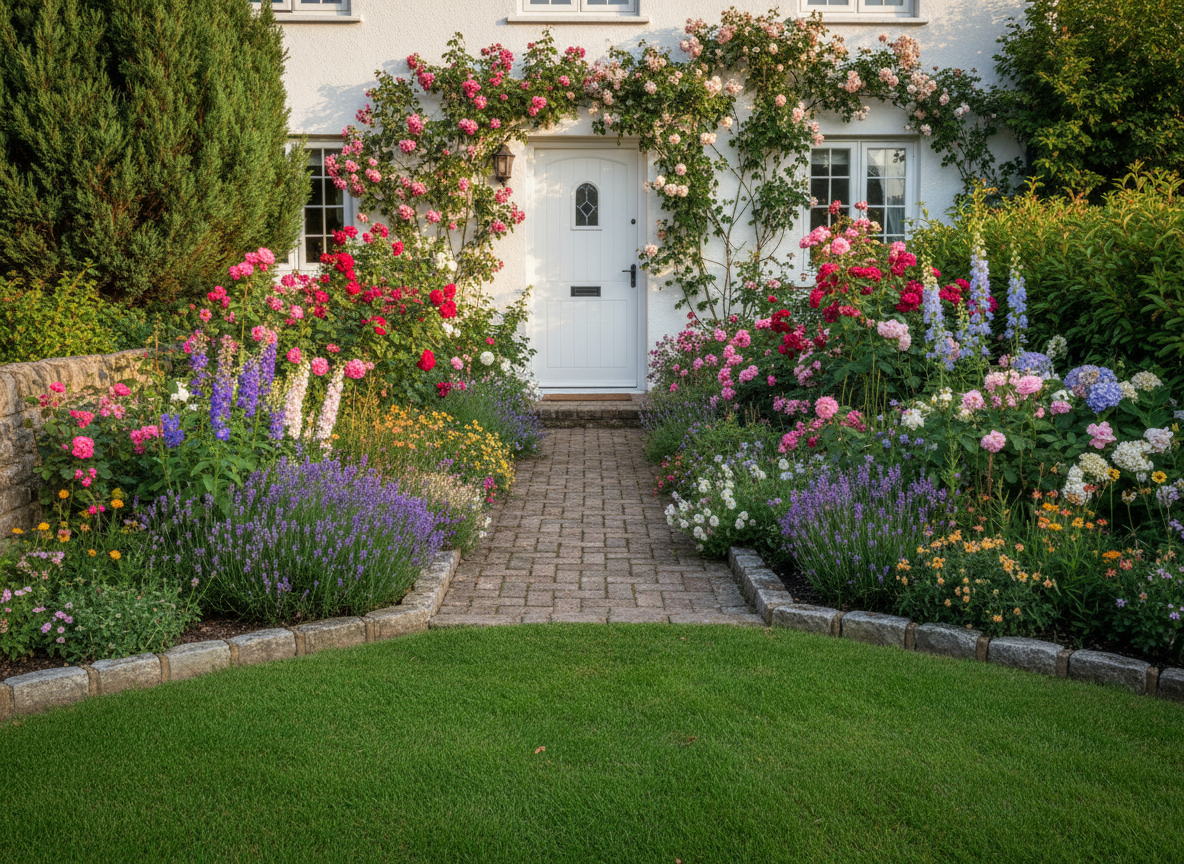
There is a particular kind of pride that comes from pulling into your own driveway and feeling a quiet thrill at what greets you. A well-planted front yard flower bed does something no fresh coat of paint can quite replicate: it brings movement, fragrance, and seasonal life to the face of your home. Colors shift with the light; textures catch the morning dew; bees drift through on warm afternoons. Before a single visitor reaches your front door, your garden has already told them something about the people who live inside.
Front yard flower beds come in every scale and style imaginable. A narrow foundation strip planted with three reliable perennials can be just as impactful as a sweeping curved border packed with summer annuals. The key is intention: choosing plants that suit your climate, your light conditions, and the overall character of your home, then arranging them with attention to height, color flow, and seasonal continuity.
Whether you are working with a sun-baked slope, a shaded corridor beneath mature trees, or a tidy rectangular plot flanking your front steps, the right combination of color, structure, and texture can transform the exterior of your home entirely. These 18 front yard flower bed ideas span every style, from crisp formal symmetry to loose wildflower naturalism, so you can find the approach that fits your space and the kind of curb appeal you want to create.
There is something timeless about a rose-lined path leading to a front door. Roses have framed cottage entrances for centuries, and their combination of arching canes, rich blooms, and heady fragrance makes them one of the most visually rewarding plants you can place at the front of a house. For a border alongside a brick pathway, look for compact shrub rose varieties in the one-to-two-foot range, such as the Drift series or Knock Out roses, which bloom repeatedly through summer without demanding constant deadheading.
Plant in groups of three or five for a full, lush effect, spacing them 18 to 24 inches apart. Underplant with a low edging of blue catmint (Nepeta), whose silvery foliage and lavender flower spikes complement every rose color from blush pink to deep crimson. The catmint softens the base of the roses and provides color continuity when the roses pause between flushes. For brick pathways specifically, warm coral and soft peach tones read beautifully against red brick, while white and cream roses create elegant contrast. Mulch with dark compost to ground the color and retain moisture through dry summer spells. This pairing works equally well in full sun and receives heavy pollinator traffic from midsummer through September.
A cottage-style flower bed works on the principle of controlled abundance: generous planting in a limited palette creates the impression of a lush, effortless garden without visual chaos. A lavender-and-white scheme is one of the most versatile because it reads as sophisticated in formal settings and romantic in informal ones. Begin with tall spires at the back: white foxglove (Digitalis purpurea ‘Alba’) or tall bearded iris in pale lavender set a vertical note that draws the eye upward from the street.
In the middle tier, plant clusters of true lavender (Lavandula angustifolia ‘Hidcote’ or ‘Munstead’), catmint, and pale lilac garden phlox. These mid-height plants create the soft, hazy middle layer that defines the cottage aesthetic. At the front edge, allow white alyssum to spill over the border and thread in viola tricolor for small seasonal punctuation. The combination blooms from late spring through early autumn with minimal intervention. Cottage gardens traditionally allow plants to self-seed freely, and in a lavender-and-white scheme that self-seeding fills in gaps beautifully without introducing jarring colors. Pair this style with a painted picket fence or low stone wall for the complete classic cottage effect that photographs beautifully in every season.
When you want a front yard bed that announces itself from half a block away, a bold pairing of sunflowers and black-eyed Susans delivers the warmest, most exuberant version of summer color imaginable. Sunflowers (Helianthus annuus) serve as structural focal points: the tall Mammoth varieties can reach eight feet, while dwarf types like Sunspot cap out around two feet and work better in narrow beds. Plant toward the back third of the bed in rows or loosely spaced clusters.
Black-eyed Susans (Rudbeckia hirta) are the workhorse fill: they bloom from midsummer into October, tolerate poor soil and light drought, and their golden-yellow ray petals with dark chocolate centers are endlessly cheerful. Together, this pairing leans deep into the warm end of the color wheel, so it pairs naturally with red-orange zinnias and bronze fennel if you want additional layers. The combination is unabashedly sunny and works particularly well in front of white clapboard or gray-painted homes where warm tones pop against cool backgrounds. Both plants attract pollinators heavily, adding constant movement to the bed through the height of summer. Direct-sow sunflowers in place after the last frost date for the strongest stems and deepest root systems.
Not every front yard gets regular rainfall, and not every homeowner wants the commitment of frequent irrigation. A bed built around drought-tolerant lavender and ornamental grasses creates year-round structure that looks intentional even in dry, challenging conditions. French lavender (Lavandula dentata) and Spanish lavender (Lavandula stoechas) handle heat and drought better than English varieties, producing silver-green aromatic foliage and distinctive pineapple-topped flowers from spring well into summer.
Pair lavender with fine-textured ornamental grasses such as blue fescue (Festuca glauca), whose steel-blue mounds create a cool color contrast, or feather reed grass (Calamagrostis ‘Karl Foerster’), whose tall upright form adds architectural elegance. The layering of soft lavender mounds with the movement of ornamental grass catches even a light breeze beautifully, giving the bed a sense of life and animation that rigid, formal plantings cannot achieve. Between clusters, use crushed gravel or decomposed granite mulch rather than bark mulch; it reflects heat away from the plants, suppresses weeds, and gives the bed a clean Mediterranean character that complements modern, craftsman, and Spanish colonial-style homes equally well. This planting is also highly deer-resistant, a significant practical advantage in many suburban and semi-rural areas.
A raised flower bed built from natural stone is one of the most structurally satisfying ways to frame a front entry. The elevation brings plants to eye level, makes details visible from the street, and creates a sense of architectural permanence that in-ground beds cannot match. Stacked limestone, dry-laid fieldstone, or cut granite all work beautifully; the choice of stone should echo materials already present in the house’s facade, whether that is brick, poured concrete, or natural stone cladding.
For the planting inside a raised stone bed, combine bold structural specimens with soft, billowing perennials. A clipped ball of boxwood or a slim columnar conifer at the back corners establishes formal symmetry, while lavender, salvia, and trailing alyssum spill over the stone edging in a controlled cascade. In spring, fill remaining gaps with tulip bulbs planted the previous autumn; taller Darwin hybrid tulips in deep burgundy or cream look especially sophisticated against the warmth of natural stone. Raised beds also dramatically improve drainage, which benefits lavender and salvia that resent wet feet through winter. The stone retains heat from daytime sun and can push marginally tender plants through cooler nights, extending the growing season at both ends of the calendar.
Formal symmetry gives a front yard an immediate sense of order and intention. Two matching beds flanking a front path or doorway, each outlined with a low boxwood (Buxus sempervirens) hedge, create a classic structure that works in virtually any architectural context, from Georgian and colonial to mid-century modern. The boxwood provides the permanent, year-round skeleton; everything planted inside the border can be changed seasonally without disrupting the overall formal composition.
In spring, plant tulips and forget-me-nots inside the boxwood frame for a saturated, cottage-formal mix. In summer, transition to compact dahlias, annual salvias, or summer snapdragons in a consistent palette of two or three colors. In autumn, ornamental kale, chrysanthemums, and trailing ivy provide a rich seasonal display. This swap-in-swap-out approach keeps the beds visually interesting through the full calendar year while the boxwood ensures every planting looks considered and contained rather than haphazard. In regions affected by boxwood blight, alternatives like Ilex crenata ‘Sky Pencil’ or compact Korean spice viburnum provide similar evergreen structure with substantially greater disease resistance and a lower long-term maintenance burden.
A front yard wildflower patch challenges the convention that curb appeal requires formal planting, and when done well, it results in the most visually dynamic and ecologically rich flower bed on the street. The key to making a wildflower area read as intentional rather than neglected is the addition of a clean, defined edge: a neat mowing line, a low stone border, or a contrasting band of ornamental grass all signal that this is a deliberate design choice rather than deferred maintenance.
Native wildflower mixes tailored to your region will always perform better than generic packets. Look for mixes containing local coneflowers, native black-eyed Susans, wild bergamot, and regional native poppies. Sow directly onto lightly disturbed, unfertilized soil in early spring or late autumn, and resist fertilizing, which encourages grass and weeds over flowers. According to the Royal Horticultural Society, wildflower areas support significantly more pollinators than conventional planted beds of the same size, making this as ecologically valuable as it is beautiful. Thin seedlings generously in the first year to allow the strongest plants to establish fully, and allow self-seeding to rebuild the display each subsequent season with minimal labor.
A sloped front yard is often treated as a landscaping problem to solve rather than an opportunity to exploit. In reality, a tiered or cascading flower bed on a gentle slope can become the most dramatic planting on the street. The natural angle of a slope puts plants at eye level when viewed from below, making blooms more visible from the road and creating a layered theater-in-the-round effect from multiple viewpoints throughout the day.
Creeping phlox (Phlox subulata) is one of the best performers for slope beds: in spring it produces a carpet of bloom in pink, white, or lavender so dense the foliage disappears entirely beneath a sheet of color. Once the spring display fades, its needle-like evergreen foliage provides year-round ground coverage and controls erosion on the slope. Alternate phlox drifts with clumps of salvia (Salvia nemorosa ‘Caradonna’ or ‘East Friesland’) for summer-long purple spikes that complement the phlox’s earlier spring show and attract hummingbirds reliably. Add a flat stepping-stone path running diagonally across the slope so maintenance remains accessible without compacting soil or damaging plants. The result is a layered, naturalistic design with high seasonal interest and strong erosion control that eliminates the need for difficult mowing on an angle.
If your front yard receives full sun and you want a bold, architectural presence that reads almost like sculpture, a tropical-style bed built around elephant ears and cannas delivers immediate visual impact. Elephant ear plants (Colocasia esculenta and Alocasia varieties) produce enormous heart-shaped or arrow-shaped leaves in colors ranging from near-black purple to lime green. Their sheer size, with some leaves spanning two feet across, creates a dramatic focal point unlike anything else in a temperate garden setting.
Cannas complement elephant ears perfectly: they add vertical height with upright stems topped by fiery blooms in red, orange, and yellow, and their bold paddle-shaped foliage reinforces the tropical scale. Background these with ornamental bananas (Musa) in mild climates, or simply let the cannas and elephant ears claim the back of the bed on their own. At the front edge, soften the boldness with trailing sweet potato vine in chartreuse or deep purple for a flowing, contrasting skirt that blurs the bed edge into the lawn or path below. This style works especially well in front of modern stucco or dark-painted homes where vivid foliage pops dramatically against neutral backdrops. In cold climates, lift canna rhizomes and elephant ear corms before the first frost and store in a cool, dry place for replanting the following spring.
A moon garden is planted entirely in whites, creams, and silvers so it glows and becomes especially arresting at dusk and in the evening, when pale flowers catch ambient light and fragrant plants release their strongest scent. For a front yard facing west, where the setting sun illuminates the bed in golden-hour light, a moon garden creates an effect that passersby consistently stop to admire, even when the rest of the neighborhood’s color beds have faded.
For structure, plant white-flowering shrub roses, white agapanthus, and tall white liatris toward the back of the bed. Fill in with silver-leaved plants that reflect light even when not in bloom: lamb’s ear (Stachys byzantina), silver sage, dusty miller, and the feathery silver foliage of artemisia. White annuals like impatiens, white petunia, and white nicotiana (flowering tobacco) add layers of delicate texture. Nicotiana is particularly valuable in a moon garden because its white star-shaped flowers open fully in the evening and release a jasmine-like fragrance that carries through warm nights. Edge the bed with white alyssum and allow it to spill softly onto any path or edging for a finish that blurs the transition between planted bed and hardscape in the most elegant possible way.
A front yard bed designed specifically around native plants and pollinators is one of the most meaningful choices a homeowner can make, and it happens to be visually spectacular through summer and autumn. The key plants for a native pollinator bed are purple coneflowers (Echinacea purpurea), butterfly milkweed (Asclepias tuberosa), native goldenrod (Solidago), wild bergamot (Monarda fistulosa), and native asters. Together these plants support monarch butterflies, native bees, and hummingbirds across the full growing season.
Coneflowers are the visual anchor: their large magenta-to-rosy-pink discs stand above the border from June through September and, if left uncut through winter, their seed heads feed goldfinches through the cold months. Butterfly milkweed produces flat-topped clusters of intense orange flowers and serves as the obligate host plant for monarch butterfly larvae, making its inclusion a direct conservation contribution rather than just a planting choice. Weave in native goldenrod for a cheerful late-season yellow that ties the warm tones together and creates an extended bloom season through early October. You can find detailed guidance on companion planting approaches in our piece on container garden ideas for small space growing, which covers techniques that translate directly to in-ground beds.
A ribbon bed, a long, narrow planting running parallel to the house foundation, is one of the most practical and high-impact front yard approaches because it visually anchors the house to the ground while requiring minimal depth. The classic combination of petunias and marigolds has anchored foundation beds for generations because both plants are reliable, fast to establish, and available in a color range that can be calibrated precisely to complement any house exterior.
Marigolds bring structure: compact French varieties (Tagetes patula) hold their shape well and bloom prolifically from early summer until frost with no deadheading required. Petunias provide softer, cascading texture that spills over the bed edge and softens hard foundation lines. For a sophisticated look, keep the palette tight: deep burgundy petunias with gold marigolds, or violet petunias with pale cream marigolds. Avoid mixing too many colors in a narrow bed, which produces visual noise rather than impact from the street. A single tight color combination reads far more powerfully at a distance than a multicolor jumble. Interplant both with a row of trailing lobularia along the very front edge to soften the transition from bed to lawn or concrete path, and the whole foundation bed looks finished from the moment it goes in.
Planting the front yard with a blend of culinary herbs and flowering perennials bridges the boundary between functional and decorative gardening in a way that invites engagement rather than simply observation. Visitors walking to your door brush past lavender and rosemary, releasing fragrance that creates an immediate sensory welcome long before they ring the bell. The combination of herbs and flowers produces a textured, varied bed that looks relaxed and abundant without ever appearing neglected or unplanned.
Build the backbone with woody herbs: rosemary, lavender, and sage provide evergreen or semi-evergreen structure and silvery, gray-green foliage that keeps the bed from looking bare in winter or early spring. Thread in flowering perennials such as catmint, alliums, and chives, whose purple globe flowers complement the herb palette without competing for attention. Calendula and nasturtium are both edible and visually vibrant, adding splashes of orange and gold that contrast beautifully with the cooler herb tones. Plant taller bronze fennel toward the back for feathery height and insect-attracting yellow umbels through summer. This fragrant entry experience pairs beautifully with the welcoming approach described in our guide to front porch decorating ideas for welcoming entryways, where scent and visual warmth work together from street to front door.
A Japanese-influenced front yard bed brings a quality of restraint and careful placement that feels unlike any other garden style. Where most beds rely on abundance, the Japanese aesthetic values the considered positioning of a small number of exceptional plants, allowing space around each specimen so its form can be fully appreciated without visual competition. This approach creates beds that look calm, curated, and effortlessly elegant regardless of the season.
The central specimen plant is typically a Japanese maple (Acer palmatum): weeping varieties such as ‘Crimson Queen’ or ‘Dissectum Atropurpureum’ produce cascading burgundy foliage that reads as purely sculptural even in winter when the bare branch structure is revealed against the sky. Underplant the maple with large-leaved hostas in blue-green or variegated silver, which thrive in the dappled shade the maple canopy creates through summer. Moss ground covers, Japanese forest grass (Hakonechloa macra ‘Aureola’), and low-growing ferns complete the understory layer. Edge the bed with smooth river pebbles or raked decomposed granite rather than wood mulch for a cleaner, more architectural aesthetic. This style suits craftsman-style, mid-century, and contemporary homes particularly well and requires far less ongoing replanting than annual-dependent beds, making it an excellent investment of initial planting time.
An island bed, a free-standing planting visible from all sides rather than tucked against a wall or fence, brings a sense of full landscape design to even a modest front yard. The curved outline is key: free-form organic curves look natural and sophisticated, while a strict oval or circle can feel regimented and stiff. Cut a generous, smooth-flowing curve using a garden hose to test the outline before digging, then edge cleanly with a flat spade or half-moon edger for a crisp final line.
A weeping Higan cherry (Prunus subhirtella ‘Pendula’) makes a spectacular focal point for an island bed: in early spring before the leaves emerge, the entire canopy clouds with pale pink or white blossoms in one of the most celebrated floral displays in the temperate garden calendar. Through summer and autumn, the weeping habit adds graceful structure even without flowers. Surround the cherry with a mix of spring bulbs, tulips and narcissus, that bloom at the same time as the cherry, then transition to summer-blooming ornamental geraniums, salvia, and lavender in soft pinks and purples that echo the cherry’s floral tones. This kind of repeating color through the seasons gives the island bed a planned, cohesive quality that holds together elegantly across the full year.
A front yard bed planted specifically for spring succession uses the layered bulb technique, planting multiple bulb species at different depths, to produce a rolling sequence of bloom from late winter through late spring. The result is a bed that changes appearance week by week: snowdrops and crocuses announce the season in late February, followed by early tulips and narcissus in April, then late tulips, alliums, and Dutch iris carrying the display through May and into June.
The layering method works as follows: plant the largest, deepest bulbs first, specifically tall tulips and alliums at their required depth. Cover lightly with soil, then plant a mid-layer of narcissus and mid-height tulips above them, and finally place small early bulbs like crocus and muscari near the surface. Each layer sits between the bulbs of the layer beneath rather than directly on top. As the season progresses, each layer pops into bloom in sequence without interference. By the time the spring display concludes, the emerging foliage of summer perennials planted in the same bed, such as ornamental grasses or hostas, neatly masks the dying bulb leaves without requiring any removal or manual cleanup. Plant bulb beds in October or November for the following spring’s display and they will return and multiply reliably for many years with almost no annual attention required.
Not every homeowner wants a complex, high-maintenance flower bed, and for narrow strips along paths, under tree canopies, or in awkward transitional zones, a thoughtfully planted groundcover bed delivers maximum year-round coverage with minimal upkeep. Creeping Jenny (Lysimachia nummularia ‘Aurea’) is one of the most reliable front yard groundcovers: its coin-shaped bright yellow-green leaves spread quickly to suppress weeds and look fresh from spring through autumn, tolerating both sun and partial shade without complaint.
Pair creeping Jenny with low-growing stonecrops (Sedum spurium and Sedum acre), which add color variation through their reddish, burgundy, and golden tones and produce small starry flowers in summer. Ajuga reptans, with its dark bronze or purple foliage and spikes of blue flowers in spring, provides additional contrast and texture that elevates the bed from purely functional to visually interesting. The beauty of a groundcover bed is that once established, it requires very little intervention: no deadheading, minimal watering once roots are established, and occasional division every two to three years to manage spread. Define the bed with a clean metal or plastic lawn edging to prevent the groundcovers from migrating into lawn or pathway, and the bed will look neat and tidy year-round with almost no active management beyond that initial installation effort.
Many front yards have an underutilized strip running the full length of the house foundation, and a bed planted to peak in late summer and autumn fills a seasonal gap that most gardens overlook entirely. While spring is well-covered by most plantings, the late-season window from August through October can be the most spectacular of the year when the right plants are chosen and given space to reach their full scale. Ornamental grasses anchor this style: Karl Foerster feather reed grass and ‘Shenandoah’ switchgrass (Panicum virgatum) combine tall vertical presence with tawny autumn color that turns from burgundy to copper as temperatures drop.
Between the grasses, plant late-season perennials for the full effect: tall garden phlox in deep pink or white for August fragrance, rudbeckia ‘Goldsturm’ for golden daisy color through September, New England asters in purple and magenta for a burst of autumn brightness, and ‘Little Spire’ Russian sage for airy blue haze along the front edge through the entire season. By mid-September, when most other garden beds have passed their peak, this combination is at full height and saturated color. The seed heads of grasses and rudbeckia persist attractively through winter, providing architectural interest and wildlife food well into the cold months before the cycle begins again in spring.
The front of your home is a canvas that changes every month, whether you tend it or not. These 18 front yard flower bed ideas prove that there is no single right approach to a beautiful entry: a sweep of native wildflowers speaks as clearly as a formal boxwood-framed border; a moon garden glows as confidently as a tropical elephant ear statement planting. The most successful front yard beds tend to start with one clear intention, whether that is maximum seasonal color, year-round architectural structure, low maintenance, or ecological value, and then build outward from that foundation.
If you are drawn to scented entries, the fragrant herb and flower bed or the classic rose border will reward you quickly. If bold drama fits your instinct, the tropical bed or the weeping cherry island will become the defining feature of your street. Pick one idea that suits your yard’s light conditions and your own aesthetic sensibility, and plant it this weekend. Your neighbors will notice before you even finish mulching.
G2G Team
06-01-2026
Let’s Build
Contact us todayGet daily tips and tricks for making your best home.
2025 Green to Gorgeous