3 MIN READ
Deck & Patio
Written By
G2G Team
Published
April 27, 2026
Imagine settling into a cushioned chair while filtered sunlight plays through wooden beams overhead, a glass of lemonade sweating on the table beside you, the scent of jasmine threading through the afternoon air. That is the promise a pergola makes — and it delivers every single time. Whether you have a sprawling estate or a compact urban courtyard, there is a pergola design that fits your space, your budget, and your entertaining style. From the rustic charm of a cedar frame tangled with roses to the sleek precision of a motorized bioclimatic system, these structures do more than add shade: they define an outdoor room, anchor a patio, and give every gathering a sense of place. Here are 18 of the best pergola ideas to help you choose the one that belongs in your backyard.
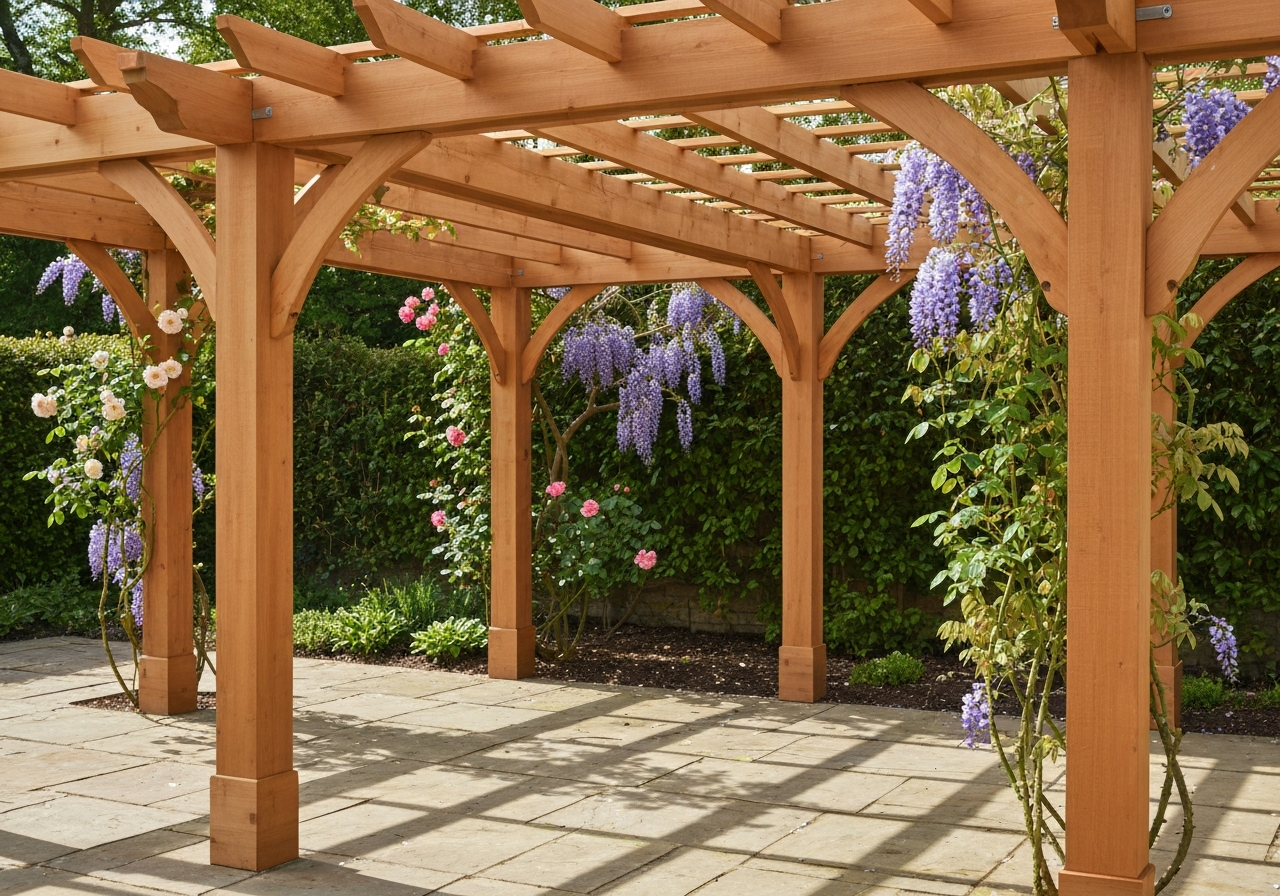
There is a reason this style has been gracing English cottage gardens for centuries — it works. A cedar or redwood frame, left to silver naturally or stained a warm honey tone, provides the perfect scaffolding for climbing roses, wisteria, or clematis. As the plants mature and weave through the lattice, the pergola transitions from a structural element into a living canopy. The textured shadow it casts on the paving below is unlike anything a solid roof can replicate. Plant fast-growing varieties like ‘New Dawn’ rose or ‘Nelly Moser’ clematis on the posts and train them up with jute twine for the first two seasons — after that, they do the work themselves. This is the pergola for anyone who wants their backyard to feel like it has always been there.
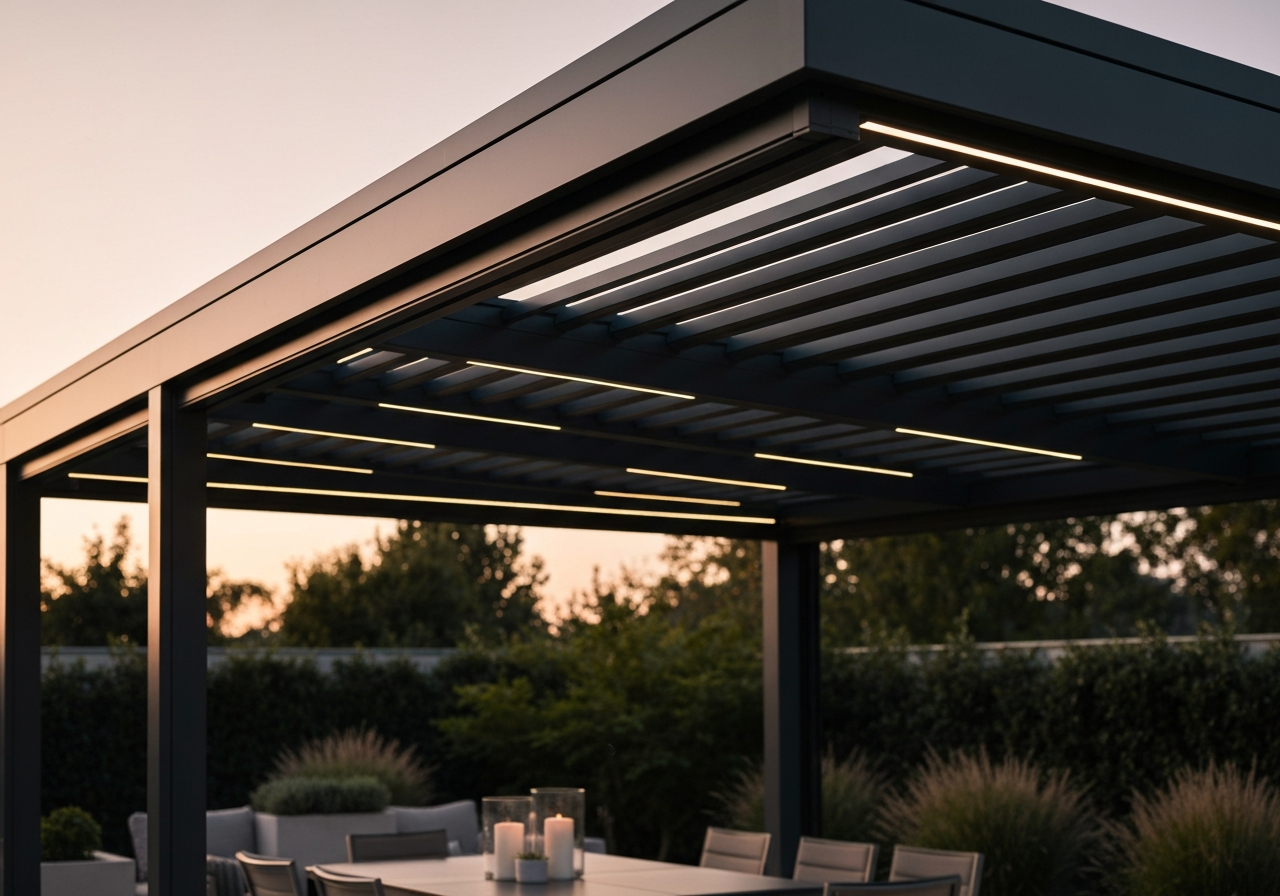
The bioclimatic pergola is the standout outdoor upgrade of 2026, and for good reason. An aluminum frame supports a roof of motorized, adjustable louvers that rotate from fully open (maximum sun and ventilation) to fully closed (complete rain protection). Built-in sensors can detect rainfall and close automatically, while integrated LED channels in the louvers create dramatic evening lighting without any additional fixtures. The result is an outdoor room you can use in every season — open on a breezy spring morning, closed against a July downpour, and lit beautifully for an October dinner party. The investment is significant compared to a timber build, but the usability is on another level. Look for systems from brands like Renson or Louvretec with at least a 10-year structural warranty before committing.
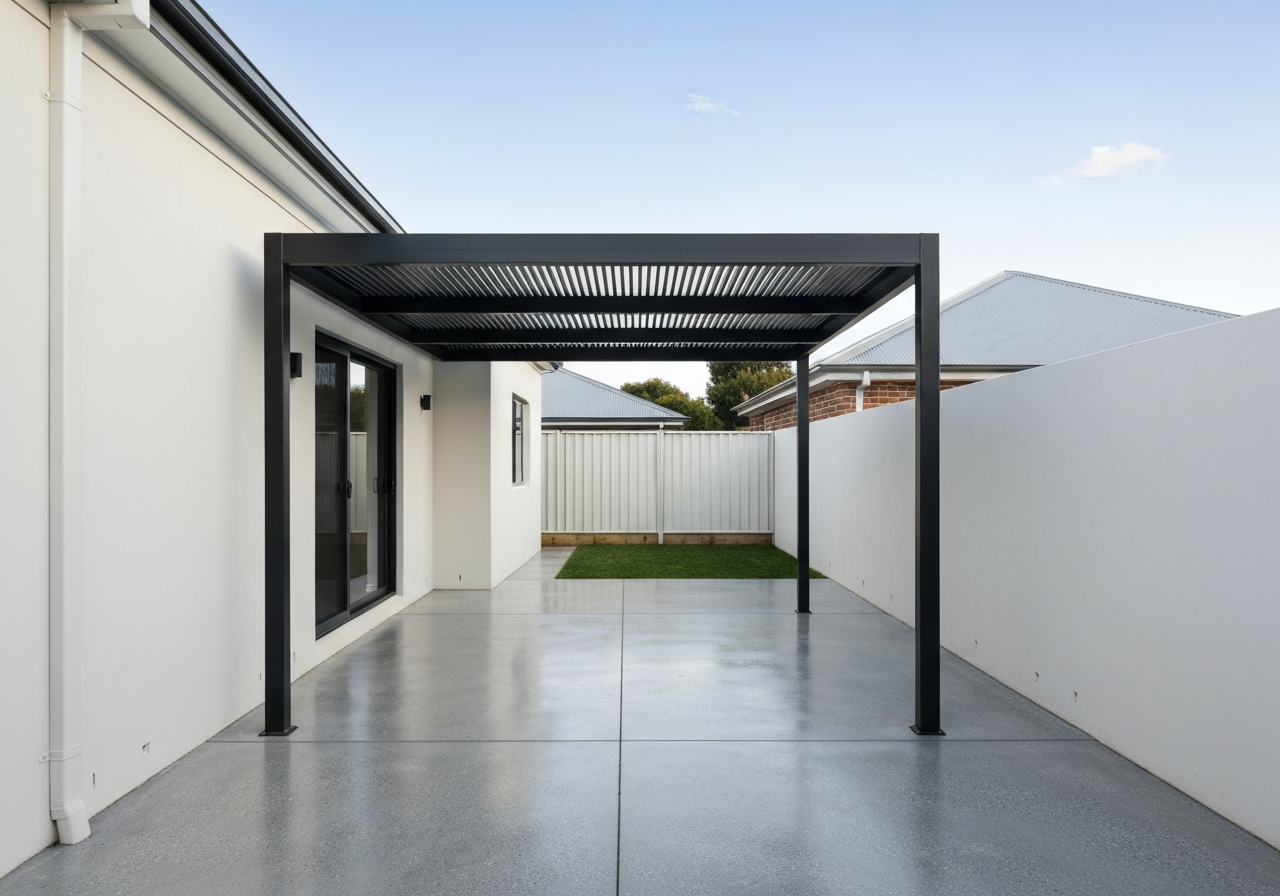
For homes with a modern, industrial, or contemporary exterior, a powder-coated steel pergola is the clean-lined solution that timber simply cannot match. Matte black is the most popular finish right now, providing high contrast against white render, polished concrete, or pale limestone paving. The structural slimness of steel means the posts and beams appear more refined — almost architectural — while still providing a proper overhead framework for shade sails, string lights, or climbing plants. Steel pergolas require almost no maintenance beyond an occasional wipe-down and periodic inspection of any bolted connections. Unlike wood, they will not warp, split, or need annual staining. If you want your outdoor space to feel like an extension of a well-designed interior, this is the pergola that will make that happen.
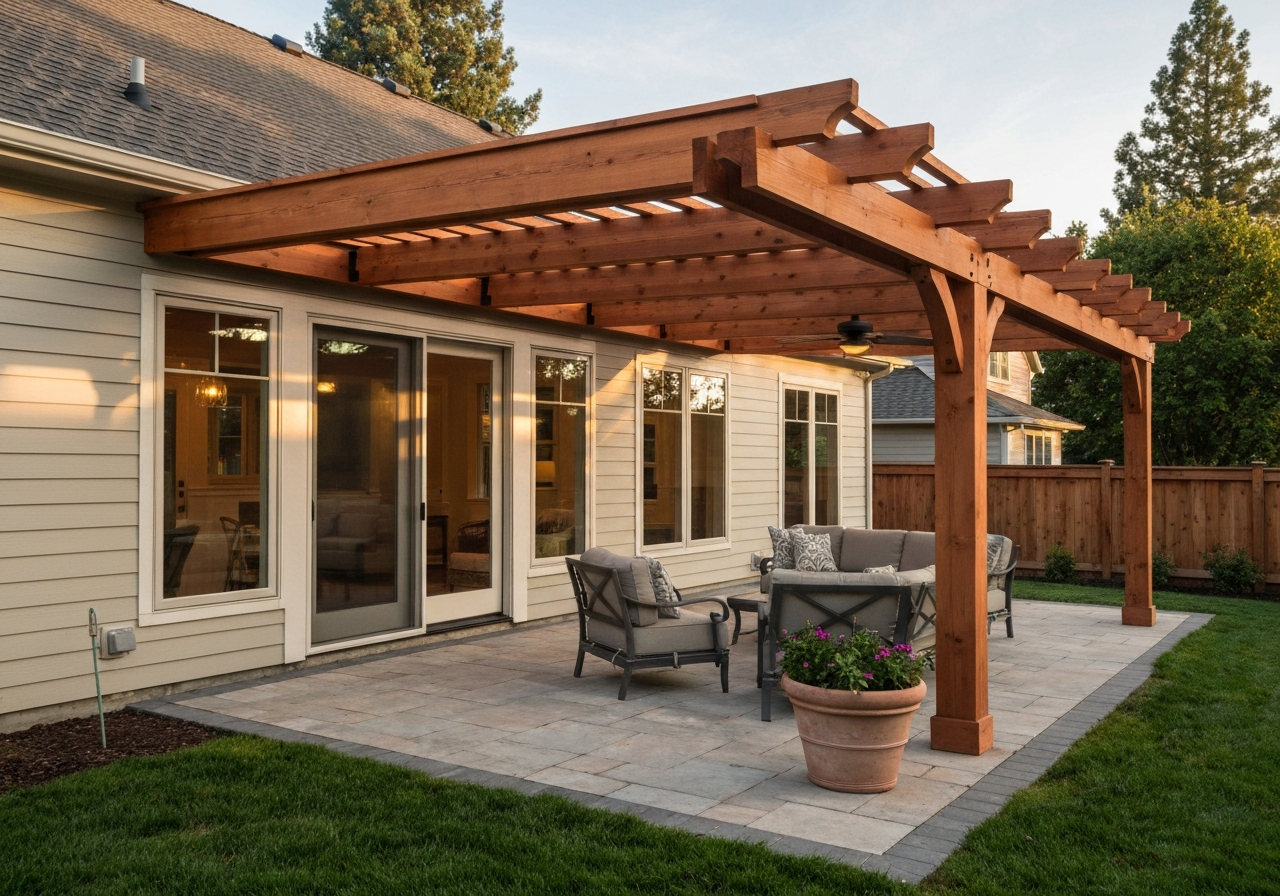
An attached pergola — fixed directly to the house exterior and extending outward over the patio — is one of the most practical outdoor investments you can make. It blurs the boundary between inside and out, making the transition from kitchen to garden feel seamless rather than abrupt. The structure bears on the house wall at one end and two or four freestanding posts at the other, so the footprint is manageable even on modest plots. Finish it in materials that echo the house: if you have painted timber windows, paint the pergola beams to match; if the house is brick, a stained cedar frame picks up the warm tones beautifully. Add a ceiling fan mid-span for summer comfort and you have a four-season outdoor sitting room that required no extension permit to build in most US states.
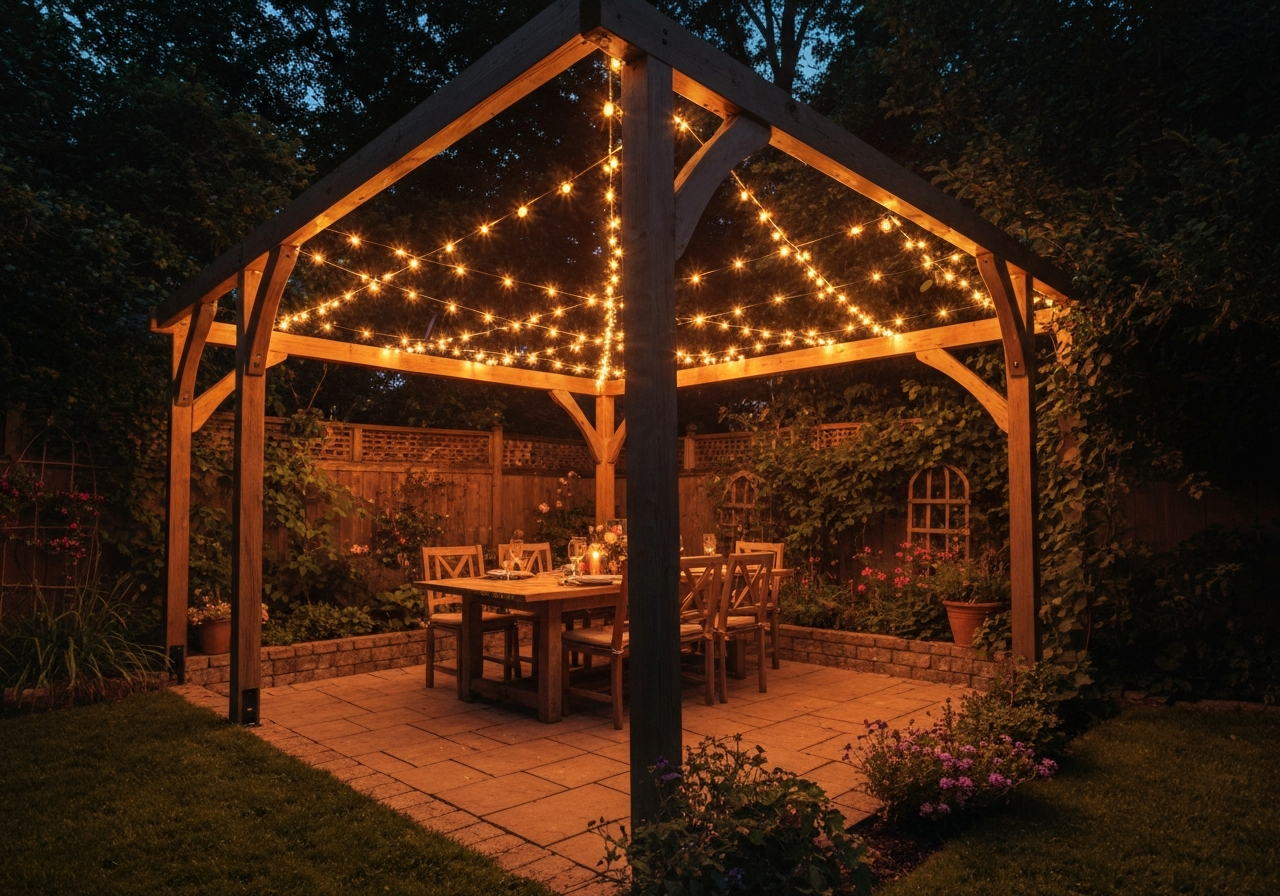
Sometimes the best outdoor entertaining happens away from the house — in a corner of the yard, beside the pool, or at the far end of a long garden. A freestanding pergola creates a destination: a defined outdoor room that draws people toward it. String lights are the easiest way to make it magical after dark. Run them in a criss-cross grid beneath the beams for maximum impact, or drape them in loose swags for a more relaxed, festival feel. Edison-style filament bulbs give warm 2200K light that flatters every skin tone and makes food look incredible on the table. Anchor the posts in concrete footings at least 24 inches deep so the structure is solid enough to handle the weight of lights plus a ceiling fan if you decide to add one later. This is the setup that makes backyard dinner parties feel like an event.
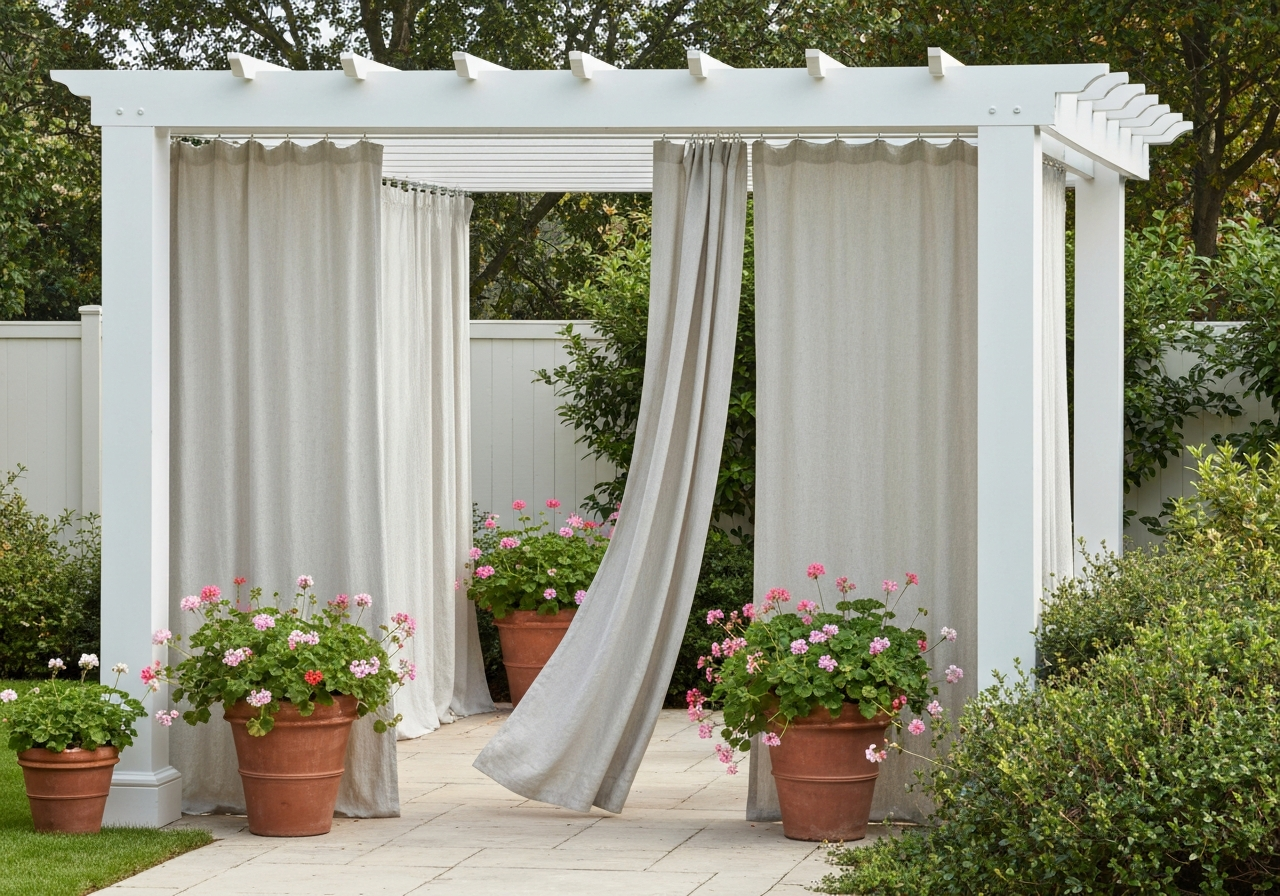
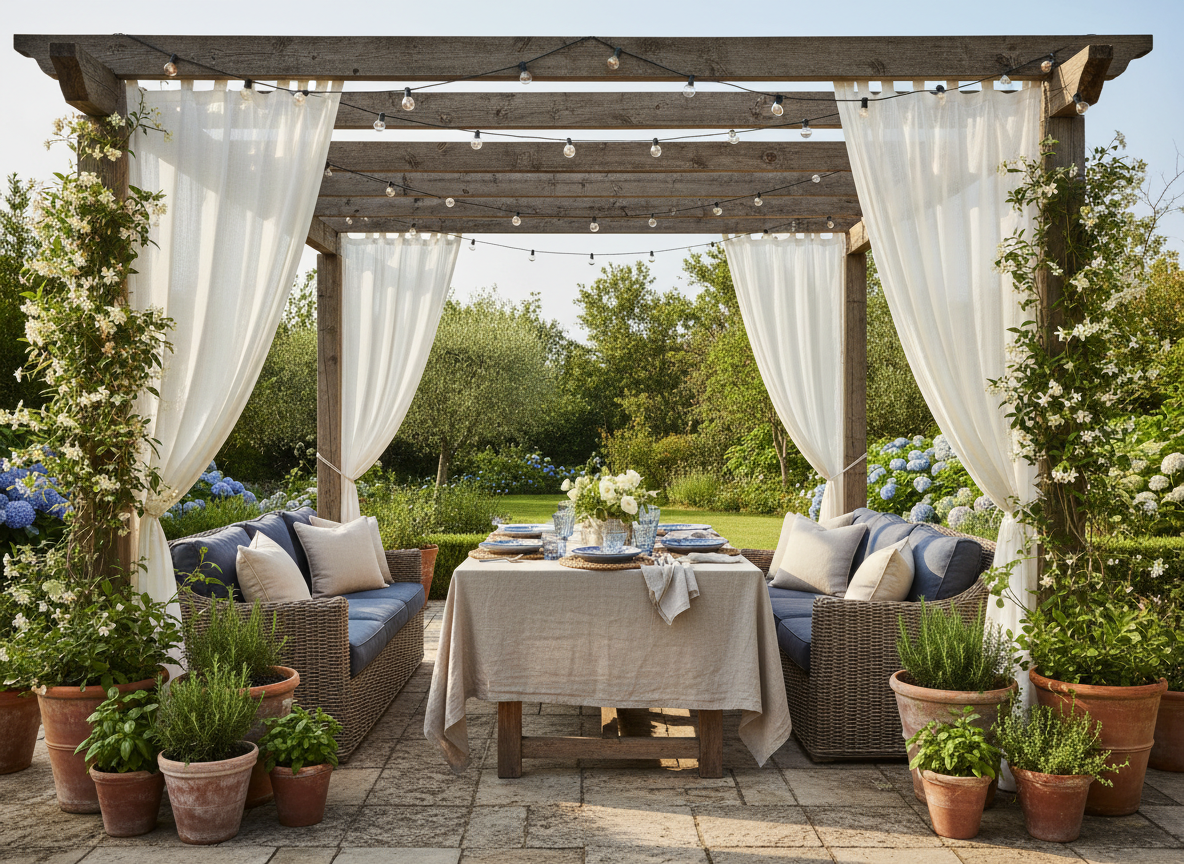
A white-painted pergola with full-length outdoor curtain panels is one of the most versatile looks in the design playbook — it works in Mediterranean gardens, coastal spaces, and even traditional suburban backyards. The curtains serve triple duty: privacy screen, windbreak, and pure aesthetic drama when they billow in a summer breeze. Choose solution-dyed acrylic fabric (brands like Sunbrella are ideal) in white or natural linen tones for UV resistance and easy cleaning. Install the curtain rods on the inside face of the beams so the panels hang straight and can be drawn fully open along the sides. A white pergola with curtains in motion reads as quietly luxurious in a way that a solid wall or fence simply cannot achieve. Pair with terracotta pots and trailing pelargoniums for a southern European atmosphere that transports you on sight.
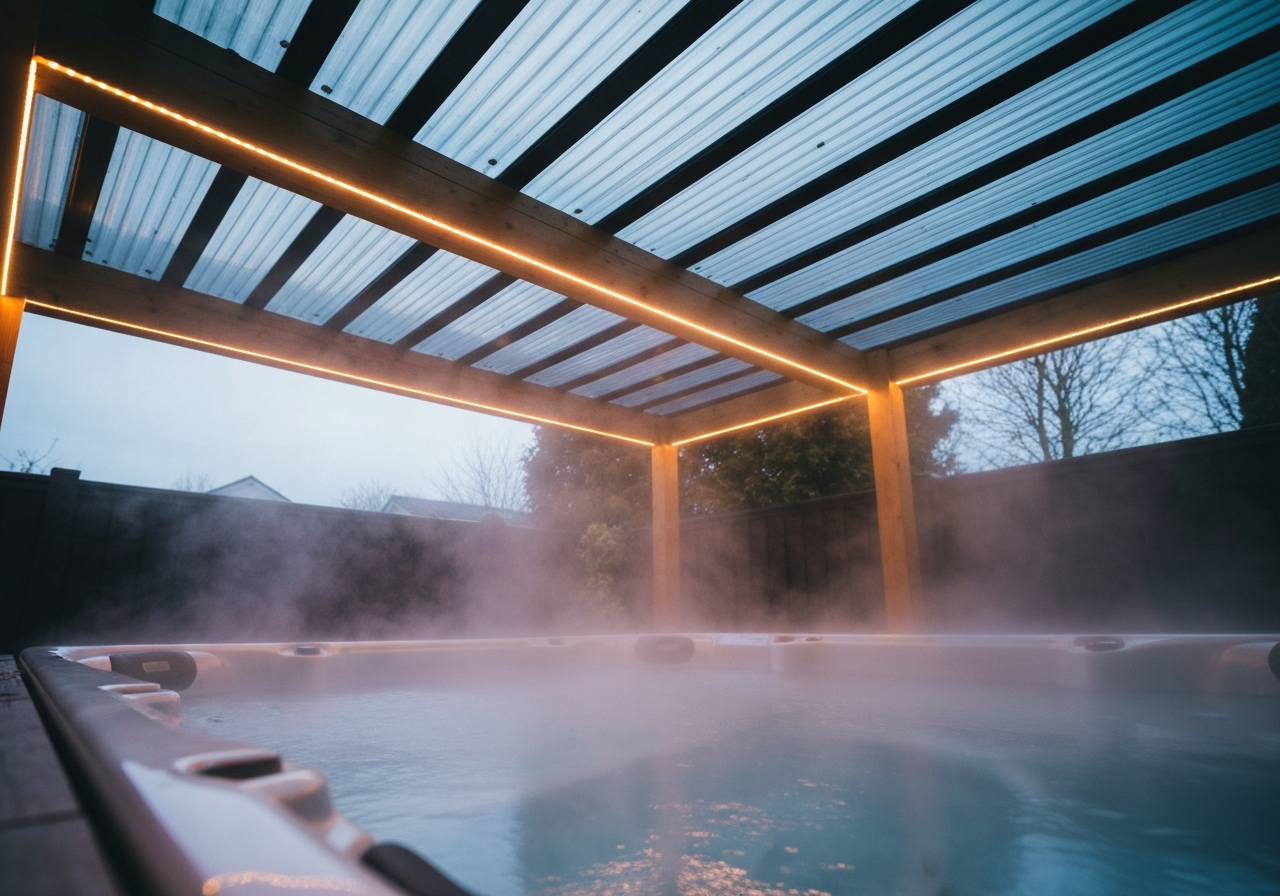
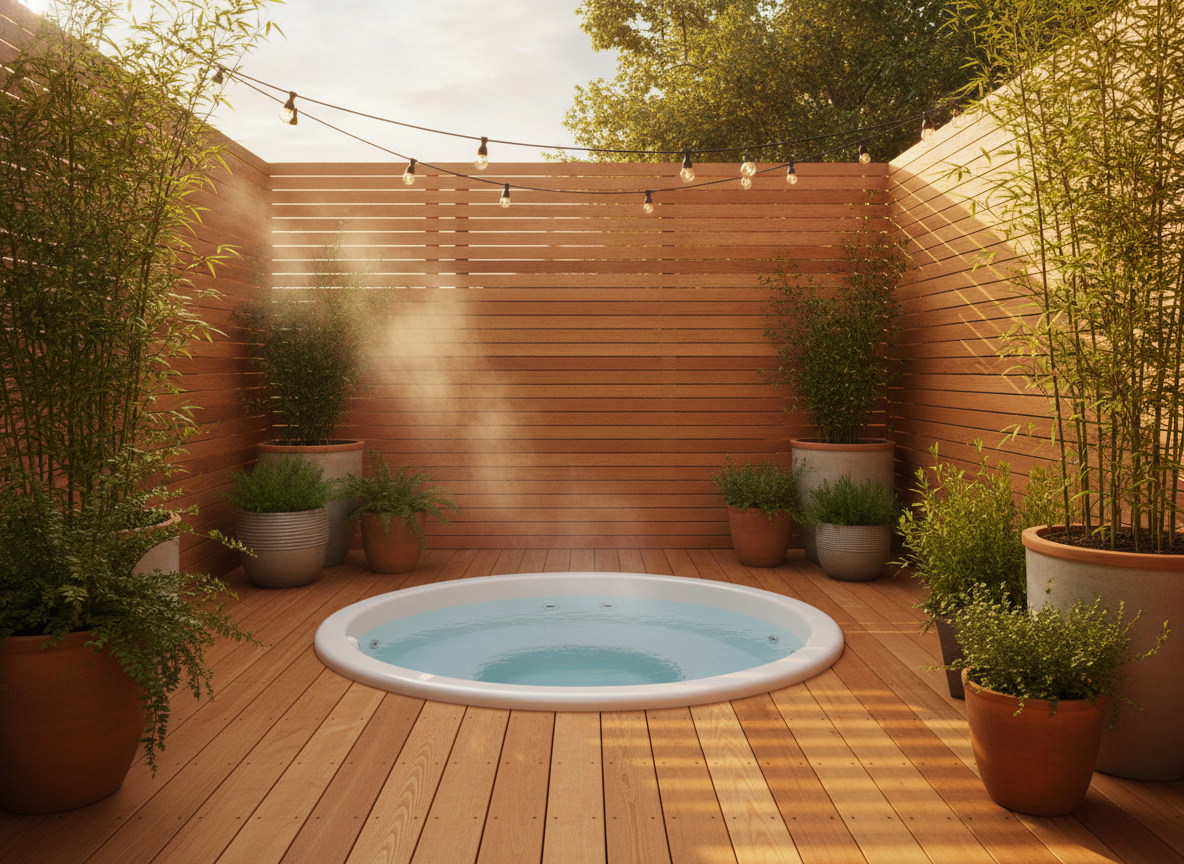
A pergola over a hot tub solves two problems at once: it provides privacy from overlooking neighbours and creates a dedicated sheltered zone that makes year-round soaking remarkably comfortable. The key specification difference here is the roof — an open lattice top is fine for fair-weather cover, but if you want real weather protection, consider a corrugated polycarbonate panel insert that allows light through while blocking rain. Leave at least 18 inches of open ventilation around the perimeter to prevent steam buildup, which can accelerate timber deterioration. Use pressure-treated lumber rated for ground contact (UC4B) on any posts that sit on or near wet surfaces, and seal all cut ends before assembly. With good lighting — think recessed LED strips on the inner beam faces — a hot tub pergola becomes the most used corner of the entire backyard from September through April.
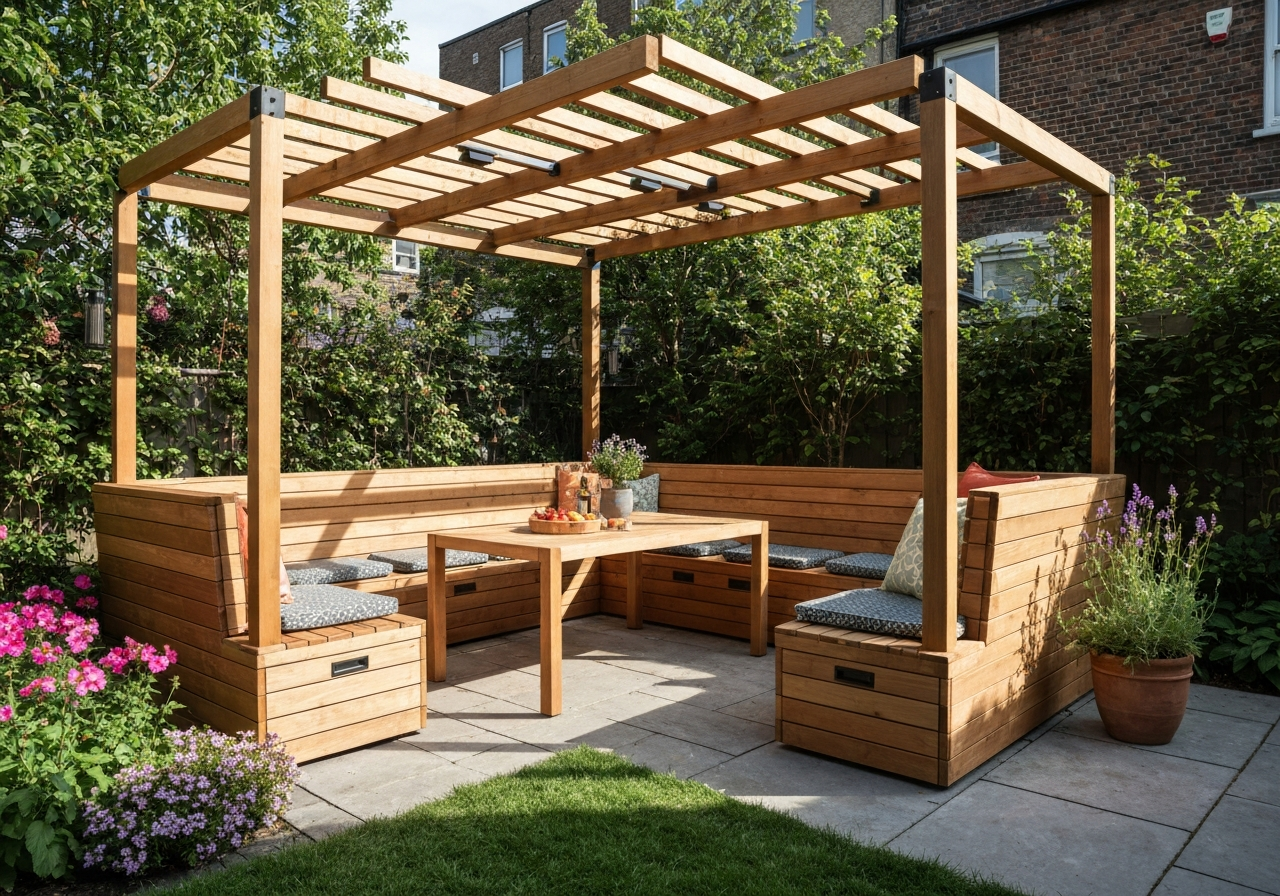
If patio space is at a premium, a pergola with integrated bench seating is a smart way to consolidate function without clutter. The benches run along the inside face of the perimeter posts, turning what would otherwise be wasted apron space into generous seating for eight to ten people around a central table. Build the bench seats from the same timber as the pergola frame for a cohesive look, and add a deep storage compartment beneath the seat board — it is the perfect hiding place for cushions, throws, and outdoor accessories that would otherwise need a separate storage box. Top the benches with weather-resistant foam cut to size and covered in Sunbrella fabric. This setup is particularly well-suited to smaller city gardens where every square foot needs to earn its place, and it looks far more considered than a patio furniture set that simply gets dragged out and pushed back in.
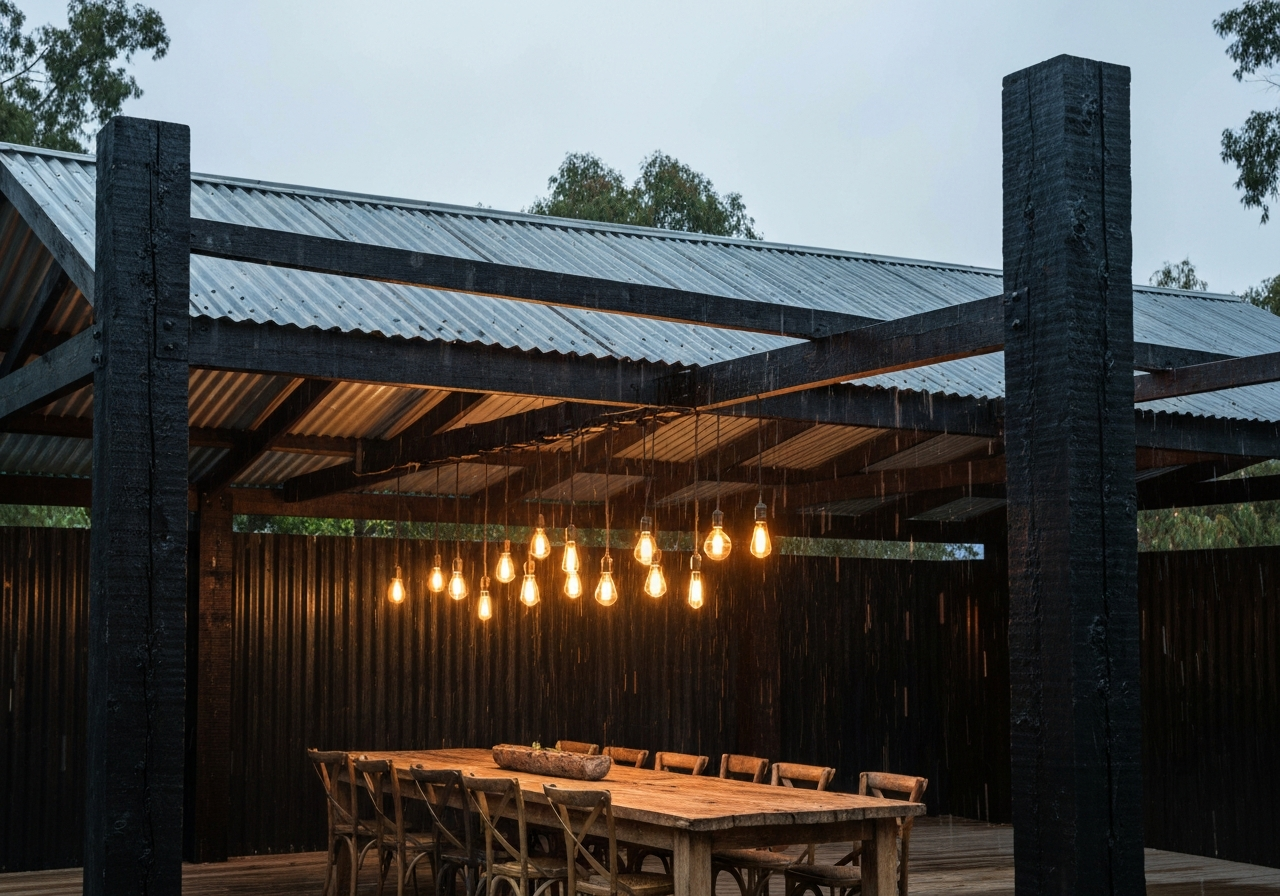
The farmhouse-meets-industrial aesthetic that has been dominating interior design has moved firmly outdoors, and this hybrid pergola is its best expression. Dark-stained or charred timber posts and beams pair with a corrugated galvanized or Corten steel roof panel to create a structure that is equal parts rugged and designed. Unlike an open lattice, the metal roof provides real weather coverage — you can eat outside in a rain shower, which changes how you use the whole backyard. The sound of rain on a corrugated metal roof is, to many people, one of the most satisfying sounds in existence. Run Edison filament bulbs on a dimmer underneath, set a long wooden farm table and mismatched chairs below, and you have an outdoor dining room with more character than most indoor ones. Seal the timber annually to maintain the colour and protect against moisture ingress at the metal fixings.
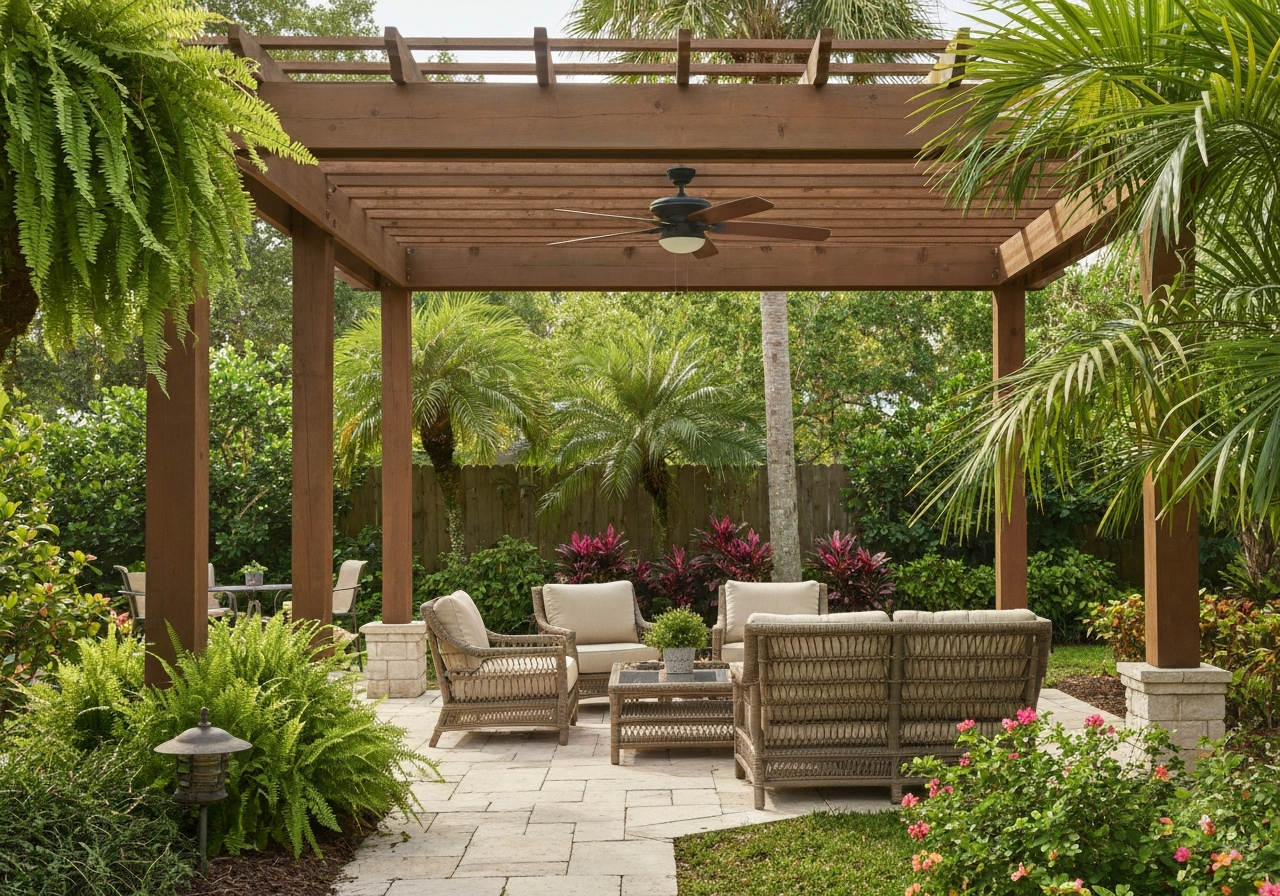
In hot, humid climates — think the Southeast US, coastal areas, or anywhere that gets oppressive summer afternoons — a ceiling fan mounted to the pergola’s central beam changes the outdoor experience entirely. A good outdoor-rated fan (look for UL wet-rated models with sealed motors) moves enough air to make 90°F feel like 80°F, keeping you comfortable without running air conditioning. The visual effect is also undeniably relaxed and tropical, particularly when paired with rattan or teak furniture and a lot of greenery. Make sure your electrical plan routes a conduit through one of the posts from the house — surface-mount cord covers are functional but look makeshift. Size the fan blade span to at least 52 inches for a standard pergola, and choose a reversible model so it can push warm air downward in cooler months if the pergola has any solid roof coverage.
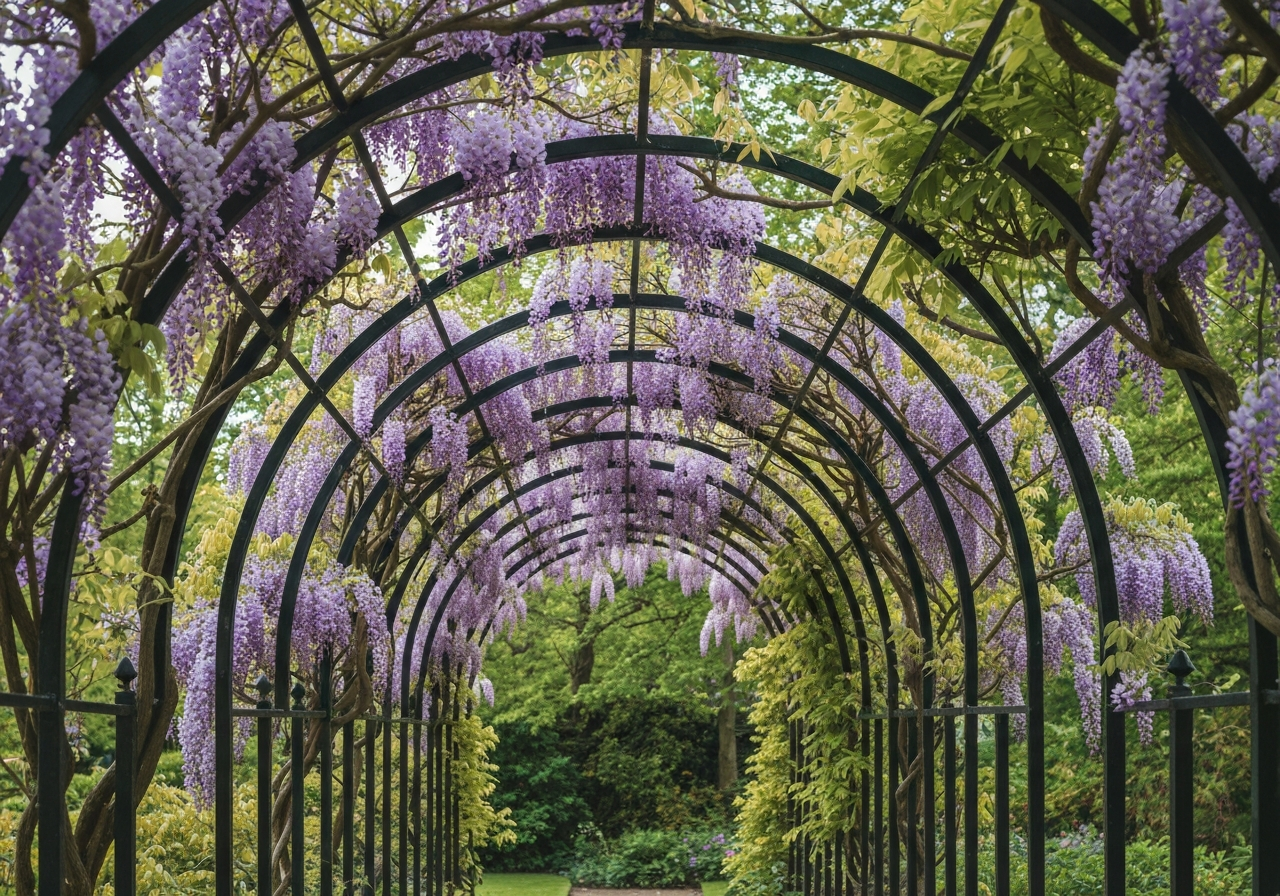
An arched pergola is less about outdoor entertaining and more about outdoor experience — it is the structure that makes the journey through your garden as beautiful as the destination. A series of arched frames, spaced every 6 to 8 feet and linked by horizontal rails at the top, creates a tunnel of greenery once climbing plants establish. Wisteria is the classic choice: its cascading lilac racemes in May are spectacular enough to draw people into the garden just to walk beneath them. Roses like ‘Veilchenblau’ or ‘Albéric Barbier’ are slightly more manageable and offer repeat blooms through the season. The arch pergola also works wonderfully as a formal garden focal point when viewed from the house — place one at the far end of a lawn axis and it creates the same sense of depth and perspective that landscape architects charge handsomely to achieve through other means.
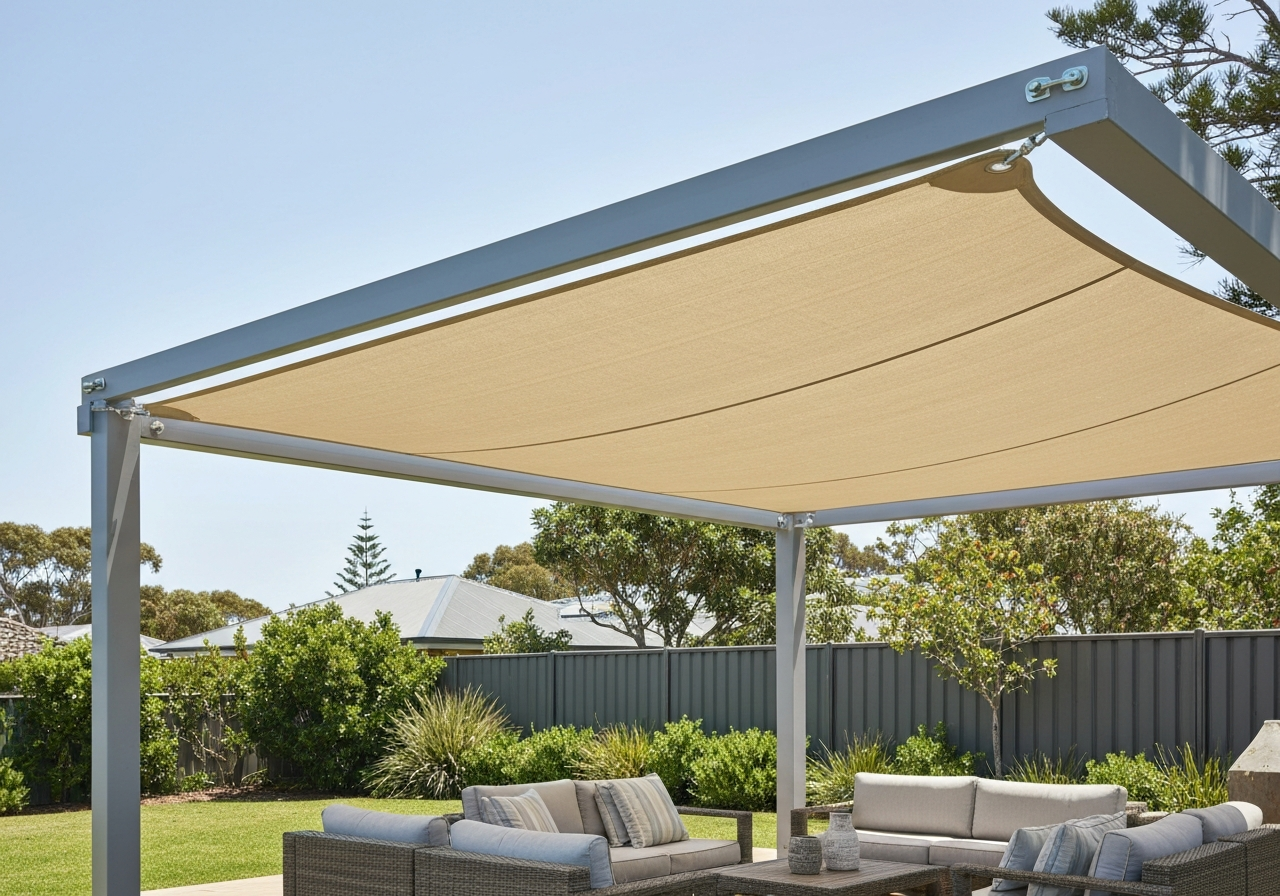
For those who want the overhead structure without committing to a fixed roof, a shade sail stretched between the pergola posts is a flexible, low-cost solution. UV-rated HDPE shade cloth in a triangle or rectangle configuration blocks 90–95% of UV rays while still allowing air to circulate freely underneath — a significant comfort advantage over a solid roof in very hot climates. The sail can be retracted in winter or during storms, dramatically reducing wind load on the posts. Choose a neutral palette — stone, sand, slate — for a look that ages well and doesn’t compete with the garden. Tension the fabric tightly from the attachment points using stainless steel turnbuckles; a slack shade sail looks provisional and will degrade faster at the stress points. This is particularly popular in coastal and Australian-influenced backyard designs where sun protection is paramount but visual lightness is equally valued.
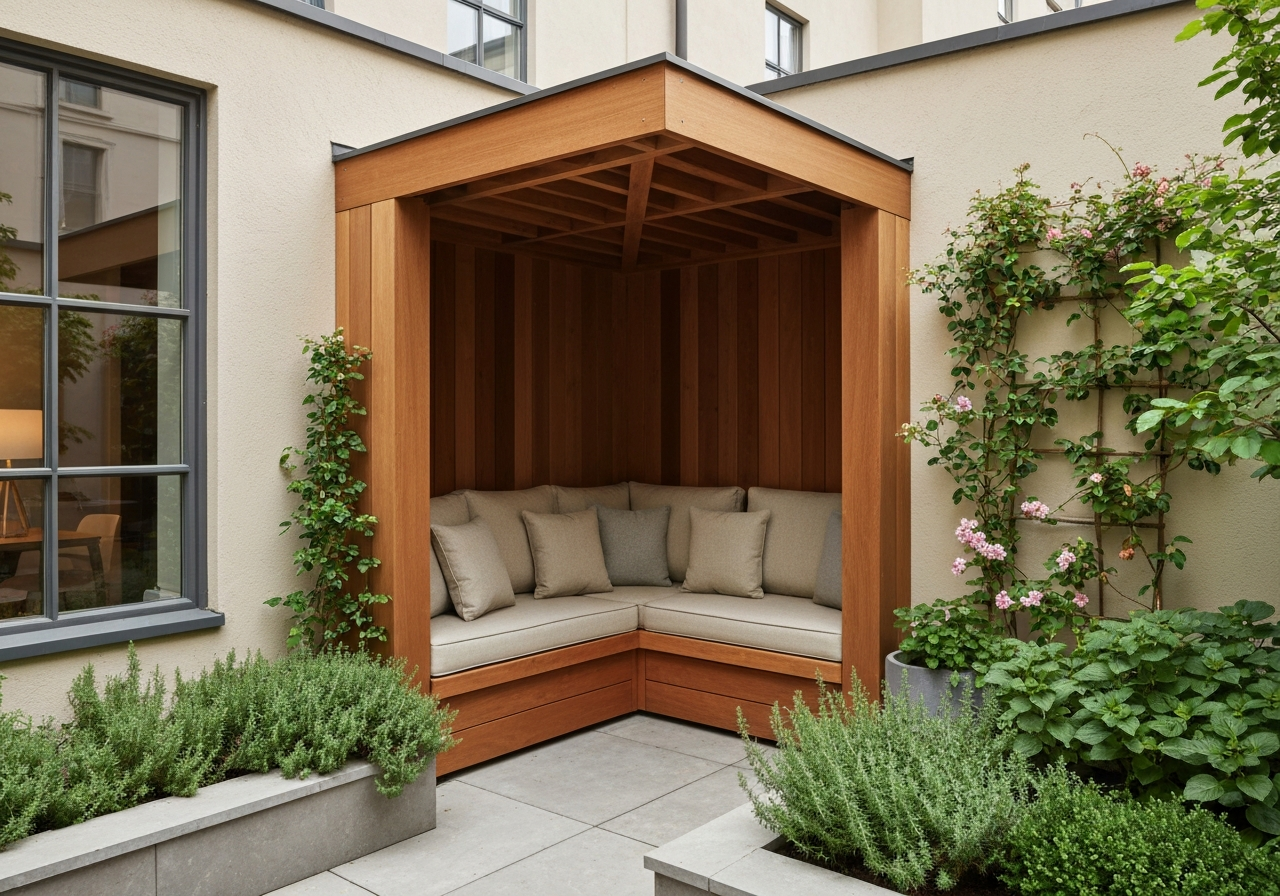
An L-shaped or corner pergola is the small-patio design solution that most homeowners never consider but immediately love once they see it. Rather than placing a square pergola in the center of a tight space (which eats into circulation), a corner structure fits snugly into the angle of two walls or fences and leaves the rest of the patio open. Two sides of the pergola are effectively supported by the adjacent walls, reducing the number of freestanding posts needed and making the build simpler. The result is a defined, sheltered dining or lounge nook that feels intimate rather than cramped — like a booth in a good restaurant, it provides enclosure on two sides while remaining open to the garden. A corner pergola is particularly effective in urban courtyards and terrace gardens where every decision has to work hard to justify its footprint.
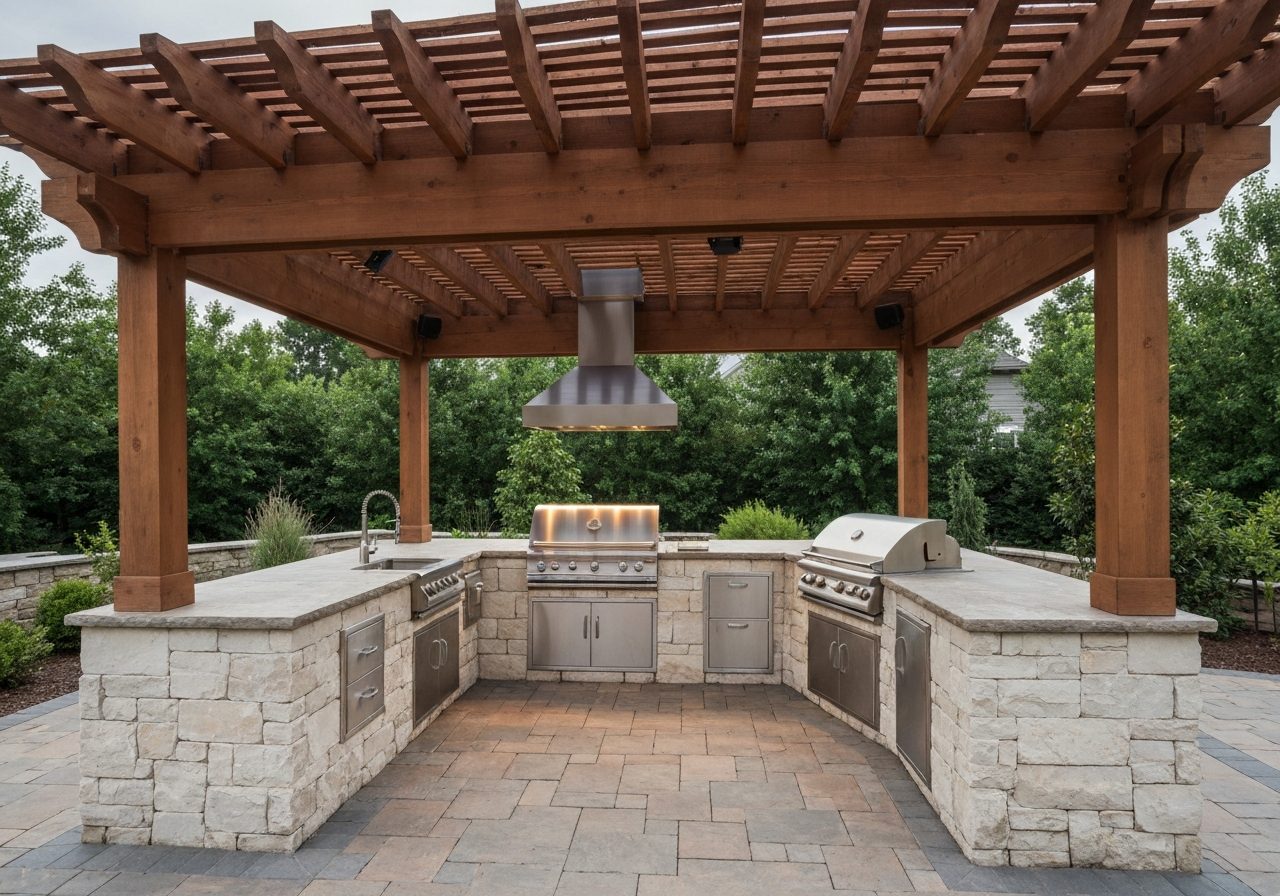
Building a pergola over an outdoor kitchen requires a bit more planning than a standard patio application, but the payoff is enormous. It defines the cooking zone as a proper outdoor room, protects the cook from sun and light rain, and gives the whole setup an intentional, designed quality that a standalone grill simply lacks. The critical consideration is ventilation: ensure the overhead structure is fully open or generously louvered above the grill position — a solid roof directly over a gas or charcoal grill creates a smoke problem. Maintain at least 8 feet of clearance from the grill grates to any overhead combustible material. According to the National Fire Protection Association, proper ventilation clearances around outdoor cooking appliances are essential for safe outdoor kitchen design. Stone or concrete countertops work particularly well beneath a pergola because they don’t require the same weather protection as timber or tile surfaces.
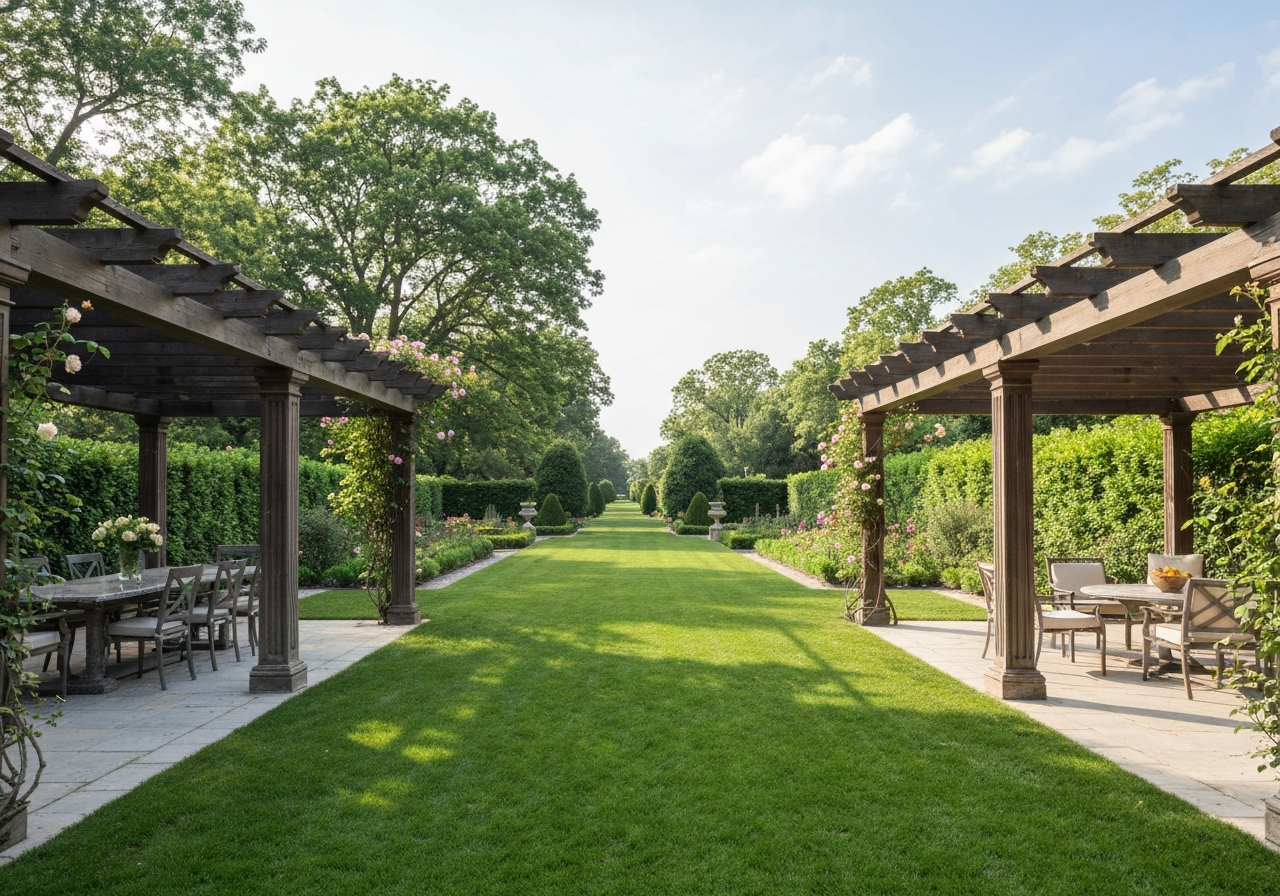
A single pergola in a large yard can look lonely, marooned in too much open space. A double pergola — two matching structures placed symmetrically, flanking a central lawn, pool, or garden feature — solves this problem while adding a real sense of landscape grandeur. The visual effect is similar to a classical allée: it creates a strong axis and a sense of journey through the space. Connect the two structures with a path, a series of planters, or a low hedge to reinforce the symmetry. Both pergolas can be functional — one as a dining zone, the other as a lounge or outdoor kitchen — giving large family gatherings room to spread out without feeling disconnected. This approach is most effective when the materials and finish are identical across both structures; any variation in colour or proportion will undermine the compositional strength that makes the double pergola so compelling.
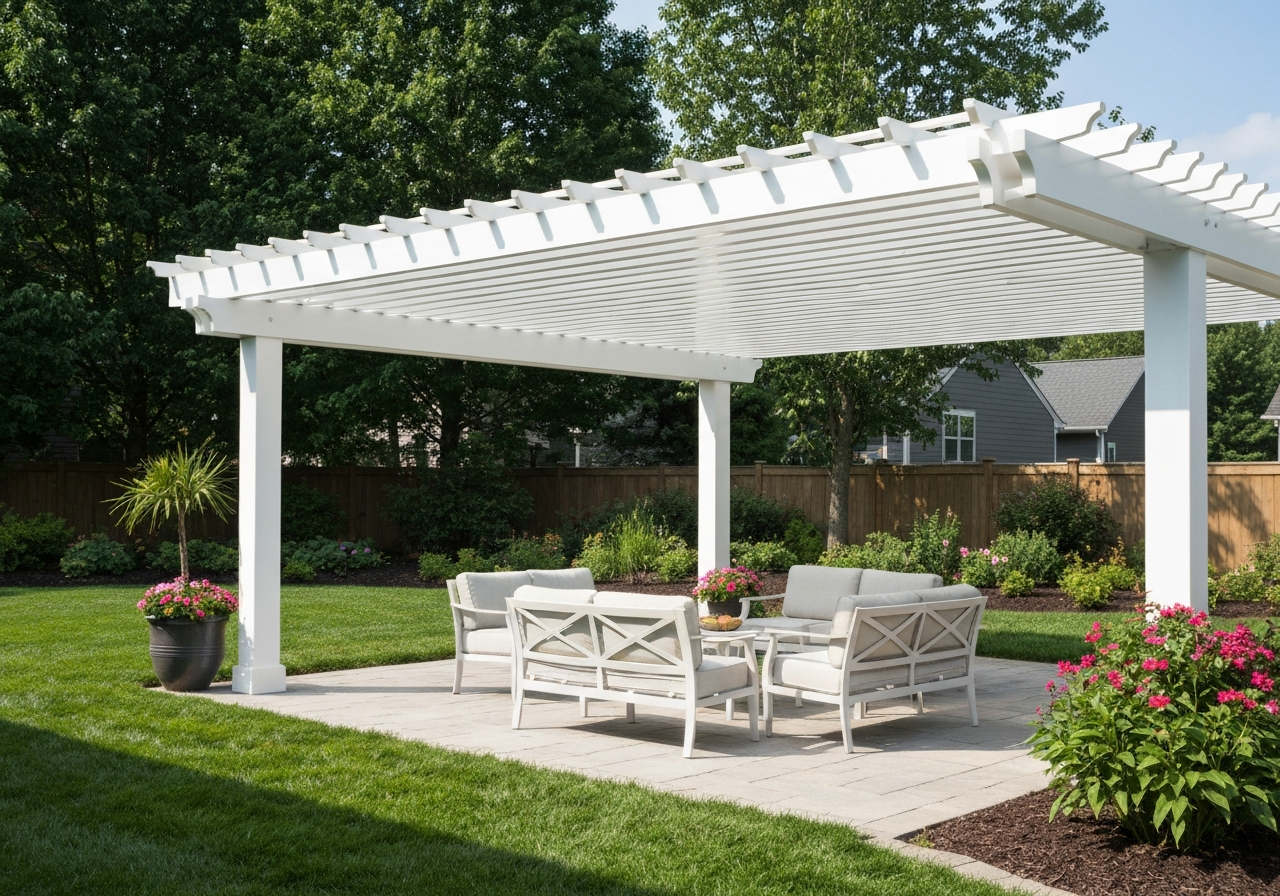
For homeowners who love the look of a traditional painted wood pergola but have no interest in the upkeep that comes with it, vinyl is a serious alternative worth considering. Modern vinyl pergola systems are made from cellular PVC with an aluminium reinforcing channel inside each post and beam, giving them real structural rigidity without the weight of solid timber. They come in bright white, cream, and occasionally tan, and they never need painting, staining, or sealing — a hose-down twice a year is more than sufficient. The aesthetic is clean and neat rather than characterful, making vinyl pergolas a particularly good fit for tidy suburban backyards and HOA communities where a weathered or rustic look might raise objections. Pair with low-maintenance outdoor furniture — powder-coated aluminum frames, solution-dyed cushions — and the entire outdoor setup becomes essentially self-maintaining.
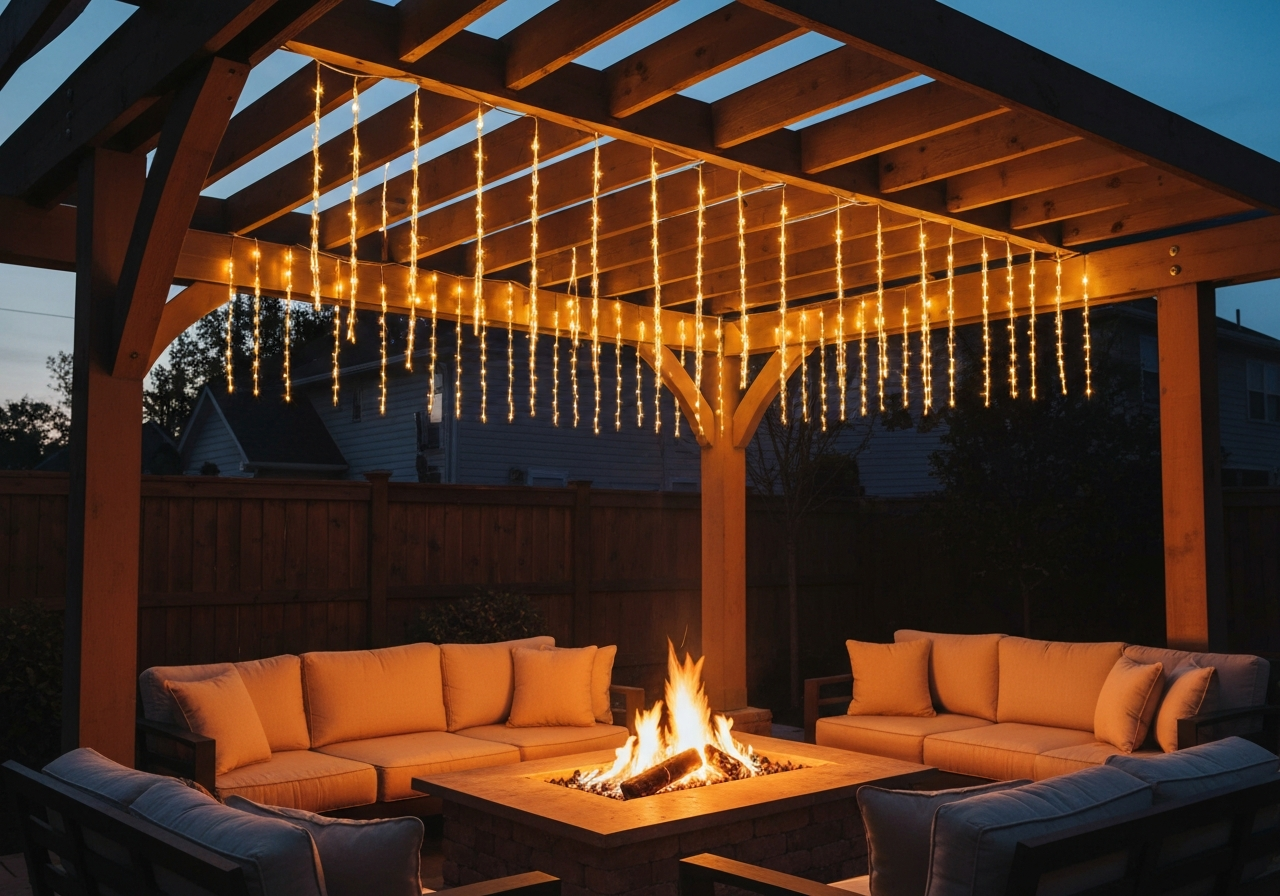
This combination is, quite simply, one of the most atmospheric outdoor setups you can create. The pergola provides the overhead framework for curtain lights — vertical strands of warm LEDs that hang down from the beams to create a glowing canopy effect — while the fire pit below anchors the seating area and provides warmth and focal point. The layered light sources (overhead from the curtains, flickering at ground level from the fire) create a depth and ambiance that no single lighting strategy can match. Keep a minimum of 6 feet of horizontal clearance between the fire pit and any curtain light strands, and ensure the pit sits on a non-combustible surface — gravel, stone, or concrete pavers. Use battery-operated or plug-in LED curtain lights rather than open-flame string lights for safety. This is the pergola setup that turns an ordinary Tuesday evening into something worth staying outside for.
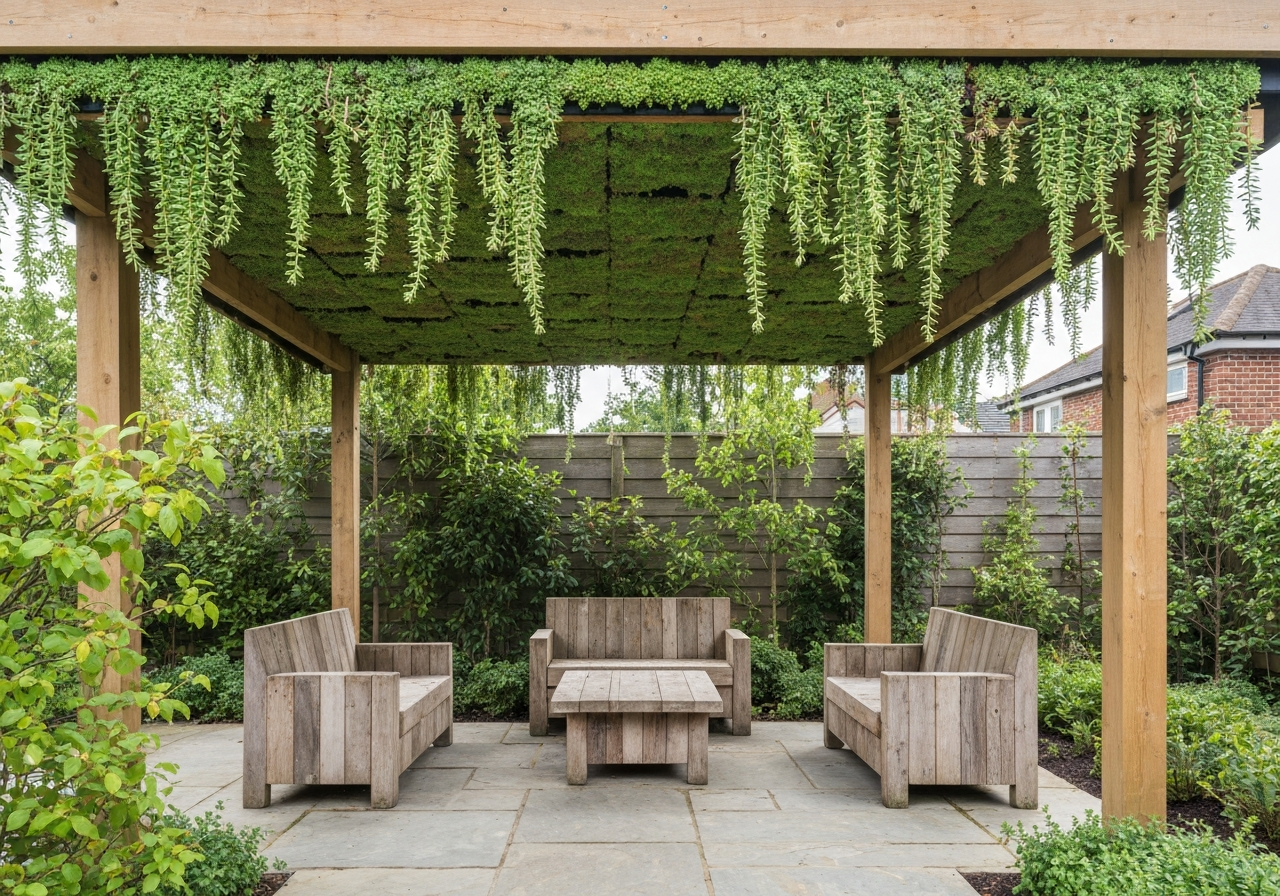
At the leading edge of sustainable outdoor design, the living canopy pergola replaces a conventional lattice or roof panel with a planted substrate — sedge grass, trailing succulents, sedum mats, or moss panels — growing directly over the overhead frame. The effect is extraordinary: a lush, textured ceiling of green that filters light, reduces radiant heat underneath, absorbs rainfall runoff, and supports pollinators. The practical requirements are more involved than a standard pergola — the frame must be engineered to bear the additional weight (a saturated sedum mat weighs around 10–12 lbs per square foot), and an irrigation drip line is strongly advisable. But for garden-forward homeowners who want their outdoor structure to contribute to biodiversity rather than simply occupy space, this is the most exciting pergola direction in 2026. It pairs beautifully with natural stone paving, reclaimed timber furniture, and a planting scheme that prioritises native species.
A pergola is one of the few backyard investments that pays dividends every time you step outside — in shade, in beauty, and in the way it gathers people together under something worth gathering under. Whether you go classic and plant-covered, high-tech with motorized louvers, or dramatic with curtain lights and a fire pit, the best pergola is the one that fits how you actually live and entertain. Start with your climate, your budget, and the look of your home, then let the ideas above guide you toward the structure that will become the heart of your outdoor life.
For more backyard inspiration, take a look at our guide to 19 Suburban Backyard Ideas for Cozy Outdoor Living and 19 L Shaped Porch Ideas for Cozy Outdoor Spaces.
G2G Team
04-27-2026
Let’s Build
Contact us todayGet daily tips and tricks for making your best home.
2025 Green to Gorgeous