3 MIN READ
Gardening
Written By
G2G Team
Published
June 5, 2026
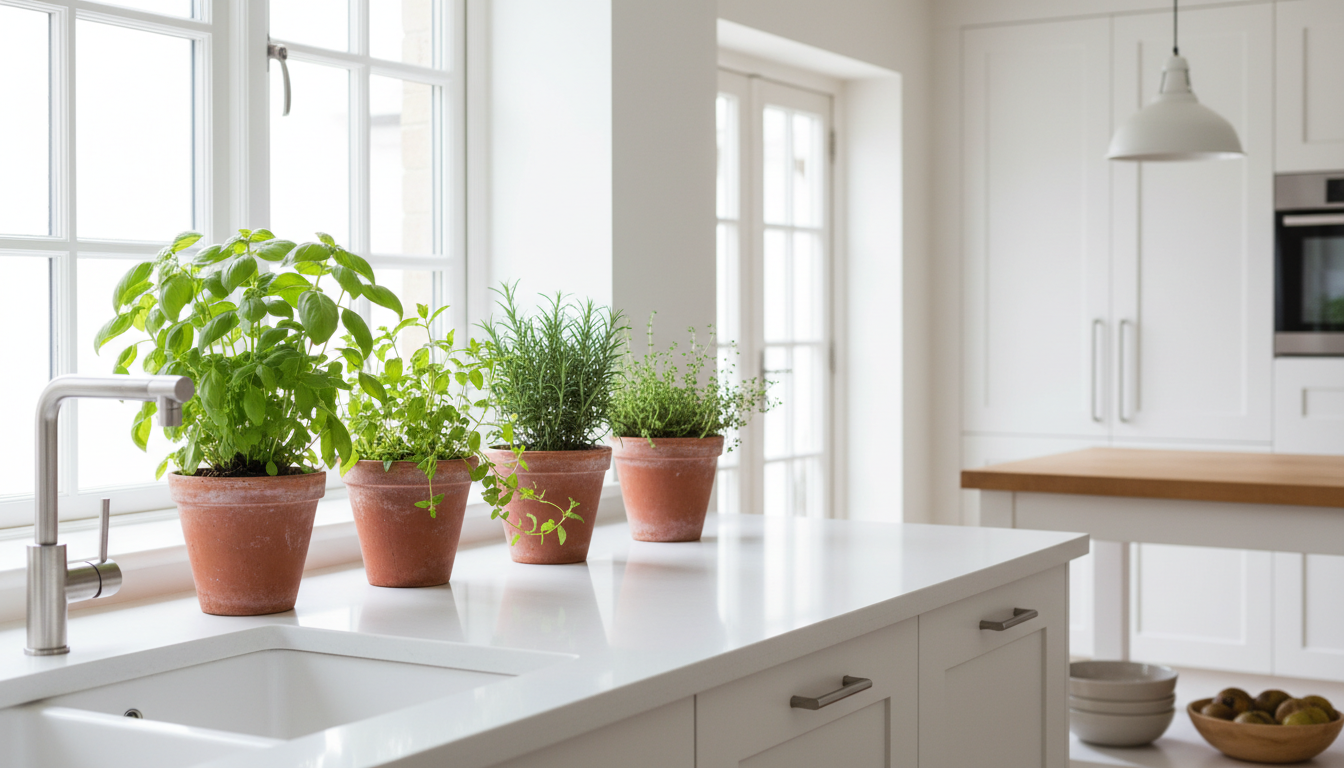
The first thing you notice is the smell. You brush past a pot of basil on the windowsill while reaching for the kettle, and the leaves release that warm, peppery sweetness that no jar of dried herbs has ever matched. Light pools across the counter, a few droplets still cling to the underside of a mint leaf from this morning’s watering, and suddenly the kitchen feels less like a place you cook in and more like a small, living thing you tend. That shift is what an indoor herb garden does best. It turns a functional corner into something you actually want to stand near.
You do not need a greenhouse, a south-facing wall, or any real gardening experience to grow herbs where you cook. You need a sunny ledge, a few well-chosen containers, and a sense of how texture and color can make even a row of pots feel intentional. The ideas ahead range from sculptural wall systems and tiered ladder shelves to humble mason jars and self-watering planters, with notes on which herbs thrive in each setup and why certain materials hold up better near steam and heat. Whether you rent a studio or own a sprawling farmhouse kitchen, there is a fresh, low-effort way here to keep basil, thyme, and rosemary within arm’s reach.
Here are eighteen ways to bring that living freshness into the heart of your home.
There is a reason the classic windowsill herb row never goes out of style. Aligned terracotta pots, all the same warm clay tone, turn a strip of glass into a tidy little nursery that catches the brightest light in the room. Terracotta breathes, which means roots get the airflow they crave and the soil dries evenly between waterings, sparing you the root rot that kills so many kitchen herbs. The unglazed surface also develops a soft chalky patina over months, a quiet sign that the garden has lived a little. Choose four or five pots in graduated sizes for rhythm, and plant the sun-lovers here: basil, oregano, thyme, and a compact rosemary. Set them on a shallow zinc tray to catch drainage and protect the sill. The look works because repetition reads as calm, and the rusty clay warms up cool morning light beautifully. According to the Royal Horticultural Society, most culinary herbs need plenty of sun and warmth to thrive, which makes a bright sill the easiest place to start.
When counter space is precious, the wall becomes your garden. A felt or canvas pocket planter, the kind with rows of soft fabric pouches, hangs flat against an empty stretch of kitchen wall and holds a surprising number of herbs in almost no floor footprint. The breathable fabric wicks excess moisture away from roots, and the staggered pockets let you read the whole collection at a glance, like a living spice rack. Mount it near a window so the upper pockets catch light, and reserve those bright top rows for sun-hungry basil and parsley while trailing thyme and oregano spill from the lower ones. The visual appeal comes from the contrast of soft, irregular greenery against a clean painted wall, a touch of vertical wildness that keeps the eye moving upward. Use a sturdy French cleat or anchored screws, since wet soil adds real weight. Line the back with a thin waterproof membrane to keep moisture off the plaster, and you have a green tapestry that earns its keep.
Few things feel more like a lived-in country kitchen than herbs growing in glass jars on a weathered timber shelf. The clarity of the mason jar lets you watch the roots thread through the soil, and the warm grain of reclaimed oak or pine grounds the whole arrangement in something handmade. Because jars have no drainage holes, the trick is a one-inch base layer of pebbles or activated charcoal before the soil, creating a reservoir that keeps roots from sitting in water. Mint and chives forgive the occasional overwatering and look lush in glass, their bright stems glowing when backlit. Space the jars unevenly along the shelf rather than in a stiff line, mixing a few heights with small stacked books or a folded linen runner underneath. The charm here is honest imperfection, the slight wobble of handmade against the precision of factory glass. It draws from the same cottagecore warmth that makes a farmhouse feel collected over years rather than bought in an afternoon.
A leaning ladder shelf tucked into a sunny corner gives your herbs the one thing a windowsill cannot: layered height. Each ascending rung holds a cluster of pots, so light reaches every plant without one shading out the next, and the diagonal silhouette adds architectural interest to an otherwise dead corner. A raw oak or black metal ladder both work, the wood reading soft and Scandinavian, the metal crisp and industrial. Place the tallest, most light-demanding herbs like basil and dill on the upper shelves, and let shade-tolerant parsley and chives sit lower. The staggered depth creates a small jungle effect, layers of green at different eye levels that make the corner feel abundant rather than cramped. If you love the gathered, displayed look, the same logic that powers a well-styled outdoor plant stand display applies indoors. Anchor the ladder to the wall with a small bracket for safety, especially in homes with curious pets, and rotate the pots weekly so every side grows evenly toward the light.
Suspended glass globes drifting at different heights above the counter turn herb growing into something almost sculptural. These open-fronted terrariums, hung on thin brass or leather cords from a ceiling hook or a mounted rail, keep greenery at eye level without sacrificing a single inch of work surface. The transparent spheres catch and refract daylight, scattering soft highlights across the backsplash in a way that feels quietly luxurious. Plant compact, slow-growing herbs that tolerate snug roots, like creeping thyme or small mint cuttings, and use a free-draining mix with a charcoal layer since the globes hold no drainage. The appeal lies in the floating quality, green orbs hovering in the air, weightless against a tiled or plaster wall. Vary the cord lengths so the globes hang at staggered heights, creating a loose constellation rather than a rigid line. Mist them rather than drench them, and position them near but not pressed against a window to avoid the magnified heat that glass can trap on the hottest afternoons.
If you travel often or simply forget to water, a self-watering planter box removes the guesswork while still looking polished on the counter. These containers hide a lower reservoir that wicks moisture up to the roots on demand, so the soil stays evenly damp for a week or more between fills. Matte ceramic or powder-coated steel versions read clean and contemporary, while a long trough shape lets you grow a small hedge of mixed herbs in one tidy line. Parsley, cilantro, and basil all thrive in the consistent moisture these boxes provide, since they hate the drought-and-flood cycle that hand watering often creates. The design reasoning is practical elegance, a single horizontal form that organizes several herbs into one architectural gesture rather than a scatter of mismatched pots. Look for a model with a visible water-level indicator so you are never guessing. Set it where you chop and prep most, because the whole point is having soft, fragrant leaves a snip away while you cook.
There is real charm in giving a humble tin can a second life as an herb pot. Cleaned and lightly sanded food tins, lined up on a shelf with their contents hand-lettered across the front, bring a relaxed, thrifty creativity that expensive planters cannot buy. The metal warms quickly in sunlight, so these suit herbs that like their roots on the cozier side, and the reflective surface bounces a little extra light onto the leaves. Punch three or four drainage holes in each base, add a pebble layer, and finish the outside with chalk paint in soft sage, cream, or terracotta for a cohesive palette. Chives, marjoram, and thyme stay compact enough to suit the smaller cans. The look succeeds because of intentional repetition, a row of varied cans unified by a single paint family and consistent lettering style. It is the same upcycling spirit that makes a small-space container garden feel resourceful and personal, proof that good design often starts in the recycling bin.
The flat metal flank of a refrigerator is wasted vertical real estate, and a magnetic herb garden claims it beautifully. Small lightweight pots backed with strong magnets cling to the steel, turning a blank appliance side into a living green panel you pass a dozen times a day. The pots, usually shallow and made of light resin or thin metal, suit herbs with modest root systems like chives, oregano, and small basil cuttings. Because the fridge side often sits away from direct sun, supplement with a clip-on grow light or choose this spot for the more shade-forgiving herbs. The visual payoff is unexpected delight, greenery appearing exactly where you least expect a garden, softening the hard appliance edges of a working kitchen. Use rare-earth magnets rated well above the filled pot weight so nothing slides, and keep the pots small to manage moisture against metal. It is a clever fix for renters who cannot drill walls but still want fresh herbs woven into daily life.
A weathered wooden crate set in the middle of a kitchen island doubles as both planter and centerpiece, gathering several herbs into one generous, low-slung display. The open box shape lets you crowd pots together for a lush, overflowing look, and the grey-brown timber brings an earthy counterweight to sleek stone counters or glossy cabinetry. Line the crate with a sheet of landscape fabric or a plastic tray so moisture never reaches the wood, then nestle individual potted herbs inside rather than planting directly, which keeps maintenance simple. Trailing herbs like oregano and thyme soften the crate’s hard edges as they spill over the sides, while a taller rosemary anchors the center. The arrangement works because of contrast and abundance, rough reclaimed wood against a refined surface, with a controlled wildness of green tumbling outward. Fill any gaps with a handful of moss or a small candle for warmth. It is a movable feast of freshness you can lift aside whenever the island needs to become a workspace again.
Slim floating shelves mounted in a stepped formation give trailing herbs room to cascade, turning a plain wall into a soft green waterfall. Without visible brackets, the shelves seem to hover, and the herbs become the star, their stems draping downward in loose, living lines. Choose creeping thyme, trailing oregano, or prostrate rosemary, all of which spill gracefully rather than growing stiffly upward. A pale oak or white-painted shelf keeps the focus on the greenery, while the negative space between shelves lets each plant breathe and read clearly. The design principle at play is rhythm and descent, the eye following the green as it tumbles from one level to the next. Stagger the shelves so the trailing growth of an upper pot nearly brushes the rim of the one below, creating a connected, layered effect. Use concealed heavy-duty brackets rated for wet soil weight, and slip a thin drip tray beneath each pot. The result feels curated and architectural, more gallery wall than garden, yet entirely edible.
For year-round freshness regardless of season or sunlight, a countertop hydroponic unit grows herbs in water and light alone, no soil and no mess. These sleek towers and pods come with built-in LED grow lamps, so basil and cilantro flourish even in a windowless galley kitchen or through a grey northern winter. The clean, minimal form, usually white or matte black with a soft glow at night, reads more like a modern appliance than a planter, which suits contemporary spaces beautifully. Herbs grow noticeably faster in hydroponics because their roots access nutrients directly, meaning you harvest sooner and more often. The glowing light also doubles as a gentle ambient feature, casting a calm pink-white wash across the counter after dark. Place it where you can enjoy that glow, perhaps near a coffee station, and top up the reservoir and nutrients on the simple schedule the unit indicates. It is the most hands-off route to a steady supply, ideal for cooks who want results without the learning curve of soil.
Mismatched vintage teacups, each cradling a single small herb, bring a delicate, collected charm to a windowsill or open shelf. The fine bone china, painted with faded roses or gilt rims, lends an heirloom softness that contrasts sweetly with the vigorous green of the herbs themselves. Because teacups are tiny and lack drainage, they suit slow-growing, shallow-rooted herbs and a careful hand with the watering can, plus a pebble layer at the base to hold excess moisture away from roots. Thyme, chives, and small mint sprigs settle happily into a cup’s modest space. The appeal is sentimental and tactile, the kind of detail that makes guests lean in and smile, drawing on the gentle nostalgia of grandmillennial style. Hunt for cups at flea markets and charity shops so each carries its own history, then group three or four together for a vignette rather than scattering them. Set them on saucers to catch any seepage, and rotate the herbs out as they outgrow their dainty homes.
Framing your herb collection inside a chalkboard panel turns a working corner into an inviting, café-style station. A large chalkboard mounted behind a narrow shelf lets you label each herb in looping script, jot a recipe note, or sketch a little vine, giving the whole arrangement a handcrafted warmth. The deep matte black of the board makes the greens and the pale pots pop with gallery-like contrast, sharpening every leaf against the dark backdrop. Functional and decorative at once, the board can track what you planted and when, or simply hold a seasonal quote above the pots. Use small uniform pots in white or natural clay so the chalk lettering stays the star, and light the station well, since the dark board can swallow ambient light. Position it near the prep zone so the labels actually earn their keep while you cook. The mood is friendly and a touch nostalgic, like a corner bistro, and the erasable surface means your display evolves with the seasons and your cravings.
A stacking tower pot, the kind originally designed for strawberries, grows a generous herb collection in a single vertical column that takes up barely a square foot of floor. Each tier offers planting pockets angled outward, so a dozen herbs can grow up one sculptural spiral, with light reaching each level as the pockets stagger around the column. Glazed ceramic versions feel intentional and decorative, while terracotta keeps things rustic and breathable. Plant cascading herbs in the upper pockets and sturdier ones below, mixing basil, parsley, thyme, and oregano into one living tower. The design wins through verticality and abundance, a column of greenery that draws the eye up and makes a small kitchen feel layered rather than crowded. Set it on a saucer with casters so you can spin it for even light and wheel it toward the brightest spot through the day. Water from the top and let it trickle down through the tiers, a self-distributing system that keeps the whole column evenly moist with one pour.
Three matching concrete planters in graduated sizes bring a cool, architectural calm to a modern kitchen. The raw grey surface, slightly rough to the touch with the faint speckle of the aggregate, contrasts strikingly with the soft, organic green of the herbs, a study in opposites that feels deliberate and grounded. Concrete holds temperature steadily and gives pots a reassuring weight, so they stay put on a busy counter. Seal the interior or use a plastic liner, since unsealed concrete can leach lime and wick moisture from the soil. Rosemary, sage, and thyme suit the restrained, Mediterranean mood these planters evoke, their silvery foliage echoing the stone tones. The trio reads as intentional through repetition and scale, three of the same form in three sizes, arranged in a loose triangle for balance. Keep the styling spare, letting the herbs and the texture of the concrete do the talking. The look draws from minimalist and brutalist sensibilities, proof that an herb garden can feel as considered as any other element in a thoughtfully designed room.
The unused space beneath a wall cabinet is a perfect spot for a slim hanging rail lined with small herb pots. A brass or matte black rod fixed to the underside of the upper cabinets holds S-hooks, and from each hook dangles a lightweight pot, keeping fresh herbs at eye level right above the prep counter. This setup borrows from the classic pot-and-utensil rail, extending that practical, everything-within-reach logic to living plants. Because the spot often sits in cabinet shadow, choose shade-tolerant herbs like parsley, mint, and chives, or fit a slim under-cabinet LED strip to boost the light. The visual rhythm of evenly spaced hanging pots adds a crafted, professional-kitchen feel, the kind of detail that signals a cook who truly uses the space. Use small, light pots with secure hanging rims so nothing tips, and slip a drip tray on the counter below. It frees the counter, fills awkward dead space, and keeps the herbs exactly where your hands already are while cooking.
An old wooden cutlery tray or shallow drawer, set on the counter and filled with tiny potted herbs, makes a charming compartmentalized garden that nods to the kitchen’s culinary heart. Each divided slot holds a small pot or a planted liner, so individual herbs stay neatly separated like spices in a rack, easy to identify and snip. The worn wood and the orderly grid bring a satisfying sense of organization, turning a salvaged object into a functional centerpiece. Line each compartment with a waterproof insert to protect the wood, then plant compact herbs such as thyme, oregano, marjoram, and chives, one variety per slot. The appeal is in the tidy logic of it, a place for everything, with the greenery softening the rigid grid. Set the tray near the stove for cooking convenience, but out of direct splatter range. It reads as both clever and sentimental, the kind of repurposing that gives a humble drawer new dignity and keeps a careful cook’s most-used flavors arranged at a glance.
If your kitchen is blessed with a bay window, the recessed ledge becomes a sun-soaked nook that practically begs to be a miniature greenhouse. The three-sided glass floods the space with light from morning to evening, the ideal conditions for a thriving, generous herb garden. Cluster a mix of pots across the deep sill, layering heights with a few small risers or stacked wooden boxes so back plants are not lost behind front ones. Sun-worshippers like basil, rosemary, oregano, and thyme flourish in this brightness, growing fuller and more fragrant than anywhere else in the home. The design strength is immersion, a pocket of dense greenery framed by glass and sky, blurring the line between indoors and garden. Choose pots in a cohesive material, perhaps all terracotta or all glazed white, to keep the abundance from reading as clutter. Add a small watering can and a pair of snips on the sill so tending becomes a pleasant ritual. On bright mornings, the whole nook glows, herbs backlit and luminous, the freshest corner in the house.
The beauty of growing herbs indoors is that there is a version of it for every kitchen and every kind of cook. Maybe the sunlit terracotta windowsill row speaks to your love of simple routine, or the floating wall shelves with their cascading thyme call to the part of you that wants the kitchen to feel a little wild. Perhaps the hands-off hydroponic unit fits your real life better, or the vintage teacup planters are too charming to resist. Pick the one idea that makes you want to pour a coffee and start snipping basil this weekend, and let it grow from there. Bookmark your two or three favorites, gather a few pots, and find that one bright ledge. Before long, the smell of fresh mint and rosemary will greet you every time you walk in, and your cooking, and your mornings, will taste all the better for it.
G2G Team
06-05-2026
Let’s Build
Contact us todayGet daily tips and tricks for making your best home.
2025 Green to Gorgeous