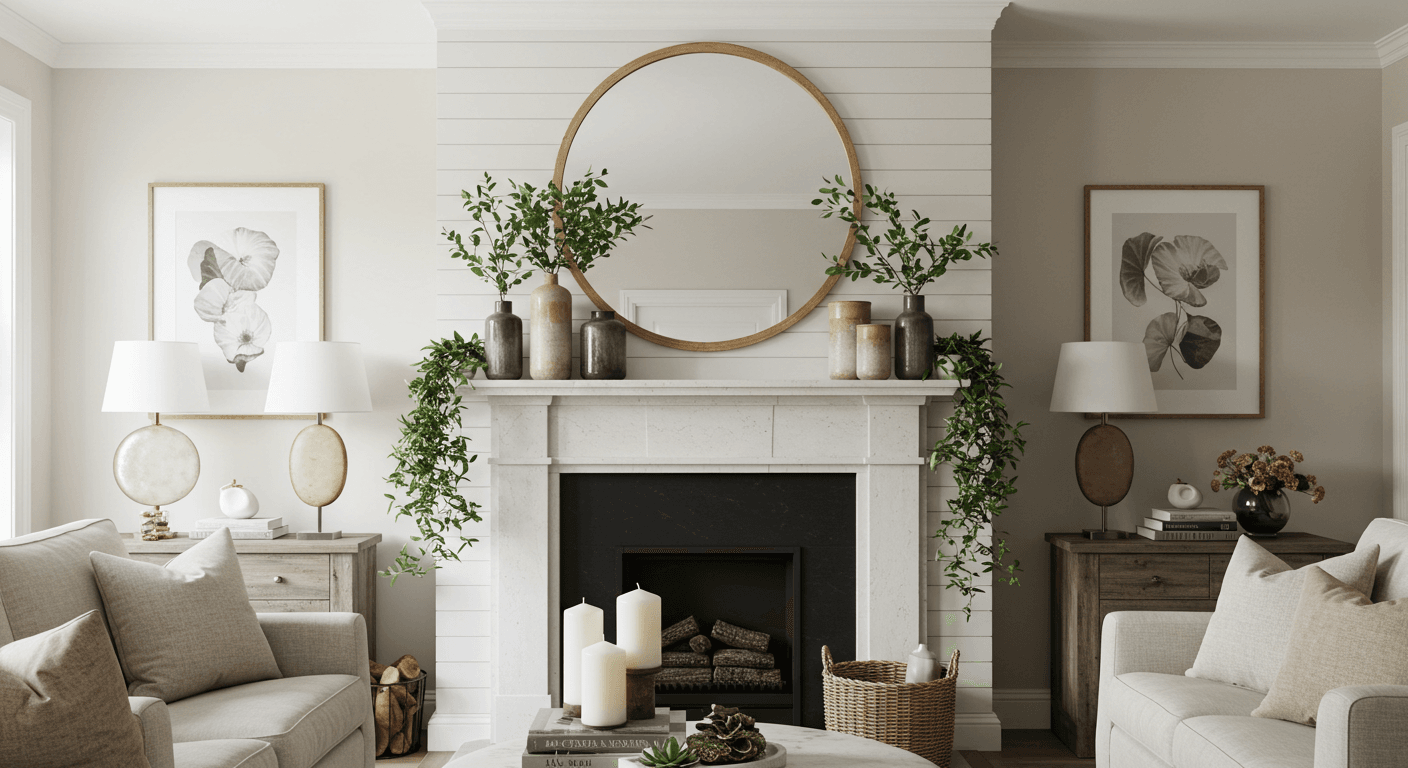
Your mantelpiece is more than just a shelf above the fireplace—it’s the heart of the room. It frames your décor, draws the eye, and sets the tone for everything else. Whether it’s a grand living room centerpiece or a simple floating shelf, a well-styled mantel can instantly transform a space.
The best part? You don’t need a luxury designer budget to make it look incredible. Professional stylists rely on timeless principles—not just expensive items—to create spaces that feel curated, balanced, and intentional. With the right approach, even thrift finds, DIY art, and seasonal greenery can look like they came from a designer showroom.
In this guide, we’ll break down exactly how to style your mantelpiece like a designer, step by step. You’ll learn foundational styling principles, clever budget hacks, and themed inspiration so your mantel looks stunning all year long — without overspending.
Before diving into accessories and seasonal swaps, it’s important to understand the core principles that interior designers use to make mantels feel cohesive and elevated. These concepts apply to every style — whether you love farmhouse, modern, boho, or traditional décor.
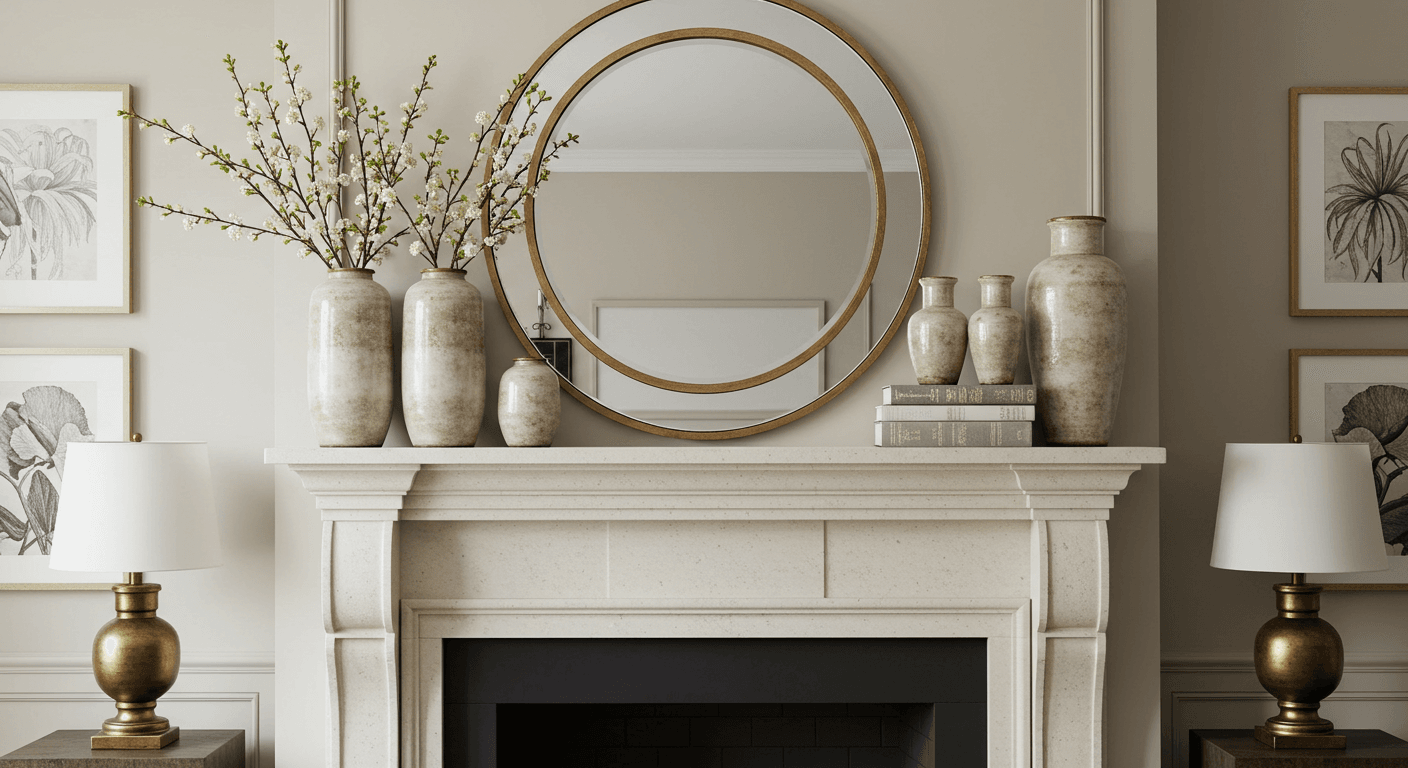
Designers often use symmetry to bring calm and order to a space. Imagine two matching candleholders flanking a central mirror — simple, balanced, elegant. But they also know how to break symmetry intentionally for a more dynamic, editorial look.
Pro Tip: Keep the visual weight balanced, even if the objects aren’t identical. A tall vase on one side can be balanced by layered frames and books on the other.
A flat row of identical objects looks unfinished. Designers use layers and varied heights to create depth and interest.
Pro Tip: Overlap objects slightly to avoid everything sitting in a straight line — this adds a curated, dimensional look.
Designers rarely throw random colors together. Instead, they choose a tight palette—usually 1–2 main colors plus neutrals—to make the mantel look intentional.
Example: A white mantel with soft greenery and gold accents looks polished. Add a few terracotta vases and suddenly it’s warm and modern — without needing 10 different colors.
Every designer starts with an anchor — a single large focal point that centers the composition. This could be:
Once the anchor is in place, everything else supports it. This keeps your mantel from feeling like a random assortment of items.
Pro Tip: The anchor should take up roughly two-thirds of the mantel width for ideal proportions.
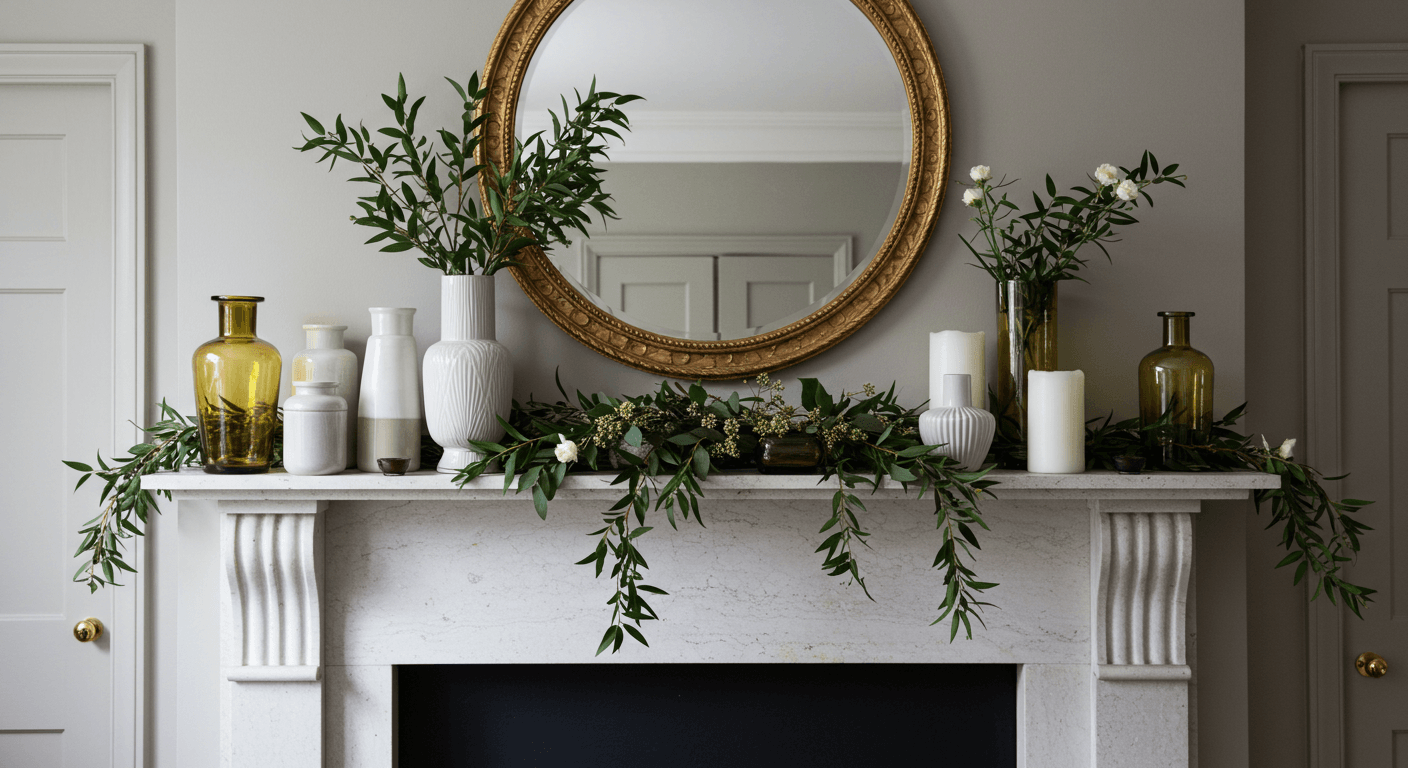
Styling your mantelpiece like a designer doesn’t mean buying everything new — it means approaching it intentionally. Follow these simple steps to transform any blank shelf into a curated focal point.
Before you add anything, wipe the slate clean.
Designers always begin with a fresh start so they can see proportions clearly without distraction.
Pro Tip: If your mantel has permanent fixtures (like sconces or built-in shelving), treat them as part of your anchor and plan around them.
Your anchor sets the tone for the entire mantel. Without one, your styling can look aimless.
Popular anchor options:
Budget tip: Thrift stores, flea markets, or DIY canvases are fantastic places to find affordable statement pieces. Oversized items are usually cheaper than buying multiple small ones.
Pro Tip: Your anchor should be centered and roughly two-thirds the width of your mantel for balanced proportions.
Once the anchor is in place, begin building layers around it using a mix of heights and textures.
Arrange items in clusters of odd numbers (usually 3 or 5), which naturally feel more balanced. Overlap items slightly to create a curated, magazine-worthy depth.
Pro Tip: Vary your spacing. Avoid lining everything up like soldiers — loosen the arrangement for a more organic designer feel.
No mantel is complete without natural or textural elements. Greenery brings life, texture adds interest, and both elevate even inexpensive accessories.
Options include:
Budget tip: You can forage from your garden or use inexpensive faux greenery for a long-lasting effect.
Pro Tip: Let some stems drape or spill slightly over the edge of the mantel to soften hard lines and make the arrangement feel natural.
Editing is what separates a good mantel from a designer one. Once everything is in place:
A curated mantel is about breathing space as much as beautiful objects.
Pro Tip: Snap a quick photo of the finished look — imperfections and imbalance are often easier to spot in pictures than in person.
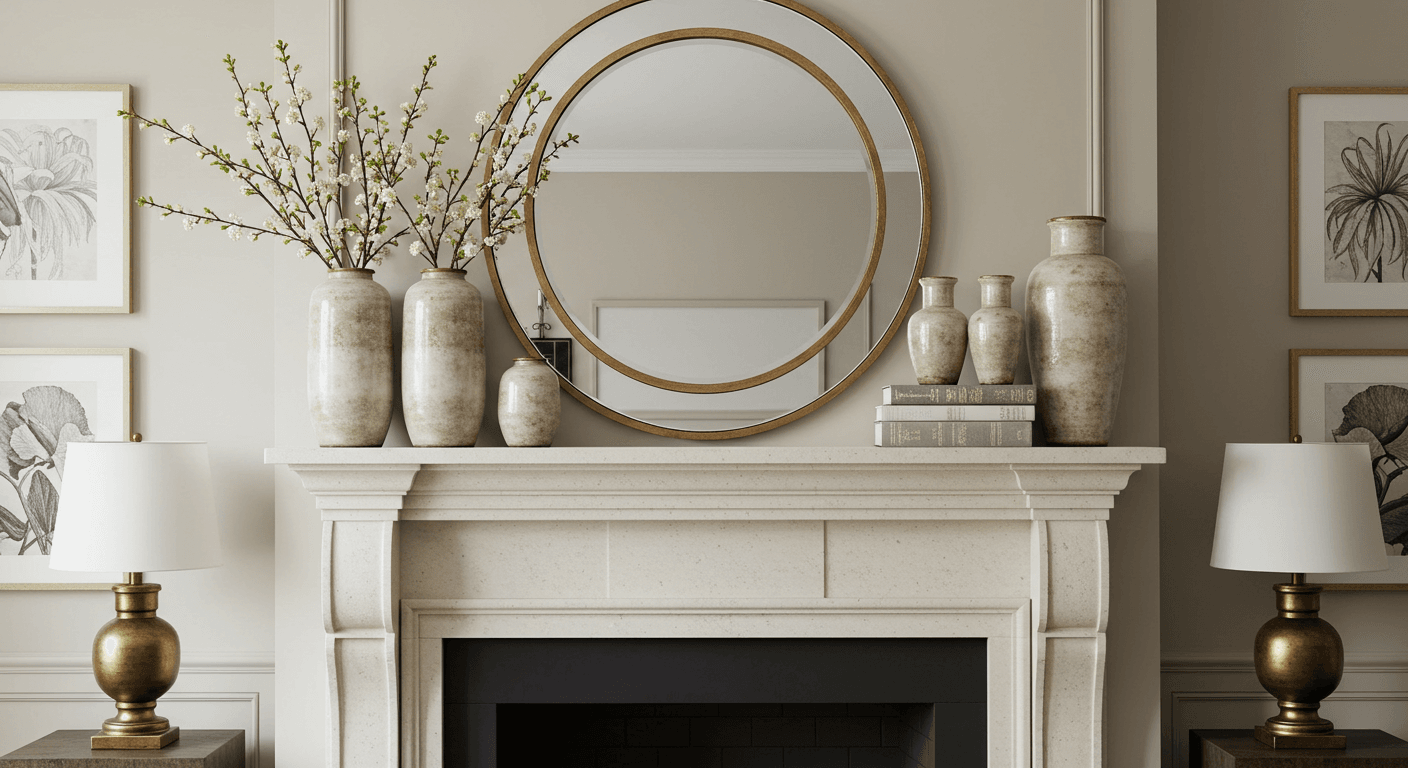
A beautifully styled mantel doesn’t have to break the bank. In fact, many designers rely on affordable finds, DIY projects, and seasonal swaps to refresh spaces without expensive makeovers. Here’s how you can do the same:
Thrift shops, flea markets, and antique fairs are gold mines for mantel décor.
Pro Tip: Go thrifting with a color palette in mind — it keeps your finds cohesive instead of random.
Designer art can be expensive, but you can get a similar effect for a fraction of the cost.
Budget Hack: Oversized art instantly elevates a mantel. A single large DIY canvas costs less than buying multiple small décor pieces.
Designers love seasonal refreshes, and mantelpieces are perfect for that. Instead of redoing your entire room, simply rotate a few accent items throughout the year:
You can reuse your base items (mirror, frames, vases) and only swap small accents — budget-friendly and endlessly flexible.
Pro Tip: Store seasonal décor in labeled boxes so you can easily restyle each year without rebuying.
Some of the most beautiful designer mantels feature foraged natural elements, which cost absolutely nothing.
Bonus: Foraged décor adds irregularity and charm that mass-produced items can’t replicate.
You don’t always need “decor” to decorate. Look around your home — many items can double as mantel styling pieces:
Pro Tip: Designers often “shop their own home” before buying anything new — it’s sustainable, budget-friendly, and surprisingly effective.
A beautifully styled mantel doesn’t have to break the bank. In fact, many designers rely on affordable finds, DIY projects, and seasonal swaps to refresh spaces without expensive makeovers. Here’s how you can do the same:
Thrift shops, flea markets, and antique fairs are gold mines for mantel décor.
Pro Tip: Go thrifting with a color palette in mind — it keeps your finds cohesive instead of random.
Designer art can be expensive, but you can get a similar effect for a fraction of the cost.
Budget Hack: Oversized art instantly elevates a mantel. A single large DIY canvas costs less than buying multiple small décor pieces.
Designers love seasonal refreshes, and mantelpieces are perfect for that. Instead of redoing your entire room, simply rotate a few accent items throughout the year:
You can reuse your base items (mirror, frames, vases) and only swap small accents — budget-friendly and endlessly flexible.
Pro Tip: Store seasonal décor in labeled boxes so you can easily restyle each year without rebuying.
Some of the most beautiful designer mantels feature foraged natural elements, which cost absolutely nothing.
Bonus: Foraged décor adds irregularity and charm that mass-produced items can’t replicate.
You don’t always need “decor” to decorate. Look around your home — many items can double as mantel styling pieces:
Pro Tip: Designers often “shop their own home” before buying anything new — it’s sustainable, budget-friendly, and surprisingly effective.
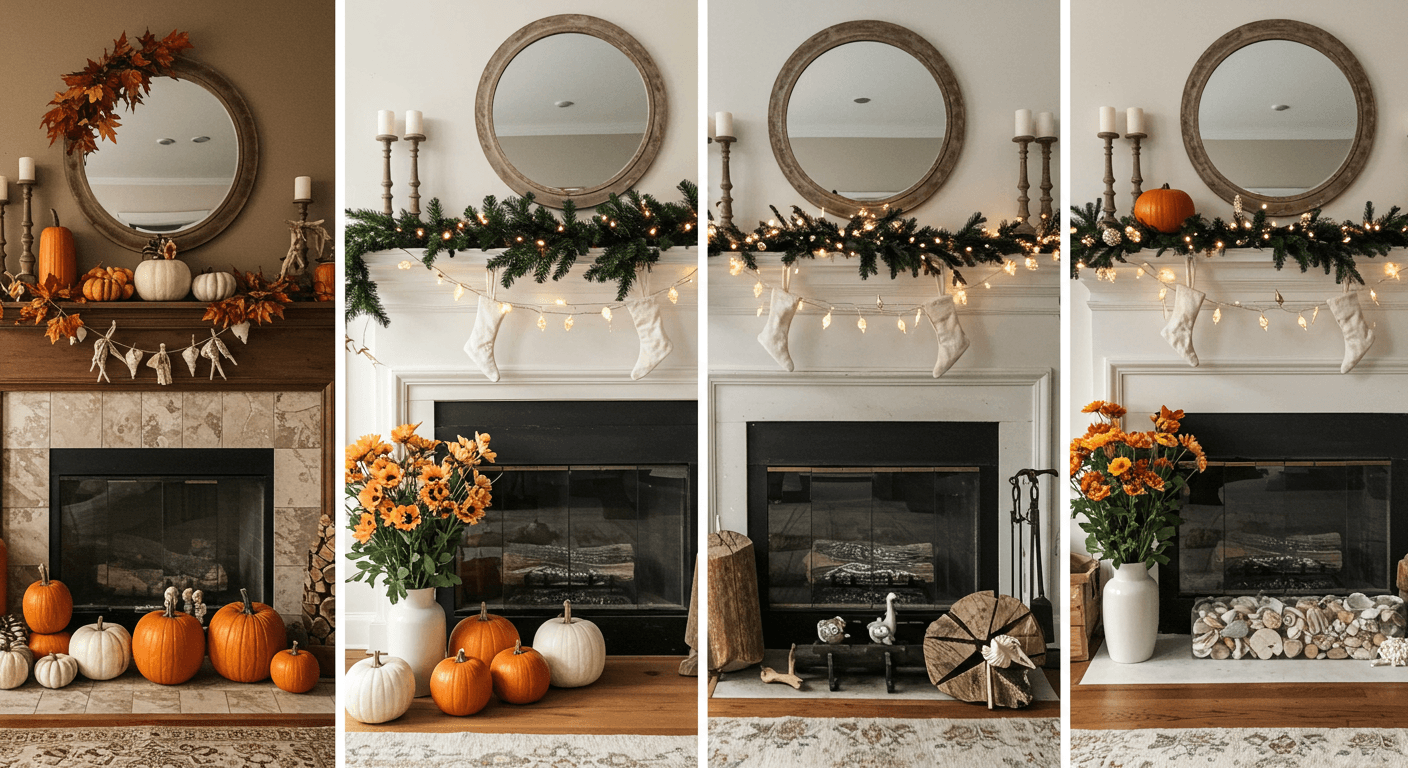
Styling your mantelpiece isn’t one-size-fits-all. The principles stay the same — balance, layering, a strong anchor — but the theme brings the personality. Below are a few designer-inspired themes you can recreate, whether you love clean minimalism, rustic charm, or modern drama.
For lovers of sleek, timeless design, a black and white palette creates a gallery-like focal point.
Key Elements:
Designer Tip: Keep spacing intentional and let negative space do the heavy lifting. This look thrives on clean lines and restraint.
This theme blends warmth, nostalgia, and natural textures. It’s perfect for creating a cozy, lived-in feel that still looks curated.
Key Elements:
Designer Tip: Mix metals (e.g., brass + iron) with soft textures (wood, linen) to get that layered, designer farmhouse vibe.
If your style leans elegant and bold, modern glam is all about luxurious textures and striking accents.
Key Elements:
Designer Tip: Glam mantels shine with strategic lighting — use sconces, candles, or LED spotlights to highlight metallics and glass.
For those who love to refresh their space throughout the year, a seasonally rotating mantel keeps things playful and dynamic.
Key Elements:
Designer Tip: Keep a core arrangement and change just 3–4 accents each season. This gives you a “new” mantel without starting from scratch.
Before you grab that vase or stack another frame, here are a few insider tricks designers swear by when styling mantelpieces 👇
Grouping items in odd numbers (usually 3 or 5) creates a natural, balanced composition. Designers often combine a tall, medium, and small object in one cluster to build rhythm and visual flow.
Even affordable décor looks elevated when it’s grouped intentionally. Place similar tones together (e.g., whites and woods, golds and greens) or cluster by texture (smooth ceramics with rough stone). This gives the display a cohesive designer look.
Your anchor item should always dominate. Everything else is there to support it — not compete. If the mantel starts to feel chaotic, step back and remove anything distracting from that main piece.
Lighting is a subtle but powerful design tool.
One of the biggest differences between amateur and designer styling is editing. Designers know when to stop. Give your décor space to breathe — negative space makes your objects shine.
A floating shelf styled with the same principles works just as well. Position it at eye level, use a mirror or art piece as an anchor, and layer décor thoughtfully beneath.
Swap out seasonal accents or change the anchor artwork. Even just adding greenery or candles can create a fresh new vibe without spending much.
Mirrors are timeless and add light — but they’re not mandatory. Artwork, wreaths, or even architectural salvage pieces make excellent anchors too. The key is scale and placement.
Seasonally works best for most people (4 times a year). But if you love variety, monthly mini-refreshes with small items (flowers, candles, garlands) can keep things fun and personal.
Overcrowding. Too many small, uncoordinated items make mantels look cluttered. Stick to a strong focal point, limit your palette, and edit ruthlessly.
A beautifully styled mantelpiece doesn’t require expensive décor or professional help — it just needs intentional choices and a few timeless design principles.
Start with a clean slate, anchor your arrangement with a strong focal point, layer thoughtfully, and sprinkle in texture and greenery. Whether you lean toward rustic farmhouse, sleek minimalism, or glamorous modern, these steps work for every style and budget.
And remember: the best mantelpieces tell a story. Mix new with old, elevate everyday objects, and embrace seasonal changes. Your mantel should reflect your personality, not just trends.
So grab that mirror, raid your thrift finds, and start styling like a designer — without spending like one.
Let’s Build
Contact us todayGet daily tips and tricks for making your best home.
2025 Green to Gorgeous