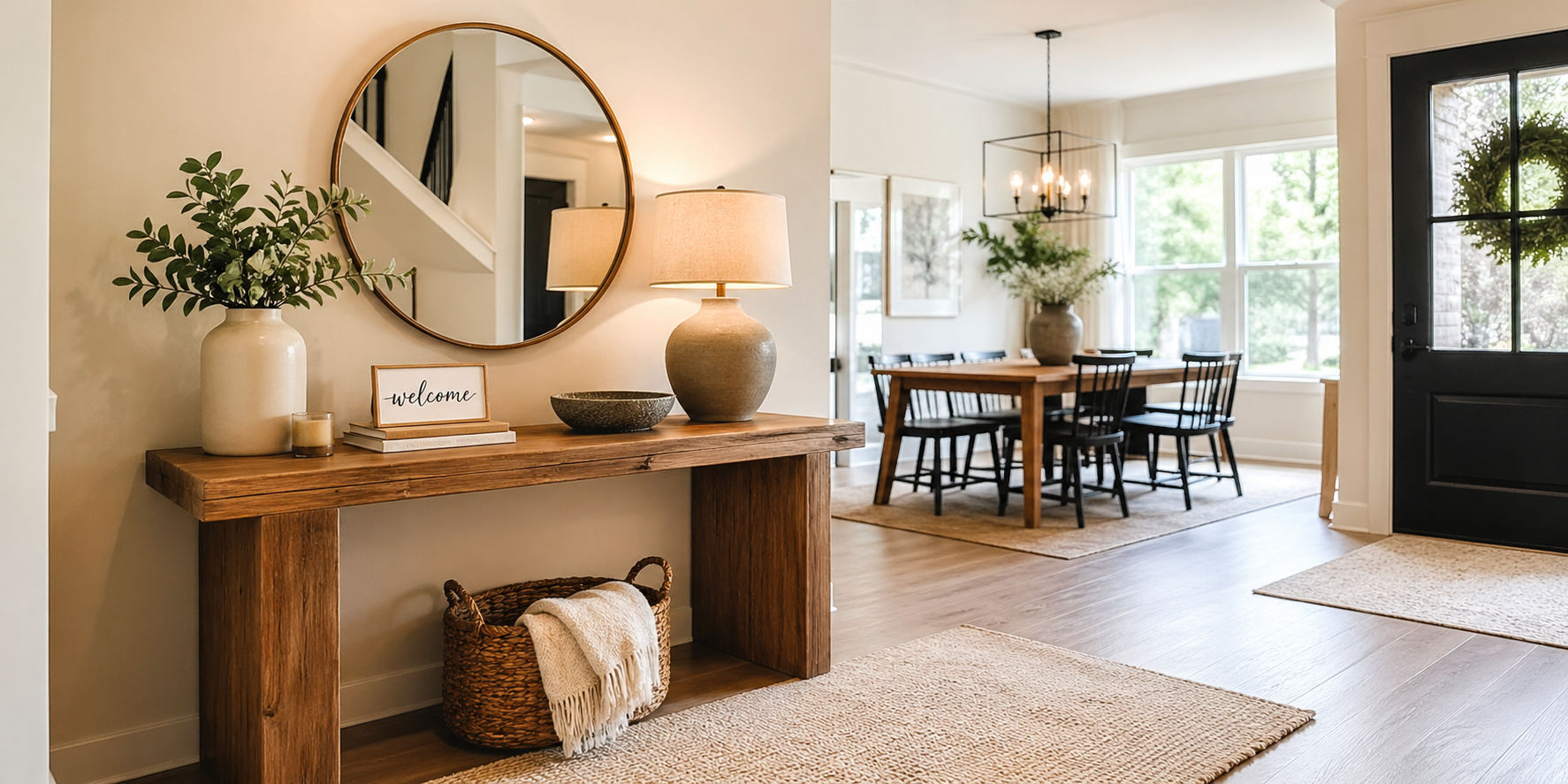
You push open the front door, arms full of groceries, keys still jingling — and for one brief moment before you step inside, you see your home the way a guest does. That first glance lands on the entryway table, and in three seconds flat it tells a story: about your taste, your mood, the kind of home you’ve made. It’s the smallest stage in the house, and yet it carries enormous weight.
The entryway table — whether it’s a sleek marble console, a repurposed vintage bureau, or a narrow floating shelf — is where your home’s personality gets its opening line. Done well, it feels curated without being cold, styled without looking staged. Done poorly, it becomes a catch-all for mail, keys, and forgotten odds and ends that quietly drain every ounce of ambiance from your front room.
The good news is that getting it right doesn’t require a designer budget or a full weekend overhaul. It comes down to understanding a handful of principles — layering heights, mixing textures, balancing proportion — and then choosing pieces that truly mean something to you. Whether you’re working with a narrow city apartment hallway or a wide farmhouse foyer, there’s a combination here that will transform that first impression from forgettable to something beautiful.
These 17 entryway table decor ideas range from bold and sculptural to quietly minimal, from seasonal and playful to timeless and architectural. There’s no single right answer — only the one that makes you feel good every time you walk through the door.
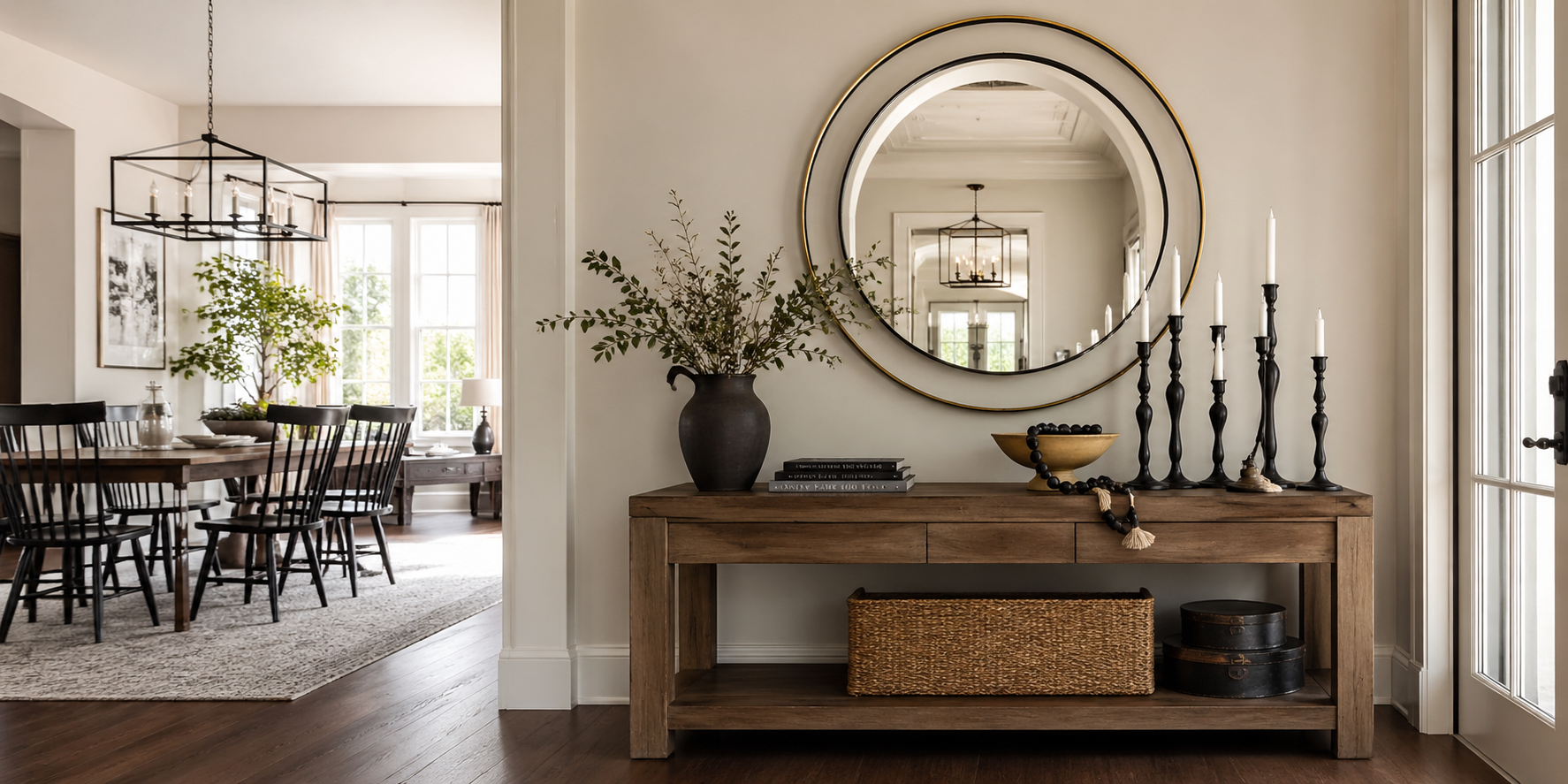
There’s a reason mirrors and entryways have been paired together since the age of grand European foyers — the combination solves two problems at once. A well-placed mirror bounces light deeper into what’s often the darkest corner of a home, while the reflection itself adds a sense of spatial depth that makes narrow hallways feel broader than they are. The trick is not to stop at just the mirror.
Flank it with two or three sculptural candle holders at varying heights — think one tall pillar style in aged brass, one medium hurricane lantern in smoked glass, and one low votive cluster — so the arrangement reads as a full composition rather than a floating rectangle on a wall. Choose a mirror with an interesting frame: a chunky plaster border, a sunburst in antique gold, or a raw-edge carved wood surround all add character without competing with the candles below.
When candles are lit in the evening, the reflection doubles the warm glow and turns an ordinary entryway into something deeply atmospheric. For daytime impact, choose unscented pillar candles in neutral tones — cream, charcoal, or terracotta — so the sculptural silhouettes do the work regardless of whether they’re burning. This layered approach works equally well on a narrow console table or a wider credenza, scaling up or down with the number of candle holders you include.
Nothing communicates “someone lives and cares here” quite as immediately as a fresh or thoughtfully dried botanical arrangement. The key word in that sentence is thoughtfully — a sad gas station bunch of carnations in a plain plastic vase does the opposite. What you’re after is something that looks like it was gathered with intention: a loose cluster of garden roses and eucalyptus in late spring, a generous bunch of dried pampas grass and cotton stems for autumn, or a sculptural arrangement of bare curly willow branches in winter.
The vessel matters as much as the botanicals inside it. A heavily textured ceramic vase — one with a rough, matte finish in sage green, warm terracotta, or deep slate — gives the arrangement an anchor that looks deliberate and artistic. The roughness of the clay plays beautifully against the softness of petals or the whisper-fine filaments of dried grass. Position the vase slightly off-centre on your table rather than dead centre, and let the arrangement spill gently to one side for a relaxed, organic feel. If you prefer low-maintenance options, high-quality dried or preserved botanicals now achieve the same visual effect without the weekly refresh — preserved eucalyptus in particular holds its dusty sage colour for months and continues to release a faint herbal scent that greets guests at the door.
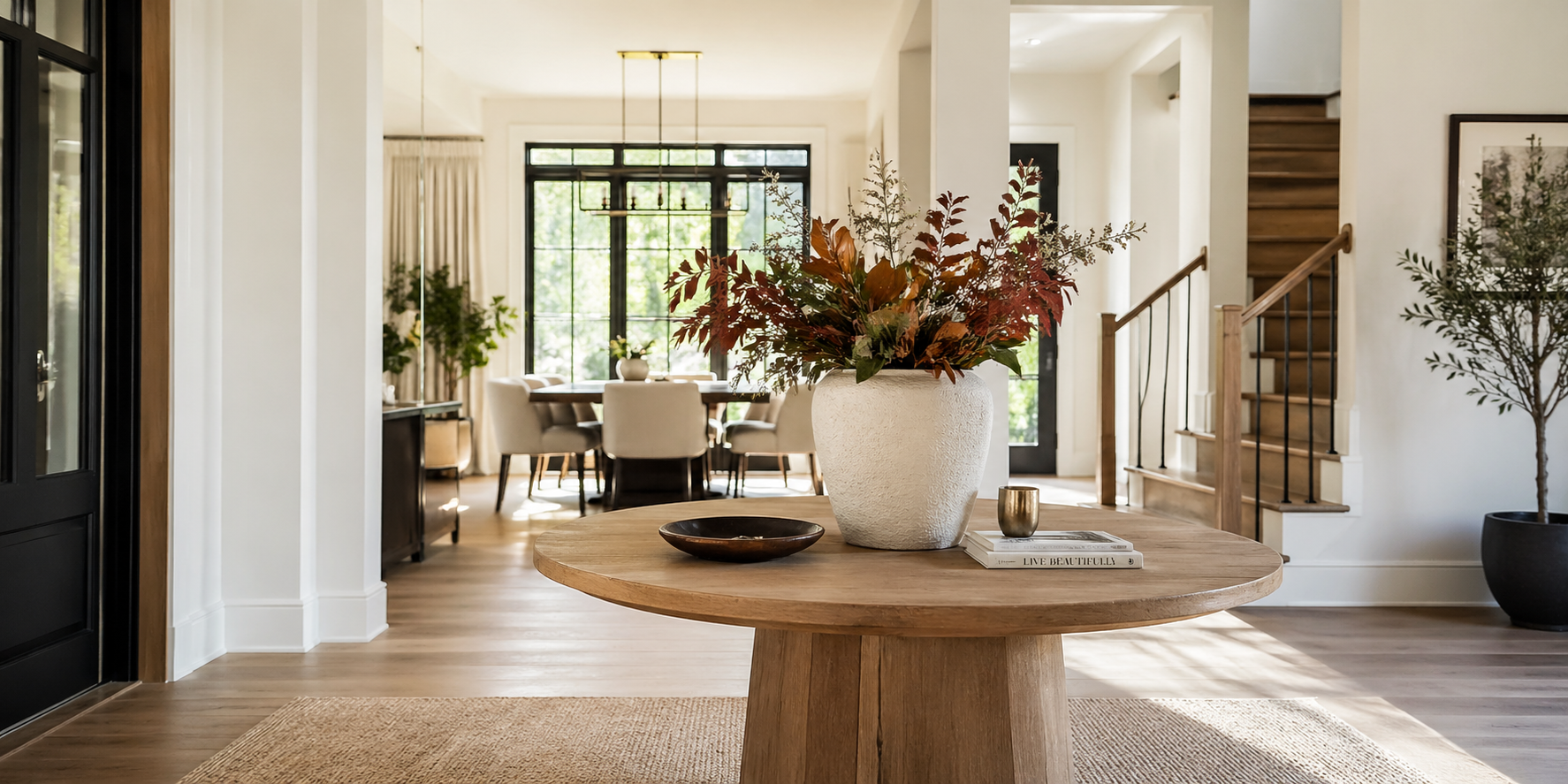
The monochromatic entryway vignette is one of those approaches that looks deceptively effortless — and it’s actually one of the most designer-approved routes to a cohesive display. The idea is to work within a single colour family but vary the value (light to dark), the material (matte to glossy, rough to smooth), and the height of every object on the table. In a warm white scheme, for instance, you might arrange a tall, creamy ceramic amphora-style vase, a mid-height woven rattan ball, a low stack of linen-covered books, and a small white marble dish holding a few round stones.
Every object occupies the same tonal neighbourhood, but because the textures and heights differ so dramatically, the arrangement avoids the flatness that a single-material monochromatic scheme can create. The visual logic is clear: when colour contrast is removed as a tool, your eye instinctively reads the composition through shape and texture instead, which tends to produce a more sophisticated, gallery-quality result. This approach works in virtually any palette — deep charcoal and slate for a moody foyer, warm cognac and rust for an earthy entryway, or soft blush and dusty rose for a romantic, feminine space. The key is to resist the urge to add a contrasting accent “for interest” — trust the tonal restraint, and the arrangement will hold its own.
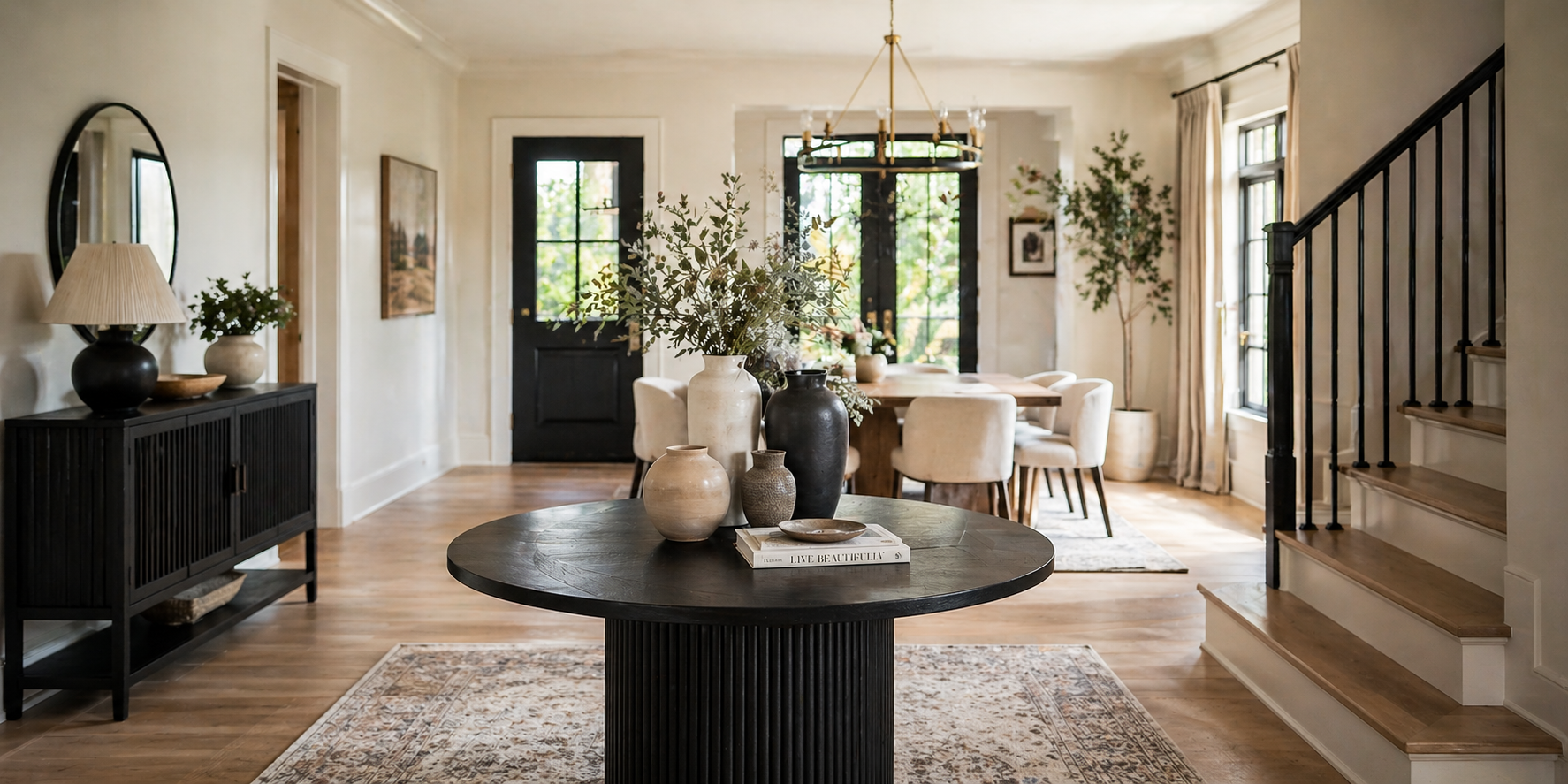
If your home leans toward relaxed, coastal, or natural design — the kind of space where linen curtains sway gently and bare feet on warm floorboards feel absolutely right — a driftwood and lantern display is one of the most authentic ways to bring that energy into the entryway. True coastal style is built on found materials and honest textures, not on mass-produced nautical prints and plastic lighthouses.
A piece of weather-smoothed driftwood positioned horizontally at the back of the table establishes an organic, sculptural focal point that nothing store-bought can replicate. In front of it, a cluster of two or three lanterns in varying sizes — black powder-coated iron, aged rattan, or clear glass with a brass frame — carries warm candlelight or battery-operated flame bulbs.
Complete the vignette with a small terracotta pot of sea grass, a shallow dish of smooth river stones, or a handful of coral-coloured shells collected from an actual beach (not a gift shop bin). What makes this work is material honesty: every element should feel like it came from the natural world or from a well-travelled home. The textures — rough driftwood, woven rattan, smooth stone — create a conversation between surfaces that grounds the display in something tactile and real.
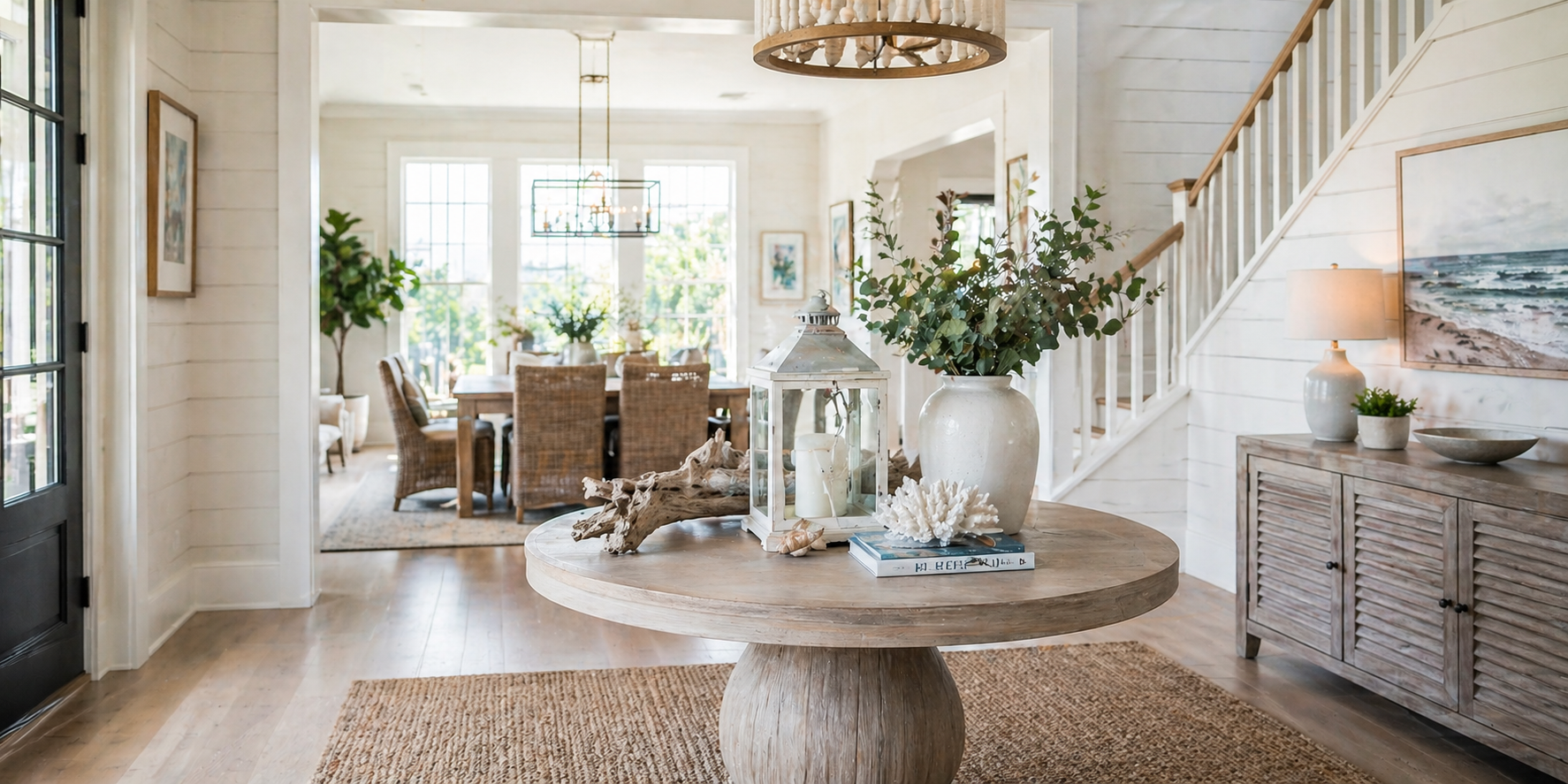
Leaning art rather than hanging it is one of the easiest ways to give a styled space a more relaxed, lived-in quality — the kind of “I’ve thought about this, but I haven’t overthought it” energy that characterises the best casual-luxe interiors. Against the back edge of an entryway table, a single framed print, painting, or photograph leaning loosely against the wall turns a flat surface into something that feels more like a considered installation than a piece of furniture with objects on it.
The frame should have presence: a chunky gallery-wrap canvas, a wide linen mat in a black or natural wood frame, or an ornate gilded frame holding something unexpected (an abstract print, a botanical illustration, a black-and-white portrait) all work beautifully. Below the art, an accent tray in marble, lacquered wood, or hammered metal collects the smaller items — a small stack of books, a candle, a decorative dish — and prevents the table surface from feeling scattered. The tray acts as a physical frame for the lower layer of your composition, containing the objects and giving them a shared base that unifies even mismatched pieces.
This is particularly useful if you tend toward collected, eclectic styling, where the tray provides the visual editing that keeps everything from tipping into chaos. For practical entryway function, the tray also becomes the perfect holder for keys and a small wallet.
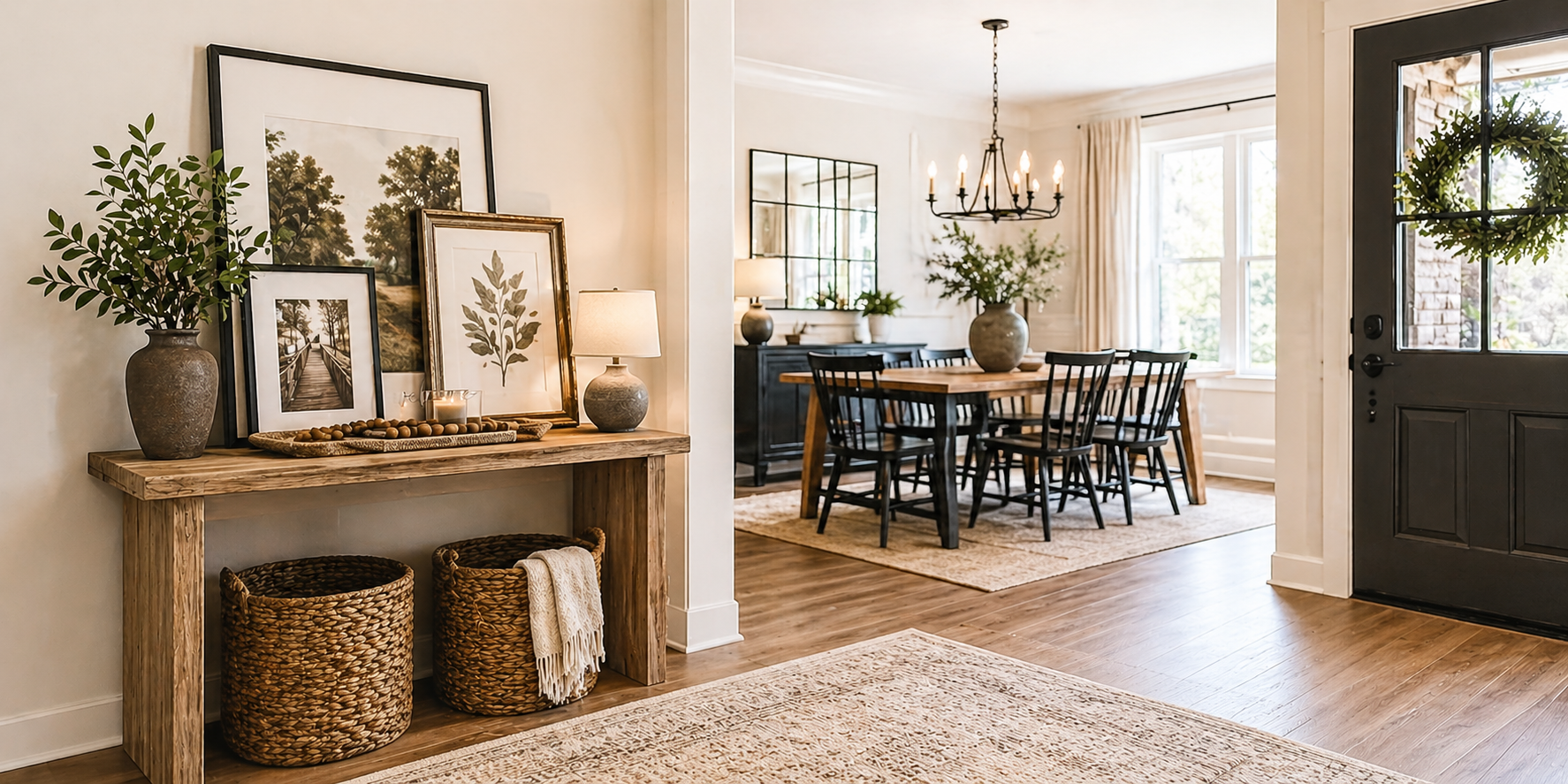
Books are one of the most underused decorative tools in the home, possibly because we tend to think of them as purely functional objects. But a carefully edited stack of two or three hardcovers — chosen for the colour of their spines as much as their content — becomes one of the most reliable foundations in a styled vignette.
Remove the dust jackets to reveal the often more interesting cloth bindings underneath in navy, forest green, cream, or cognac. Stack them horizontally with the tallest on the bottom, spine facing out or turned in for a minimal effect, and place a sculptural object on top: a small cast-iron animal, a geometric stone bookend that’s migrated off the shelf, a tiny ceramic bowl holding a collection of acorns or sea glass. The stacked books do two things simultaneously: they add height variation at an intermediate level (taller than a dish, shorter than a vase), and they bring intellectual warmth and visual interest through their textures and typography.
A stack of three books topped with a small bronze sculpture tells a story about the people who live here in a way that a generic decorative set never could. This approach works on any size table and bridges the gap between minimalist and maximalist styling, depending on how many other elements surround it. For a truly cohesive look, echo the colour of the book spines somewhere else in the composition — in the vase, the tray, or the base of a lamp.
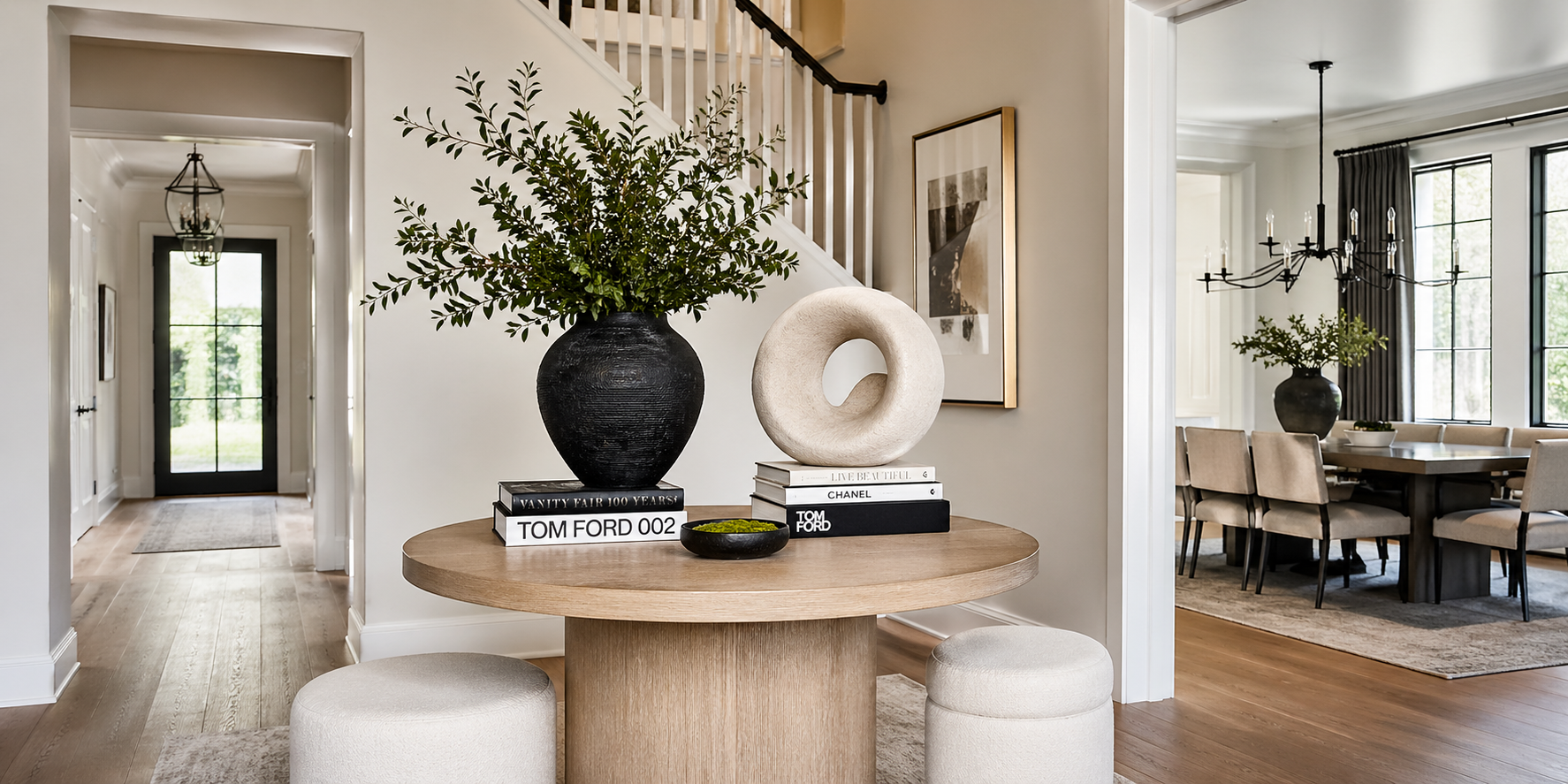
There’s a particular kind of life and movement that only plants can bring to a styled surface, and trailing varieties — pothos, string of pearls, trailing philodendron, or English ivy — are especially well suited to entryway tables precisely because they do something static objects can’t: they grow, they move slightly in a breeze, and they remind you that something living is here.
Position a trailing plant in a warm metallic pot — aged brass, antique copper, or brushed gold — near the corner of the table and let the vines spill naturally over the edge and down toward the floor. The cascade creates a vertical element that extends the composition beyond the table surface itself, drawing the eye up and then down in a satisfying arc. Pair the plant pot with other warm metallic accents — a small brass tray, a set of gold-toned bookends, a copper candlestick — so the metals read as intentional rather than accidental.
The key is to keep the metallic finish consistent: mixing too many different metals in a small surface display can feel chaotic. One dominant finish (say, antique brass) with occasional variations in depth (a burnished gold, a dark bronze) reads as sophisticated layering. According to the Royal Horticultural Society, trailing pothos (Epipremnum aureum) is among the most adaptable houseplants for low-light indoor spaces, making it a practical as well as beautiful choice for entryways that often receive indirect light.
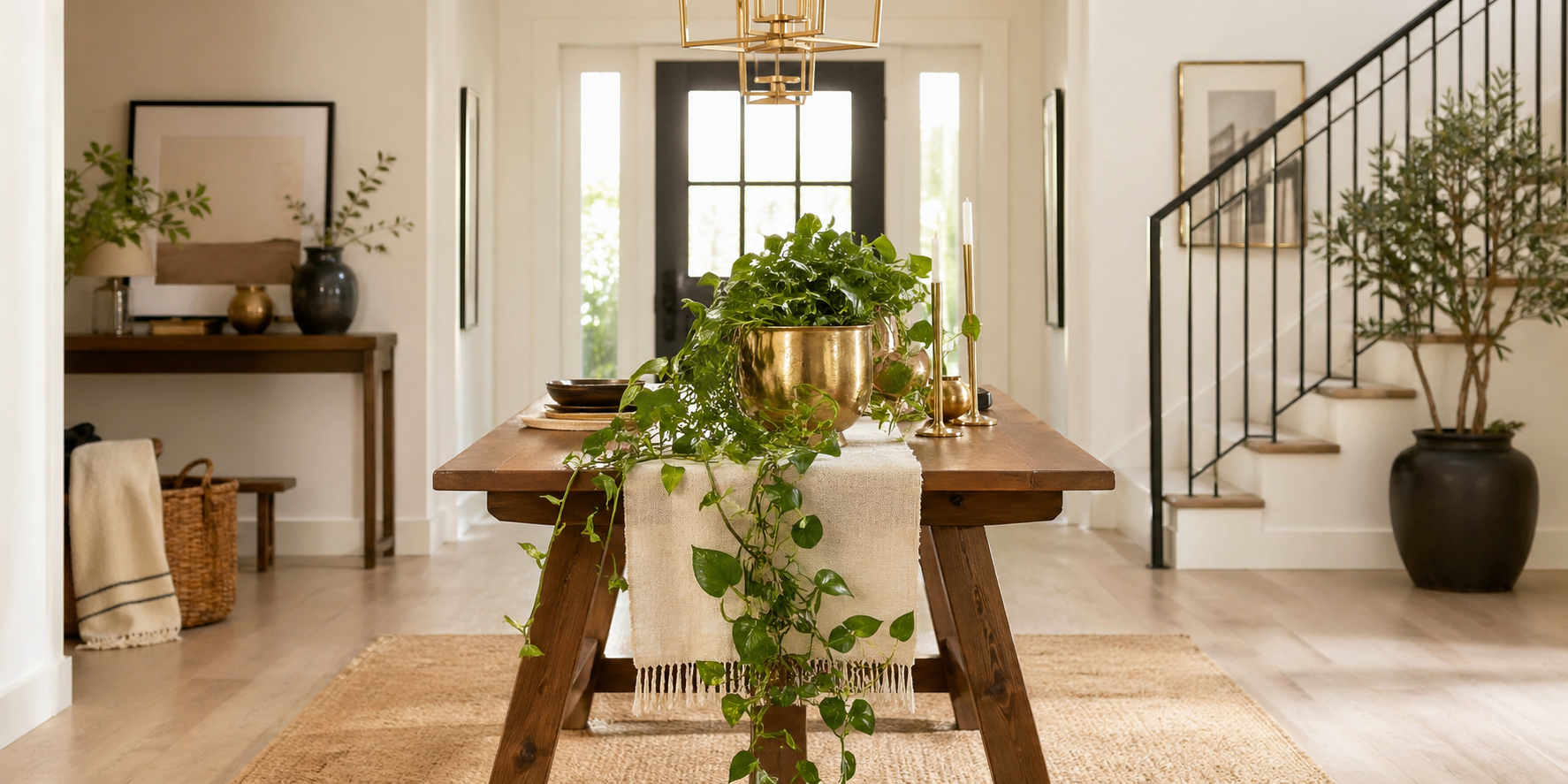
An oversized wall clock positioned directly above an entryway table transforms the entire wall into a single cohesive installation rather than a surface with objects sitting on it. The clock provides height, graphic presence, and a functional focal point that works in almost every style direction — a large industrial gear clock suits urban lofts and converted warehouse apartments; an ornate French-inspired clock face in aged cream suits traditional or transitional interiors; a minimalist black and white dial on a raw concrete disc suits the Japandi or Scandinavian-leaning home.
Below the clock, two matching table lamps — one at either end of the console — create the symmetry that naturally directs the eye to the centred clock above. Flanking lamps are one of the oldest and most effective compositional tricks in interior design, providing visual anchors that frame whatever is displayed between them and creating a warm pool of light at eye level when switched on in the evening. Choose lampshade shapes and finishes that complement the clock’s material language: linen shades in off-white work with almost everything, while black shades add a more graphic, editorial quality. Between the two lamps, keep the table surface relatively restrained — a single low arrangement in a tray, or a cluster of small sculptural objects — so the clock above and the lamps flanking it remain the clear stars of the composition.
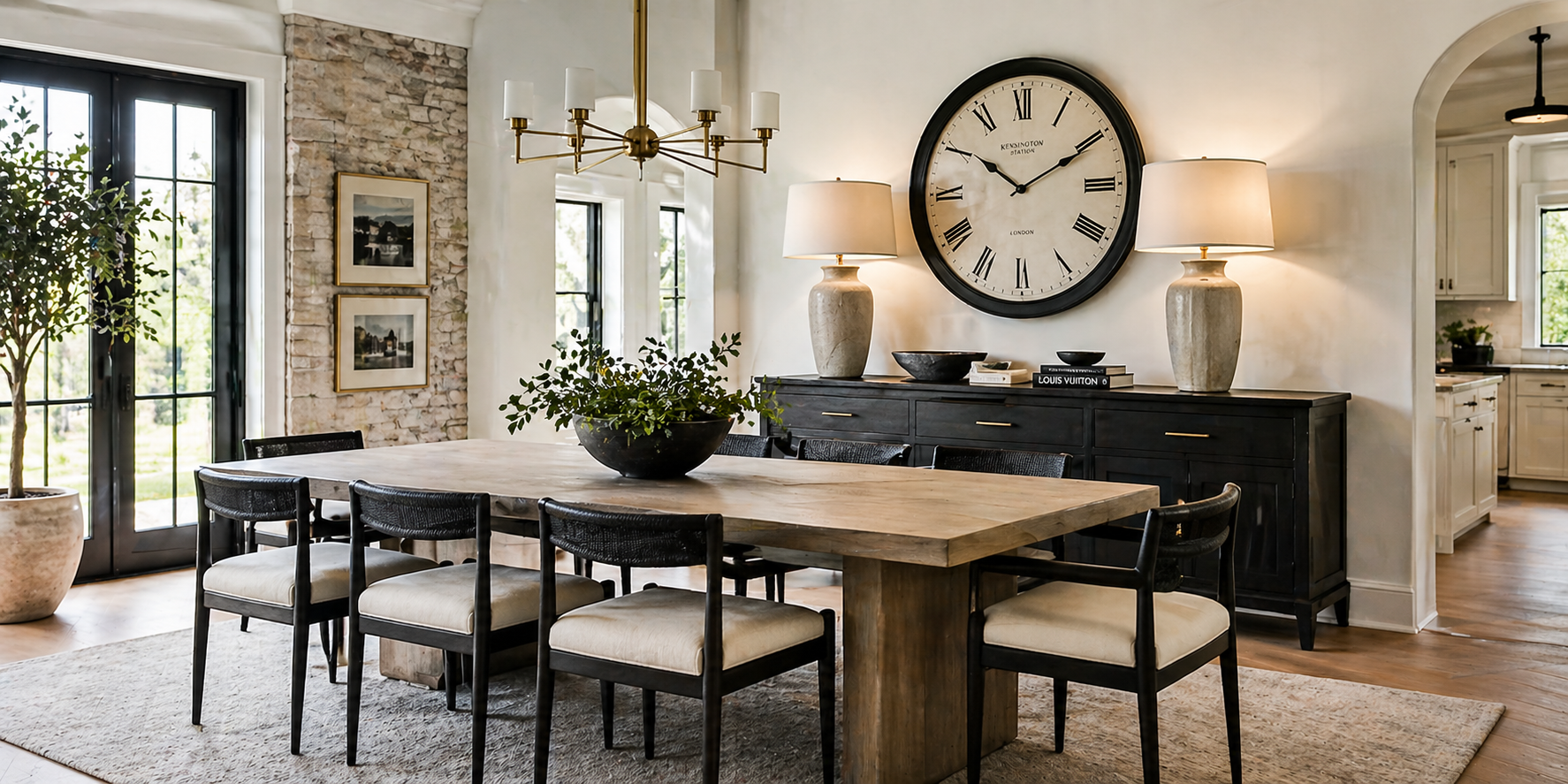
The Japanese design concept of ma — often translated as negative space or the meaningful pause — suggests that what you leave out of a composition carries as much weight as what you put in. Nowhere is this more powerfully demonstrated than in a single-stem entryway display. A tall, narrow bud vase in hand-thrown stoneware or matte black ceramic holds a single branch: one flowering cherry stem in spring, a single stem of amaryllis in deep winter, one branch of autumn maple leaves in October.
The vase itself should be beautiful enough to stand alone — look for pieces from small ceramic studios or Japanese pottery traditions where the irregularity of the glaze and the slight asymmetry of the form are features, not flaws. Place the vase on a small wooden or stone tray positioned off-centre on a clean, otherwise bare table surface. The restraint is deliberate and requires confidence — our instinct is always to add more — but the result is a display that feels breathtaking in its simplicity.
This is particularly effective in small entryways where a crowded surface would feel claustrophobic. The single stem also forces a seasonal mindfulness: you change it when the botanical changes with the season, and the act of refreshing it becomes its own small ritual. If you’re drawn to this kind of mindful, pared-back styling, you might also enjoy the principles at work in our guide to apartment entryway ideas for welcoming first impressions.
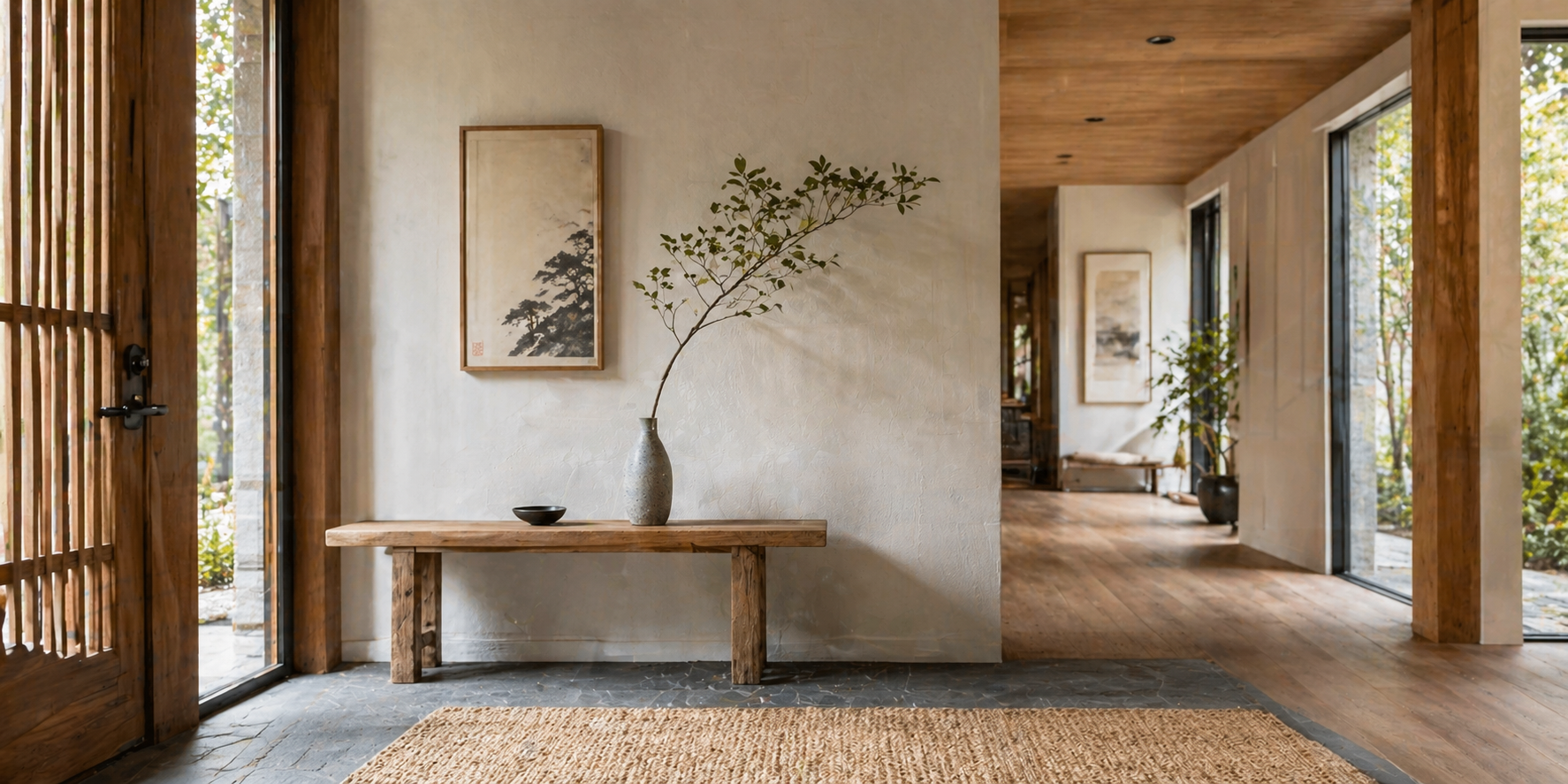
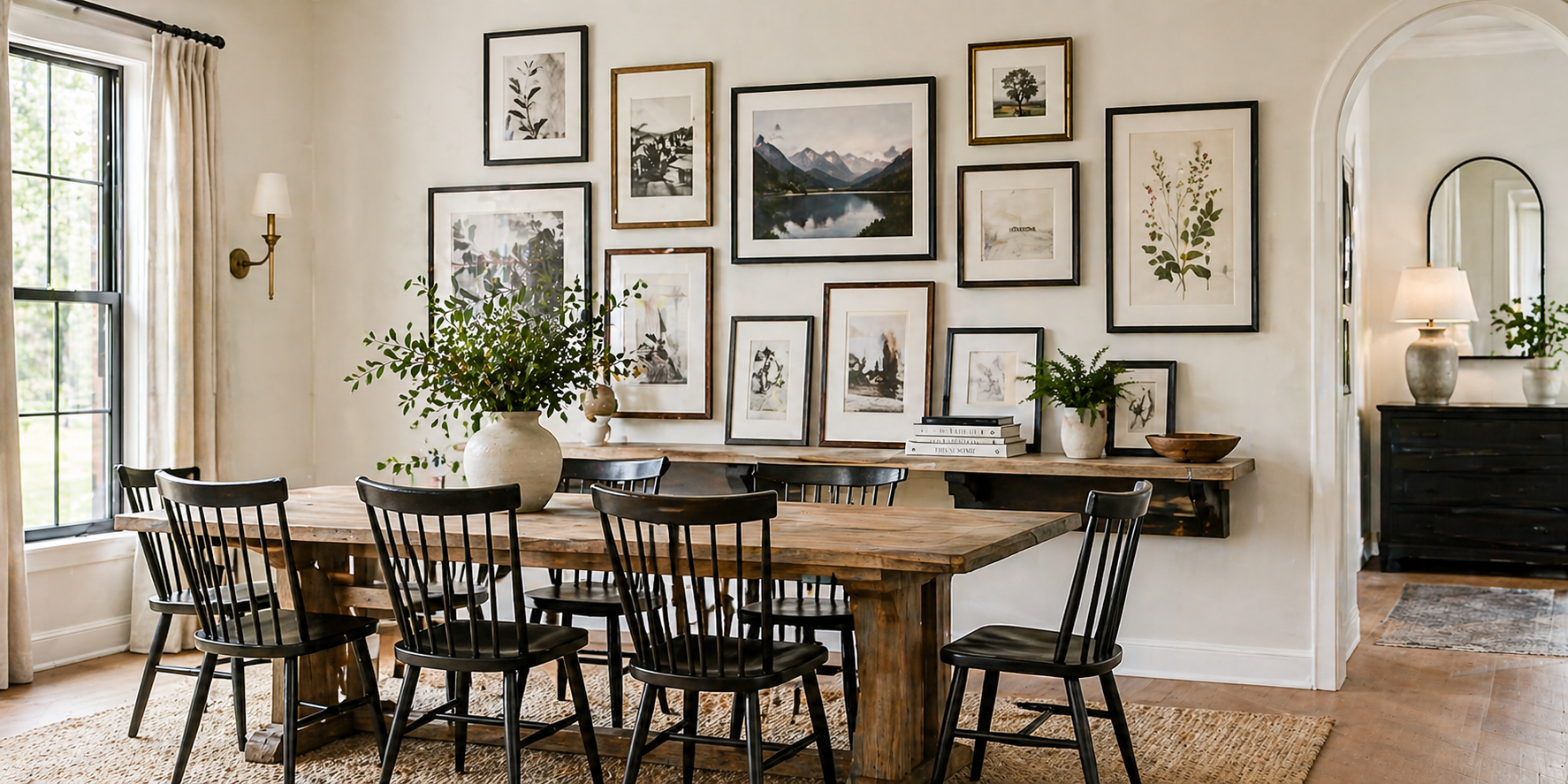
One of the most striking ways to style an entryway table is to treat the wall above it and the table surface below as a single continuous installation — a gallery wall that quite literally spills downward onto the furniture. On the wall, arrange a cluster of frames in different sizes: a mix of photographs, botanical prints, abstract art, and perhaps one or two small mirrors or decorative plates.
Let the lowest frame descend to just a few inches above the table surface, and then continue the composition on the table itself with small framed pieces leaning against the wall, a sculptural object that echoes a shape in one of the prints, and a plant or floral arrangement that bridges the gap between wall and table. The effect is immersive and personal — a gallery wall that behaves more like a living installation than a static décor moment. The key to keeping it from feeling chaotic is to establish a consistent through-line: a repeated colour (all frames in the same black or natural wood), a repeated subject (all botanical illustrations, all black-and-white photography), or a consistent mat colour.
The table pieces should feel like extensions of the wall conversation, not separate objects that happen to be nearby. This approach works especially well on a longer console table where you have enough horizontal space to create multiple zones across the display while maintaining cohesion through the gallery above.
Practical and beautiful are not opposites — a fact that the woven basket under an entryway table proves every single time. A pair of natural rattan, seagrass, or water hyacinth baskets tucked beneath the console holds umbrellas, dog leads, rolled magazines, or folded throws while contributing a warmth and texture to the lower third of the composition that an empty table base simply can’t achieve.
Above on the table surface, a grouping of potted succulents in terracotta or matte clay pots continues the earthy, natural material story established by the baskets below. Succulents are the ideal entryway plant: they need minimal light and even less water, and their sculptural geometry — the rosette of an echeveria, the columns of a haworthia, the trailing arms of a string of bananas — provides genuine visual interest without demanding much care. Cluster three or five pots of varying sizes together rather than spacing them evenly across the table (odd numbers always read as more natural than even groupings in decorative composition).
You can introduce one or two taller cacti or snake plant cuttings to add vertical scale to the succulent grouping. The overall effect is earthy, organic, and surprisingly sophisticated — a combination that works beautifully in homes with warm wood tones, exposed brick, or terracotta floor tiles, and equally well against a clean white painted wall.
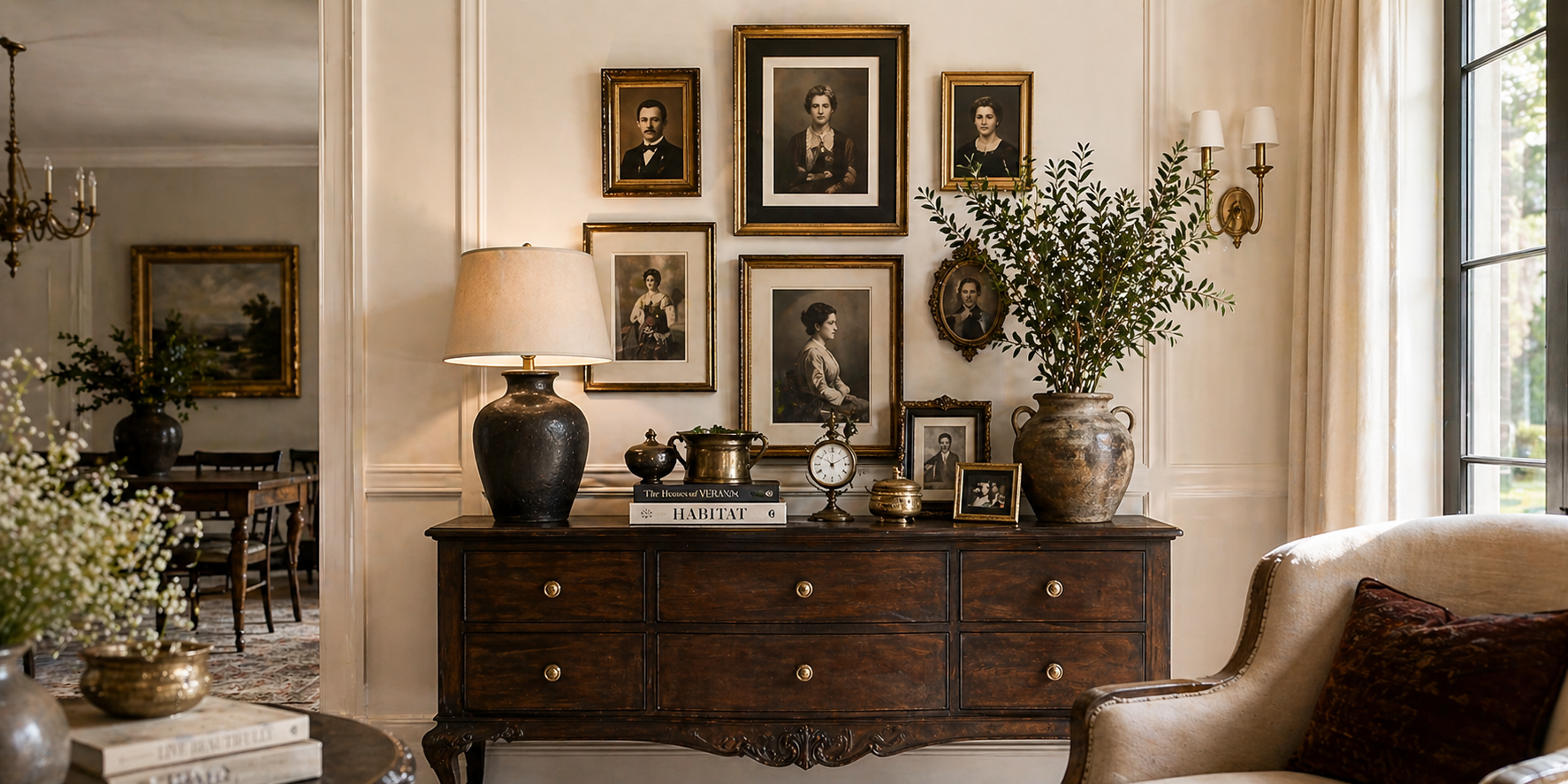
There’s a warmth that only collected, personal objects can bring — the kind that no amount of perfectly styled store-bought décor can replicate. A heritage-style vignette on an entryway table is built from pieces that have a story: a photograph of a grandparent in a tarnished silver frame, a ceramic piece picked up on a Mediterranean holiday, a small clock inherited from an aunt, a hand-embroidered textile folded beneath the display.
The styling principle here is curation with breathing room — not everything from the collection at once, but a carefully edited selection that feels connected by shared materiality or tone. Predominantly silver and aged gold frames group well together; objects in cream, sepia, and warm ivory tones naturally cohere.
Add depth with a small hand-painted or transferred-print tray beneath the collection to ground it, and introduce one fresh or living element — a single rose in a bud vase, a sprig of rosemary in a small vessel — to prevent the display from feeling like a museum exhibit. The heirloom entryway says something specific and personal about who lives here, and it is inherently unreplicable — no two people will have the same objects with the same meaning. For guests, it functions as an instant conversation starter; for the homeowner, it offers the daily pleasure of being surrounded by things that matter.
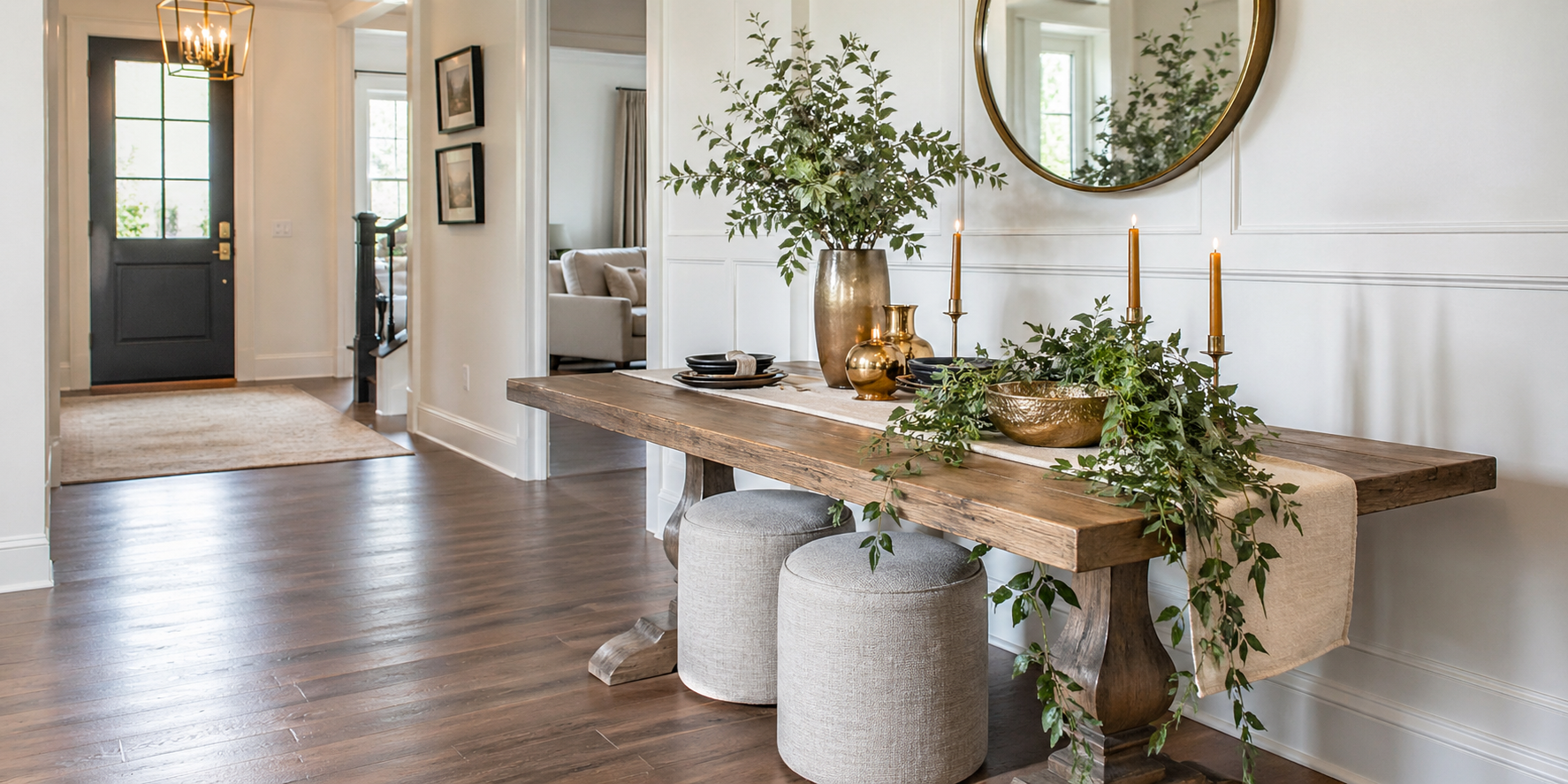
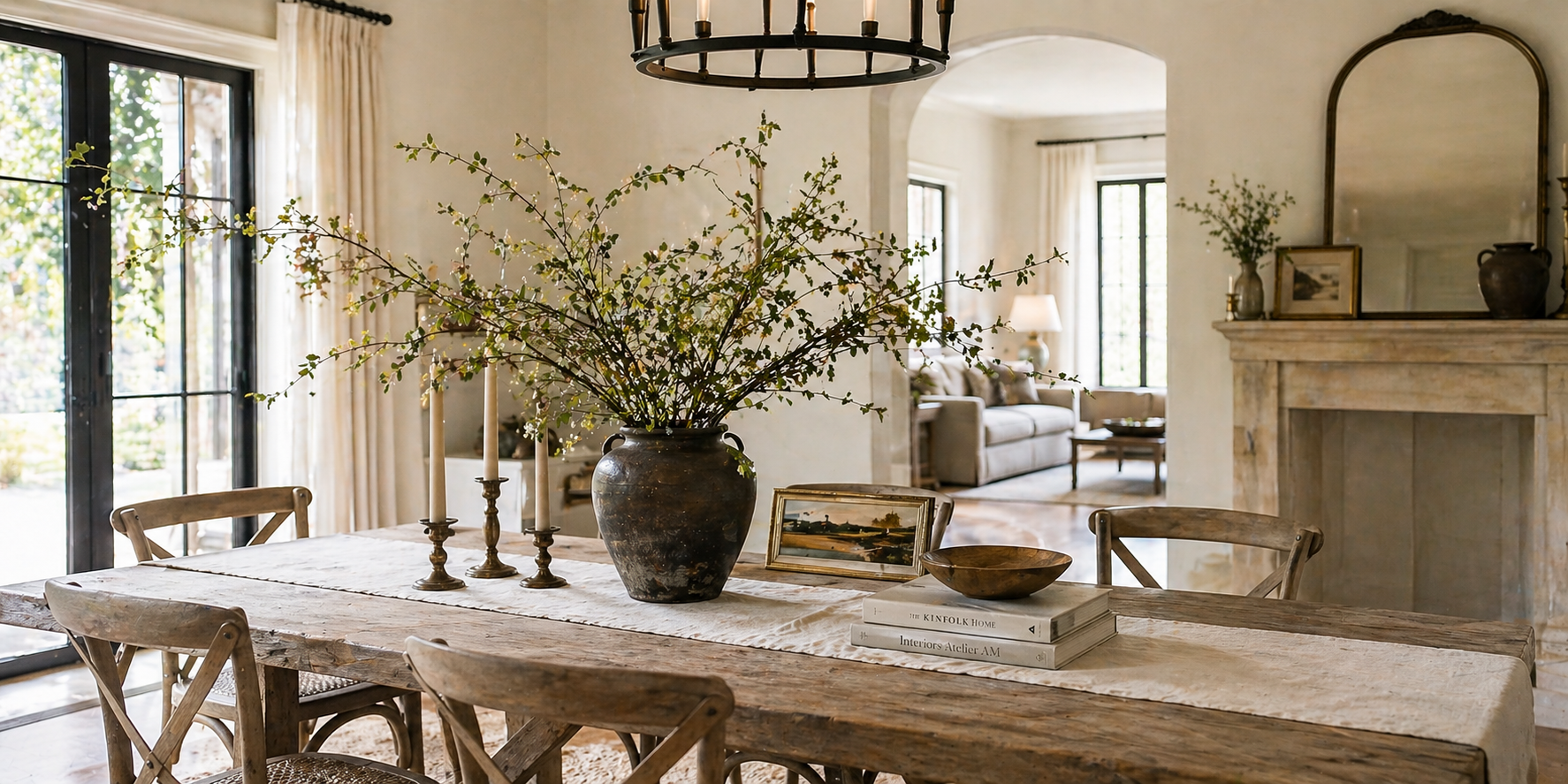
For entryways with higher ceilings or larger console tables, an architectural branch arrangement provides a scale of drama that a conventional vase-and-flowers display simply cannot match. Branches of curly willow, bleached white birch, contorted hazel, or magnolia — cut generously long and placed in a tall, weighty floor vase or a large ceramic pot at one end of the console — create a sweeping vertical statement that draws the eye upward and fills otherwise dead space between the table and the ceiling.
The branches’ natural curves and shadows cast beautiful patterns across a plain wall when backlit by evening light, turning the entryway into something almost theatrical. To balance the airy drama of the branches, anchor the table surface with a linen runner — a length of undyed or very lightly coloured linen laid lengthways down the centre of the console adds tactile warmth and provides a defined base for the smaller objects grouped around the branch arrangement’s pot. Choose objects that echo the organic quality of the branches: smooth river rocks, a hand-thrown ceramic bowl, a low candle pillar in natural beeswax. The contrast between the airborne drama of the branches above and the grounded simplicity of the objects below creates a beautifully resolved tension that reads as architectural in quality.
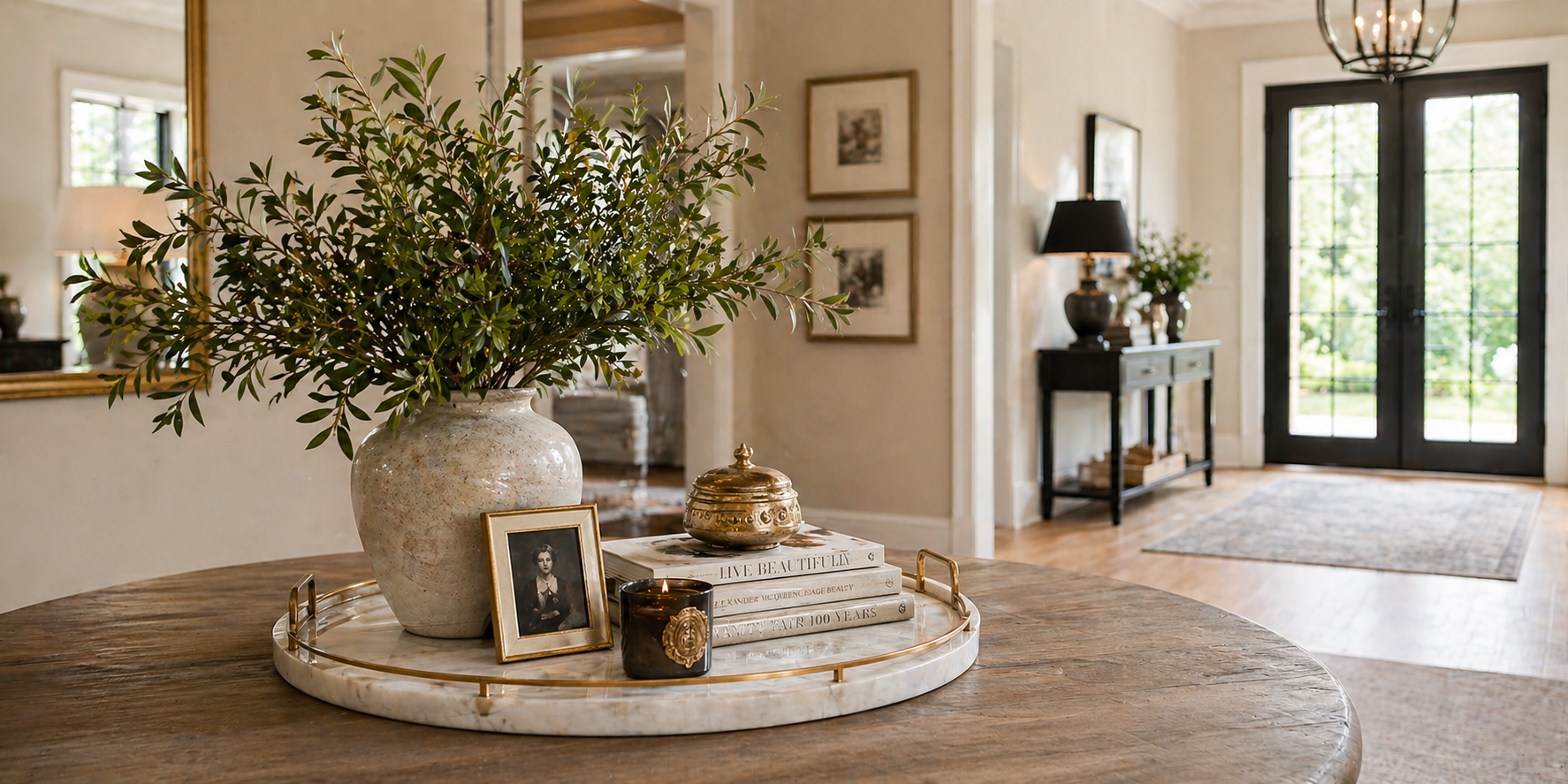
There is a particular quality of restraint at the high end of interior design that communicates luxury not through quantity but through material quality — and a marble tray vignette on an entryway table is one of the most accessible ways to achieve exactly that effect. A tray in white Carrara or grey Bardiglio marble — ideally with gently rounded edges and a polished rather than honed finish so it catches the light — becomes the foundation for a deliberately small, precisely chosen collection of objects.
Within the tray: a short gold-capped perfume bottle or two, a small gilded dish holding a few spare keys or a single ring, a cream pillar candle in a minimal brass holder, and perhaps one tiny sculptural piece in resin, alabaster, or cast metal. The tray’s job is to contain the composition and frame it as intentional — without the tray, the same objects scattered on a table surface look random; inside the tray, they read as a collection. Gold accents — matte or brushed rather than high-gloss for a more current feel — warm the cool grey and white tones of the marble and prevent the display from feeling clinical. If you enjoy thinking about how functional objects become decor through thoughtful arrangement, our post on console table ideas for functional style covers many of the same principles across different table styles.
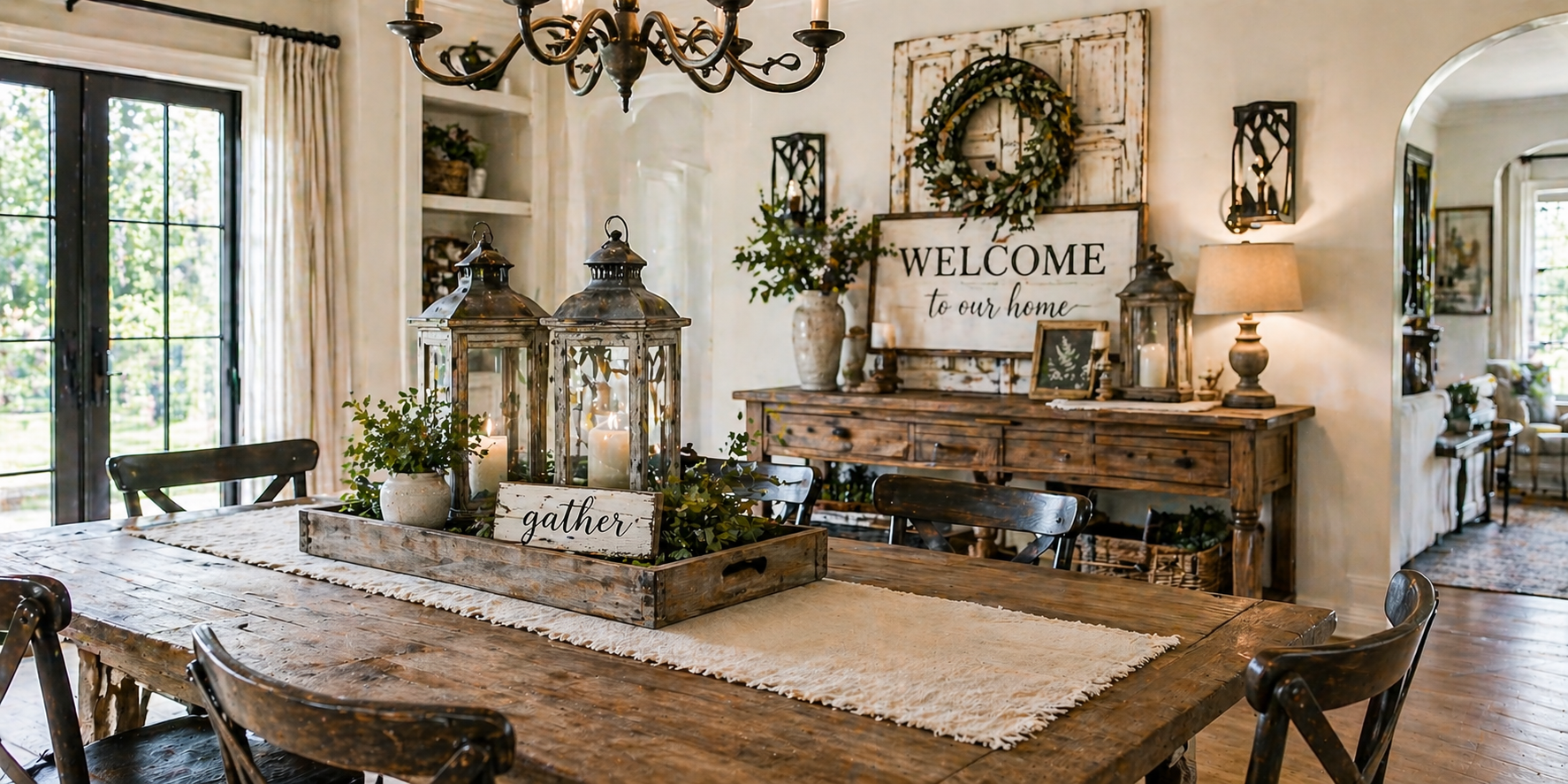
The farmhouse entryway table is at its best when it draws on truly worn, aged materials rather than mass-produced “distressed” finishes that fake the patina of time. The difference is in the detail: a weathered wooden sign with painted lettering that’s slightly uneven because it was actually hand-lettered, not printed; a lantern in oxidised iron that has aged naturally rather than been chemically treated to look that way; a ceramic crock with a visible throwing mark and an irregular lip.
These authentic details layer together to create a surface display that feels like it has history — like it was assembled gradually over years of living in a home that was loved and used. The key elements: one or two lanterns of varying size in black iron or aged brass, a short wooden sign or initial block, a small galvanised metal container holding a cluster of white or cream dried florals, and a natural fibre table runner or a folded grain sack textile beneath everything. Anchor the arrangement with a taller element at the back — a jar of long cotton stems, a framed vintage botanical print leaning against the wall, or a simple chalkboard with a handwritten seasonal message. Keep the colour palette tight: cream, black, warm wood tones, and one or two touches of sage green provide the cohesion that farmhouse styling depends upon.
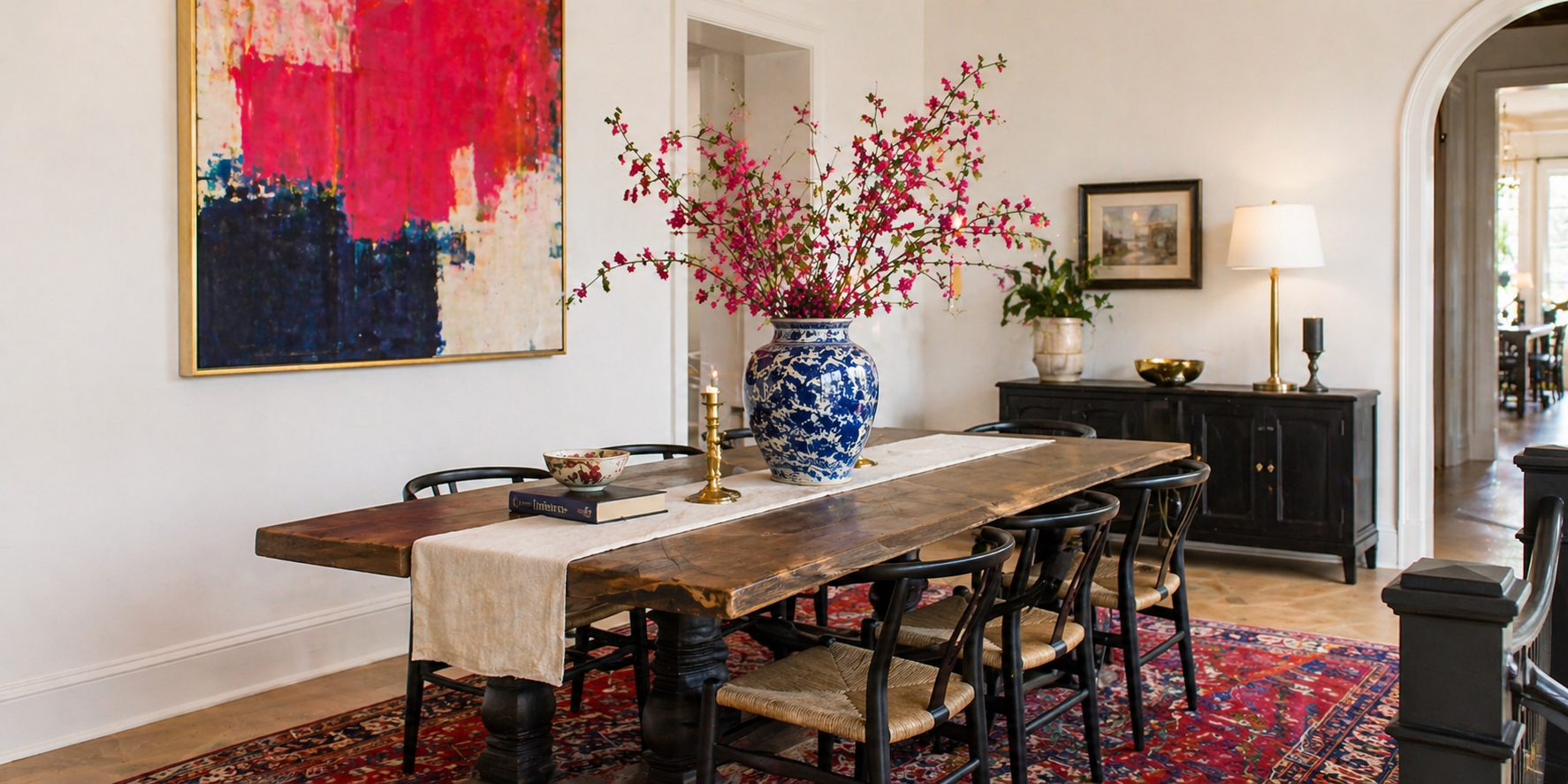
If your home tends toward neutral walls and quiet furnishings, the entryway table is one of the most strategic places to introduce a deliberate, confident burst of colour — precisely because it’s contained, easily changed, and seen by everyone who enters. A single large vase in a bold colour — cobalt blue, deep terracotta orange, forest green, or inky navy — immediately draws the eye and signals a design personality that the rest of the room can be more restrained about. Above the vase, lean or hang a piece of artwork that picks up and responds to the vase colour: a print with cobalt accents, an abstract canvas where the same orange appears in one corner, a photograph with a deep forest in the background.
The colour conversation between the object on the table and the art above it creates the kind of considered layering that makes a styled space feel like it was designed rather than simply furnished. The boldness works because it’s precise — everything else on the table should step back, perhaps just a low candle in a complementary neutral and a single stack of books in a tone that bridges the table surface to the vase colour. The art of the colour pop isn’t in choosing a bright colour — it’s in repeating that colour exactly enough times (two or three) that it reads as intentional rather than accidental.
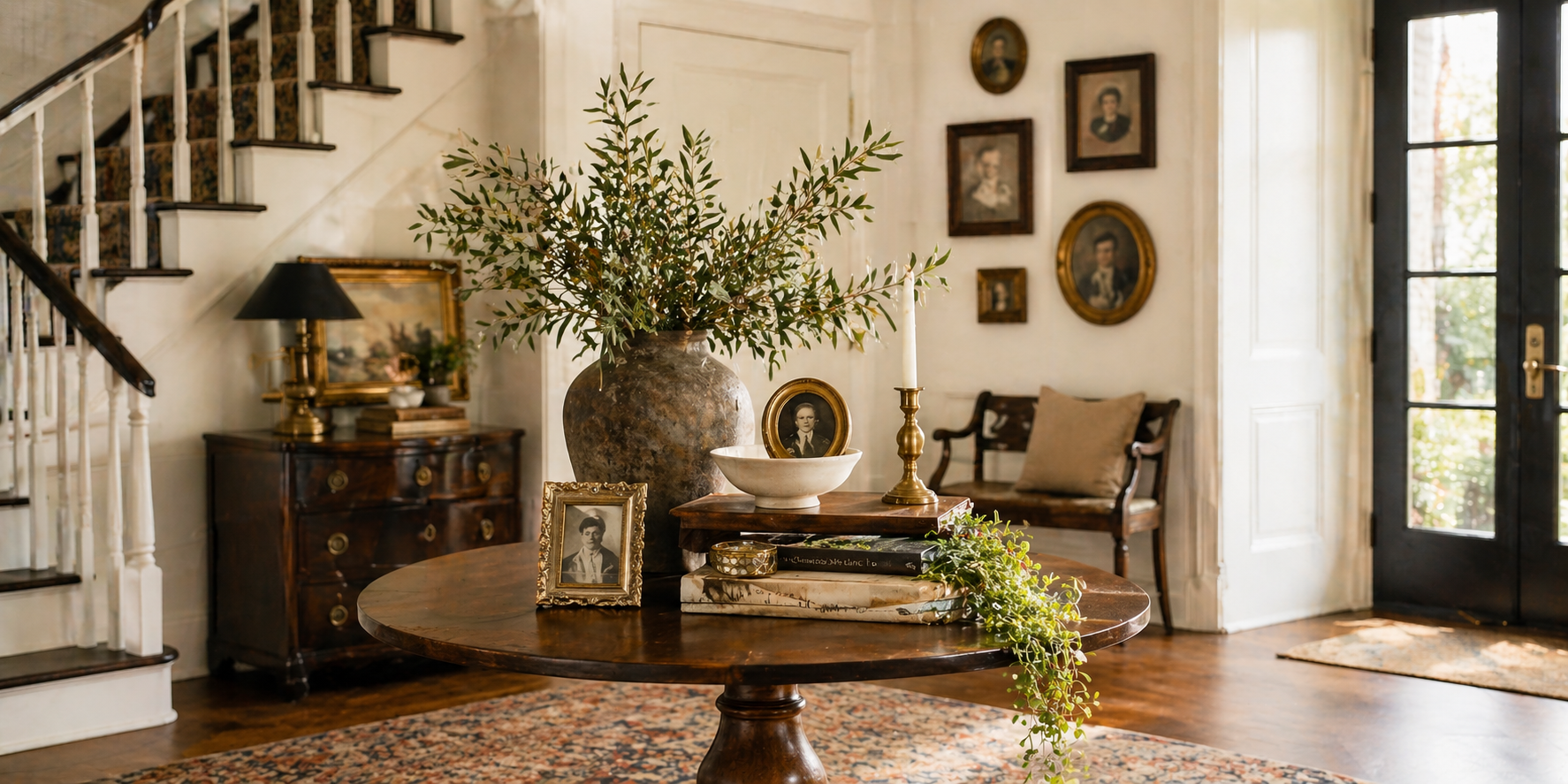
The most enduring principle of entryway table styling — and of all decorative vignette work — is the rule of varied heights. A flat arrangement of same-height objects, no matter how beautiful the individual pieces, reads as monotonous to the eye. What we instinctively find pleasing is a skyline: peaks, valleys, and gradual transitions.
A tiered display achieves this deliberately by using risers, stacked books, and object placement to engineer three distinct height zones across the table. In the tallest zone (towards the back): a vase, tall candlestick, or architectural branch. In the mid zone: a framed photograph, a medium sculptural object, or a small potted plant. In the lowest zone (front and sides): a tray with small objects, a single low candle, or a decorative bowl. A small platform riser — in wood, stone, or lacquered bamboo — lifts one or two mid-zone objects to exactly the height you need without requiring you to go searching for the perfect intermediate-sized piece. Many designers who work with tiered trays apply the same logic to flat surfaces, which is why our in-depth look at tiered tray decor ideas for stylish displays is worth exploring if you want to refine your layering further.
The goal is a composition that, when you step back and squint slightly, reads as a dynamic, interesting silhouette rather than a flat line of objects at the same height.
Your entryway table is the smallest room in the house and the most powerful first impression you make. Whether you’re drawn to the quiet drama of a single stem in a hand-thrown vase, the warmth of a lantern-and-driftwood coastal arrangement, or the confident colour conversation of a cobalt vase meeting matching artwork above — the right display makes your home feel finished, personal, and warmly welcoming the moment the door opens.
Start with one idea this weekend. Clear the surface of everything that’s landed there by accident, choose three objects with deliberate intention, and see how different it feels. The best displays are never truly finished — they evolve with the seasons, with new finds, with the way your taste keeps shifting. Bookmark the ideas here that felt like they were written for your home, and come back to them when the mood to refresh takes hold.
Let’s Build
Contact us todayGet daily tips and tricks for making your best home.
2025 Green to Gorgeous