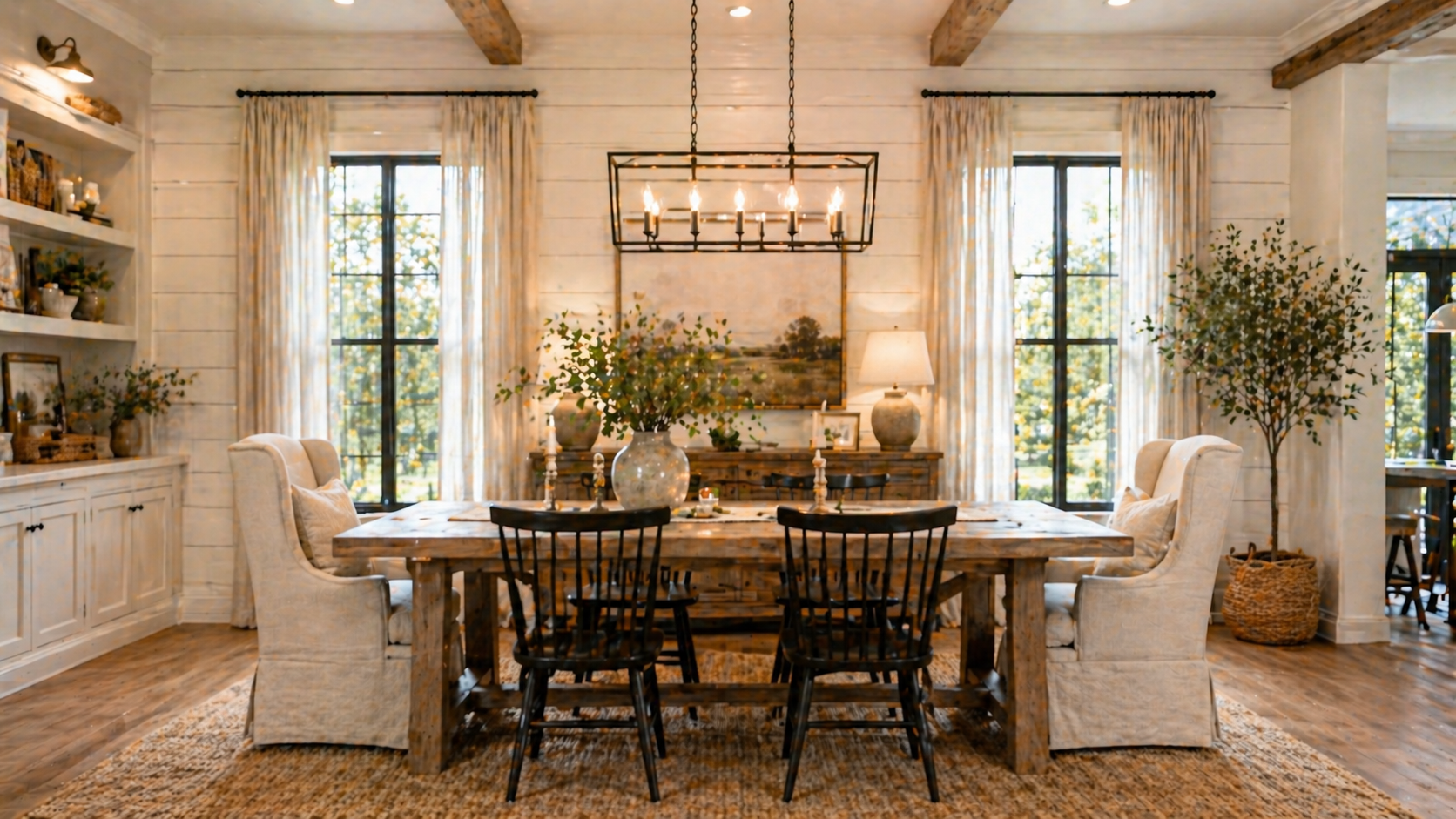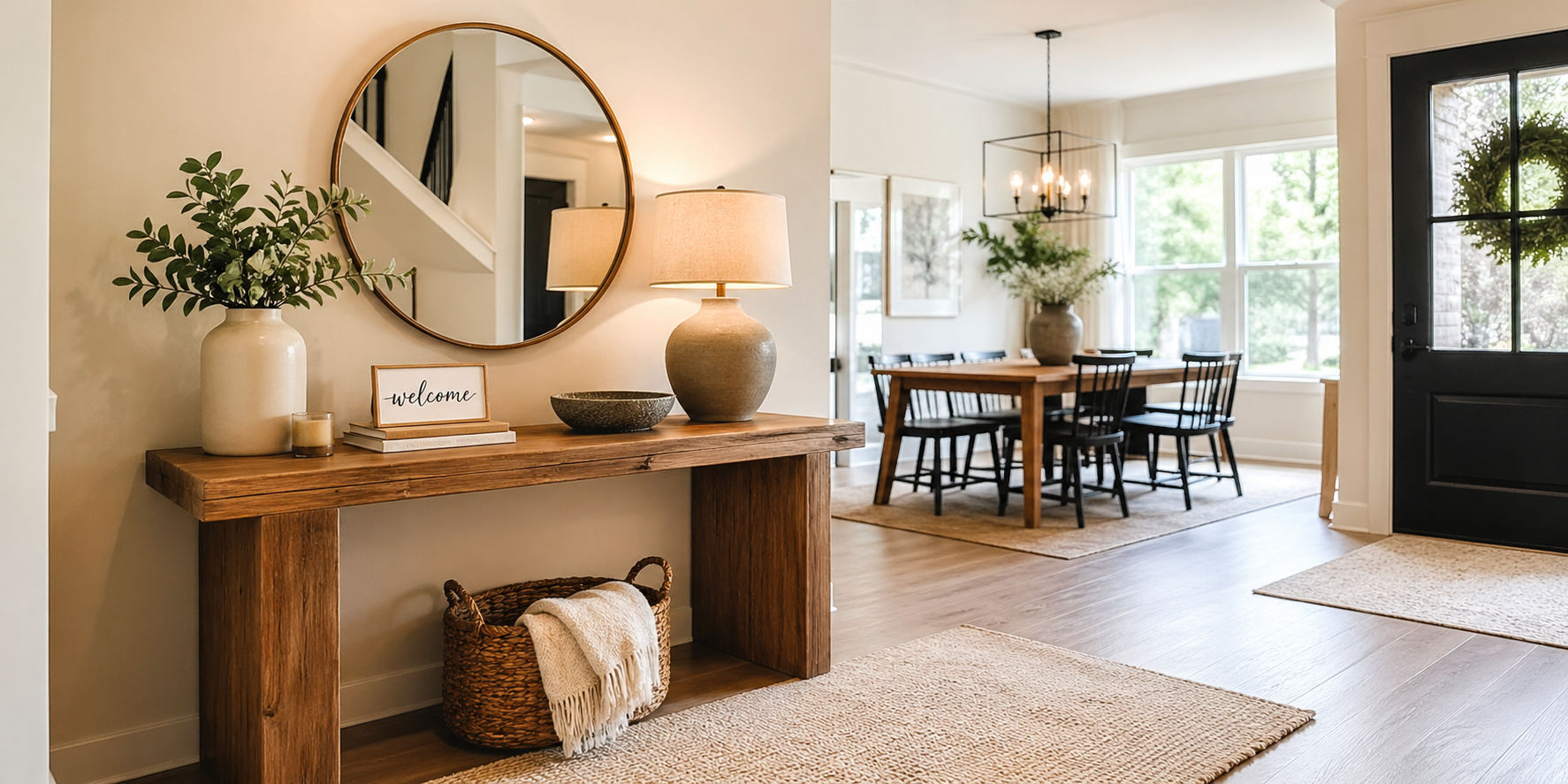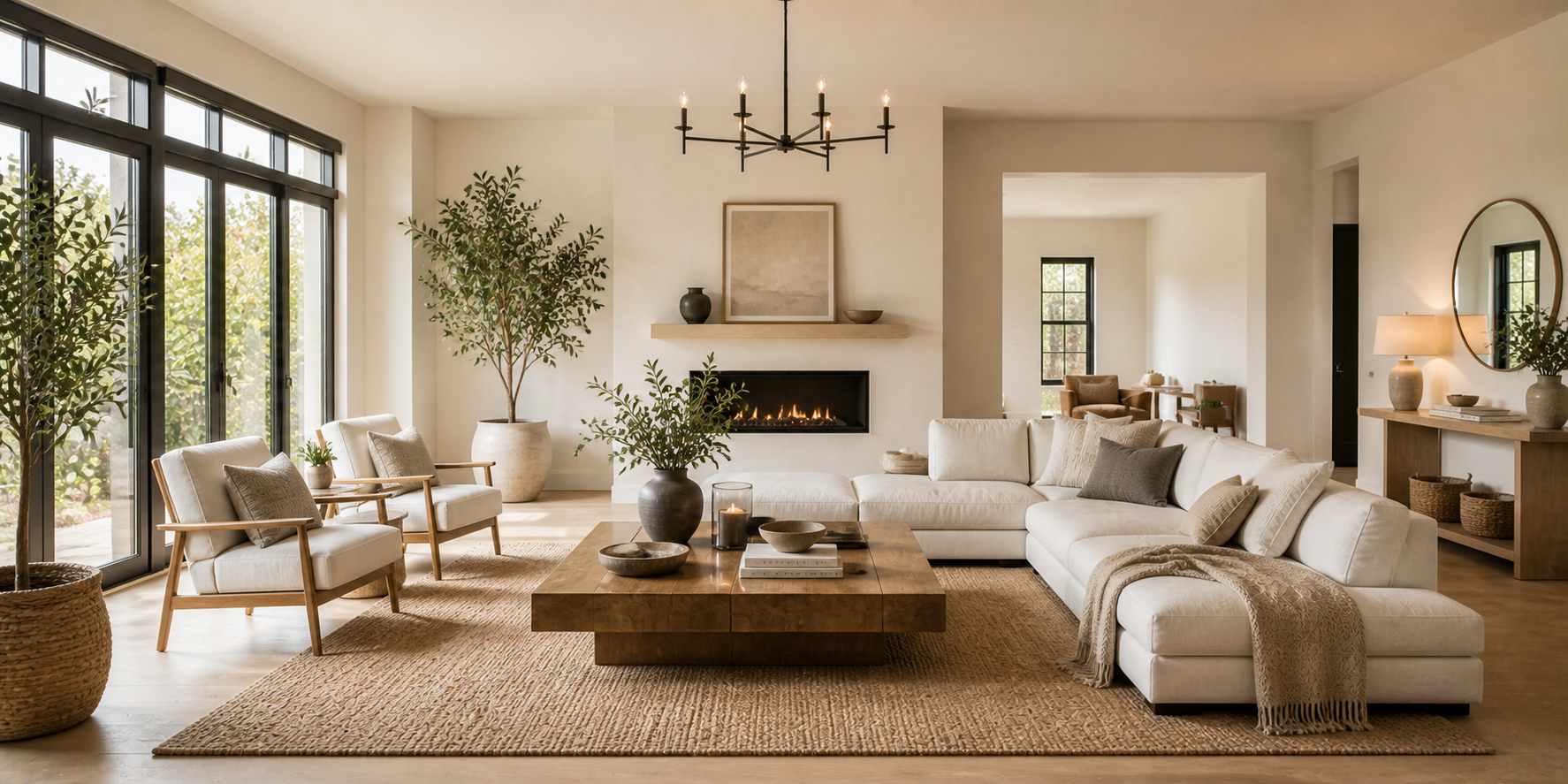
Ever walked into a living room that immediately felt sleek, balanced, and effortlessly modern? That’s the magic of contemporary design. It’s clean without being cold, bold yet comfortable — the kind of aesthetic that evolves gracefully over time. A contemporary living room is not about chasing trends; it’s about creating harmony between form, function, and feeling. Think neutral palettes, sculptural furniture, statement lighting, and just the right mix of texture and color. The goal is to design a space that reflects your lifestyle while keeping things uncluttered and visually grounded.
In this article, you’ll discover 20 contemporary living room ideas that will help you create a space that’s fresh, timeless, and full of personality. From dramatic statement walls to cozy textural layering, these ideas balance sophistication with livability — proving that “modern” can also mean warm, inviting, and beautifully human.
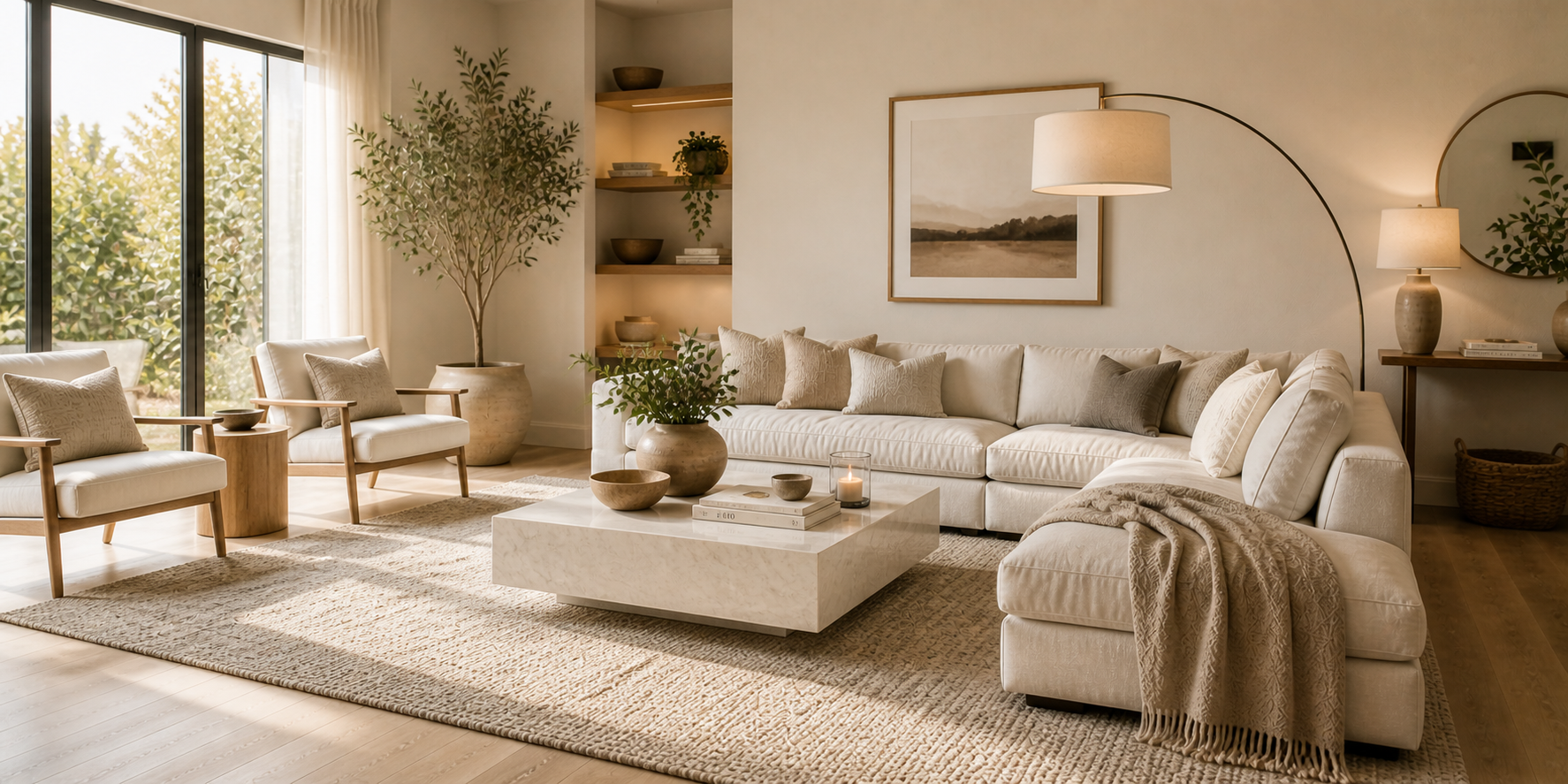
A neutral color palette is the cornerstone of contemporary design, but it’s the layering of textures that keeps it from feeling flat. Picture a living room where soft cream walls, taupe furniture, and gray accents form a calming base. The key lies in tactile variety — a wool rug underfoot, linen curtains flowing near the windows, and a sleek marble coffee table catching soft light. Each surface feels different, but together they create balance and depth.
You can experiment with tone-on-tone variations of beige, greige, ivory, or warm white to make your space feel grounded and cohesive. Add small contrasts — perhaps a matte black vase or brushed brass lamp — for visual punctuation.
In a modern living room, lighting is more than just illumination — it’s art. Imagine a linear pendant cutting across the ceiling like a geometric sculpture, or a cluster of glass globes suspended above a minimalist coffee table. These statement fixtures add architectural intrigue, transforming your space after dark. Opt for mixed materials like frosted glass, matte metal, or natural wood to complement your decor. Layer light with wall sconces, floor lamps, and recessed LEDs to create a dynamic mood that adapts to every moment — bright and energized during the day, soft and ambient at night.
Contemporary interiors thrive on openness. Low-profile furniture — think sleek sectionals, modular sofas, and minimalist armchairs — keeps sightlines clear and makes the room feel expansive. Visualize a soft gray sofa with clean lines sitting atop a textured area rug, paired with a glass or acrylic table that almost disappears from view. The overall composition feels airy, uncluttered, and intentional.
When selecting pieces, focus on streamlined silhouettes, hidden storage, and materials like metal or wood veneer. Furniture should enhance flow, not compete for attention. The result: an inviting space that feels bigger and lighter than it is.
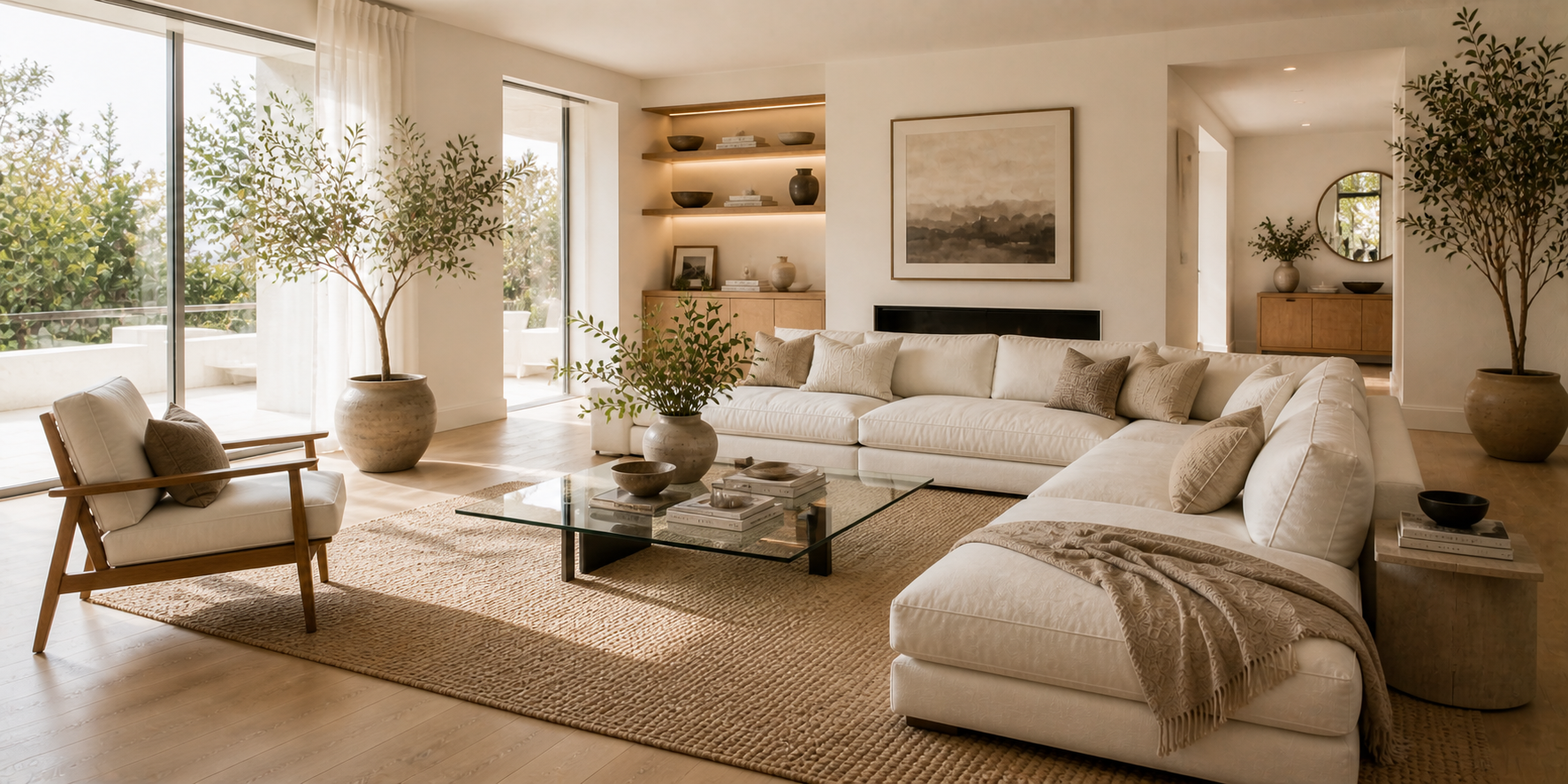
Modern living rooms often walk a fine line between sleek and sterile — natural elements are what bridge the gap. Think oak coffee tables, rattan accent chairs, or stone side tables that bring an organic touch to clean lines. Add a jute rug for earthiness or textured clay vases for a handcrafted feel. These materials soften the geometry of modern furniture while grounding the design in nature. To maintain balance, pair each natural texture with a refined element — like matte metal lighting or polished concrete floors. This mix of raw and refined creates timeless appeal.
A single piece of art can define the entire tone of your living room. Large-scale paintings, abstract prints, or textured wall sculptures become the visual anchor in a clean-lined space. Picture a monochrome room enlivened by a massive canvas bursting with color and texture. The contrast between minimal architecture and expressive art creates instant sophistication.
If you prefer subtlety, consider black-and-white photography or sculptural wall decor. Use oversize pieces rather than gallery walls for a bold, curated feel that aligns with contemporary minimalism.
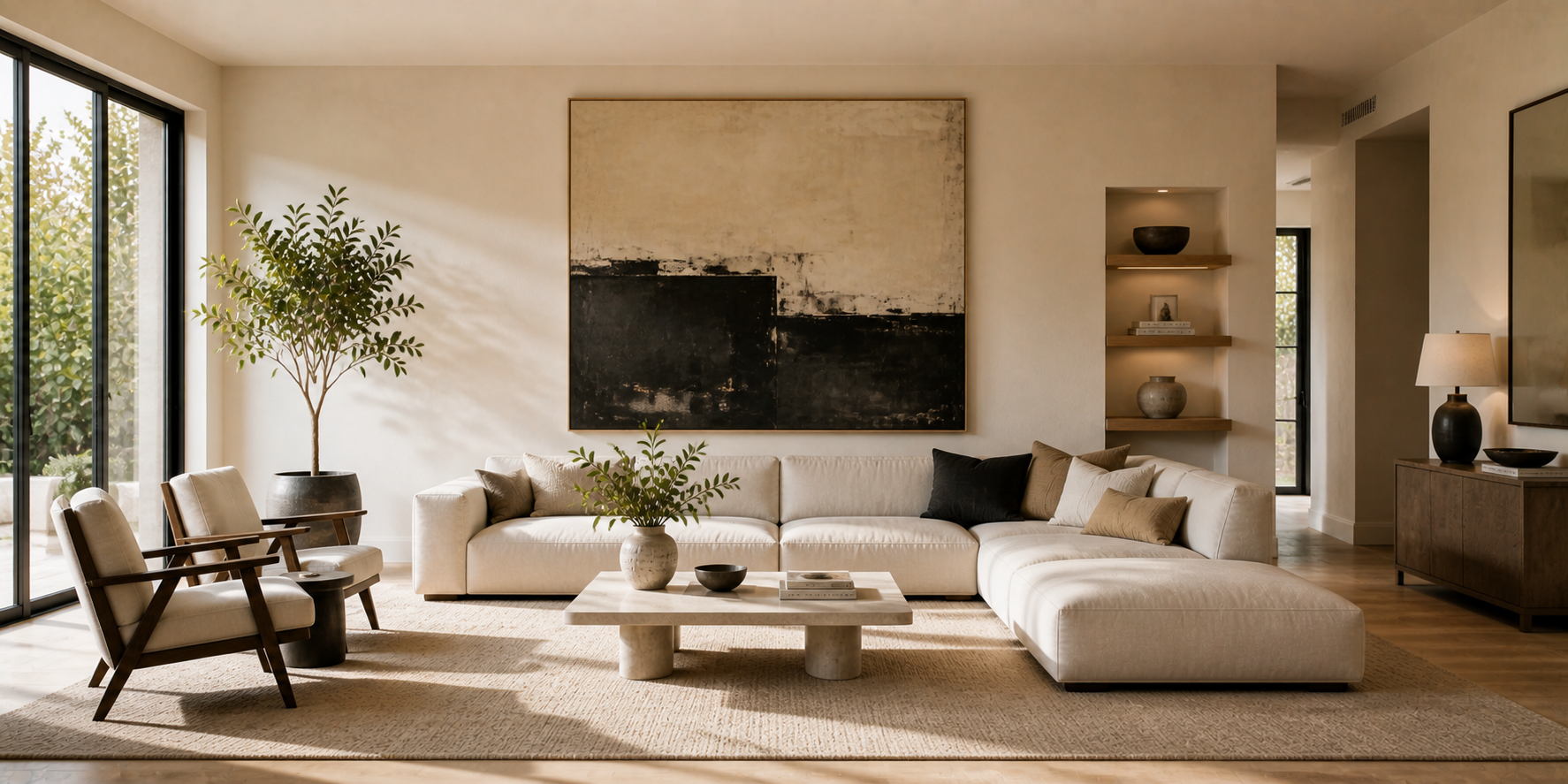
Metallics — when used strategically — add just the right amount of shine. They act like jewelry for your living room: small details that catch the eye and elevate the look. Imagine a brushed brass floor lamp beside a charcoal sectional, or a coffee table with slender chrome legs gleaming under warm light. These accents introduce a hint of glamour without feeling flashy.
Stick to one dominant metal tone to maintain cohesion — brass for warmth, chrome for cool sophistication, or blackened steel for industrial edge. Complement them with matte finishes to balance reflectivity.
No contemporary space feels complete without a touch of nature. Plants add color, freshness, and visual rhythm to the clean geometry of modern interiors. Envision tall fiddle-leaf figs in sleek planters, cascading pothos on open shelving, or small succulents lined up along a windowsill. The organic shapes of leaves contrast beautifully against crisp furniture lines. Use ceramic or metal planters to match your color scheme. Even a single statement plant can bring energy and softness to your living room, making it feel more human and relaxed.
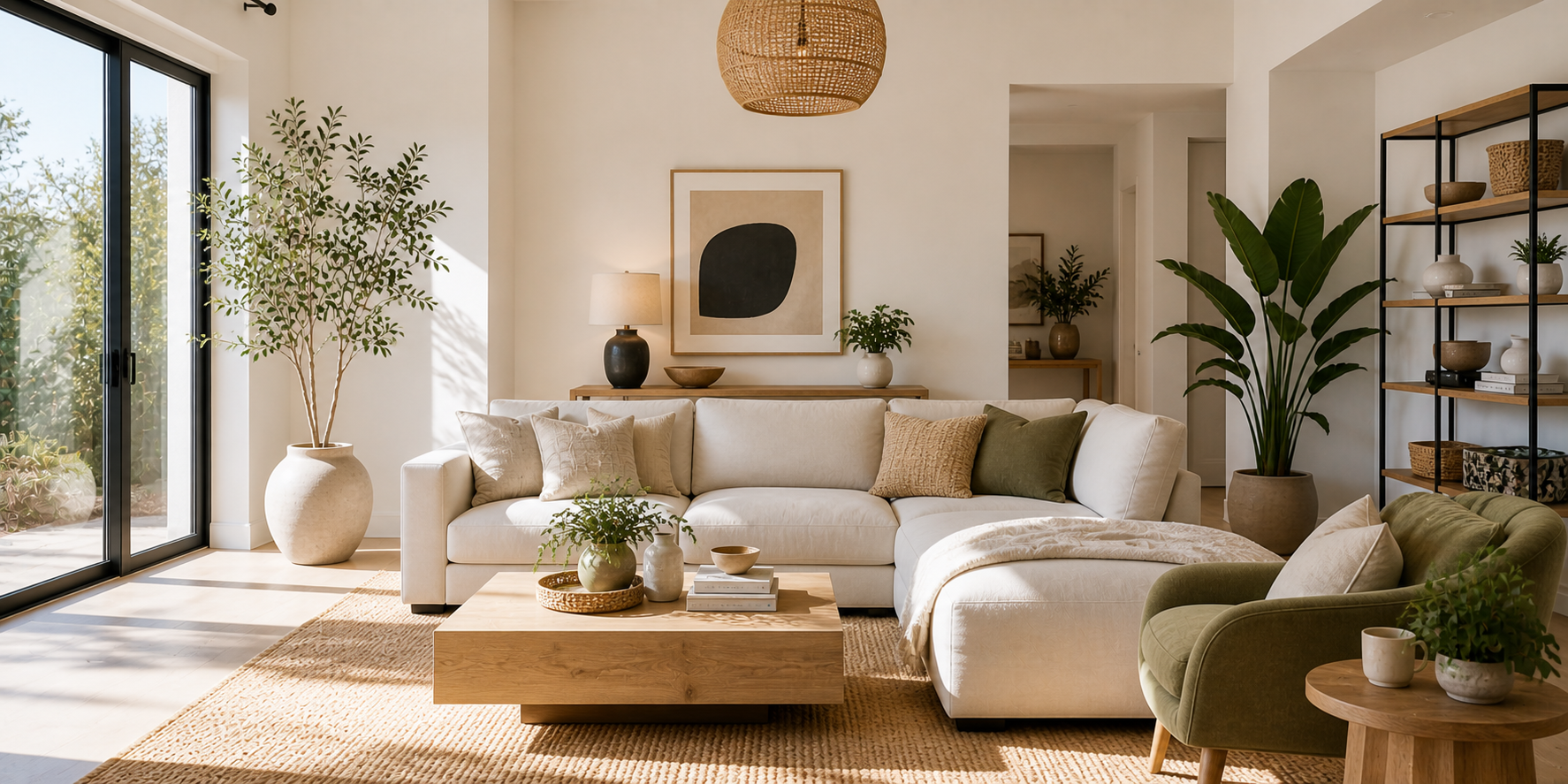
One hallmark of modern style is visual clarity — no clutter, no unnecessary noise. Built-in cabinetry helps maintain that effortless polish while maximizing function. Imagine a custom wall unit blending floor-to-ceiling shelving with hidden drawers. The design appears as an architectural feature, not separate furniture. Everything — books, electronics, and accessories — has a designated home. You can choose high-gloss finishes for a sleek look or natural wood veneer for warmth. Keep hardware minimal and lines uninterrupted. The result: a space that feels intentional, not improvised.
In contemporary design, subtle contrasts create sophistication. Smooth against rough, matte beside gloss, soft paired with structured — these tactile juxtapositions bring a space to life. Picture a velvet sofa against a concrete wall, or a leather lounge chair beside a wool rug. The interplay of finishes adds visual depth without clutter.
Balance is key: too many textures compete, but two or three repeated materials create rhythm and cohesion. It’s a simple formula for richness that doesn’t overwhelm.
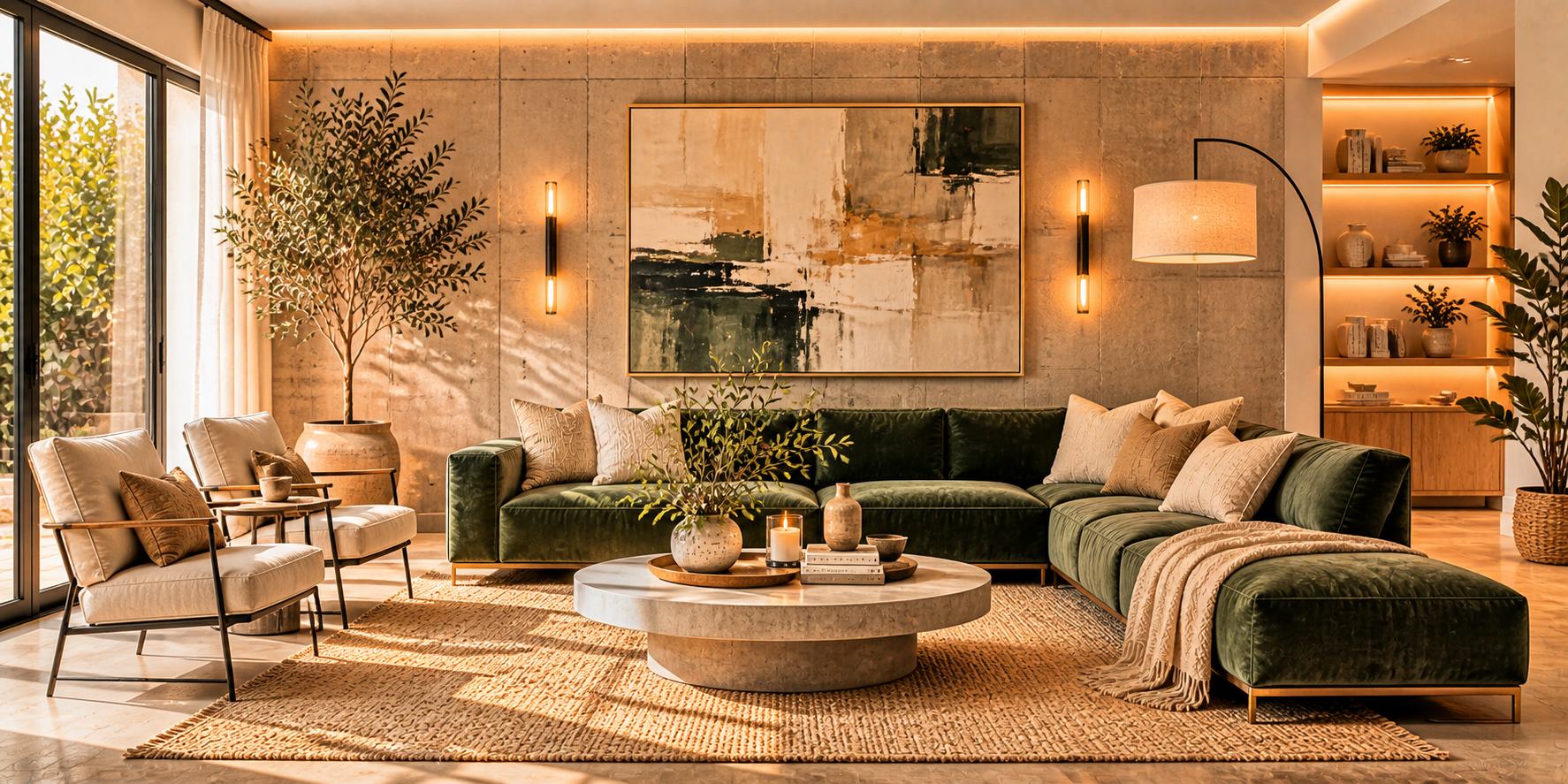
A contemporary rug can define your color palette, anchor your furniture layout, and add personality in one bold move. Imagine a living room with light gray walls and neutral furniture, tied together by a large rug featuring geometric patterns or subtle color gradients. It becomes the silent hero of the space — pulling every element into harmony.
Choose rugs with low pile and crisp edges to maintain a modern silhouette. If you want warmth, look for handwoven wool textures or tone-on-tone designs that add depth without visual clutter.
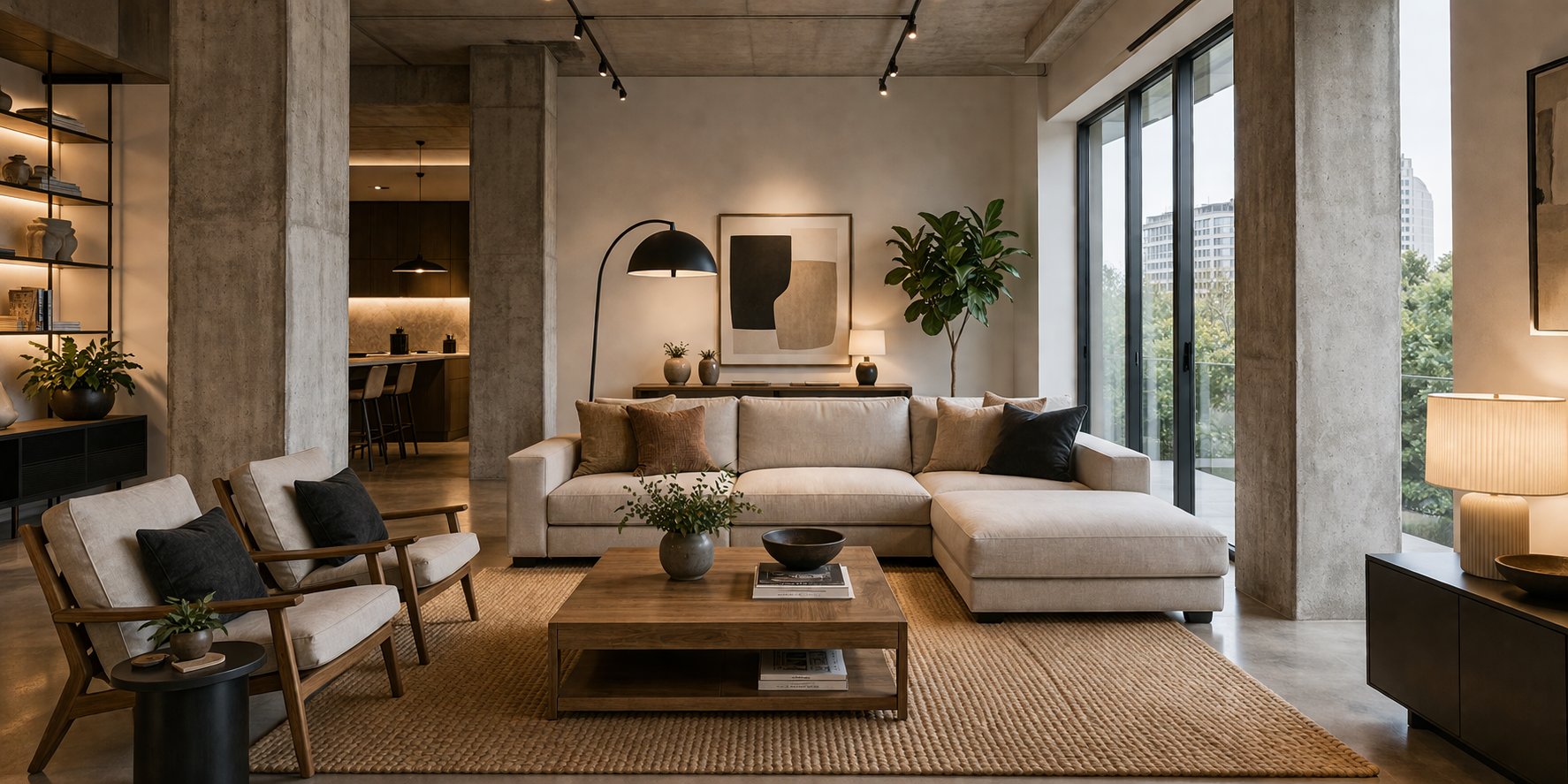
Contemporary design celebrates architecture as art. Instead of hiding structural elements, showcase them. Picture an exposed concrete column, a visible ceiling beam, or steel-framed windows integrated as intentional design features. These raw elements create texture and authenticity, especially when paired with softer furnishings.
You can enhance this look with smooth finishes and warm materials nearby — a plush sofa or a cozy woven rug softens the industrial feel. The balance between sleek and rugged keeps the space grounded and modern. For smaller rooms, highlight one feature — perhaps a brick wall or visible duct — and keep the rest minimal to let that detail shine.
Modern living thrives on convenience, and technology can blend beautifully when designed thoughtfully. Imagine a wall-mounted smart TV that disappears within a dark-paneled wall or a sound system hidden inside shelving units. Charging stations built into side tables and smart lighting controlled by voice command make daily life smooth while maintaining the aesthetic flow.
Conceal cords with cable organizers and use furniture designed with built-in storage for tech accessories. Keep all devices sleek and color-coordinated so they feel like part of the decor, not clutter.
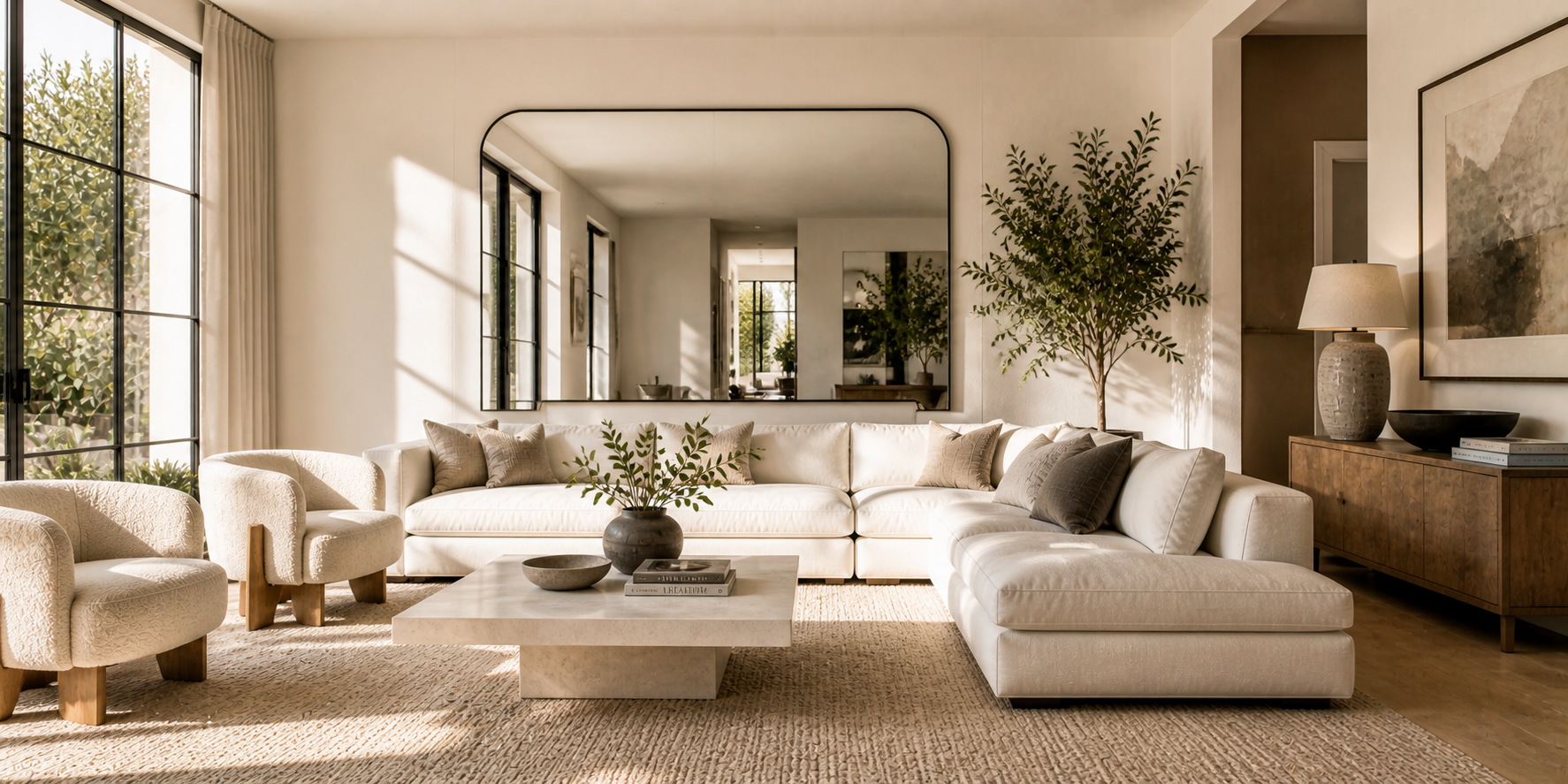
Large mirrors are a simple yet powerful way to elevate your living room. They bounce natural light across the room and make even compact spaces feel open and airy. Picture a full-length mirror with a slim black frame leaning against a wall, reflecting your main seating area. Or imagine a round mirror hung above a console table, catching both daylight and warm lamplight at night.
The key is placement — position mirrors opposite windows or light sources to maximize reflection. Keep frames minimal so they blend seamlessly into the modern environment.
Contemporary doesn’t mean empty — it means intentional. A few sculptural decor pieces can add personality without breaking the minimal flow. Visualize a single ceramic vase with clean lines on a marble coffee table, or a modern sculpture on a floating shelf. Each item has purpose and breathing space around it, allowing design to shine without distraction. Choose decor in limited tones that complement your main palette — think matte black, stone gray, or warm beige. Texture and form matter more than quantity in achieving balance.
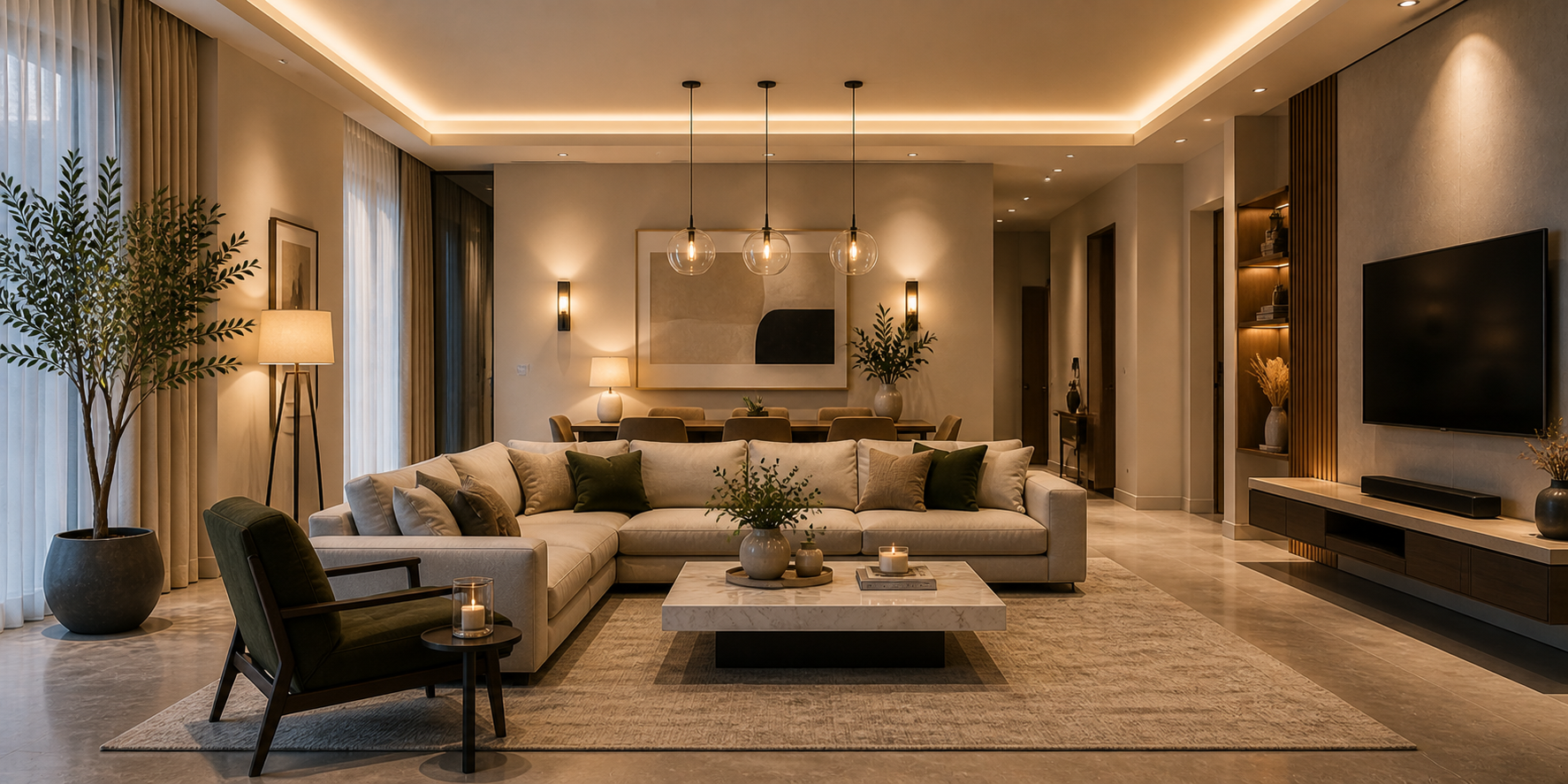
The best contemporary living rooms use layered lighting — a strategic mix of ambient, task, and accent sources. Imagine recessed ceiling lights setting the base, a linear pendant defining the center, and warm wall sconces creating depth. Floor lamps can highlight corners or art pieces while subtle LED strips add a soft glow under shelves.
This layered approach adds dimension and flexibility. You can change the mood instantly — from bright for gatherings to dim for relaxation. The interplay of light and shadow brings your modern materials to life.
While neutrals dominate modern spaces, a burst of color can make your living room memorable. Picture a serene palette of whites and grays accented with deep teal cushions, a mustard throw, or an emerald velvet chair. The color doesn’t overwhelm; it punctuates the calm with vibrancy. Choose one or two accent tones and repeat them subtly — in artwork, ceramics, or rugs — to maintain cohesion. The goal is harmony, not saturation.
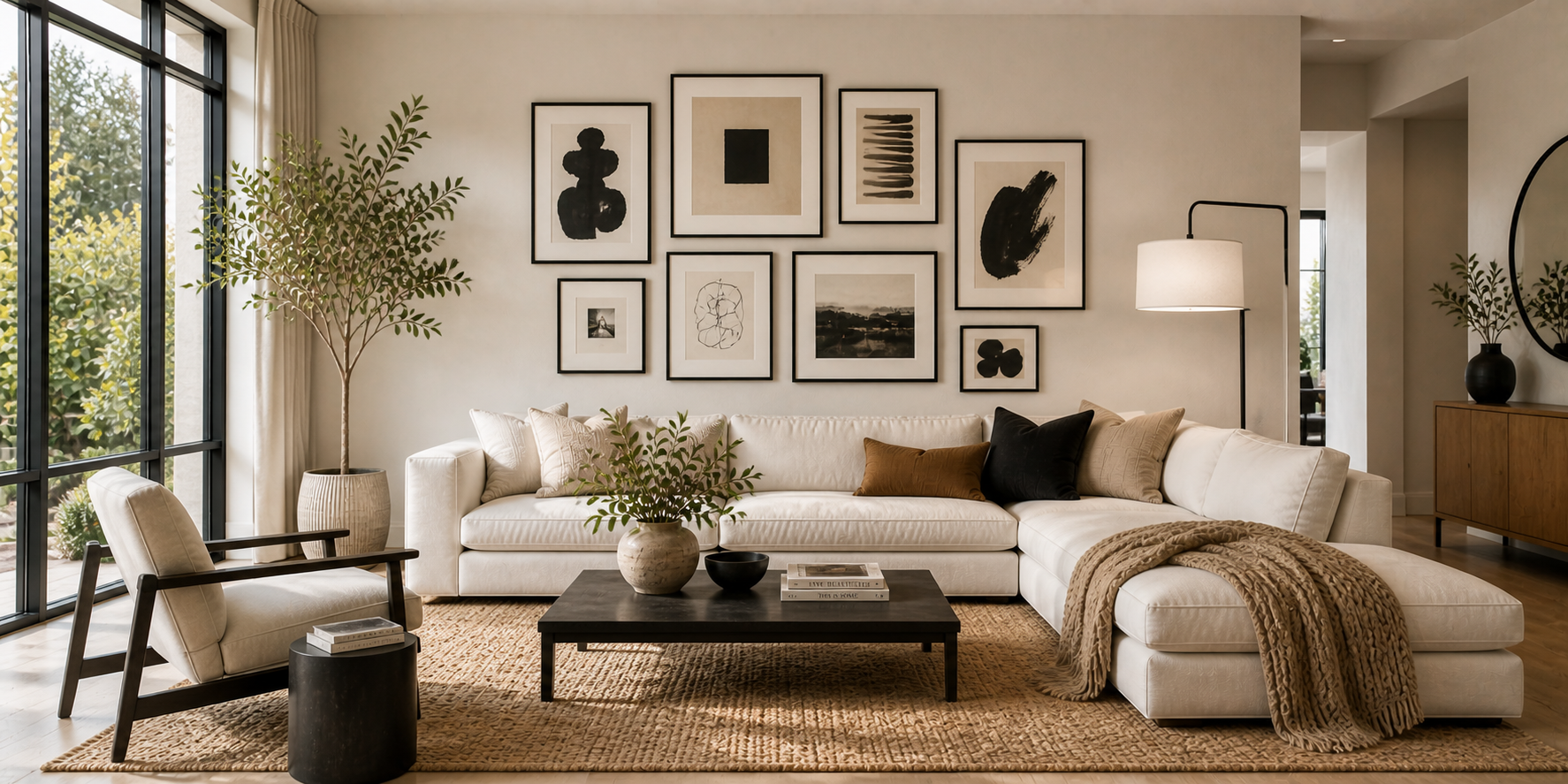
Gallery walls can feel cluttered — unless designed with intention. Contemporary style calls for clean alignment and consistent framing. Imagine a horizontal arrangement of black frames containing abstract art and monochrome photos. Equal spacing between pieces keeps it organized and visually satisfying. You can also create asymmetry deliberately — using varied sizes in a tight grid for artistic tension. Stick to one color palette across artworks for a cohesive look.
Transparency plays a vital role in contemporary interiors. Glass and acrylic pieces reduce visual clutter while enhancing brightness. Think of a glass coffee table that reveals a textured rug beneath or acrylic side tables that appear to float. Even shelving in clear or frosted glass maintains openness and light flow. These materials pair beautifully with stone, metal, and wood — adding contrast without heaviness. Use them strategically to make your living room feel open and serene.
Instead of loud colors, add depth through texture-rich walls — plaster finishes, vertical paneling, or ribbed wood cladding. Picture a slate-gray wall with a fine stucco texture behind your sofa, catching light gently throughout the day. Or imagine thin wooden slats running vertically from floor to ceiling, emphasizing height. This approach adds architectural sophistication while keeping the palette calm. Pair textured walls with smooth surfaces elsewhere for a balanced composition.
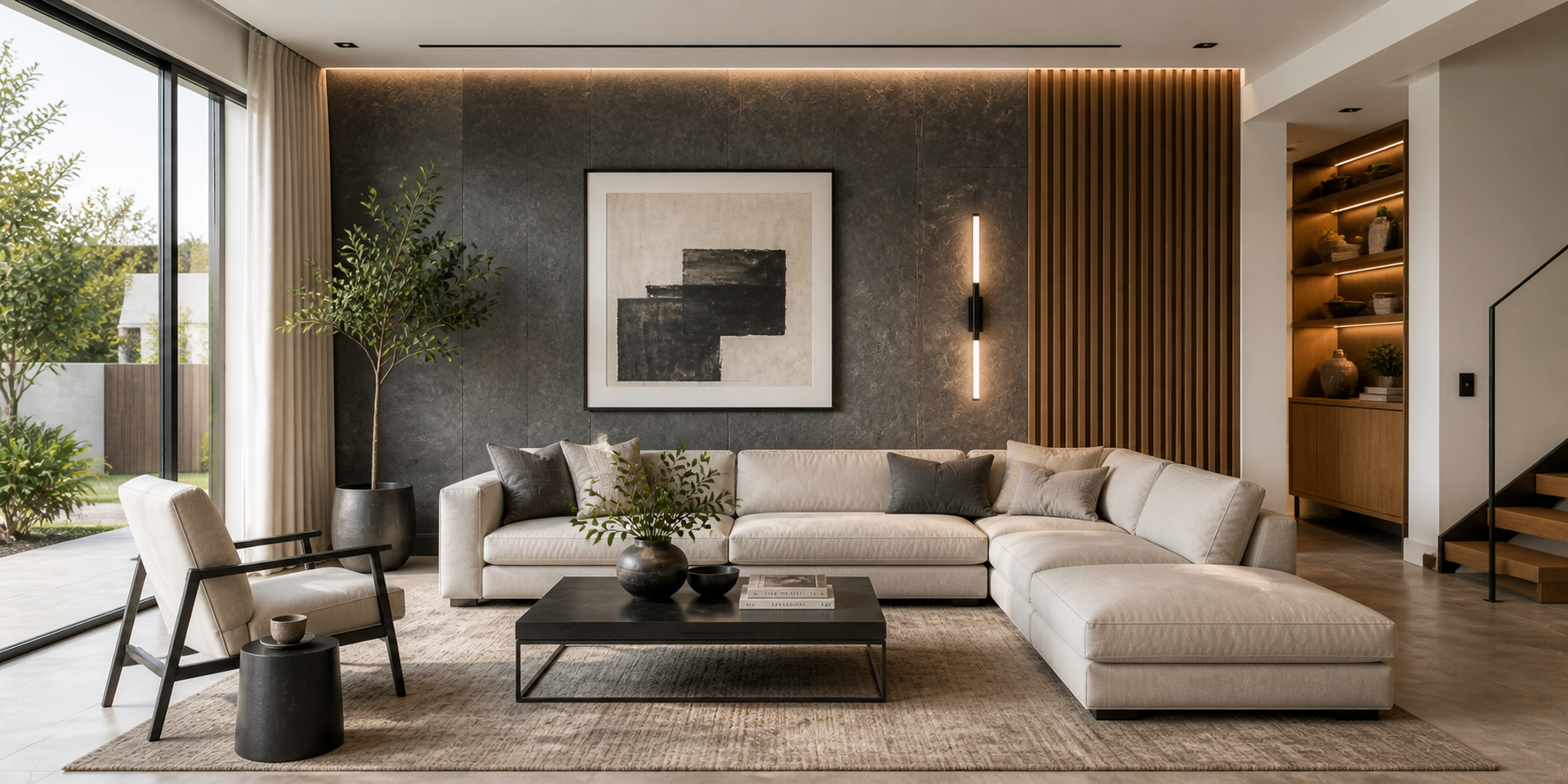
A modern living room thrives on flow — the way furniture, light, and materials guide movement through the space. Envision an open plan where the sofa faces a low media console, chairs flank a coffee table, and pathways remain clear. Rugs define zones while lighting ties everything together. Nothing feels accidental — every line, surface, and texture works in harmony. Arrange seating for conversation and sightlines toward natural light. Leave negative space — open floor area — so the room breathes. Add finishing touches like a throw, a tray, or a small sculpture to humanize the geometry.
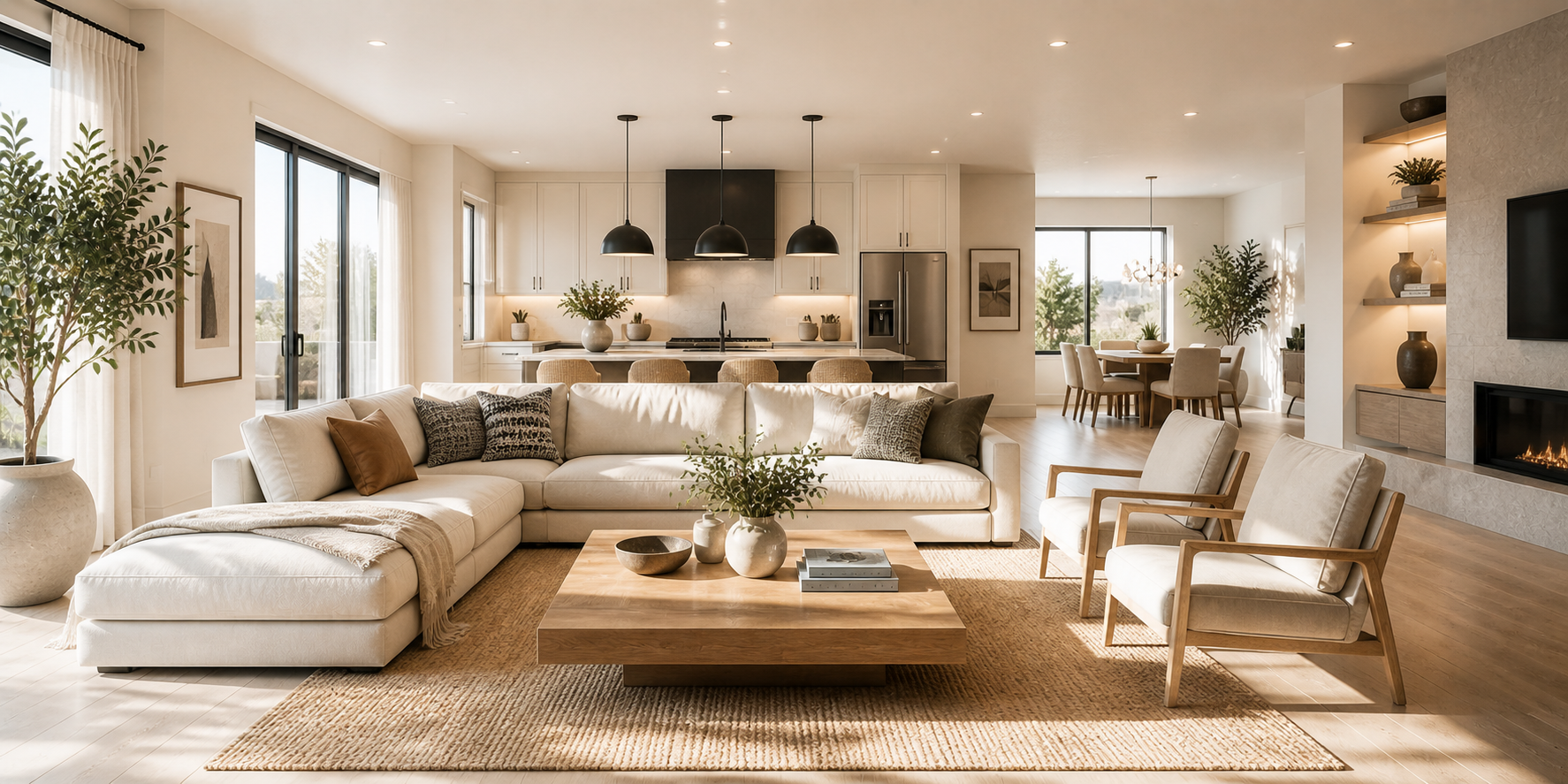
Designing a contemporary living room isn’t about adhering to strict rules — it’s about balance, clarity, and intentional living. By layering textures, controlling light, and focusing on purposeful decor, you can achieve a modern space that feels both sophisticated and welcoming. Whether your style leans minimalist, organic, or industrial, the core principles remain the same: clean lines, thoughtful materials, and a calm palette that allows personality to shine.
As trends evolve, contemporary interiors continue to prove one thing — true modern design never goes out of style. It adapts, refines, and reflects the life within it.
Let’s Build
Contact us todayGet daily tips and tricks for making your best home.
2025 Green to Gorgeous