3 MIN READ
Bedroom
Written By
G2G Team
Published
May 20, 2026
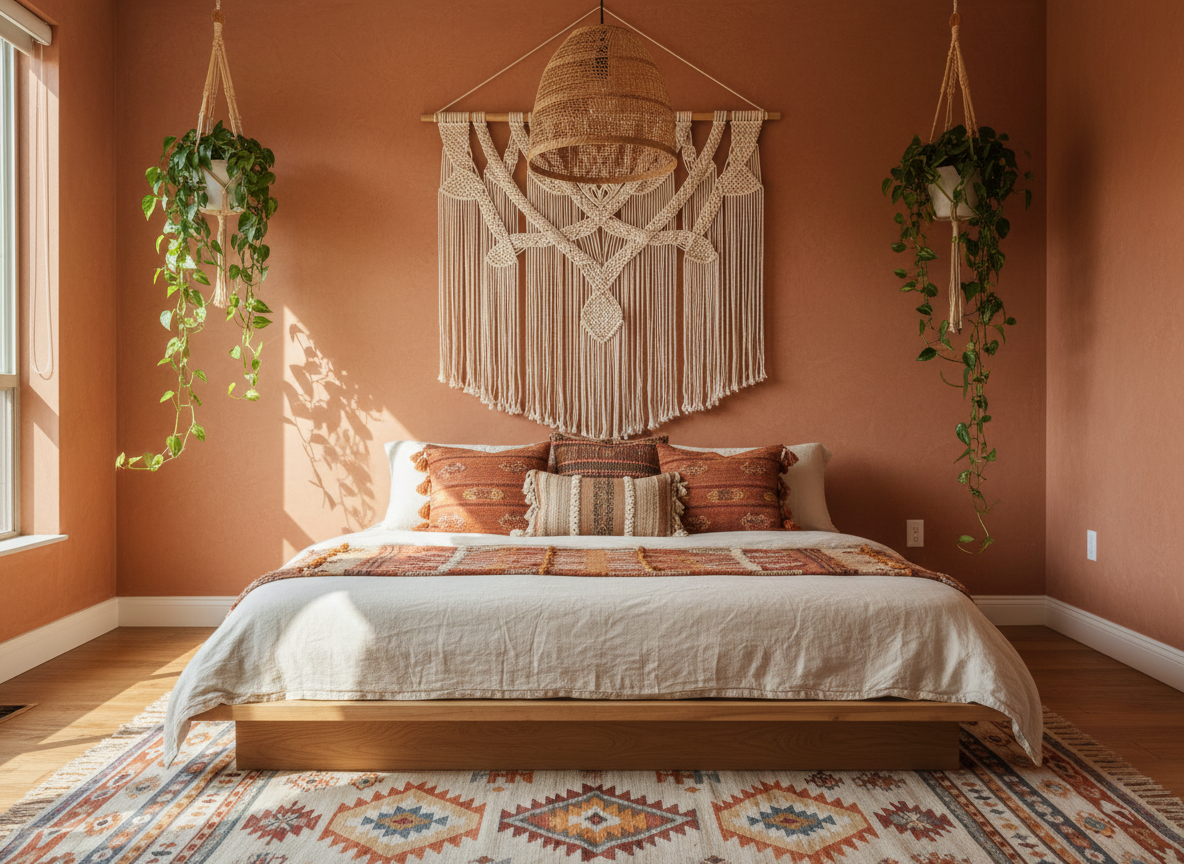
There is something quietly magnetic about a bedroom that feels like it was assembled over years rather than styled in an afternoon. Textiles from different corners of the world draped over a low wooden bed frame. A macramé wall hanging casting soft shadows in the late afternoon light. A rattan pendant glowing amber above a pile of embroidered pillows in rust, cream, and olive green. This is the promise of boho bedroom design — not a rigid aesthetic but a living, breathing philosophy rooted in the idea that a bedroom should tell your story. Every worn-edge mirror, every trailing pothos, every kilim rug laid over bare floorboards says: this person is curious, grounded, and unafraid of beauty that comes with a history.
Bohemian bedroom style draws heavily from the global nomad tradition — layering textiles, natural materials, handmade objects, and plants into a space that feels simultaneously full and calm. It borrows from Moroccan riads, Scandinavian simplicity, and the earthy warmth of southwestern American design. The result is a bedroom that prioritises texture over trend, personality over perfection, and rest over performance. According to the American Institute of Architects, biophilic design principles — which underpin much of the boho aesthetic — have been shown to reduce stress and improve sleep quality, making a well-designed boho bedroom far more than just a visual statement.
Whether you are starting from scratch or weaving boho elements into an existing space, these 18 boho bedroom ideas offer a full toolkit. From the dramatic impact of a printed tapestry headboard to the quiet magic of fairy lights threaded through dried pampas grass, there is a starting point here for every home and every budget.
The macramé wall hanging is one of the most iconic anchors of the boho bedroom, and when it is scaled correctly — large, sculptural, and placed directly above a low platform bed — it transforms an entire wall into a focal point. The key is proportion: a hanging that stretches at least two-thirds the width of your bed creates visual weight that balances the low-slung silhouette below it. Look for pieces in undyed natural cotton rope, which reads as warm and organic against white or terracotta walls. Alternatively, a piece woven with strands of rust, cream, and dusty rose introduces colour without committing to painted walls. The texture is the thing to prioritise here — the way knotted fibres catch the light and cast delicate shadows gives a bedroom a depth that flat artwork simply cannot replicate. Platform beds in solid mango wood or acacia work best for this pairing, keeping the furniture grounded and earthy rather than sleek or minimalist. To layer further, add a pair of rattan or seagrass pendant lights on either side, hanging at different heights to create an asymmetric, curated feel. This combination channels a distinctly Moroccan-influenced Bohemian energy — one that is warm, welcoming, and deeply considered.
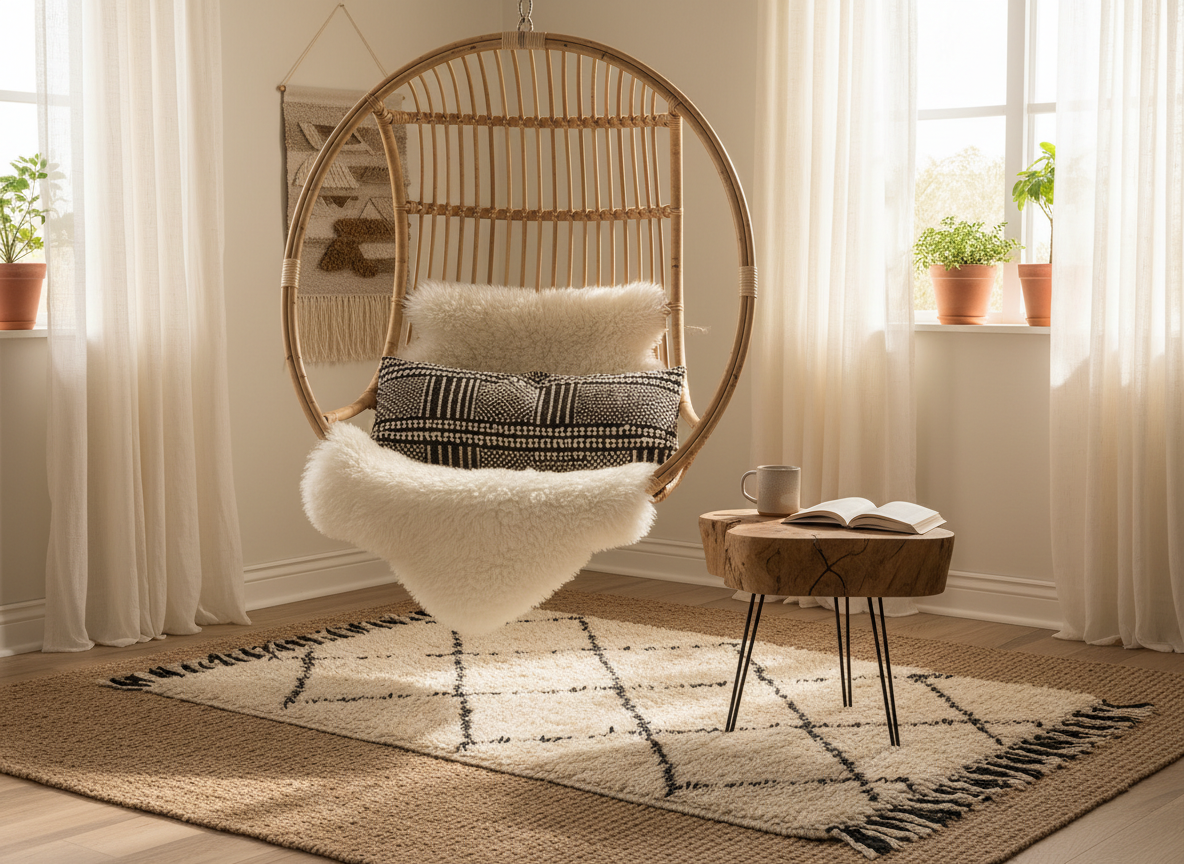
Few pieces of furniture carry as much boho personality as a rattan hanging chair, and when placed in a sun-filled corner of a bedroom it becomes one of the most consistently used spots in the house. The appeal goes beyond aesthetics: the gentle sway of a hanging chair, the enclosing curve of the rattan shell, and the warmth of natural light create a sensory environment that encourages stillness. Hang the chair from a ceiling joist using a heavy-duty hook and a length of natural sisal rope to maintain the organic texture story. Dress the seat with a thick sheepskin throw, a bolster pillow in mudcloth print, and a small side table made from a reclaimed wood slice — the kind you can stack with a ceramic mug and a paperback novel. Keep the floor beneath it layered: a small Berber wool rug on top of natural jute grounds the corner and softens the visual transition from hanging fixture to floor. Rattan is a sustainable, rapidly renewable material — it weathers beautifully indoors and only improves in character with age. In terms of style lineage, the hanging chair is a direct descendant of the rattan peacock chair, popularised in the 1960s and 70s and still one of the most enduring icons of bohemian interior design. This corner will become the one place in your home where you actually sit to read.
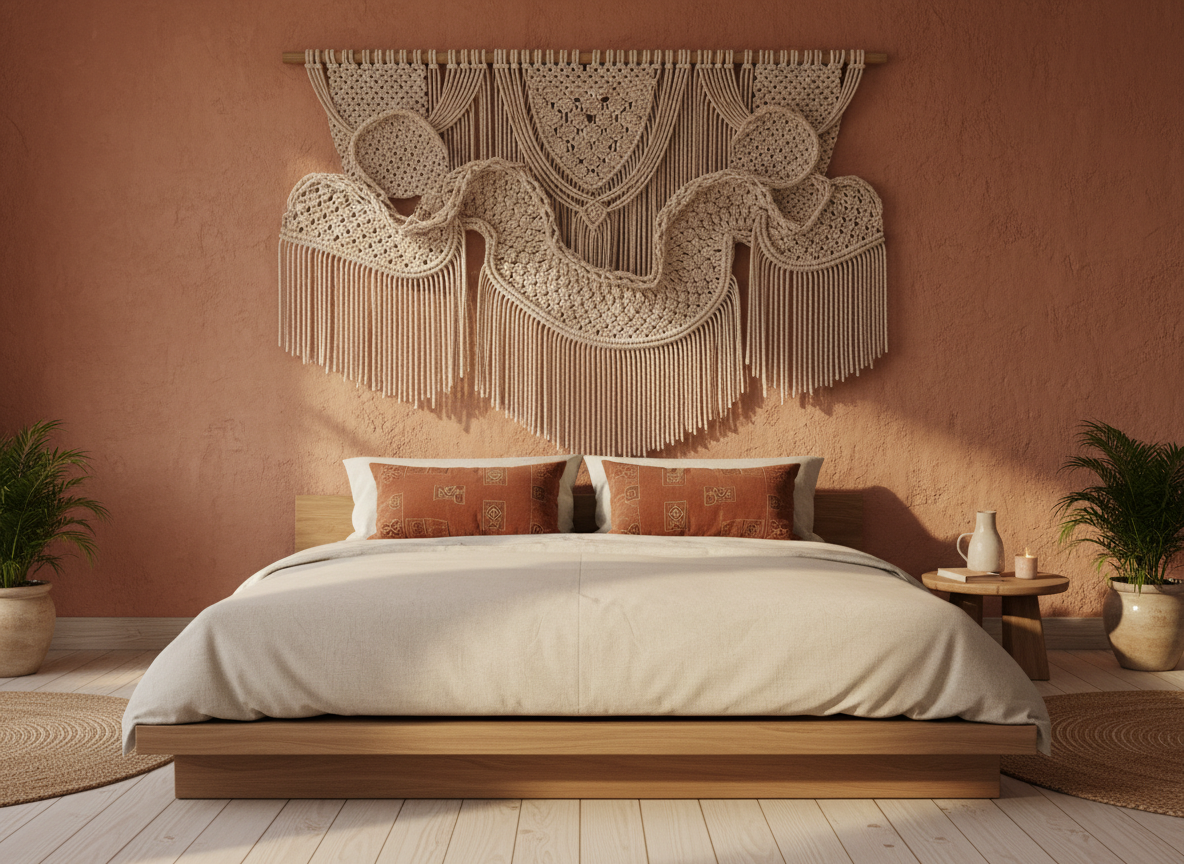
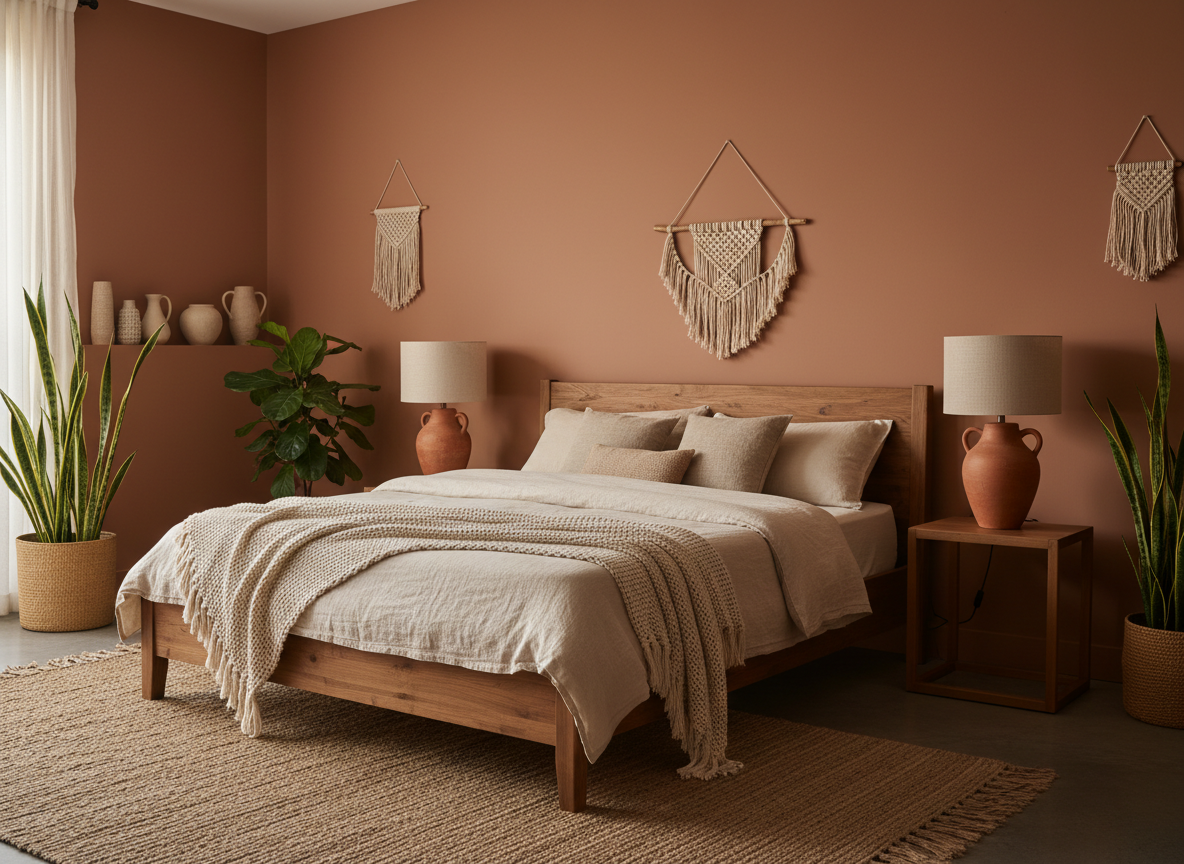
There is a reason terracotta has become synonymous with the modern boho bedroom: it is a colour that does something warm and ancient to the light in a room. At different times of day it reads as burnt orange, dusty rose, or deep clay — and against cream, ivory, or oatmeal linen bedding, it creates a palette that feels simultaneously sun-drenched and restful. The combination references the earthy tones of the American Southwest, the Mediterranean, and North Africa all at once, making it a natural fit for a globally inspired bohemian space. Paint the walls in a matte finish to avoid any glossy reflection — brands like Farrow and Ball’s “Etruscan Red” or Little Greene’s “Tuscan Red” in a flat emulsion work beautifully. Keep the bedding in natural, undyed linen — this fabric has a characteristic drape and slight roughness that adds tactile richness without busyness. A cotton waffle-weave throw in warm white folded at the foot of the bed adds another layer of texture. Complete the look with handcrafted ceramic bedside lamps in a similar terracotta tone, unglazed at the base and topped with a linen shade. The entire room will feel like it is softly lit from within, the kind of light that makes you want to stay in bed just a little longer on a Sunday morning.
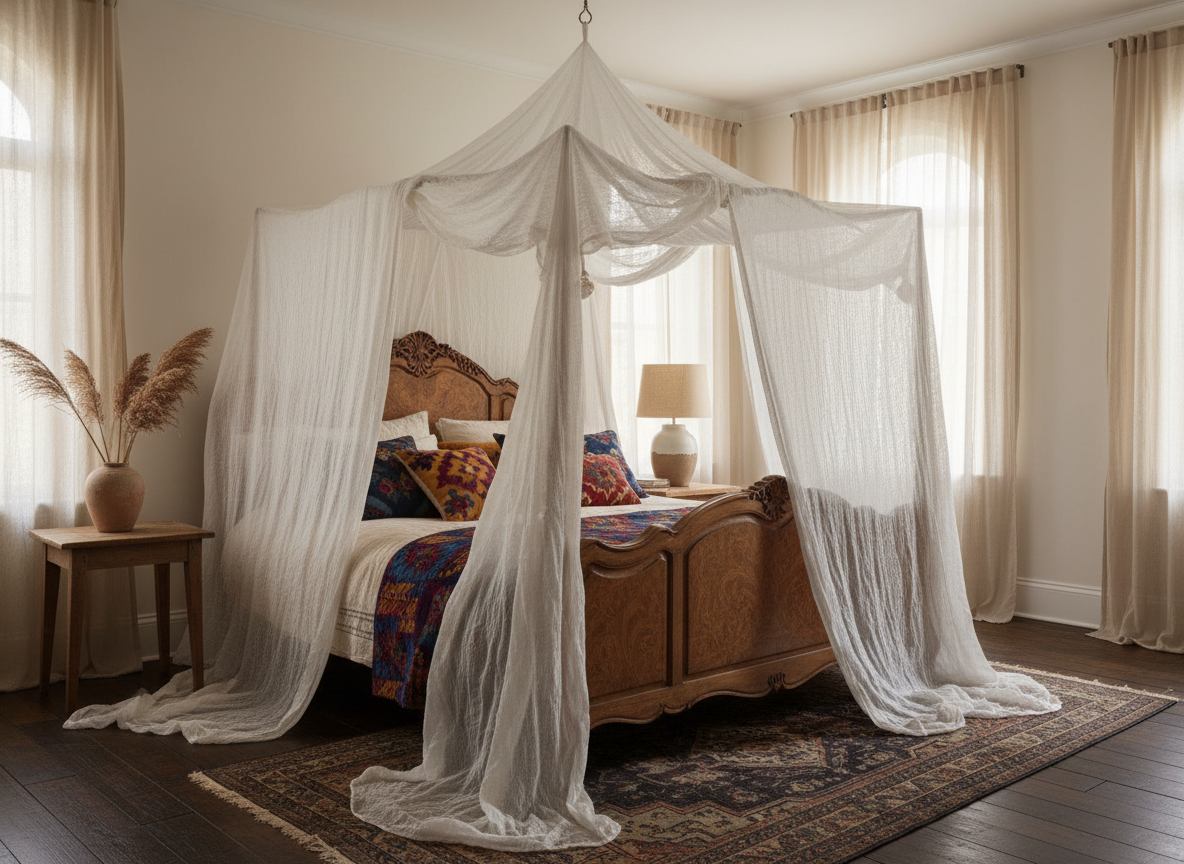
A draped bed canopy is one of the oldest expressions of luxury in bedroom design — and in a boho context, it becomes something more intimate and less formal, more daydream than palace. The secret to pulling this off without it feeling overly precious is the choice of fabric and frame. Opt for a loose weave cotton muslin or gauzy linen in undyed white or a pale blush — the sheerness is essential, as it filters light rather than blocking it, creating that signature boho softness. Hang a simple ceiling hook directly above the bed and loop metres of fabric through it, allowing both ends to pool slightly on the floor on either side. A vintage wooden bed frame with a carved headboard — the kind found at flea markets or estate sales — provides the right amount of weathered character beneath the soft fabric. The contrast between worn timber and delicate gauze is what makes this look feel intentionally layered rather than over-decorated. To keep it grounded, anchor the base of the bed with a dark-toned Persian rug and dress the frame with a mix of embroidered pillows in deep jewel tones — sapphire, ochre, and burgundy sit beautifully against pale canopy fabric. This is the boho bedroom idea most likely to make you feel like you are falling asleep somewhere quietly magical.
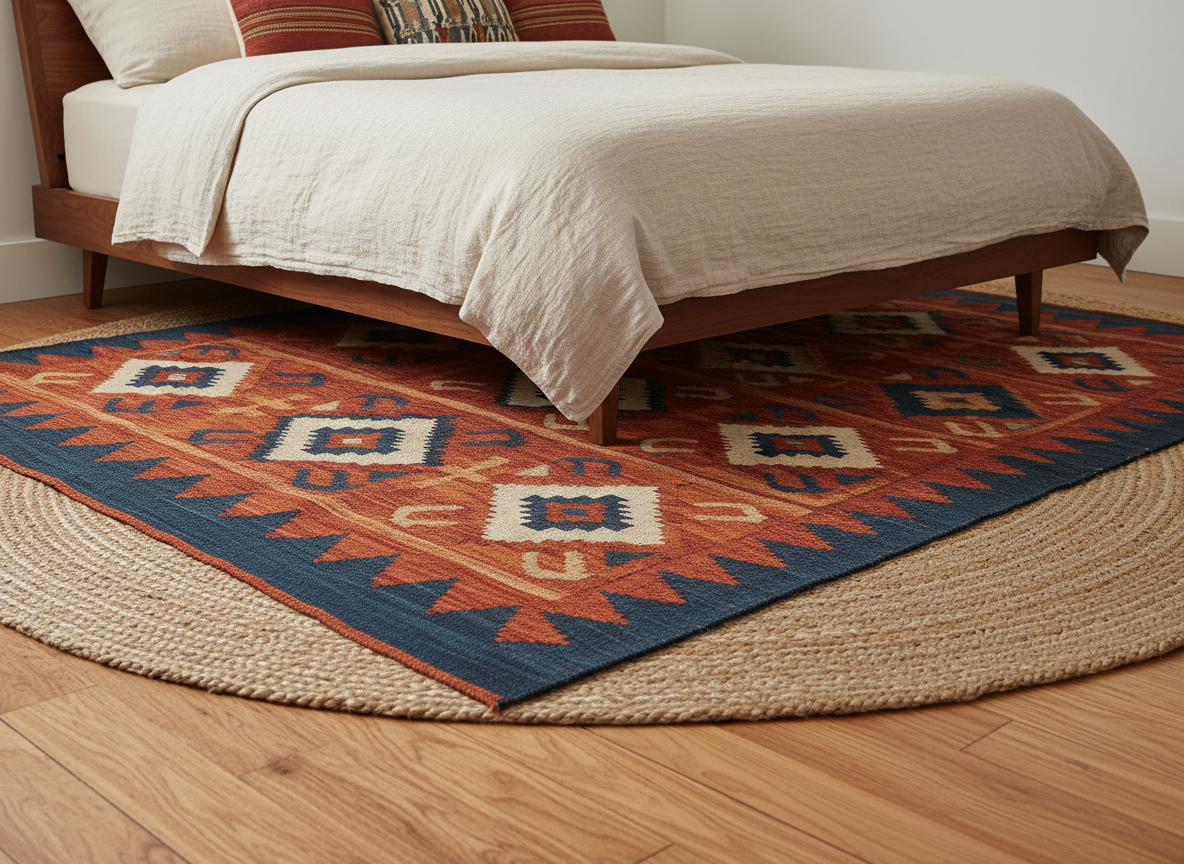
Layering rugs is a technique that defines the boho bedroom floor — and the combination of a flat-weave kilim placed over a natural jute or sisal base rug is one of the most effective and affordable ways to achieve it. The jute anchors the space in neutral, organic texture, while the kilim introduces the geometric pattern, colour story, and global reference that gives a boho room its soul. Kilims originate from the flat-weave textile traditions of Turkey, Central Asia, and North Africa, and their bold diamond, chevron, and tribal motifs have a graphic energy that photographs beautifully and wears incredibly well. Choose a kilim in earthy tones — burnt orange, rust, midnight blue, cream, and olive are classic colour combinations — and place it at an angle or centred beneath the bed, so at least two-thirds of its length extends out from under the bed frame. This placement ensures the pattern is visible and anchors the entire room. The jute underneath should be oversized — large enough to extend well beyond the kilim on all four sides, framing it like a mat within a mat. This rug-layering technique is endorsed by interior designers across bohemian and eclectic style traditions as a way to add warmth, define the sleeping zone, and bring complex pattern into a bedroom without touching the walls. It is also an easy and relatively affordable upgrade — secondhand kilims from antique markets or online vintage shops are widely available and tend to improve in colour as they age.
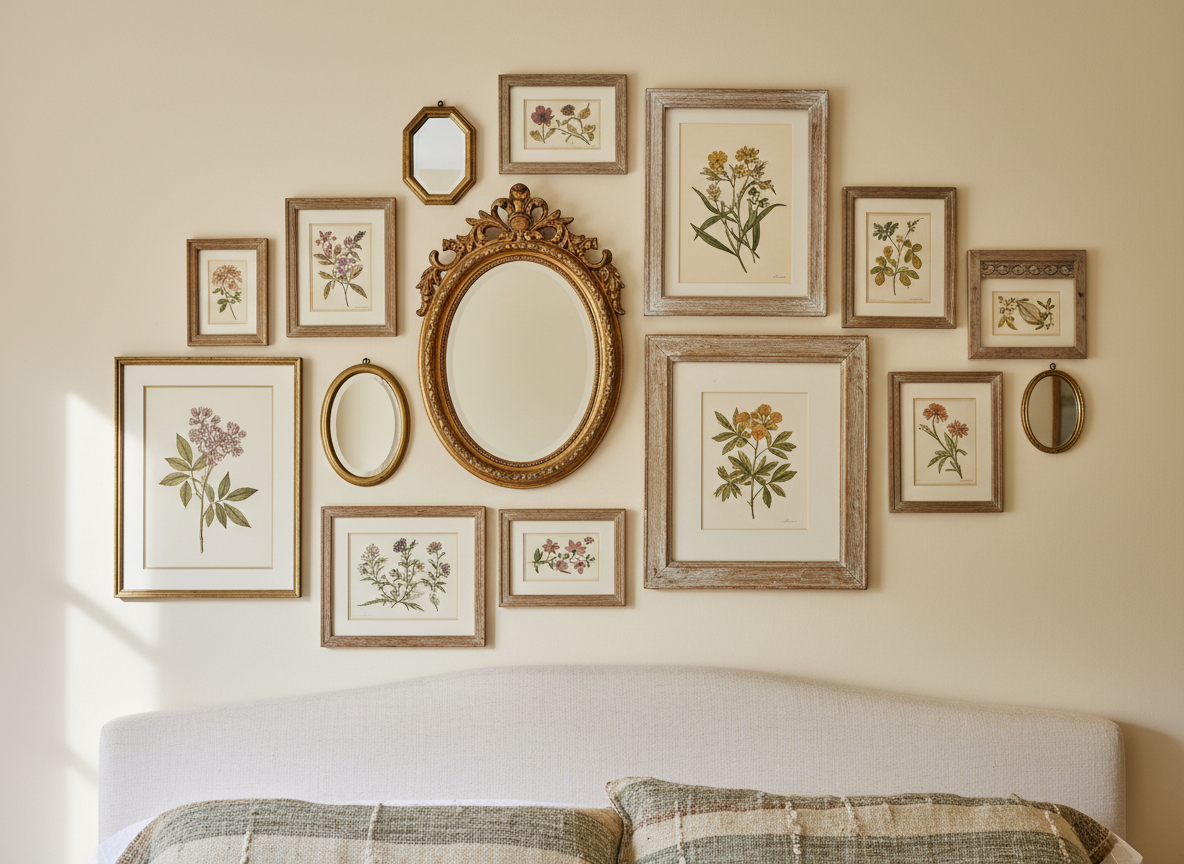
The boho gallery wall is never curated in the traditional sense — it grows, expands, and tells a story that evolves with its owner. In a bedroom context, the most restful version of this idea combines botanical prints with vintage mirrors of different shapes and sizes. The botanical illustrations bring in the biophilic element that underpins much of the boho aesthetic, referencing nature even when there are no living plants in sight. Think pressed herb prints in simple brass or weathered wood frames, antique botanical watercolours picked up at flea markets, or even printed vintage seed catalogues clipped to the wall with small wooden pegs. Interspersed among these, a collection of aged mirrors — an ornate oval in a carved gold frame, a small octagonal convex mirror, a simple rectangular bevelled piece — adds light, depth, and the sense of collected history that defines the bohemian interior. The key is to avoid symmetry. Let the arrangement breathe, leave odd gaps, mix frame materials freely, and allow the collection to feel as though it gathered itself organically over time. For the bedroom specifically, keep the prints and mirrors at a height where they can be seen from the bed — they become part of your morning view, a daily reminder of beauty accumulated over years. If you love this layered approach to bedroom walls, our guide to 20 Cute Bedroom Ideas for Whimsical Charm has more gallery wall inspiration alongside other playful decorating ideas.
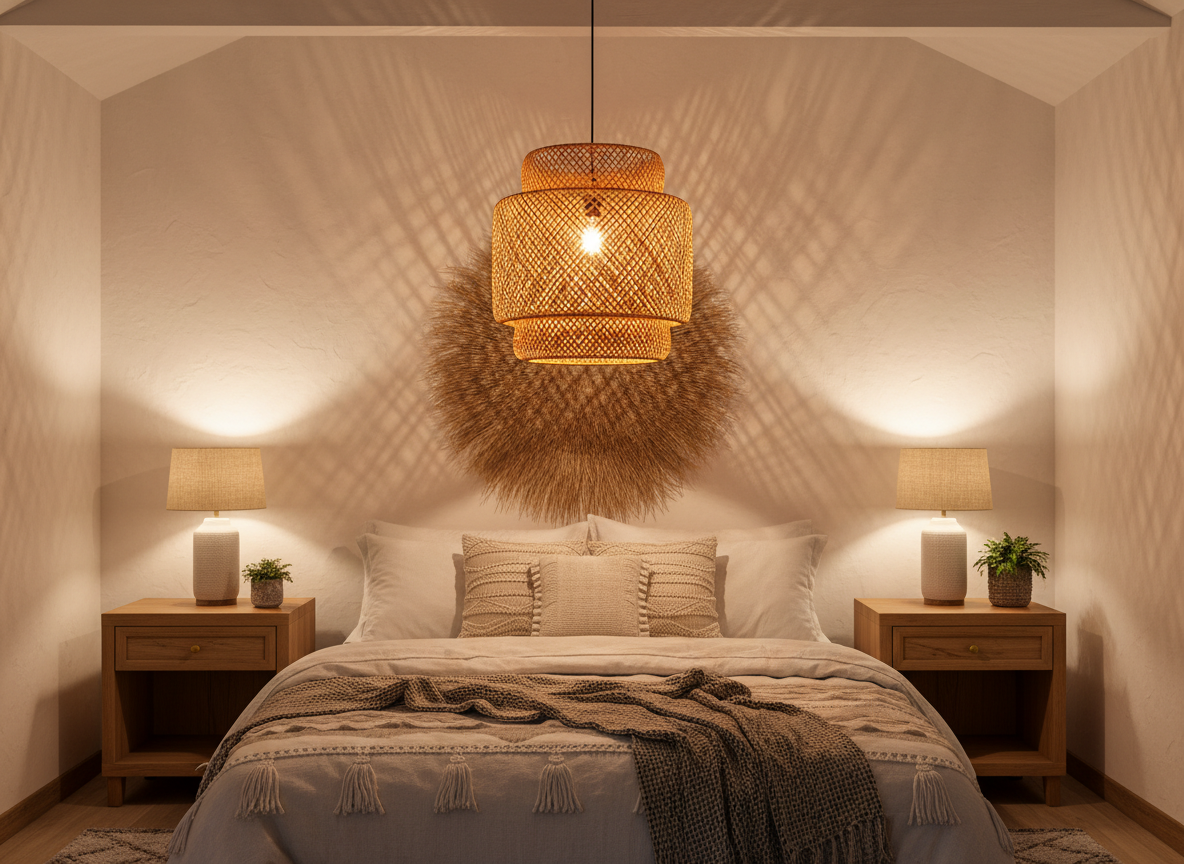
Lighting is the element most often treated as an afterthought in bedroom design, and the most effective boho intervention you can make is to replace any bright, white overhead light with a woven rattan pendant that filters light into something warm, dappled, and atmospheric. Rattan weave creates the same pattern of light and shadow that dappled sunlight makes through tree canopy — it is biophilic lighting in its most literal sense, and the effect on a bedroom ceiling at night is remarkable. Choose a pendant with a tight, intricate weave for a finer shadow pattern, or a loosely woven drum shade for larger, bolder pools of light. Natural rattan in its honey or amber tones pairs best with warm LED bulbs — aim for 2700K to 3000K for the softest, most flattering bedroom light. In a larger bedroom, hanging two pendants at slightly different heights on either side of the bed, above matching nightstands, creates a layered, considered look that replaces the standard bedside lamp entirely. In a smaller room, a single pendant centred above the bed and paired with a string of warm fairy lights along the opposite wall gives adequate light without any overhead glare. The rattan pendant works in harmony with virtually every other material in the boho toolkit — raw wood, woven textiles, earthenware, and live plants all read as cohesive alongside it.
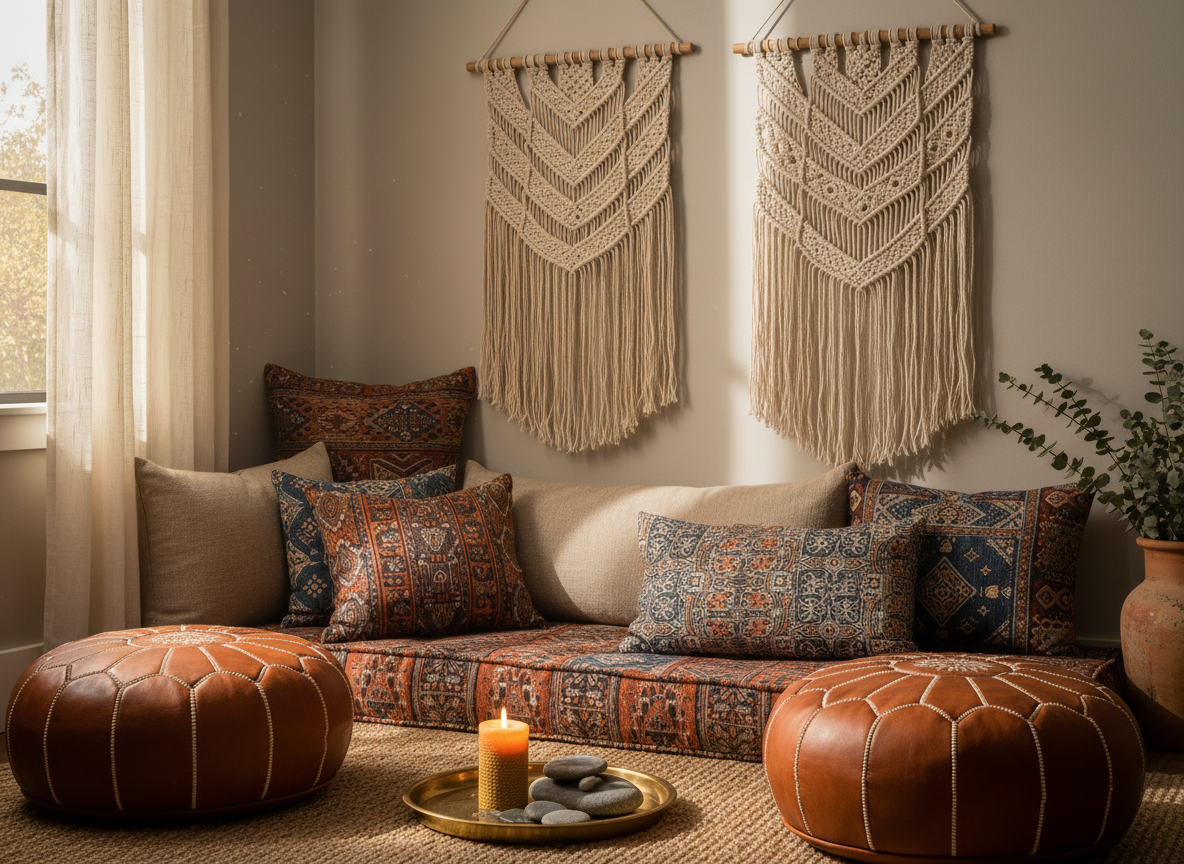
In the boho tradition, the bedroom is more than a place to sleep — it is a sanctuary for stillness, creativity, and quiet ritual. A low meditation or reading nook made from floor cushions and leather or embroidered poufs embodies this philosophy perfectly, and it requires almost no structural investment to create. Choose a corner of the room — ideally beside a window where natural light pools in the morning — and layer the floor with two or three large floor cushions in earthy fabrics: Moroccan leather poufs in cognac or saddle brown, oversized cushions covered in Indian block-print cotton, and a bolster in undyed linen for lumbar support. Over the top of this seating area, hang a small tapestry or a cluster of macramé pieces on the wall to frame the nook and give it a sense of enclosure. A small round brass tray on the floor beside the cushions, styled with a beeswax candle, a small ceramic dish of river stones, and a paperback, completes the picture. This corner creates a psychological separation between the sleeping zone and the resting-but-awake zone — a distinction that can meaningfully improve how you use and feel about your bedroom. It also offers a practical alternative to adding an armchair in a smaller room, providing seating at a fraction of the floor footprint. The aesthetic draws from traditional Moroccan and Middle Eastern salon culture, adapted perfectly for the modern bohemian bedroom.
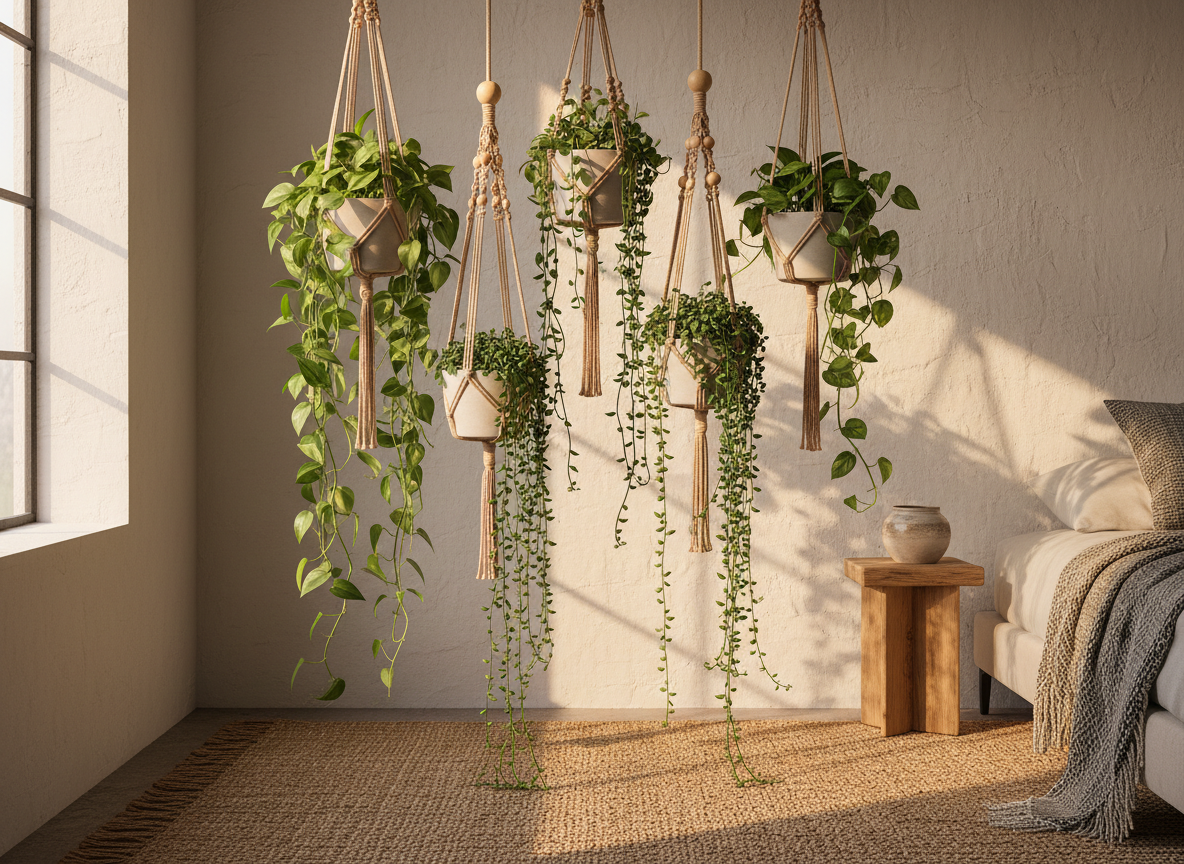
Nothing anchors a boho bedroom in living, breathing authenticity quite like real plants, and the pairing of trailing varieties with handmade macramé plant holders is one of the most visually rewarding combinations in the entire boho toolkit. Pothos, string of pearls, tradescantia, and devil’s ivy are all ideal choices — they trail naturally and beautifully, are tolerant of the lower light conditions typical of bedrooms, and require minimal care. The macramé holder does double duty here: it is both a functional hanging vessel and a textile object in its own right, adding another layer of handmade craft to the room. Hang plant holders at varying heights across a single wall or in a bedroom corner, grouping three or five for the most dramatic effect. Odd numbers always read as more natural and less staged. The movement of trailing plants in a light breeze from an open window adds a subtle kinetic quality that no static décor object can replicate. For a bedroom specifically, pothos and peace lilies are worth noting for their air-purifying qualities — though the effect at a single-plant scale is modest, the psychological benefit of tending to living things in a personal space is well documented. The macramé holders themselves can be sourced from independent craft sellers or made at home with a basic beginner’s knot kit — either way, they carry a handmade, personal quality that mass-produced planters simply cannot match.
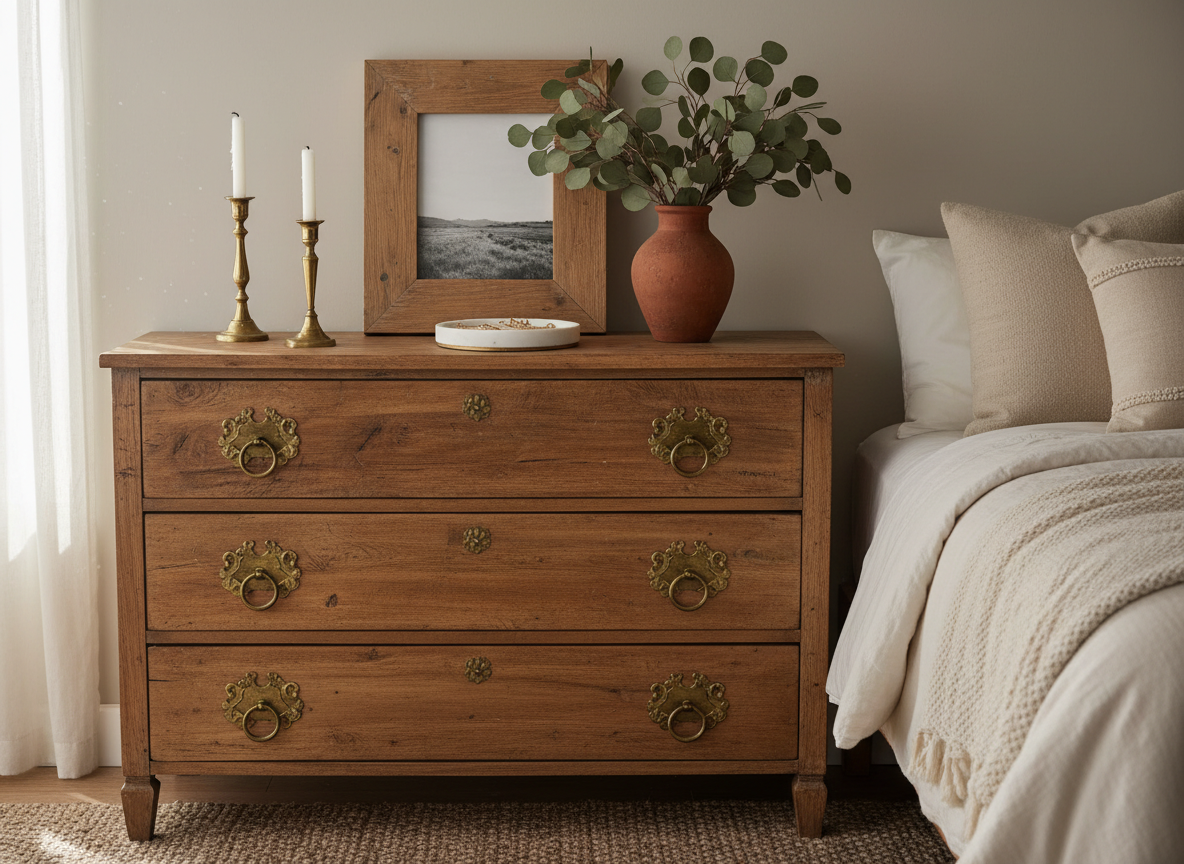
Furniture in a boho bedroom should look like it has a life before you — something found, inherited, or traded rather than delivered in flat-pack. A distressed wood dresser with ornate carved or cast-metal drawer pulls is the kind of piece that does exactly this, and it is one of the most functional boho investments you can make. Look for dressers in solid reclaimed wood — oak, pine, or mango wood all have a natural grain that deepens beautifully with a lightly distressed or whitewashed finish. The carved pulls are the key differentiator: choose hardware in antique brass, oxidised copper, or hand-painted ceramic in Moroccan-inspired blue and white. These small details are where personality lives in bohemian furniture, and upgrading existing hardware on a plain dresser is one of the most cost-effective transformations available. Style the top of the dresser as a considered display surface rather than a dumping ground — a scattering of brass candlesticks, a small ceramic tray for jewellery, a sprig of dried eucalyptus in a slim terracotta vase, and a framed photograph in a raw wood frame creates a dresser-top vignette with genuine visual intention. The dresser in a boho bedroom is not just storage; it is part of the room’s story, a surface that communicates care, curiosity, and a preference for the handmade over the mass-produced.
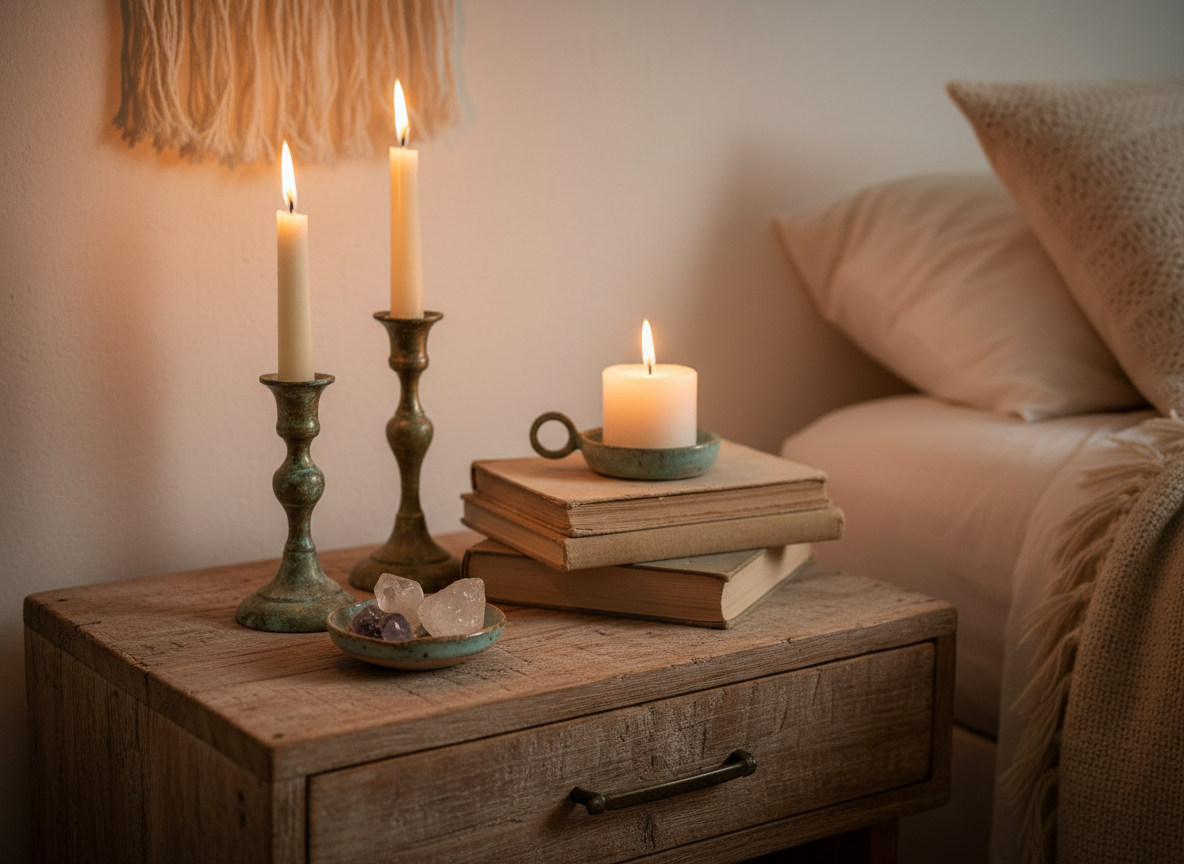
The boho bedroom finds much of its magic after dark, when layered textiles and warm candlelight create an atmosphere that is equal parts intimate and romantic. Brass candle holders with a natural patina — the kind that has developed its own greenish, darkened character through age — are among the best objects you can place on a nightstand to achieve this effect. The aged brass reflects candlelight differently to polished metal: softer, more golden, more diffuse. Pair two or three holders of different heights — a tall pillar holder, a mid-height taper, and a small votive — and cluster them on a weathered wood nightstand alongside a stack of well-loved books and a small ceramic dish of crystals or dried botanicals. The nightstand itself should feel found: raw-edge wood, a vintage bedside table painted in chalk paint, or even a stacked set of reclaimed wooden crates can serve the function while adding character. Beeswax candles are the most congruent choice for the boho aesthetic — their natural honey scent, creamy colour, and longer burn time are well-suited to the considered, slow-living philosophy the style embraces. For a bedroom, ensure any open flame candle is placed safely away from fabric, always within sight while burning, and ideally extinguished before sleep. The visual warmth this combination creates — warm patinated metal, natural wax, worn wood — is hard to replicate with any artificial lighting option.
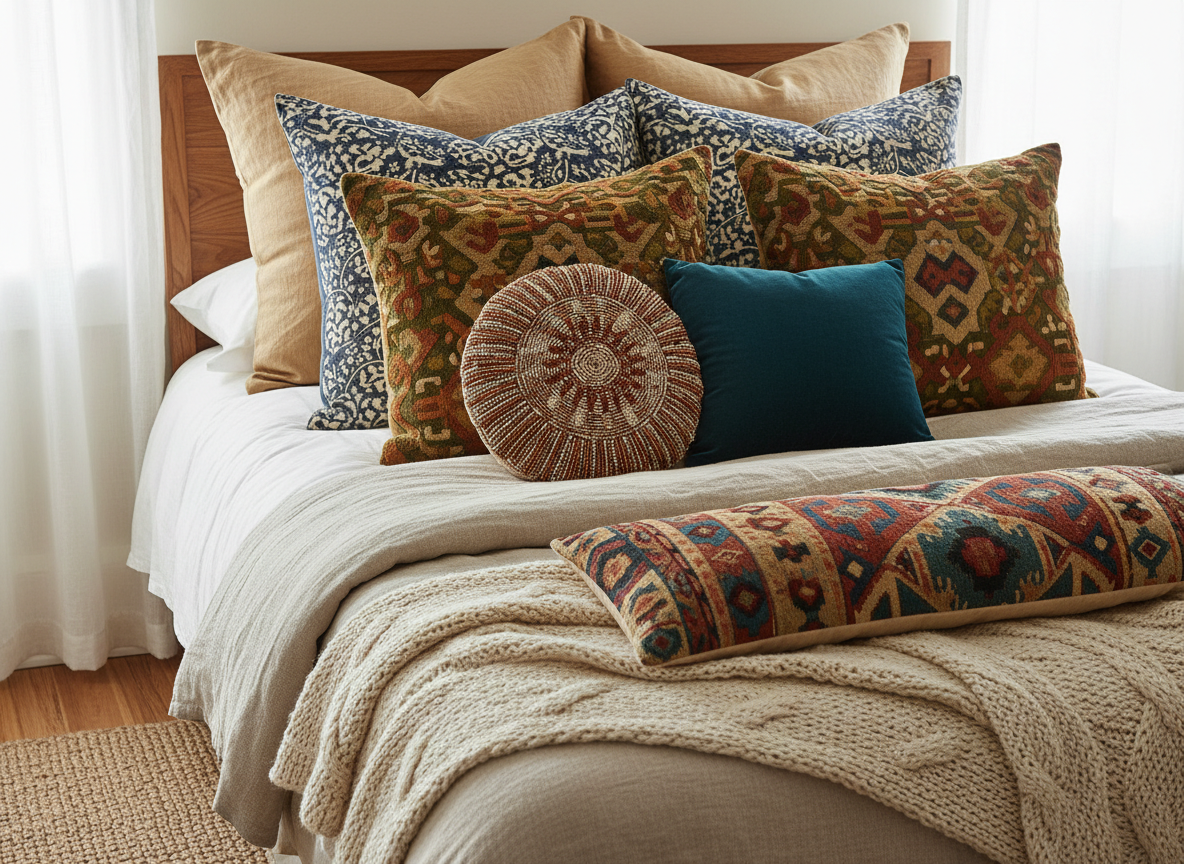
The layered pillow arrangement is one of the most approachable entry points into the boho bedroom, and it is also one of the most transformative. The key is not quantity but diversity: a mix of textures, prints, and sizes that looks collected rather than coordinated. Start with a base layer of large Euro pillows in plain linen or cotton canvas in a neutral tone — oatmeal, warm white, or undyed natural fibre. In front of these, add two standard pillows in contrasting patterns: a block-print cotton in deep indigo and cream, and an embroidered textile in rust, gold, and olive with a geometric tribal motif. Against these, introduce one or two smaller accent pillows in different textures — a tufted velvet in deep teal, a beaded or mirrored Indian textile in warm amber. The final layer is a lumbar pillow in a mudcloth or kilim-print fabric, placed at the very front. Each pillow should feel as though it came from a different place and a different time, which is precisely the point. The earthy colour palette — terracotta, rust, deep green, warm amber, cream — keeps the arrangement cohesive despite the pattern diversity. This is the boho bedroom equivalent of a well-composed outfit: individually interesting pieces that, worn together, create a look that is completely and specifically yours. Swap out pillows seasonally to keep the arrangement fresh without replacing the whole scheme.
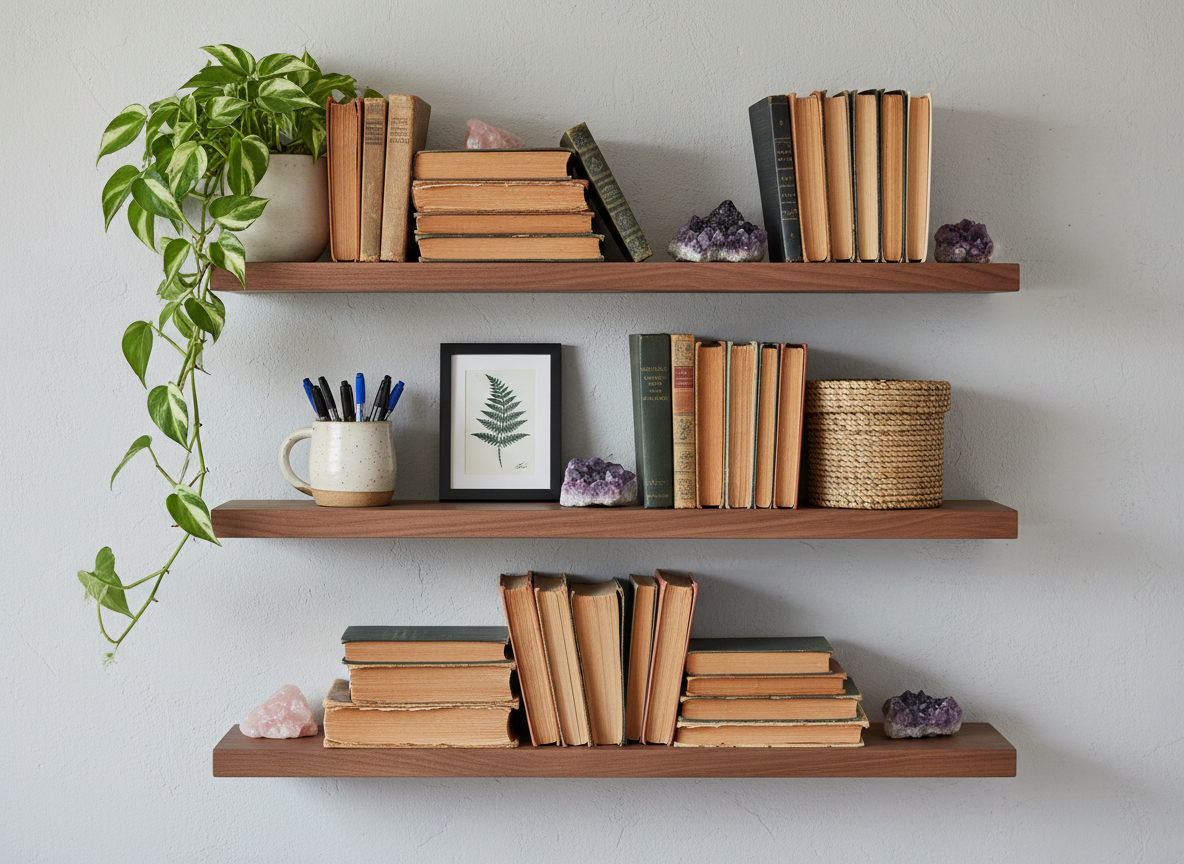
In a boho bedroom, open shelves are not storage solutions — they are a curated display of the objects that matter to you, arranged with enough intention to feel beautiful and enough randomness to feel lived-in. The shelves themselves should be made from natural materials: solid walnut, reclaimed pine with visible grain character, or raw mango wood brackets fitted with rough-sawn planks. Style them in the rule-of-three: small groups of objects with a mix of heights, textures, and visual weights. A row of spines of well-loved paperbacks, a small cluster of tumbled rose quartz and amethyst, a hand-thrown ceramic mug used as a pen holder, a trailing pothos beginning to drape over the shelf edge, a small framed print, a woven basket holding correspondence cards. The objects do not need to be expensive — they need to be personal. The crystals and ceramics serve an important tactile function in a boho shelf display: they bring in the organic, earthy quality that is the aesthetic backbone of the style. Handcrafted ceramics are particularly valuable here, as the slight imperfections of wheel-thrown pottery — irregular edges, variations in glaze — read as warm and human against the smooth precision of mass-produced objects. When building this display over time, let it grow slowly rather than purchasing all at once — the most authentic boho shelves are the ones that accumulate meaning gradually, each new object representing a memory, a trip, or a find.
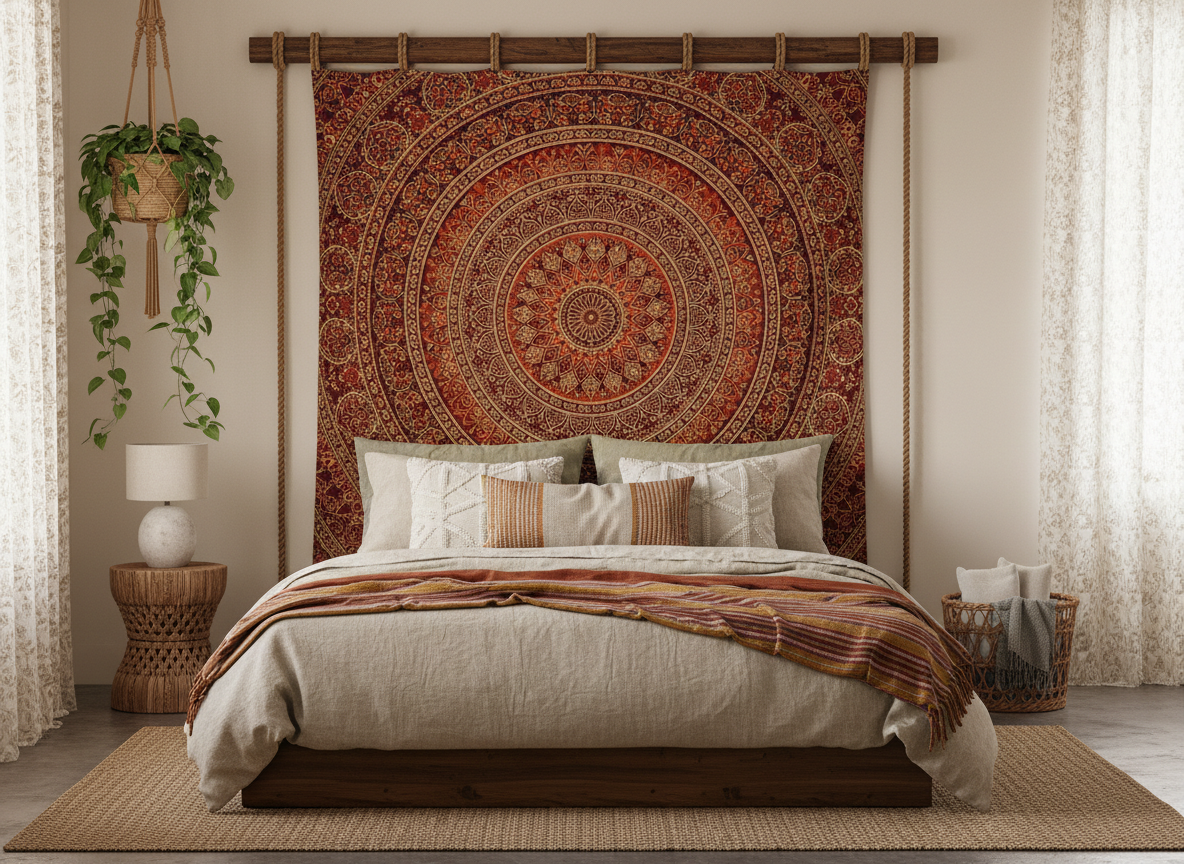
Not every boho bedroom needs a traditional headboard, and in fact the printed wall tapestry is one of the most functional, flexible, and visually impactful alternatives available. A large-format tapestry — hung ceiling to above-pillow-height directly behind the bed — creates the visual anchoring effect of a headboard while also introducing pattern, colour, and global reference in a single object. The best tapestries for this purpose are those in cotton or woven polyester with mandala, paisley, or geometric print in a colour palette that ties together the rest of the room’s textiles. For a warm, earthy boho scheme, look for tapestries in deep burgundy, burnt orange, and gold with intricate medallion patterns. For a softer, more coastal boho palette, a tapestry in dusty blue, white, and pale sage with a large floral or leaf print creates a lighter, airier effect. The tapestry can be hung from a wooden dowel or a simple curtain rail — either method maintains the slightly informal, draped quality that distinguishes this from a framed piece of art. This approach is especially useful in rental properties where drilling into walls is restricted — tapestries can be mounted with removable adhesive hooks with no wall damage. For more ways to personalise your bedroom without major structural changes, our guide to 18 Custom Headboard Ideas for Personalized Style explores the full range of DIY and statement headboard options available.
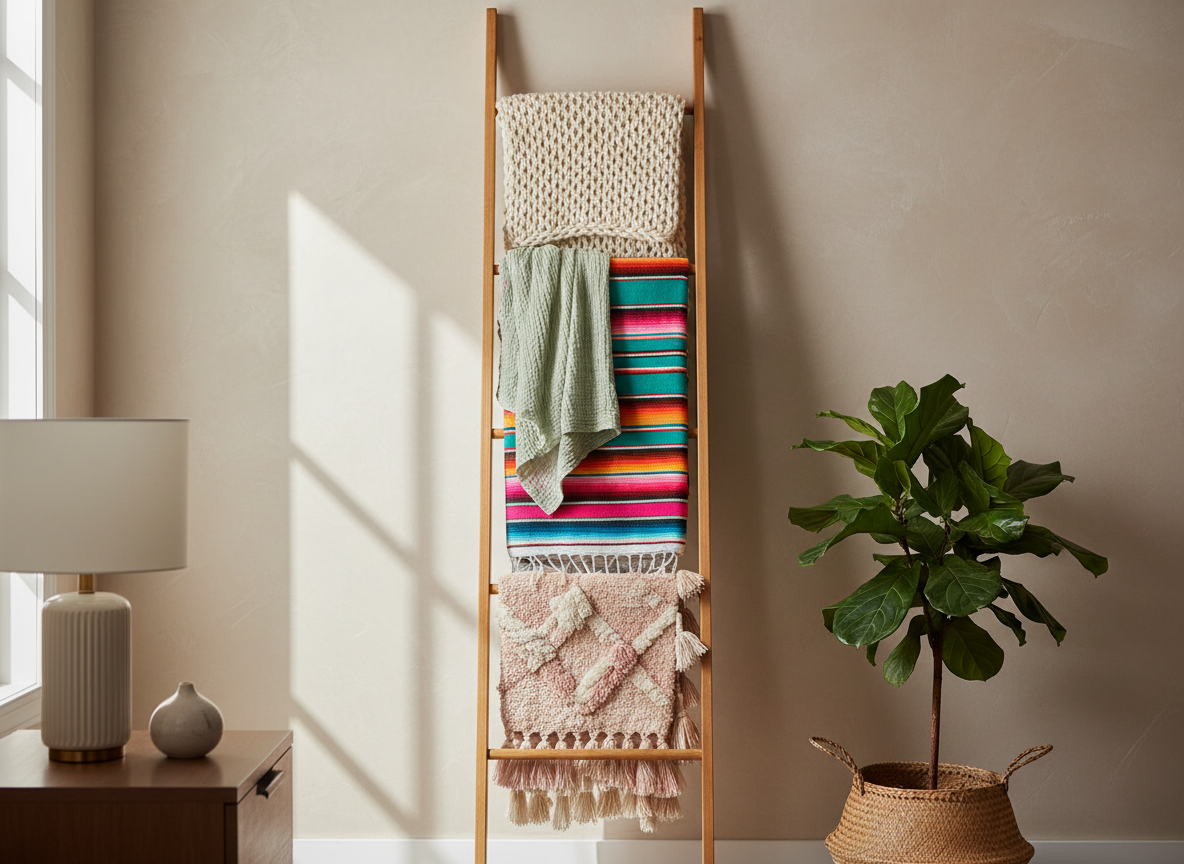
In the boho bedroom, textiles are never folded into cupboards — they are displayed proudly, because they are the most tactile and the most beautiful objects in the room. A tall blanket ladder in raw or lightly stained wood is the perfect vehicle for this: lean it against a wall beside the bed and drape three to five blankets and throws over its rungs, allowing them to hang freely with some overlap. The selection should prioritise texture diversity: a chunky hand-knit throw in cream or oatmeal wool, a lightweight cotton gauze blanket in pale sage, a flat-weave Mexican falsa blanket in bright multicolour stripe, and a tasselled Moroccan pompom blanket in warm pink and ivory. The colour mix should tie back to the room’s palette — earthy, warm, and varied — but the most important quality is the variety of tactile surfaces. Running your hand down a blanket ladder that moves from rough-weave cotton to smooth falsa to cloud-soft knit is a sensory experience that perfectly embodies what the boho bedroom is actually for: comfort experienced with full awareness. The ladder itself can be leaned against almost any wall without fixing — making it one of the most flexible and non-committal ways to add a large-scale visual element to a bedroom. A natural wood ladder in a warm honey finish reads as the most cohesive choice for a boho scheme, grounding the textile display in the organic material palette the style relies on.
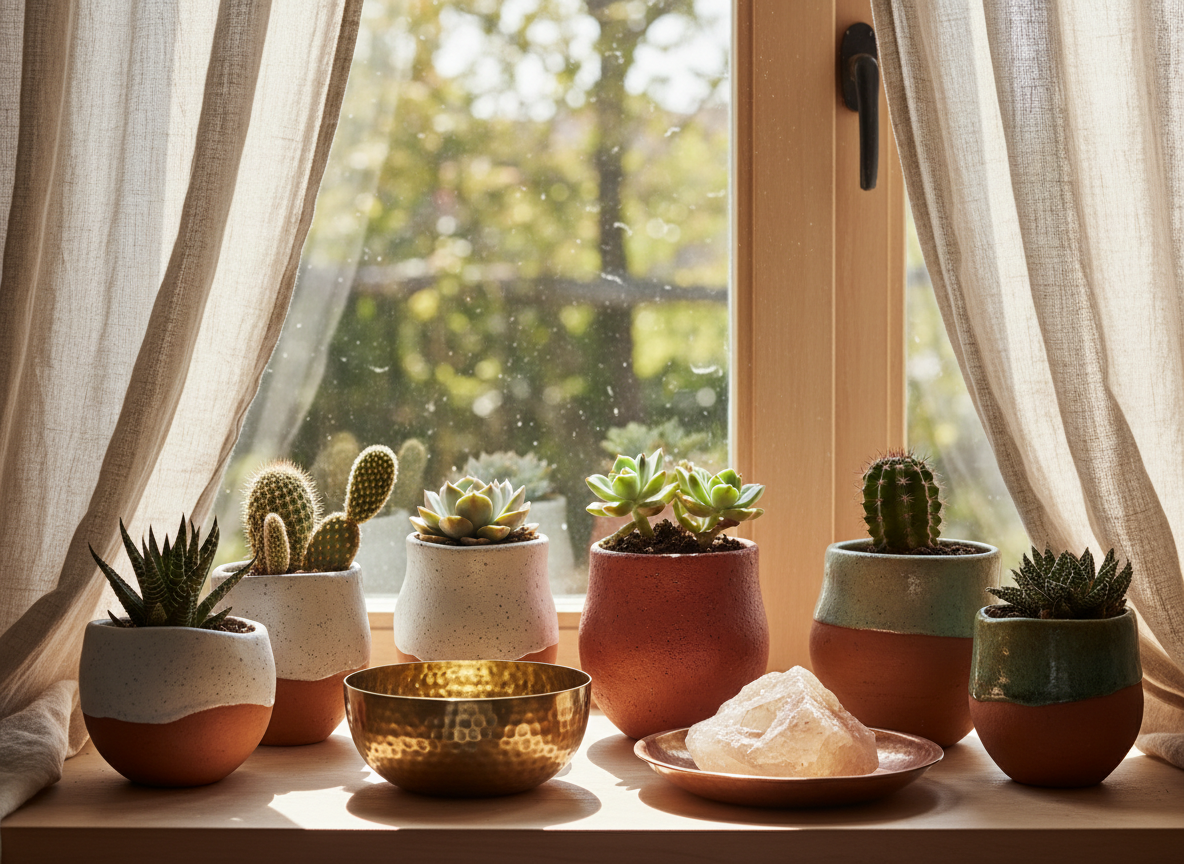
The windowsill in a boho bedroom is prime real estate — a naturally lit ledge that is perfectly positioned for a layered, organic display. The most effective approach combines small handcrafted clay pots, many planted with succulents, cacti, or small trailing herbs, with a few mixed-metal objects that catch and reflect the natural light. The clay pots should vary in size and finish: some fully unglazed in natural terracotta, some partially dipped in a matte white glaze, some painted with simple geometric patterns in black and rust. Among these, introduce a small hammered brass bowl, a silver-toned wire candle holder, and a small copper dish holding a tumbled citrine or clear quartz. The interplay between the warm earthenware and the cool and warm metal tones creates a collected, global quality that is very much at the heart of the bohemian aesthetic. The plants serve both a visual and a functional purpose — succulents and cacti require very little water and maintenance while contributing living texture and colour to a south or west-facing windowsill. The window itself, dressed with sheer linen curtains that allow maximum light while softening the view, frames the entire display beautifully throughout the day. This kind of layered, organic vignette is exactly the type of detail that gives a boho bedroom its personality — the sense that every surface has been considered and that its owner finds beauty in the small and the handmade.
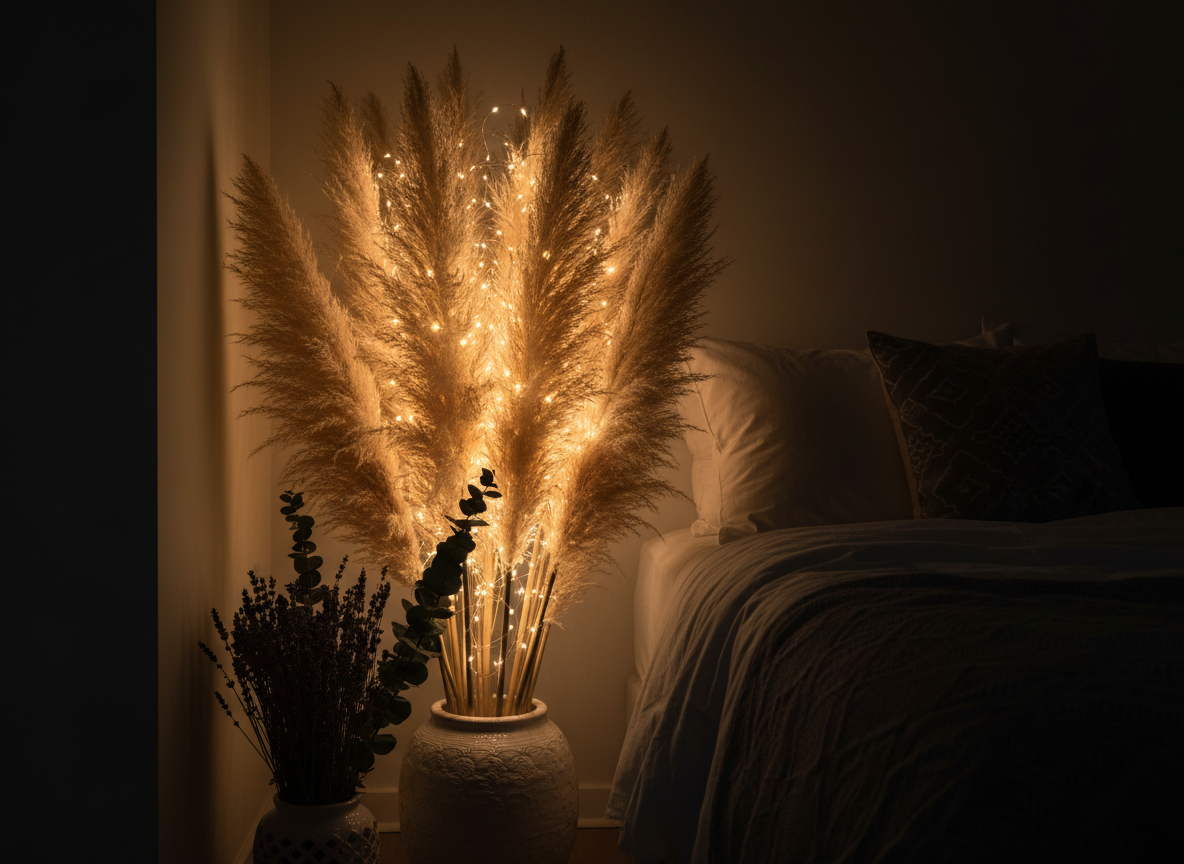
Dried pampas grass is one of the defining organic décor objects of the current era of boho interior design — and when combined with warm fairy lights, it creates a nighttime bedroom atmosphere that is difficult to describe without seeing it. The feathery, champagne-coloured plumes of dried pampas catch and diffuse light in a way that nothing else quite replicates: the light glows deep into each frond, illuminating the individual fibres and casting a warm, golden aura around the entire arrangement. Place a large vase or ceramic floor pot containing three to five tall pampas grass stems in a bedroom corner — floor-to-ceiling height is ideal for maximum drama — and weave a single string of warm white fairy lights in and out of the stems, allowing the wire to disappear into the fronds. The effect when the rest of the room’s overhead light is off is extraordinary: a warm, amber-glowing, softly rustling sculptural piece that reads as living even though it is entirely dried. Pampas grass pairs beautifully with other dried botanicals — bunches of dried lavender, preserved eucalyptus, and bleached lunaria add further texture and a subtle botanical scent. One note on sustainability: look for pampas grass grown domestically (it is invasive in some regions if planted outdoors), and dry your own if possible by hanging freshly cut stems upside down for two to three weeks. For more ideas on how texture and warmth can transform a bedroom space, our guide to 25 Cozy Room Decor Ideas With Layered Textures offers a full exploration of layered, tactile decorating strategies.
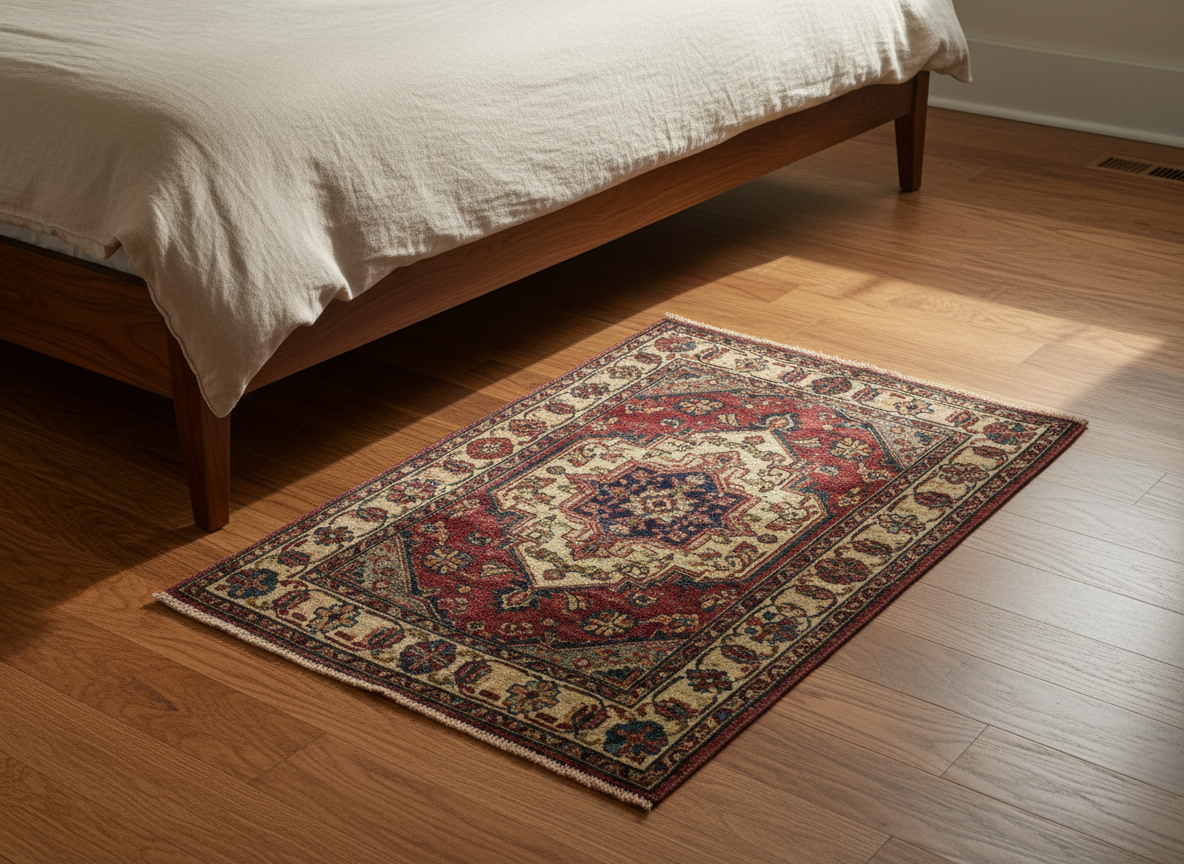
The space on either side of a bed is one of the most overlooked zones in bedroom design, and placing a small, characterful rug in each of these spots is one of the easiest upgrades available to a boho bedroom. The foot-to-floor sensation first thing in the morning — stepping from a warm bed onto a soft, patterned rug rather than cold wood or plain carpet — is a small luxury that has an outsized effect on how your bedroom feels to live in. Persian-inspired rugs in wool or flat-weave cotton are ideal for this purpose: their intricate medallion and border patterns in jewel tones, their slightly worn vintage quality, and their durability make them perfect for a high-contact bedroom zone. Look for smaller sizes — 60x90cm or 80x120cm — that fit neatly between the bed and the wall without overlapping the main room rug. If you have a central kilim or jute base rug already, the bedside pieces create that layered, rug-on-rug quality that is one of the most distinctively boho floor treatments available. Vintage or secondhand Persian-style rugs are widely available through estate sales, antique markets, and online vintage sellers — and they tend to be significantly more affordable than new equivalents while being considerably more characterful. A slightly worn edge, a gently faded colour, or a small imperfection in the weave is not a flaw in this context; it is the evidence of a life well lived, and it is exactly what the boho bedroom celebrates above all else.
There is no single blueprint for the perfect boho bedroom — and that, ultimately, is the point. The ideas in this guide are starting points, not rules. Begin with the piece that speaks loudest to you: perhaps the macramé wall hanging that anchors the whole wall, or the terracotta paint colour that changes how your room feels in every light. Layer from there — a kilim rug over jute, a handful of embroidered pillows, a rattan pendant where a flat overhead light used to be. The boho bedroom builds itself incrementally, over visits to flea markets and slow afternoons in vintage shops and impulsive moments when a pampas grass stem seems like exactly the right thing to bring home.
What makes these ideas work is not their individual impact but their accumulation: the way a distressed wood dresser and a macramé plant holder and a pair of vintage brass candle holders on a weathered nightstand all point in the same direction — toward warmth, curiosity, texture, and the simple pleasure of a space that feels completely and specifically yours. Try one idea this weekend. Let the room grow from there.
G2G Team
05-20-2026
Let’s Build
Contact us todayGet daily tips and tricks for making your best home.
2025 Green to Gorgeous