3 MIN READ
Gardening
Written By
G2G Team
Published
May 20, 2026
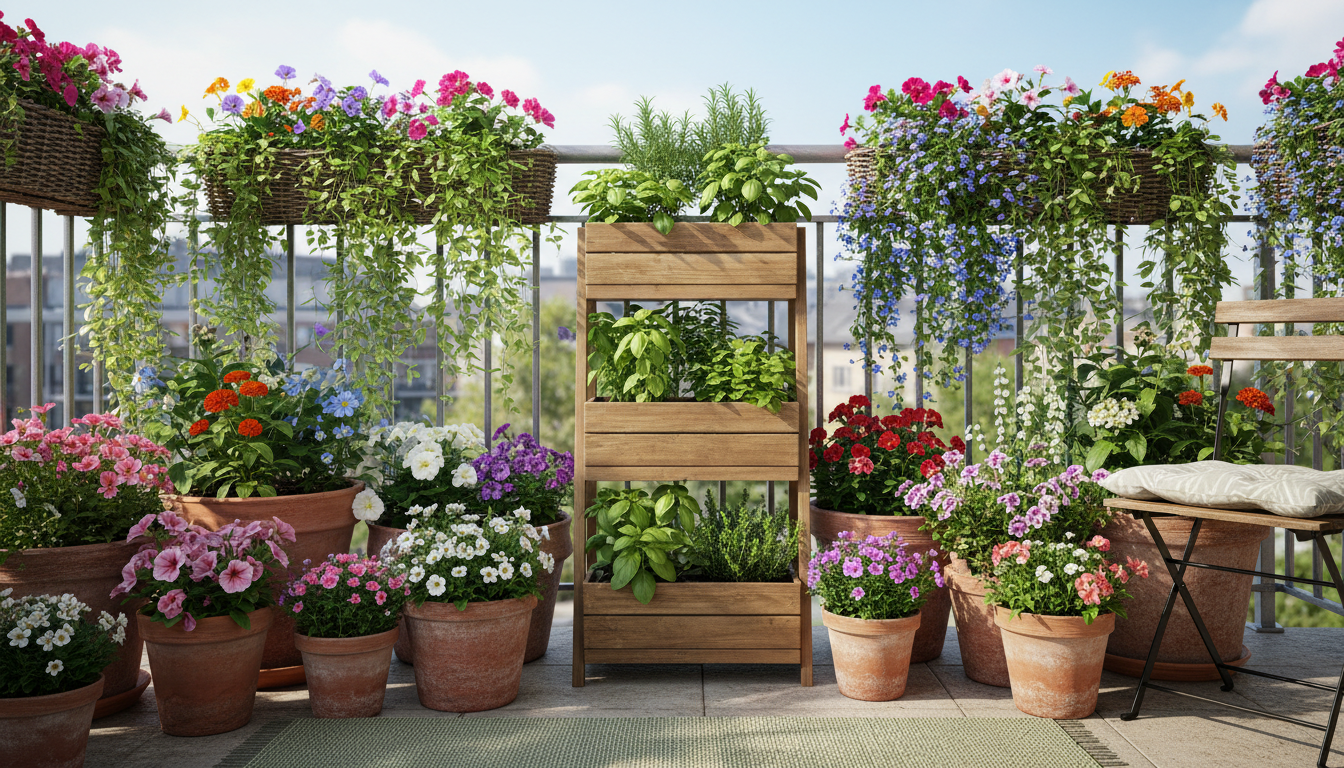
Picture a Sunday morning in a garden that’s smaller than most living rooms — a narrow apartment balcony, a city townhouse patio, or a sun-drenched windowsill lined with terracotta. The mint is brushing against the basil, tomato vines curl upward on a bamboo stake, and geraniums in shades of coral and cream spill over the edge of a wooden crate. There is colour at every level, fragrance in the warm air, and the satisfying weight of a ripe strawberry dropping into your hand. This is the promise of container gardening: a lush, productive, and deeply personal outdoor space that asks nothing more than a handful of pots, the right soil mix, and a little patience.
Small-space gardening has become one of the fastest-growing areas of home design as more people trade suburban lawns for apartment balconies, rooftop terraces, and compact courtyard gardens. And while the square footage may be limited, the possibilities within that frame are anything but constrained. With the right container garden ideas, a six-foot balcony can become a working herb kitchen, a dwarf fruit tree orchard, or a trailing flower cascade that rivals any cottage border.
From galvanized metal troughs to repurposed wine barrels, from self-watering window boxes to stacked wooden crate strawberry towers, the containers themselves have become as much a design feature as a growing vessel. Whether you are a first-time gardener or a seasoned grower looking to maximise a constrained outdoor space, these 17 container garden ideas will help you think vertically, creatively, and seasonally — filling every inch of your small space with colour, texture, and flavour all year long.
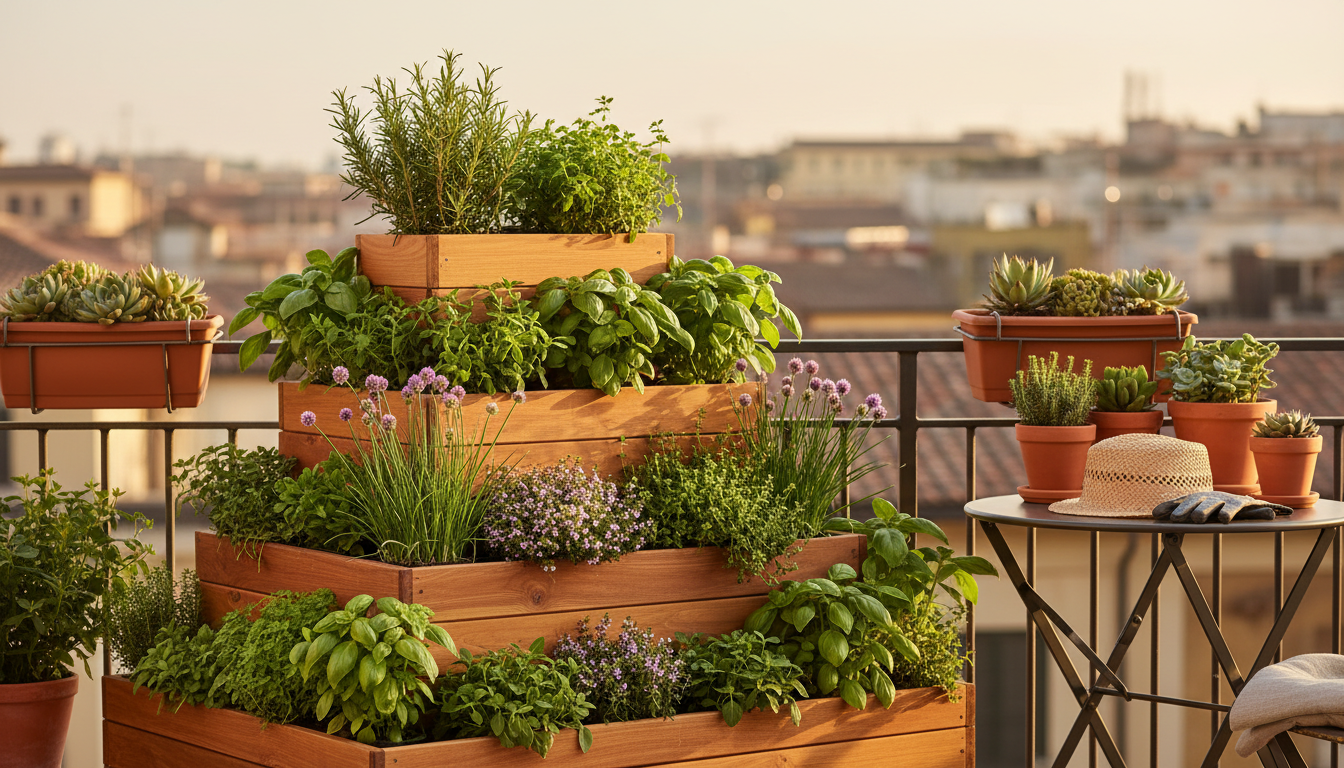
When floor space is at a premium, the answer is always the same: go vertical. A tiered wooden planter tower does exactly that, stacking three to five individual growing shelves in a footprint smaller than a dining chair. Cedar is the standout choice here — naturally rot-resistant, pleasingly pale when new and weathered silver-grey with age, and light enough to move when the seasons change. The shelves stagger outward in steps, each one wider than the tier above, so every level catches full light without shadowing the plants below.
Fill each shelf with culinary herbs arranged by usage: the bottom tier for bushy Mediterranean herbs like rosemary, thyme, and oregano that love heat and excellent drainage; the middle for chives, parsley, and coriander; the top tier, closest to eye level, for tender basil that needs the most attention and the quickest reach. The result is less a planter, more a living pantry — a structure that earns its place on any balcony or patio by pulling double duty as both garden and kitchen store. Use a breathable liner on each shelf to protect the wood from moisture while still allowing drainage, and wipe the wood with a plant-safe oil annually to preserve the grain and slow weathering.
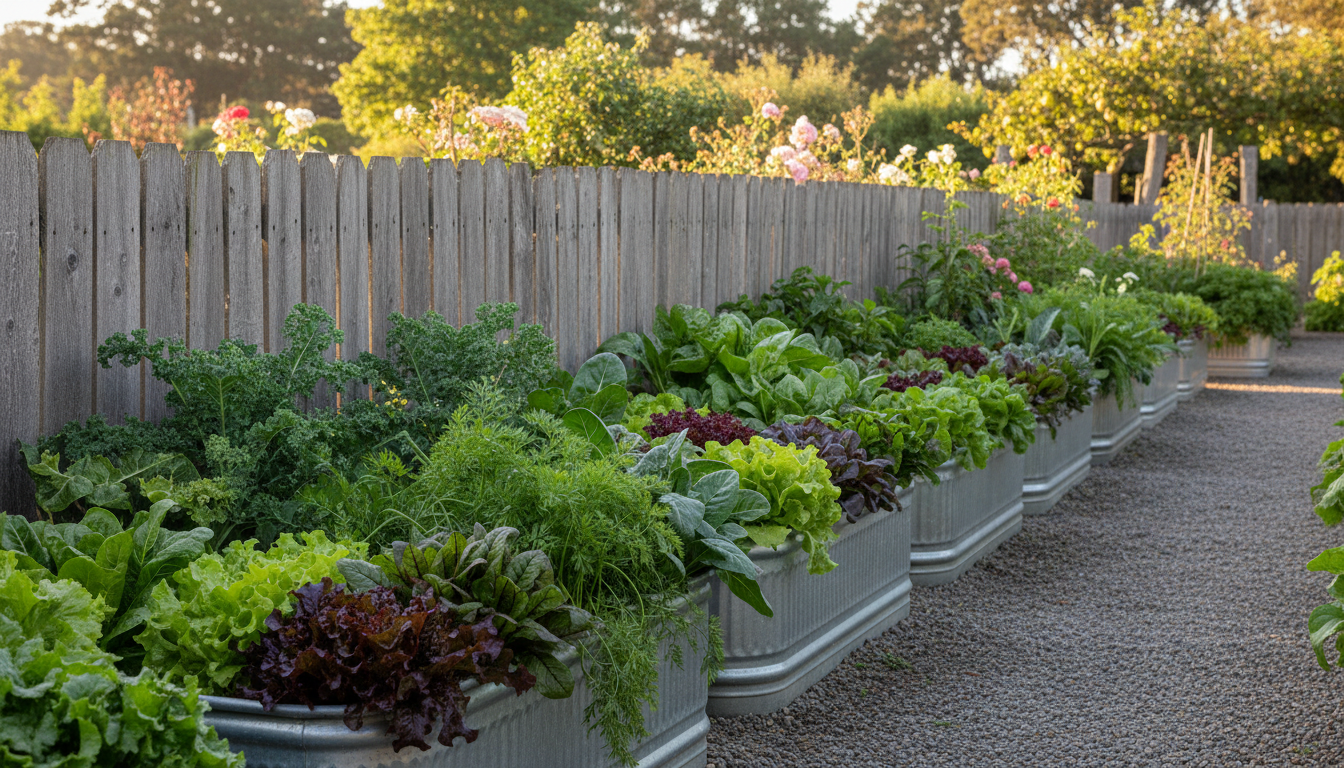
There is something quietly industrial and thoroughly satisfying about a row of galvanized metal troughs parked along a fence line. These long, low containers — originally livestock feeding troughs — come in lengths from 60 cm up to 180 cm, making them ideal for narrow strips of garden that would otherwise collect only weeds and shadow. Their corrugated steel sides add texture and a pleasingly utilitarian edge that pairs as easily with modern minimalist fencing as it does with weathered timber boards.
The key to success is drainage: drill a row of 1 cm holes along the base, then layer the bottom two inches with gravel or perlite before adding a quality loam-based compost. Root vegetables thrive here — carrots, radishes, and beetroot love the depth of a trough — and you can grow successive crops through spring, summer, and early autumn without ever running short on space. Pair two troughs side by side for a kitchen garden capable of supplying salad leaves, spring onions, and climbing beans on a simple bamboo teepee lashed together at the top. The galvanized finish develops a natural patinated look over time, shifting from bright silver to a matte, slightly weathered grey that only improves with age and perfectly complements both urban and rural garden settings.
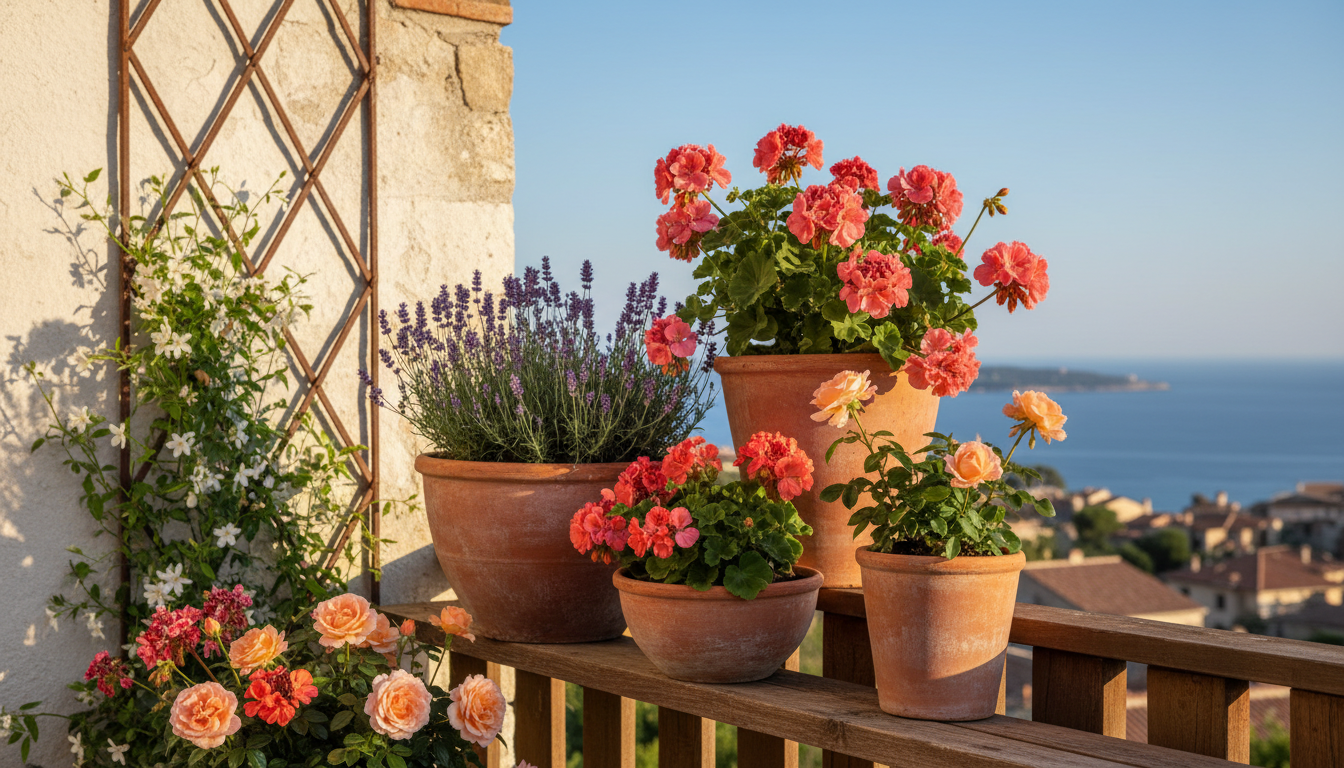
Terracotta has been the gardener’s companion for thousands of years, and its enduring popularity is no accident. The warm, earthy orange-brown of an unglazed terracotta pot brings a sense of the Mediterranean to any balcony — from a Lisbon rooftop to a London flat — and gathered in a cluster, pots of varying heights and diameters create what designers call a “found collection” aesthetic, as if the containers have accumulated naturally over years rather than been purchased in a single trip.
Position five to nine pots at different heights by placing shorter ones on stacked bricks or upturned saucers to create levels. Fill with trailing pelargoniums in deep salmon and white, upright lavender in complementary blue-purple, and compact patio roses in apricot for a palette that looks as though it was plucked from a Provençal garden wall. The terracotta itself regulates temperature beautifully — the porous clay breathes, preventing roots from overheating in direct afternoon sun — though it does dry out faster than glazed or plastic alternatives, so check moisture levels daily during high summer. These pots carry enough weight to remain stable in wind on exposed upper-floor balconies, and the natural material develops small surface cracks and moss patches over time that only deepen their character.
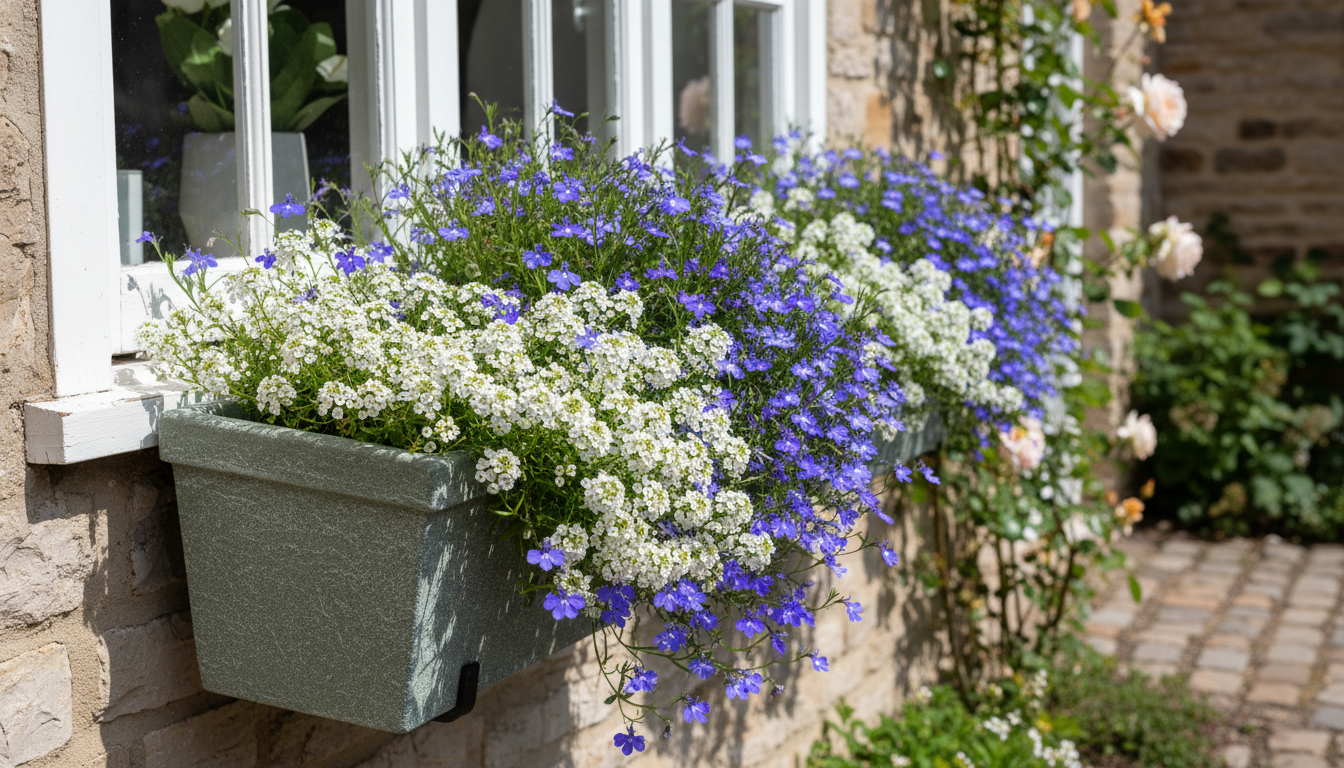
Self-watering window boxes are among the most practical inventions in small-space gardening, and yet they remain underused by homeowners who haven’t discovered them. They work on a simple reservoir principle: a separate water chamber sits below the growing medium, connected by a wick or capillary mat that draws moisture upward into the roots as needed — giving plants consistent hydration without the feast-and-famine cycle of hand-watering. The result is healthier root systems, less yellowing foliage, and far fewer casualties during busy or forgetful weeks.
The most effective choices are UV-resistant polypropylene boxes that convincingly mimic the look of cast iron, stone, or natural fibre, available in lengths up to 80 cm to span most windowsills. Plant trailing lobelia in vivid blue-violet alongside white alyssum for classic cottage charm, or take a kitchen-focused approach with cherry tomatoes and trailing nasturtiums whose edible flowers add pepper and visual drama. Refill the reservoir every five to seven days in summer, less in cooler months, and you’ll spend more time admiring the display than maintaining it. Self-watering boxes work equally well on balcony railings with U-bolt brackets, freeing up precious floor space and putting colour at eye level where it makes the greatest visual impact.
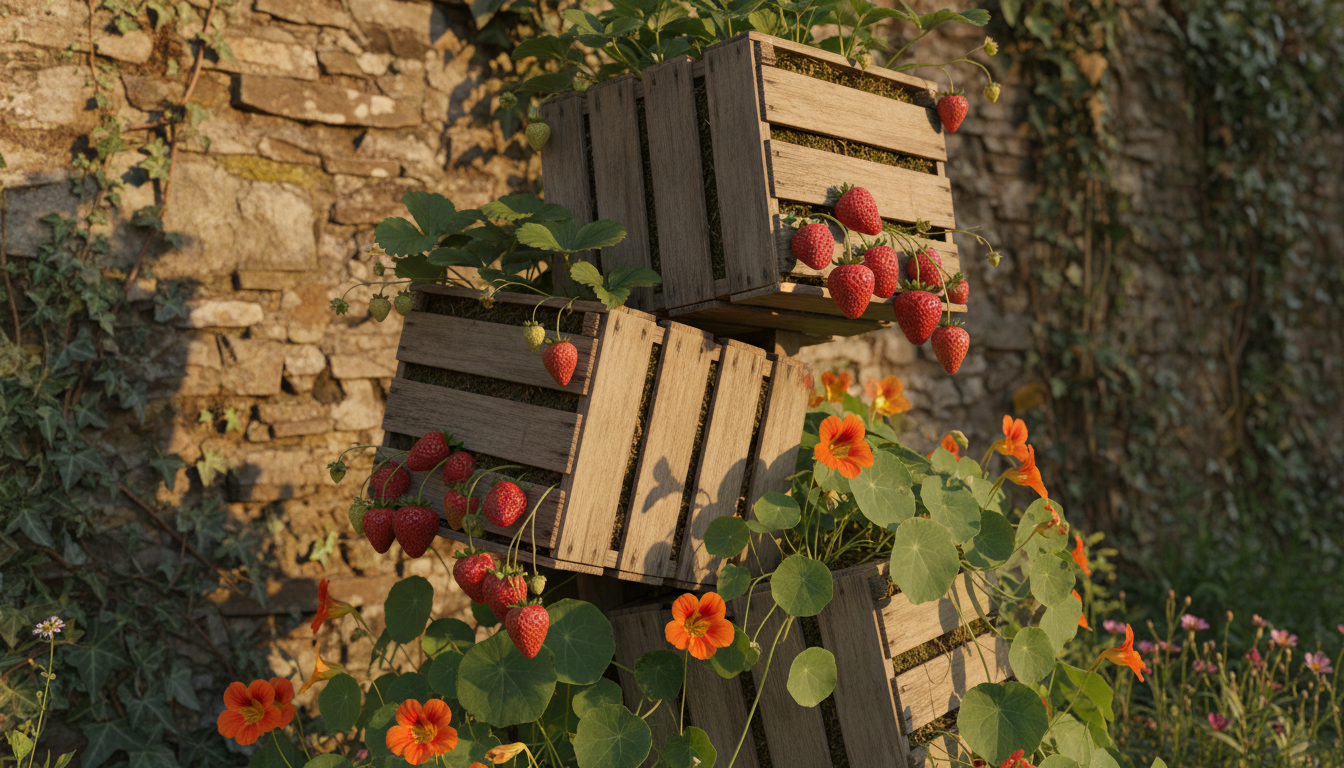
Wooden fruit crates — the kind that once held apples or wine bottles — have a second life as some of the most characterful small-space planters available. When stacked and offset at 90-degree angles, three or four crates form an open-sided tower that gives strawberries exactly what they need: excellent airflow, sharp drainage through the slatted base, and a vertical growing structure that lets fruit hang freely to ripen without rotting on damp soil. The arrangement turns what is typically a ground-level crop into a vertical feature visible from across the garden.
Line each crate with burlap hessian before filling with a strawberry-specific compost enriched with slow-release fertiliser. Plant alpine varieties like Mignonette or the perennial Mara des Bois for intense flavour and a long harvest season running from June into September. The fruit hangs over the crate edges in clusters, accessible from every angle without bending. Between the crates, tuck in trailing nasturtiums whose peppery flowers attract beneficial insects while deterring aphids — a companion planting pairing that earns its keep both visually and practically. The raw wood softens beautifully over seasons with weathering, eventually taking on a silvery driftwood tone that looks entirely intentional against a brick wall or pale timber fence.
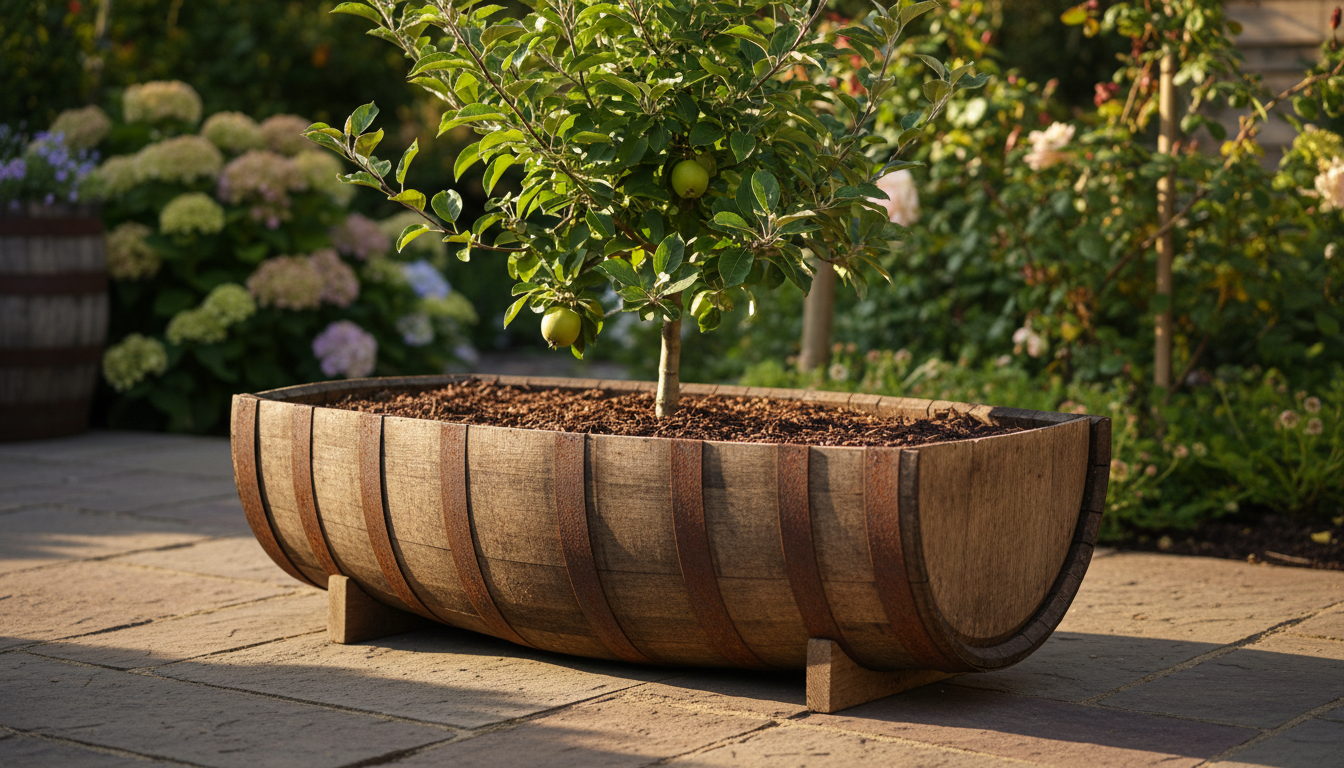
A half-barrel oak planter is the kind of container that anchors a small garden — substantial, handsome, and capable of supporting something truly impressive over the long term. Former whisky or wine barrels, cut in half and left with their natural iron hoops intact, offer around 100 litres of growing volume. That’s enough for a dwarf apple, pear, fig, or olive tree to establish itself and fruit productively for five to ten years before needing a larger pot or root pruning.
Choose a self-fertile dwarf cultivar suited to container growing: ‘Patio Braeburn’ apple, ‘Conference’ pear on a Quince C rootstock, or a Brown Turkey fig are all excellent choices that reward patience with genuine harvests. Fill with a mix of loam-based compost and 20 percent perlite for drainage, and top-dress with a 5 cm mulch of bark chips to retain moisture and regulate temperature. Place on wheeled caddies from the outset — the weight of a planted and watered half-barrel makes solo moving simply impossible otherwise — so the tree can follow the sunniest patch of your patio through the changing seasons. Feed with a high-potassium liquid fertiliser from late spring onward to support fruit development, and repot every three years with fresh compost to replenish depleted nutrients.
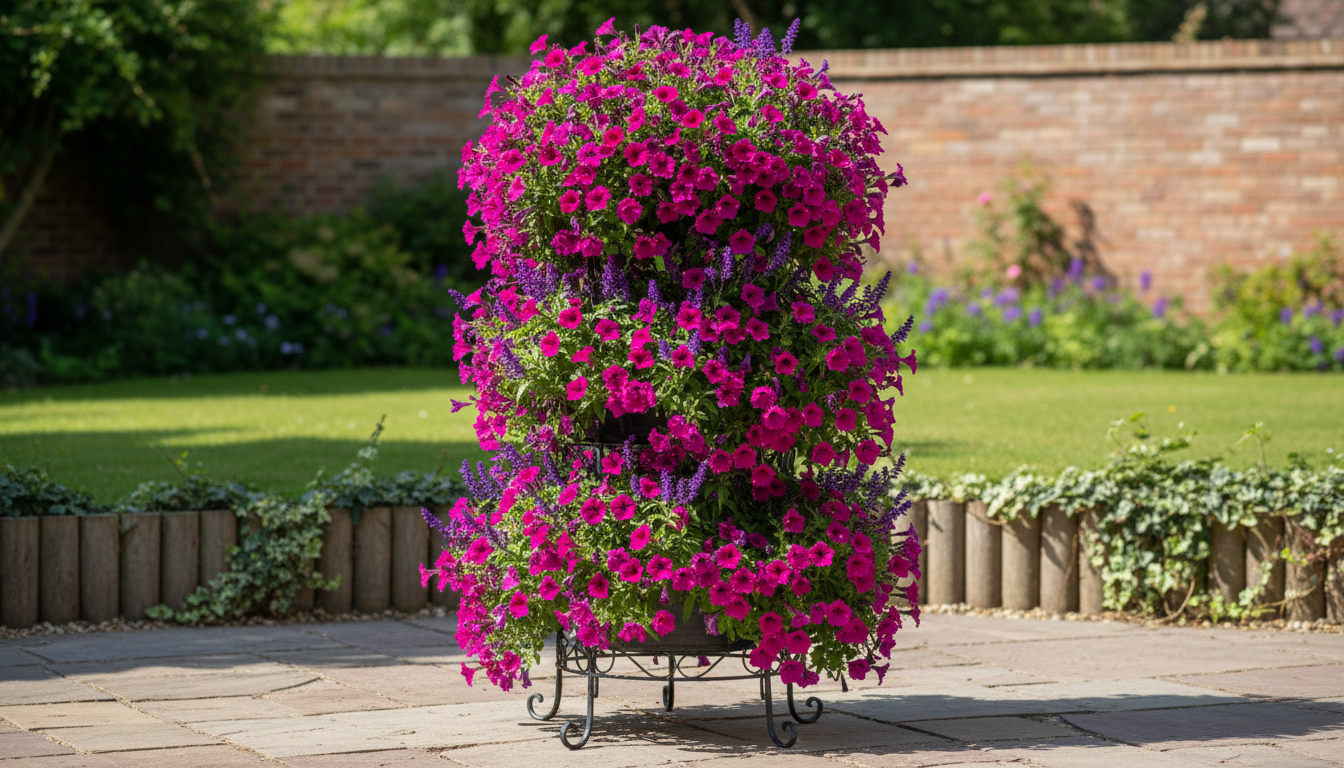
Standard hanging baskets are nothing new, but stacking them vertically on a single freestanding column transforms a one-basket idea into an entire living wall of cascading colour and fragrance that occupies almost no horizontal floor space. Hanging basket columns are powder-coated steel structures — typically 150 to 180 cm tall — with four to six arms extending outward at different heights to hold individual wire baskets. They work exceptionally well on small patios where wall drilling isn’t possible and where every inch of railing is already occupied.
Fill alternate baskets with trailing and upright plants for visual rhythm: Surfinia petunias in deep magenta cascading downward, lemon thyme spreading sideways across the middle, upright salvia in violet-blue catching the eye at the top. The interweaving of flower and herb creates a display that’s as useful as it is beautiful — you can snip lemon thyme for cooking while the petunias bloom overhead. Water thoroughly every day in summer, as hanging baskets dry out far faster than ground-level containers due to air circulation on all sides. Mix a slow-release fertiliser granule into the compost at planting time to reduce the need for weekly liquid feeding, and deadhead flowers regularly to keep the display generous and continuous from May through to the first frost.
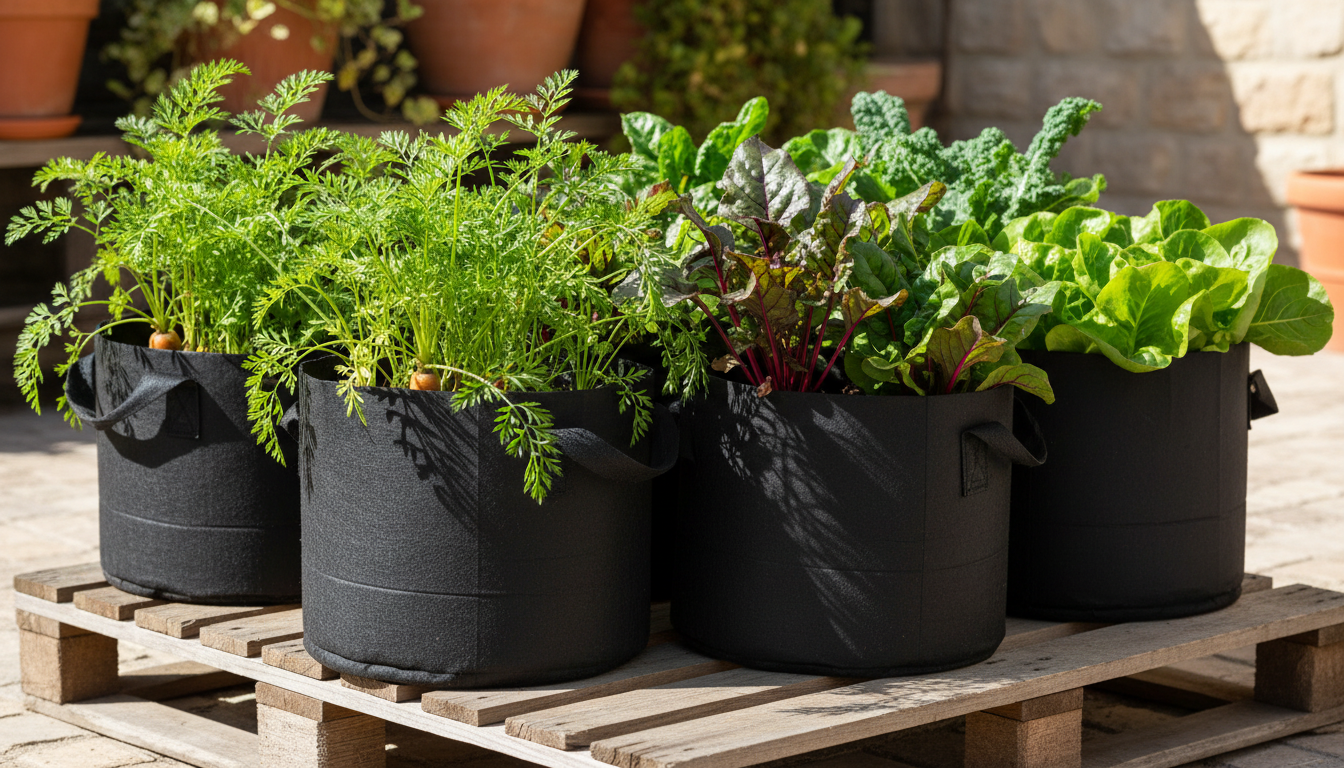
Fabric grow bags have changed the way small-space gardeners approach root vegetables, a crop traditionally associated with deep, in-ground beds. Made from breathable non-woven polypropylene, these containers allow air to reach the root zone from all sides — a process called air pruning, where roots that reach the bag’s permeable edge stop growing outward and redirect energy inward rather than circling the container as they do in rigid plastic pots. The result is a denser, more branched root system and measurably healthier plants. According to the Royal Horticultural Society, most vegetables including root crops can be grown successfully in containers with sufficient depth, drainage, and consistent moisture.
The 40-litre size is the sweet spot for most vegetables: deep enough for parsnips and beetroot, wide enough for a half-dozen potato plants, and light enough when empty to fold flat and store over winter. Plant a mix of Chantenay carrots, golden beetroot, and Little Gem radishes for a succession of harvests from early spring to late autumn. The dark fabric absorbs warmth from the sun, extending the growing season at both ends. If you’re also growing plants indoors, you might enjoy our ideas for bathroom plants that enhance air quality, many of which double as compact kitchen companions.
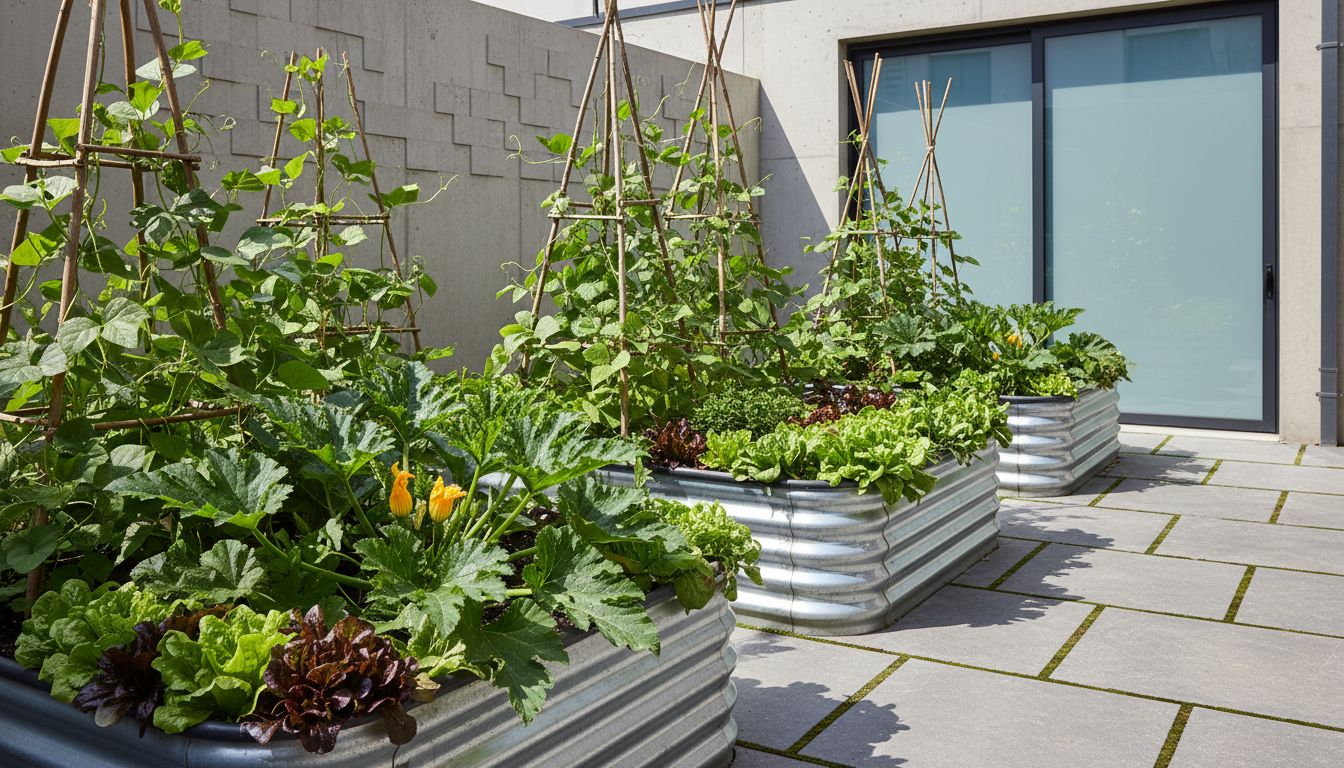
Corrugated metal planter beds have made the leap from the vegetable patch to the design showroom, and it is easy to see why. The ribbed steel panels reflect light in a way that gives any garden an industrial-cool edge — a visual language borrowed from warehouse architecture and farmland infrastructure that feels surprisingly at home in urban courtyard gardens, rooftop terraces, and contemporary patio spaces. Galvanized steel finishes resist rust for fifteen-plus years without treatment, while Corten weathering steel develops a rich, russet-brown patina over two to three seasons that harmonises beautifully with timber decking and stone paving alike.
Standard corrugated raised beds come in heights of 30 cm to 80 cm, with the taller versions eliminating almost all bending during planting and harvesting — a genuine ergonomic advantage that becomes more valuable each season. Fill with a 50/50 mix of topsoil and compost, and plant intensively: courgettes at one end, climbing beans on a central trellis panel, and a border of cut-and-come-again salad leaves along the sunny front edge. The metal sides warm up quickly in spring sun, giving seedlings a head start of two to three weeks compared with unheated soil beds. The combination of bold material and productive planting turns a practical growing structure into a genuine design statement in any outdoor space.
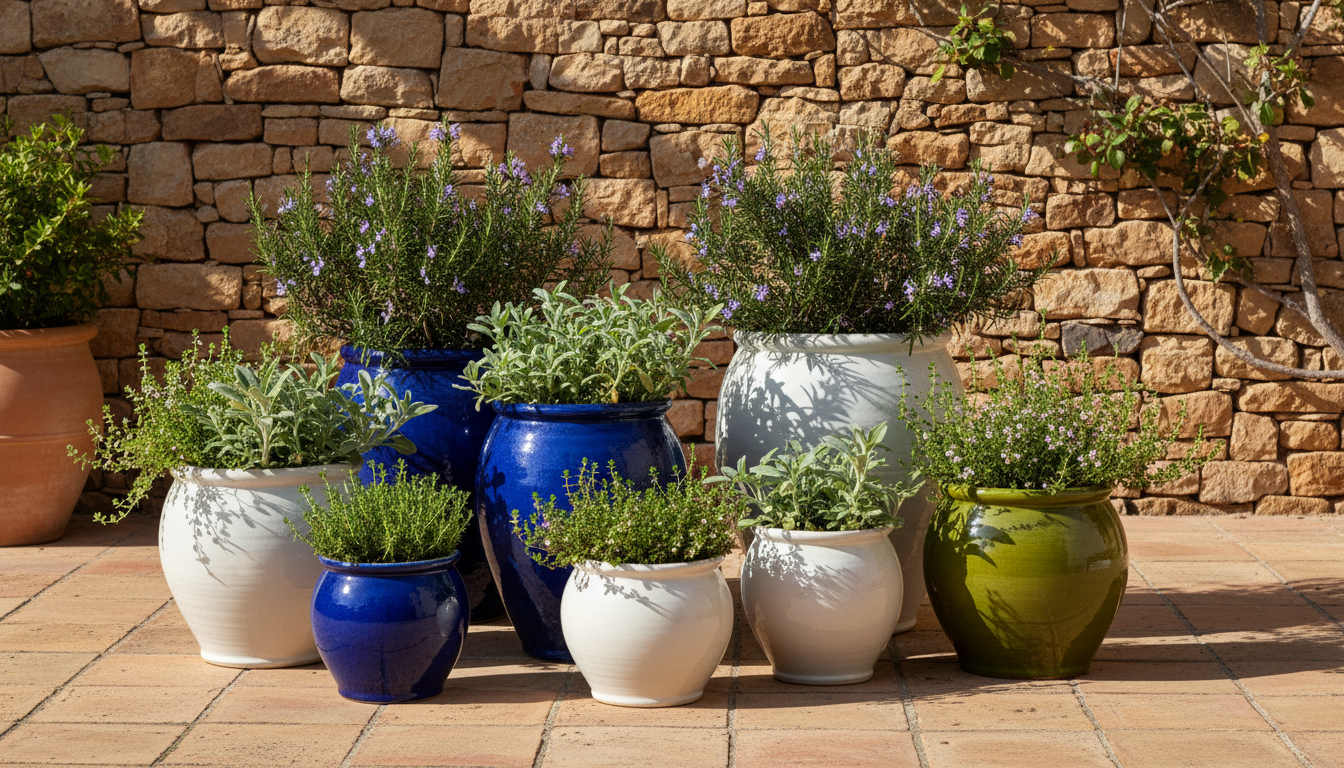
A collection of ceramic glazed pots in cream, cobalt, and olive green brings the feeling of a sun-drenched Cretan hillside to even the smallest north-facing patio. The glaze seals the clay beneath, reducing moisture loss and making these pots better suited to Mediterranean drought-tolerant herbs than their unglazed terracotta counterparts — plants like rosemary, sage, thyme, and Greek oregano that strongly prefer their roots slightly dry between waterings rather than sitting in consistently moist compost.
Arrange three to five pots in descending height order, placing the tallest against a wall or fence at the back and stepping them forward in tiers to create a small stage. The variation in pot height adds movement and depth, making even a modest grouping look considered and deliberate. Add a decorative mosaic saucer beneath each pot to catch overflow and reinforce the Mediterranean colour story with fragments of cobalt and terracotta tile. The blue-green of glazed ceramic reads brilliantly against warm stone walls, terracotta-coloured render, or bleached timber fence panels — the colours seem to vibrate pleasingly against each other in afternoon light. Check that the glaze is rated frost-resistant before buying, as unrated glazed ceramics can crack in temperatures below minus five degrees Celsius, splitting the pot and losing the plant over a cold winter.
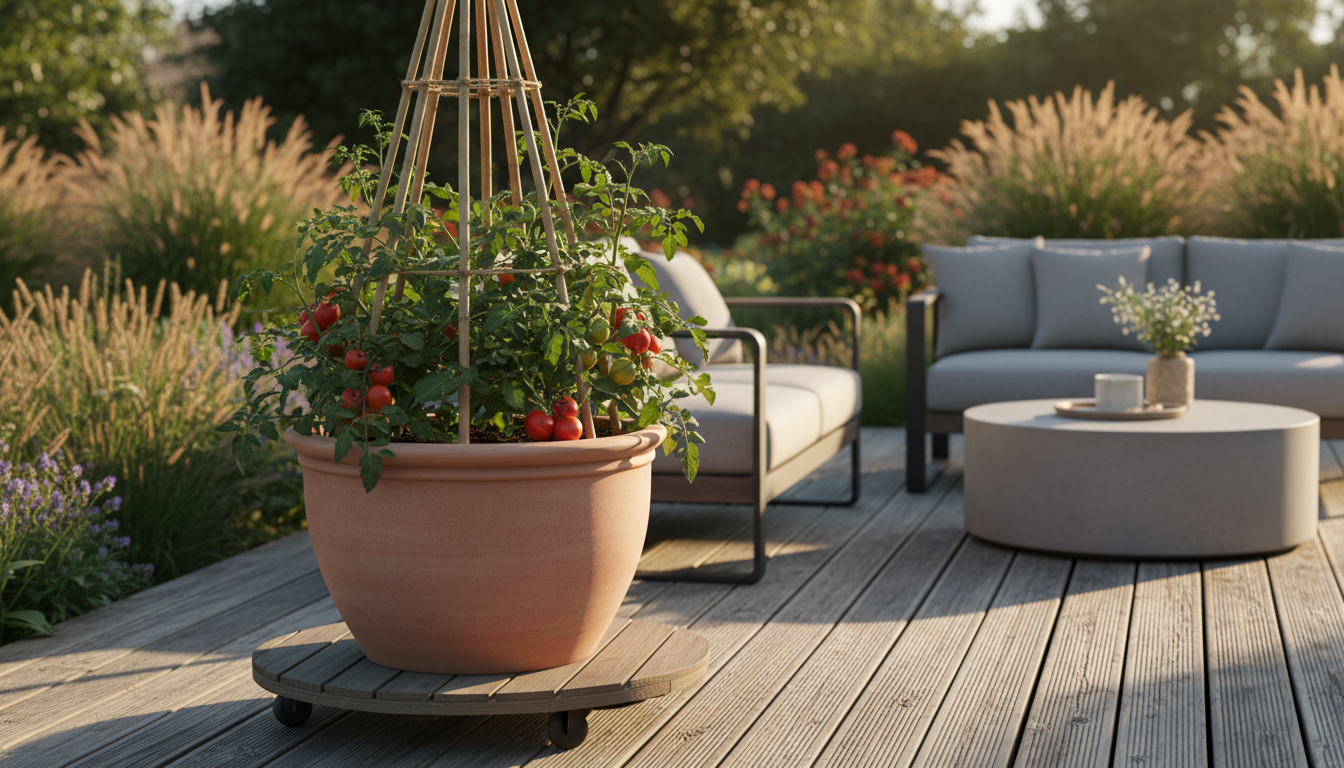
One of the lesser-celebrated challenges of balcony and patio gardening is the way sunlight moves through the day and through the year. A spot that catches full morning light may sit in deep shadow by two in the afternoon, while the corner that gets the afternoon burn is cold and dark through the morning growing hours. Wheeled planter caddies solve this problem with simple elegance: heavy-duty rubber wheels — lockable, non-marking — attached to a low platform just large enough for a single large pot or half-barrel allow you to track sunlight across your outdoor space through the day.
Caddies are particularly valuable for sun-hungry fruiting crops: tomatoes, peppers, aubergines, and chillies all require six to eight hours of direct sun daily to produce fruit reliably. Moving containers to follow that light window can dramatically increase yield in partly-shaded gardens where the available sun patch shifts by the hour. Choose caddies rated for at least 80 kg — a large container filled with moist compost can easily exceed 50 kg — and opt for locking wheels to keep the pot anchored on sloped or windy terraces. The freedom to reposition plants on impulse, to follow an unexpected patch of late afternoon light or to protect a tender plant from an incoming frost, transforms a rigid patio layout into something truly adaptive and responsive to nature.
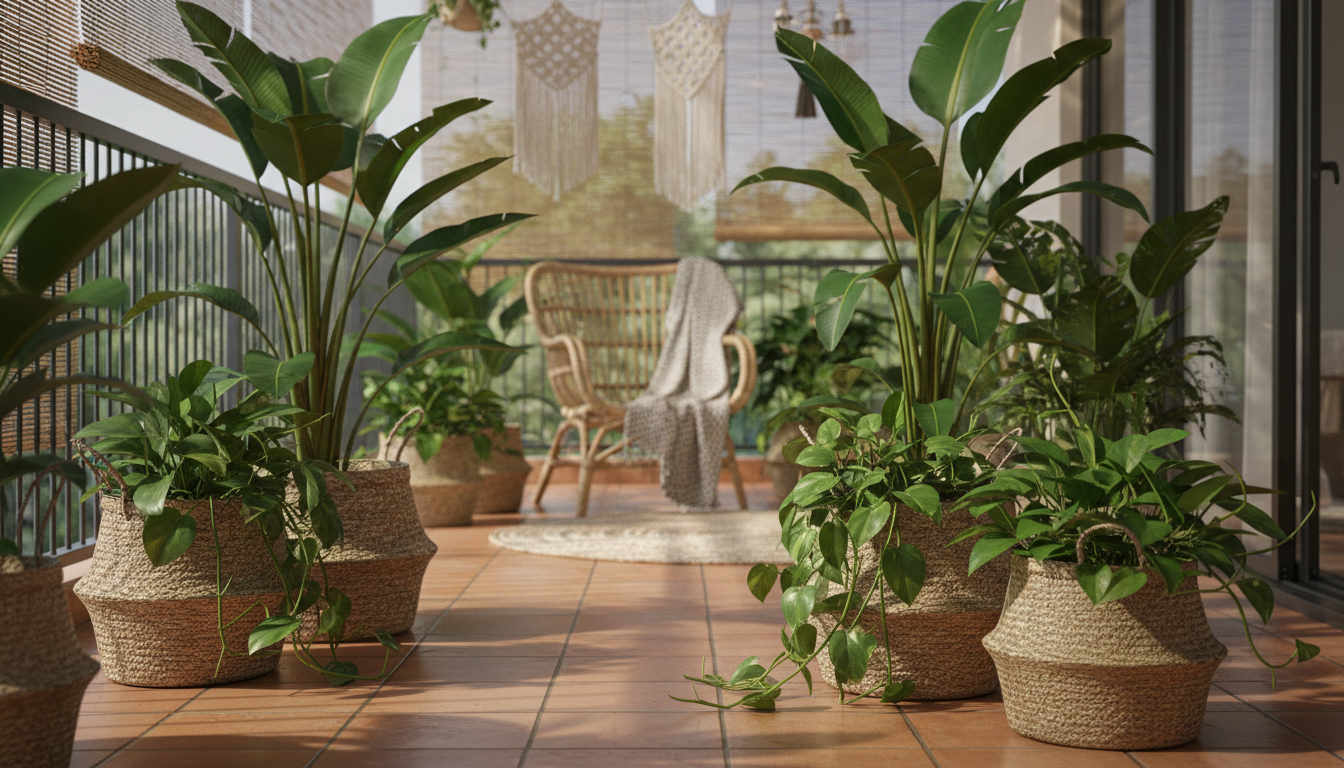
Wicker and rattan baskets don’t arrive pre-formatted for outdoor planting, but with a simple plastic liner and a sheet of breathable burlap, they become some of the most atmospheric plant containers available for a balcony with a bohemian or tropical aesthetic. The natural fibre weave reads beautifully against terracotta tiles, raw timber decking, and warm stone — earthy and organic in a way that no manufactured planter quite replicates. Look for water hyacinth wicker, which is measurably more resilient to outdoor moisture than standard rattan and will last two to three seasons on a sheltered covered balcony.
Plant with lush tropical foliage for maximum visual drama: bird of paradise in the largest basket, peace lily or philodendron cordatum in the medium, and trailing string of pearls or pothos falling across the smallest. The trailing varieties spill over basket edges in curtains of green, softening the container’s structure and adding depth to the composition. For a more practical edge, fill smaller baskets with compact herbs — lemon balm, Vietnamese coriander, and garden mint — which look entirely at home in the wicker setting and release fragrance when brushed against on warm evenings. Replace the liner annually and bring baskets under cover in sustained wet weather to extend their lifespan significantly.
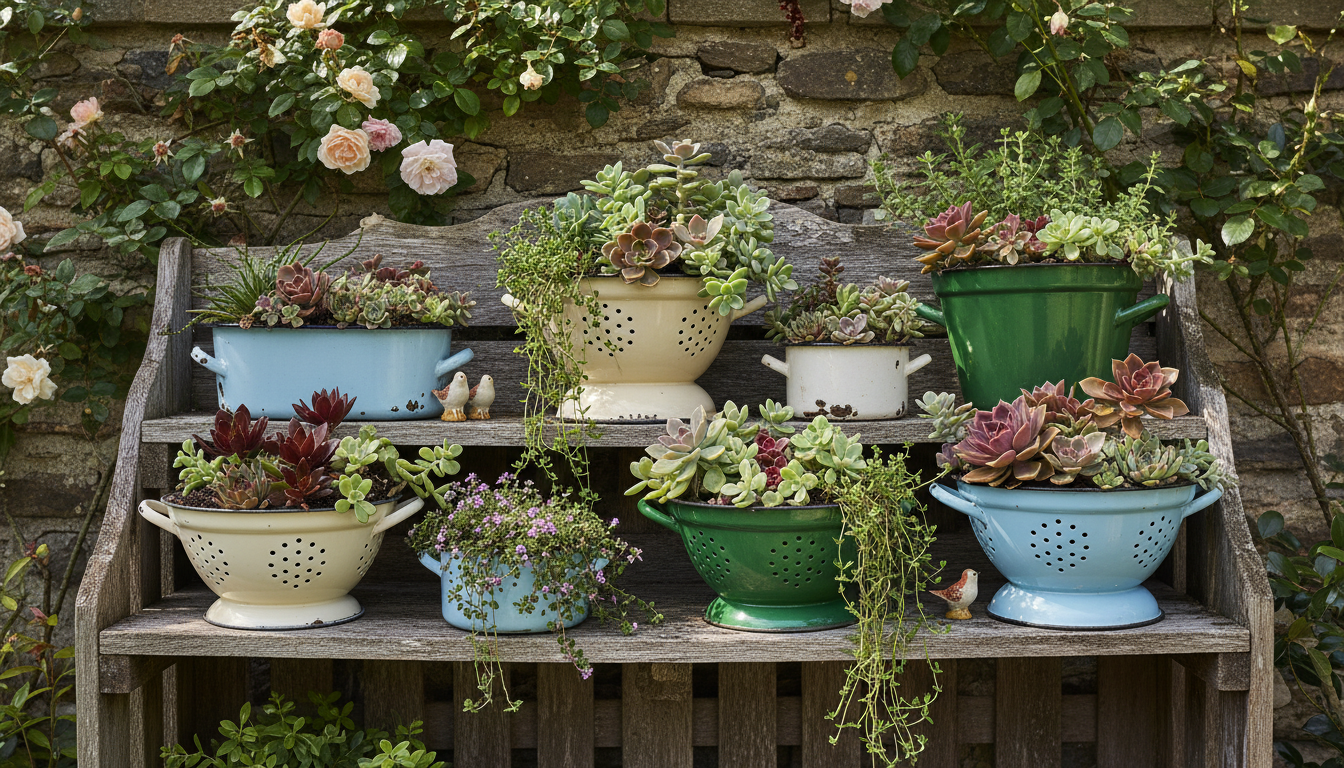
Second-hand markets and charity shops are full of objects that were never intended for growing plants but work brilliantly as containers: old enamel colanders with their ready-made drainage holes, chipped enamel soup pots in midnight blue and cream, vintage tin watering cans with small leaks that cannot be repaired, even cracked ceramic mixing bowls too good to discard entirely. The imperfect, patinated quality of these objects lends a garden instant history and personality — the kind that takes decades to accumulate through conventional means but can be assembled in a single afternoon at a car boot sale.
Group them on a tiered shelf unit or scatter them along a window ledge in a loose, organic arrangement that looks unplanned but rewards close inspection. Fill with compact, drought-tolerant plants that suit the shallow depth of smaller vintage vessels: hen-and-chicks succulents, creeping thyme, miniature sedums, and alpine strawberries all thrive in constrained root space with excellent drainage. The mismatch of sizes, colours, and textures creates what garden designers call a “curated chaos” effect — layered, unexpected, and full of visual interest. Each piece tells a story, turning the display from a plant collection into something closer to a small, living exhibition of found objects that changes character with every season.
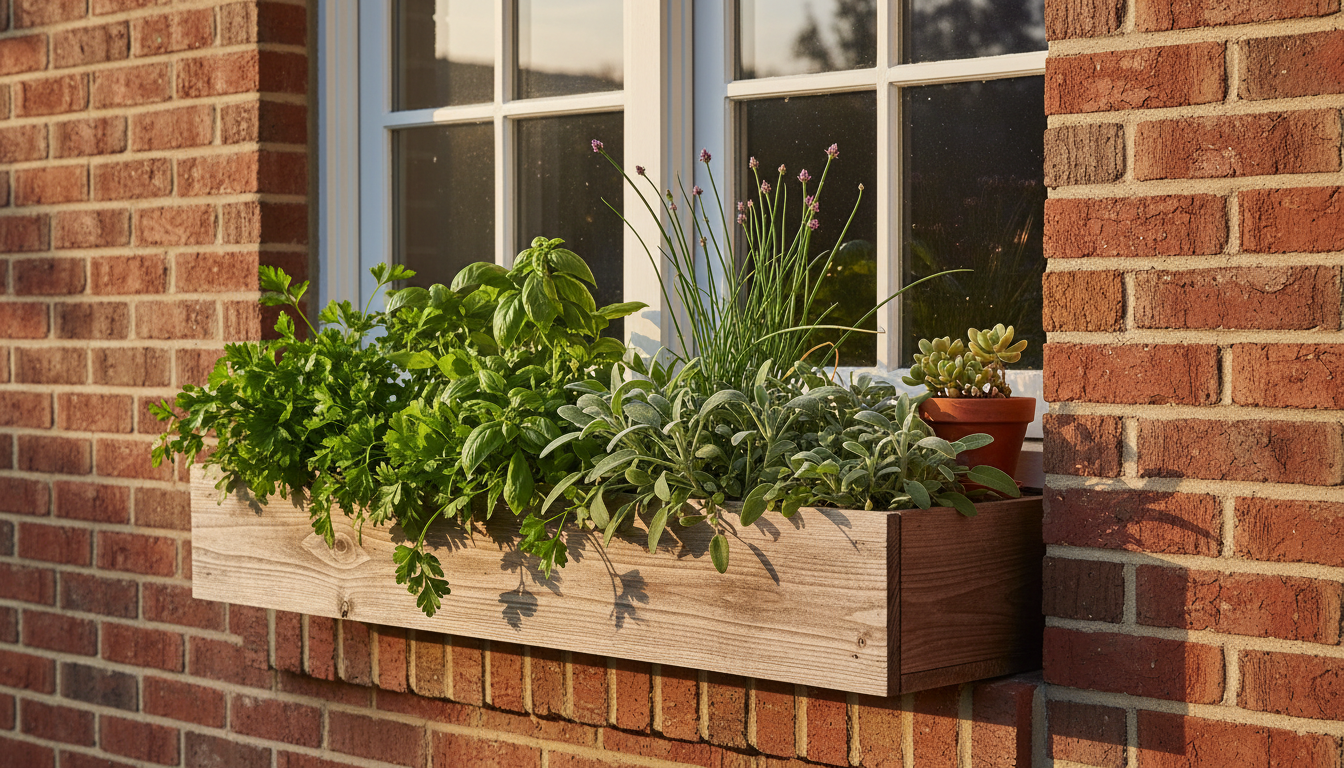
A cedar window box positioned directly beneath a kitchen window is one of the most practical and visually rewarding container arrangements possible for a small home. Cedar is the timber of choice — naturally resistant to rot and insect damage without chemical treatment, lightweight enough to mount safely on exterior windowsill brackets, and carrying a subtle resinous scent that itself repels some pests. Over time the wood weathers from warm honey-brown to a platinum-silver grey that sits beautifully against painted render, exposed brick, or timber cladding. Size the box to run the full width of the window for maximum visual impact: a 90 to 120 cm length planted tightly with herbs creates a dense, textured strip of green that reads as intentional and considered from both inside and outside the room.
Plant in culinary order of use: flat-leaf parsley and chives at one end for everyday salads and egg dishes, then basil through the centre, refreshed with new plants each spring as the previous year’s woody stems lose productivity, and sage and thyme at the opposite end for roasted meats and slow-cooked sauces. The proximity to the kitchen matters more than it might seem — herbs harvested within arm’s reach of the hob get used daily rather than weekly, and that frequency of harvest is precisely what keeps the plants compact, productive, and bushy rather than leggy and flowerbound.
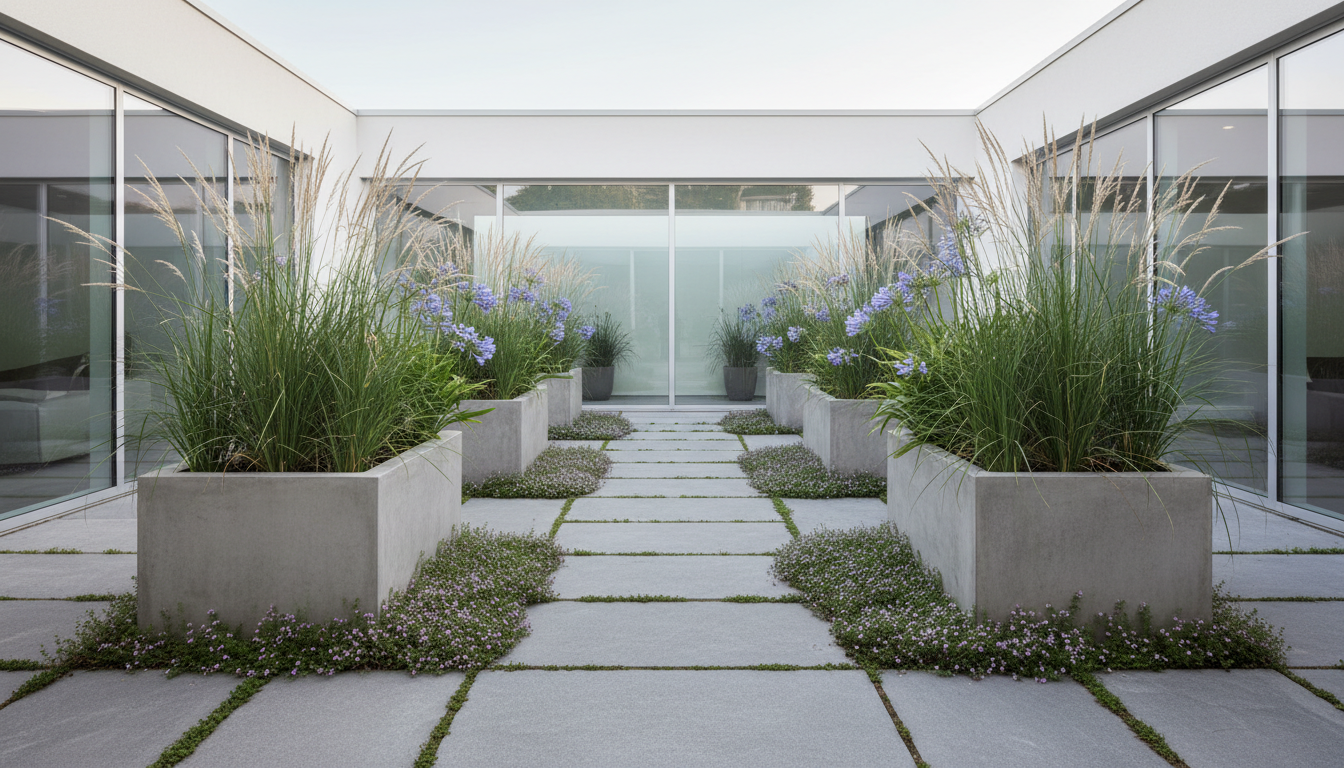
Concrete has completed its journey from construction site to design studio, and nowhere is this more apparent than in contemporary courtyard gardens where large concrete block planters set a mood of calm, monolithic restraint. Cast concrete containers in rectangular or cube forms work within the visual language of modern architecture — clean edges, deliberate proportions, and a surface texture that softens beautifully with age, weather, and the slow arrival of lichen in shades of sage and ochre. Their thermal mass also benefits plants directly: concrete absorbs heat during the day and releases it slowly at night, effectively extending the growing season by several weeks at the shoulder ends of the year by keeping root temperatures above the threshold for active growth.
For the minimalist approach, limit the planting palette to three species maximum per planter: a structural grass like Calamagrostis x acutiflora ‘Karl Foerster’ that moves with every breath of air, a seasonal flowering perennial like agapanthus or Japanese anemone for colour without chaos, and a low-growing ground cover such as creeping thyme or mind-your-own-business that spreads to fill gaps and soften the hard edge between compost and concrete. Place planters in symmetrical pairs to frame doorways, steps, or garden seating areas — repetition and restraint are the primary compositional tools in a minimalist courtyard, and the concrete container rewards both qualities.
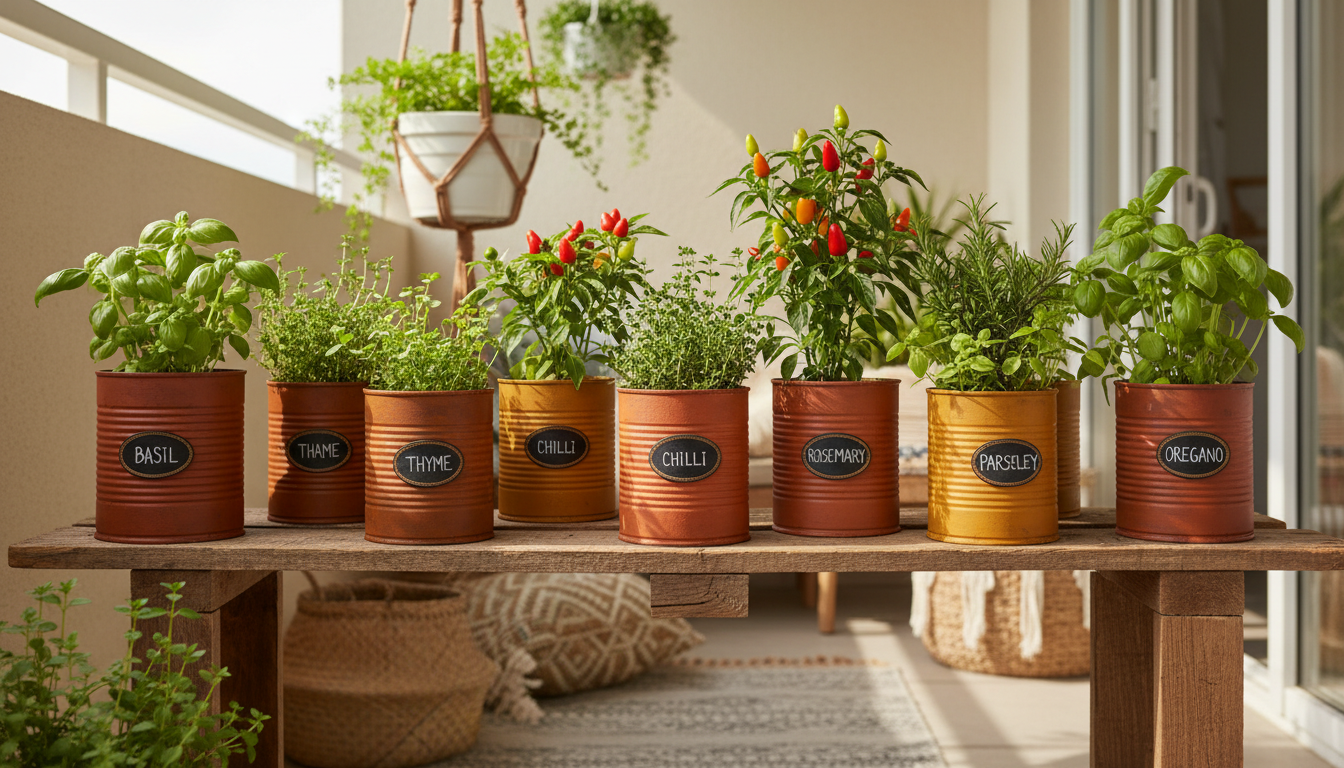
Large tin cans — the kind that hold catering-sized tomatoes, olive oil, or chickpeas — are among the most versatile and budget-friendly containers available to the small-space gardener with a creative eye. Painted in matte colours and punched along the base with drainage holes using a hammer and a thick nail, they become a cohesive collection of planters that looks nothing like recycled packaging. Chalk paint adheres to tin without primer and needs no sealing; it gives a pleasingly tactile, slightly chalky surface that suits the organic quality of plants and compost far better than high-gloss alternatives. The scale of a catering tin — typically 3 to 4 litres in volume — is ideal for individual herb plants: a single basil plant, a compact chilli cultivar, or a clump of spring onions thrives in that depth with weekly watering.
Display on a tiered wooden shelf on a balcony, or arrange in a grid pattern along a kitchen windowsill for an organised, considered look. A colour-block approach works especially well: paint each can a different shade within the same tonal family — terracotta, burnt sienna, rust, and warm ochre — for a display that looks rich and deliberately styled. Label each can with chalk paint and a white chalk pen to combine practicality with charm, refreshing the labels at the start of each growing season as plantings change.
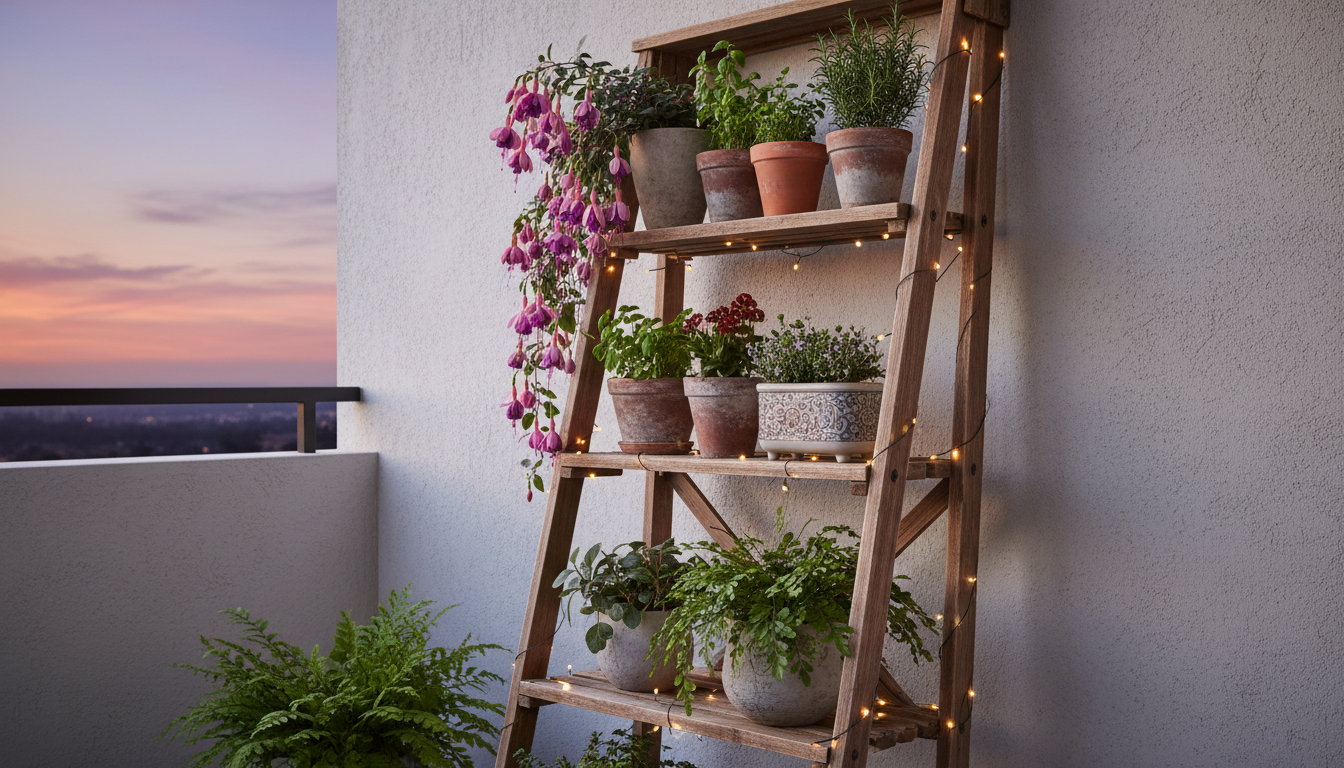
A timber ladder shelf — a leaning shelving unit that rests against a wall with rungs serving as shelves — takes what is arguably the most compact shelving footprint possible and fills it with an extraordinary volume of growing space. At roughly 45 cm wide and 160 cm tall, a five-rung ladder shelf can hold fifteen to twenty individual pots in a floor area smaller than a single dining chair. Teak and bamboo are the most weatherproof choices for sustained outdoor use; untreated pine will manage one to two seasons before the elements take hold, while FSC-certified hardwood performs indefinitely with an annual application of teak oil. The same principles that make a small apartment entryway feel generous and layered apply equally here — vertical thinking and deliberate arrangement turn a constrained space into something that feels intentional and deeply personal.
Arrange plants in descending light requirement from top shelf to bottom: full-sun herbs and trailing flowering plants at the upper rungs where airflow and direct light are greatest, shade-tolerant ferns, hostas, and begonias at the lower levels where the upper shelves cast dappled shade. The layered vertical display creates a lush, green wall effect that transforms the mood of an apartment balcony from bare concrete to something approaching a private garden courtyard. Thread outdoor fairy lights through the rungs for an evening atmosphere that changes the space entirely at dusk.
Container gardening is proof that limitations can become one of the most creative forces in design. A narrow balcony, a sun-drenched windowsill, a compact paved courtyard — each becomes a different kind of canvas when you start thinking in containers, working with rather than against the constraints of the space you have. The half-barrel oak planter anchoring a corner with a dwarf fig tree, the cedar window box herb garden that puts dinner’s ingredients within arm’s reach of the hob, the vintage enamel colander planted with trailing thyme — these are not compromises. They are specific, considered choices that reflect an understanding of how light, texture, scale, and plant character work together.
Start with one or two ideas from this list that excite you most — perhaps the tiered wooden planter tower for an immediate herb harvest, or a cluster of terracotta pots along your balcony railing to test what your light levels can support. Build from there, season by season. The most beautiful container gardens are never quite finished; they shift and evolve with every planting, every new discovery, every change of season. Bookmark your favourites from this list, pick up a bag of quality compost this weekend, and give your small space the garden it deserves.
G2G Team
05-20-2026
Let’s Build
Contact us todayGet daily tips and tricks for making your best home.
2025 Green to Gorgeous