3 MIN READ
Interior
Written By
G2G Team
Published
June 1, 2026
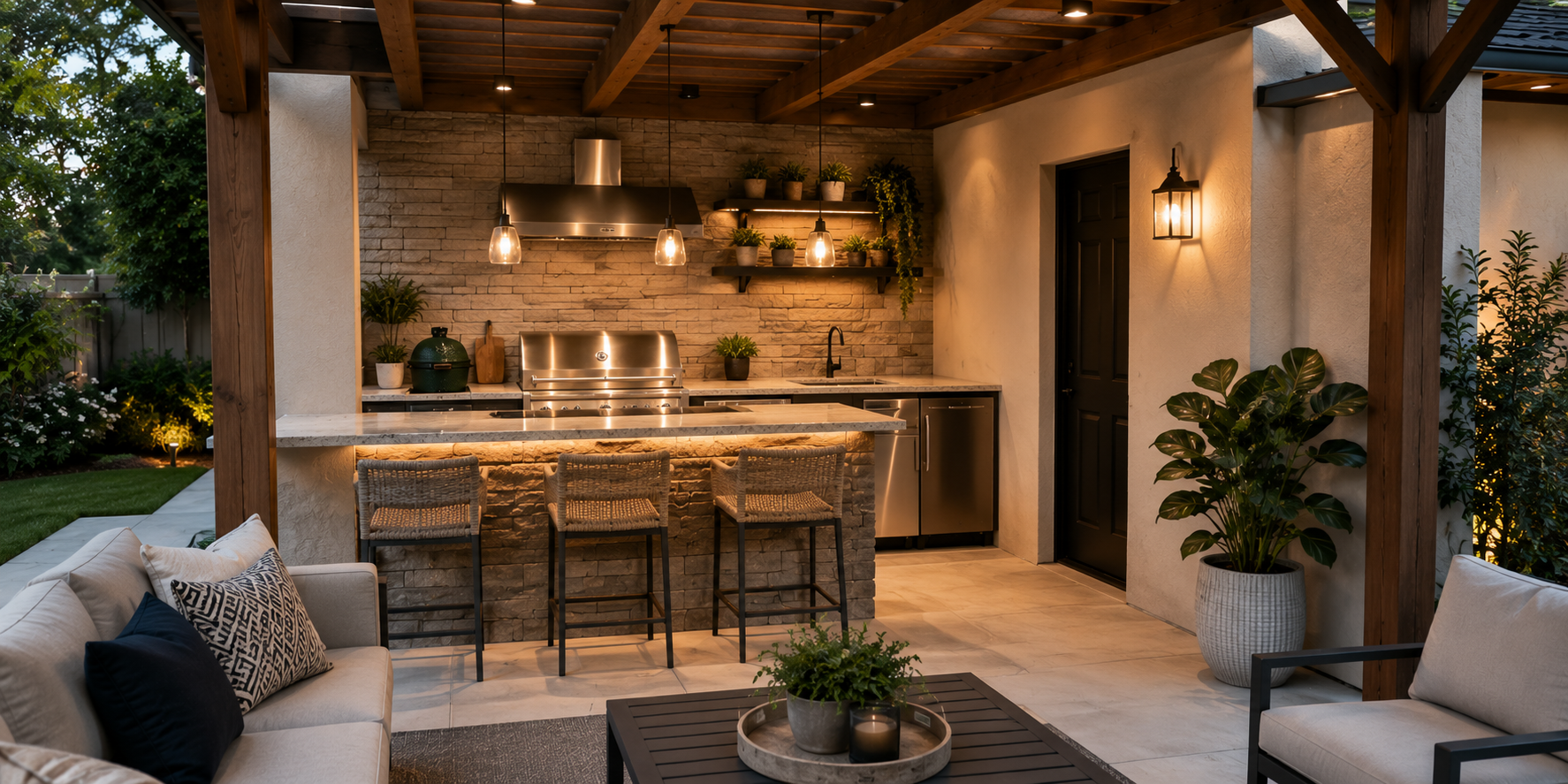
Have you ever dreamed of cooking outside but worry there isn’t enough room to build a full kitchen? The good news is that even the smallest backyard, patio, or side courtyard can host a functional covered outdoor kitchen when design and layout work together. From compact L-shapes tucked under pergolas to creative storage hidden beneath stone counters, small spaces can deliver big experiences. A covered setup protects against rain and sun, extending the cooking season year-round while adding natural gathering energy to your home.
These 19 small covered outdoor kitchen ideas combine spatial efficiency with stylish detail so you can grill, prep, and entertain comfortably — without sacrificing beauty or practicality.
A pergola roof defines space without enclosing it completely. Use slim cedar or aluminum beams topped with translucent panels or weather-rated fabric to filter sunlight while keeping rain off appliances. This light, breathable coverage creates shade and keeps airflow moving — ideal for smaller patios.
Paint the structure in a soft neutral to blend with your home’s exterior, and weave outdoor string lights through the rafters for nighttime ambience. A pergola instantly signals “kitchen zone” without adding bulky mass.
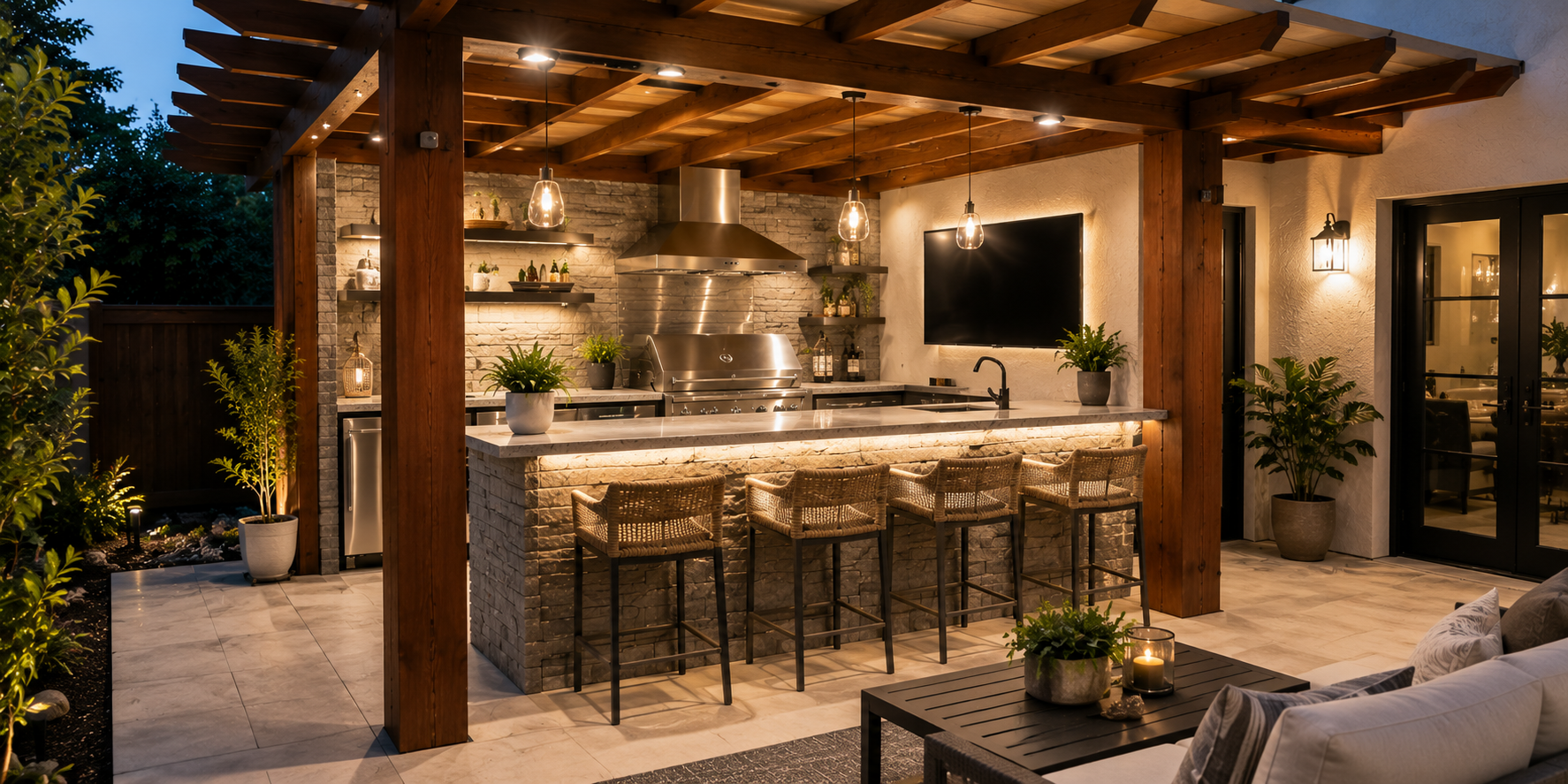
An L-shape maximizes corners and provides clear zones for prep, cooking, and serving. One side can hold a small grill and sink, while the other runs parallel for chopping and plating. This setup keeps workflow efficient even in tight footprints.
Use continuous countertop material so the eye reads one seamless surface. In small outdoor kitchens, visual simplicity equals perceived spaciousness. Add a narrow bar ledge on the return side for guests to sit while you cook.
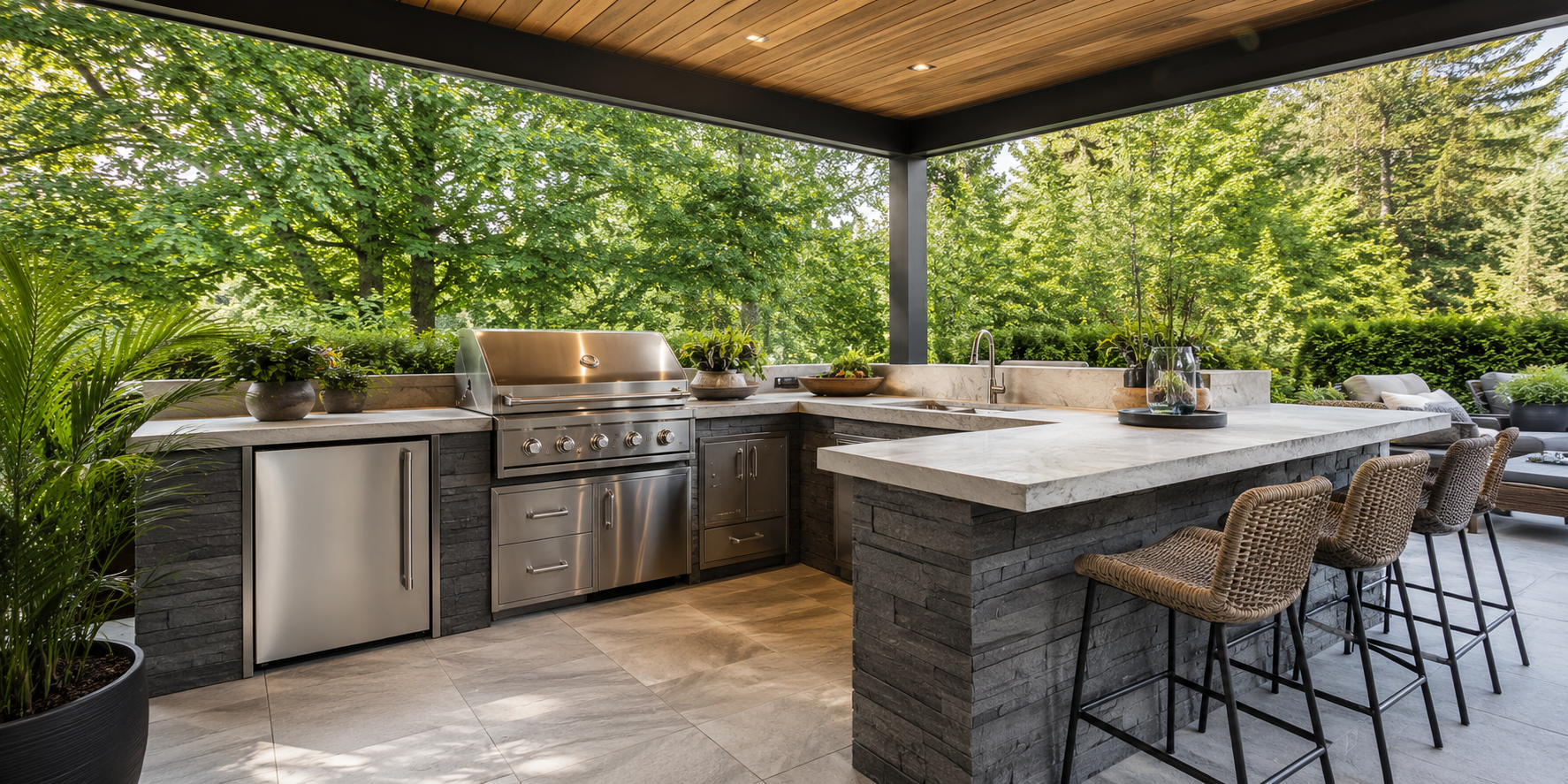
If permanent roofing feels heavy, a retractable awning offers adaptability. Extend it during summer sun or sudden drizzle, retract it at night for stargazing. Fabric options range from canvas to waterproof vinyl; choose tones that complement exterior walls.
Mount the awning high enough to maintain open sightlines, and integrate LED strip lighting along its frame for evening glow. The flexibility suits townhomes or balconies where building codes restrict fixed roofs.
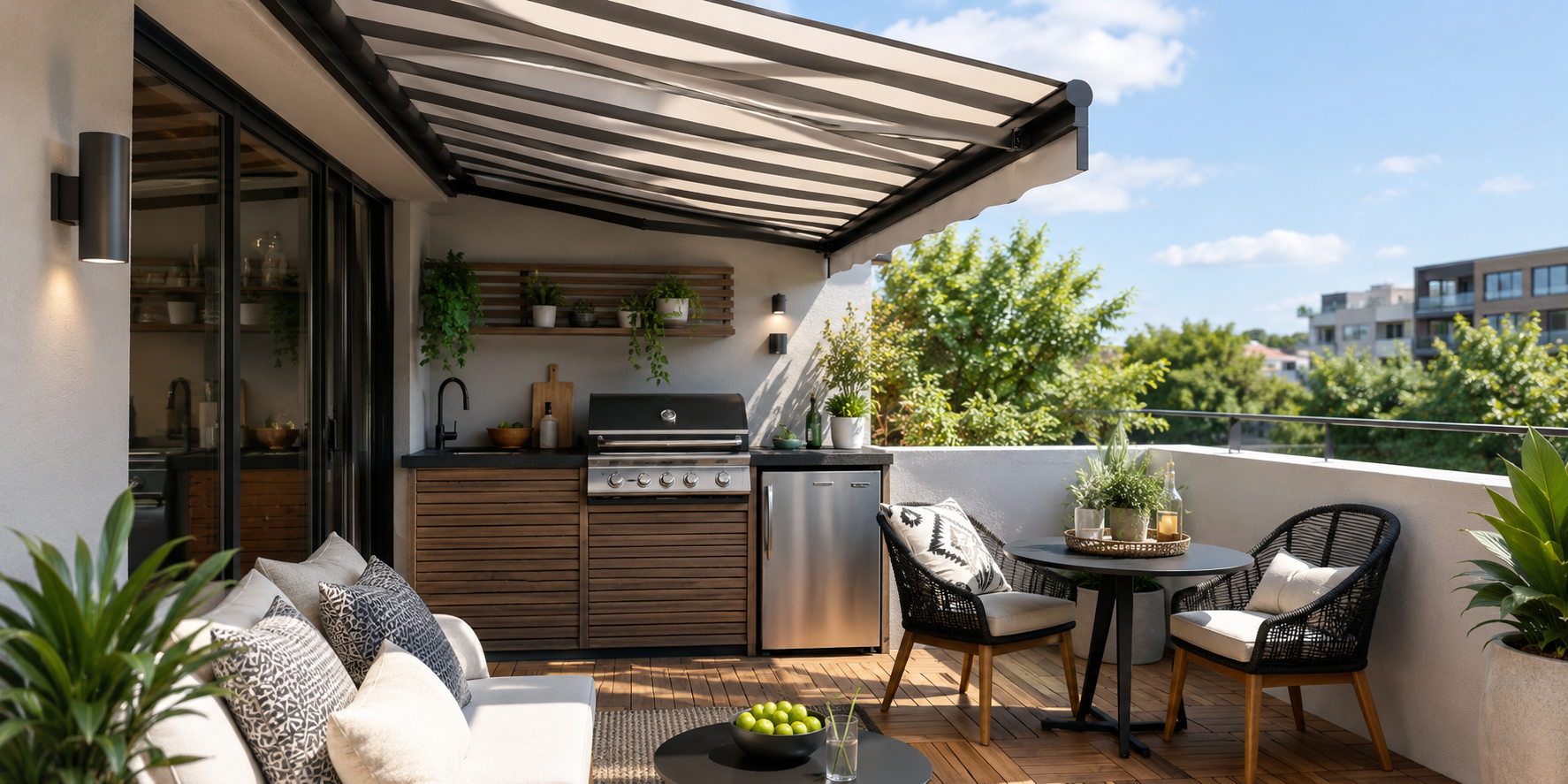
Storage is scarce outdoors, so build vertically. Weather-resistant cabinets under counters hide utensils, propane tanks, and dishware, keeping surfaces clear. Materials like marine-grade polymer, powder-coated aluminum, or sealed teak handle moisture year-round.
Opt for flush doors with minimal hardware to maintain a streamlined silhouette. When closed, cabinetry doubles as visual walling, turning a simple cooking zone into a tidy built-in feature
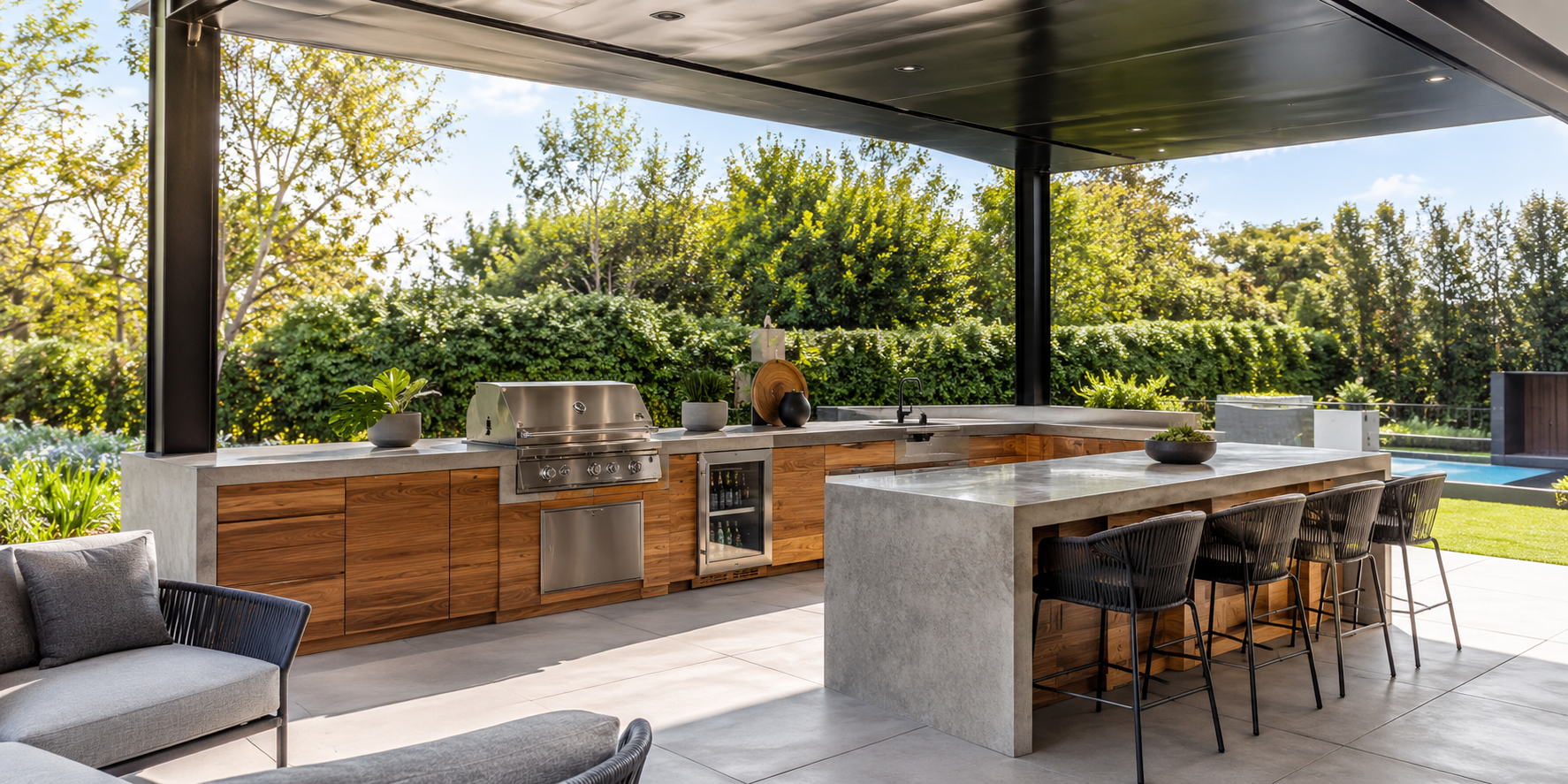
Covered kitchens often lose natural light. Integrate recessed LED pucks or slim pendant fixtures under beams so prep areas stay visible after sunset. Position lights directly over counters, not the grill lid, to avoid glare
Warm color temperatures (2700–3000 K) mimic indoor comfort and flatter natural materials. Connect them to a dimmer or smart switch for easy mood control between cooking and dining.
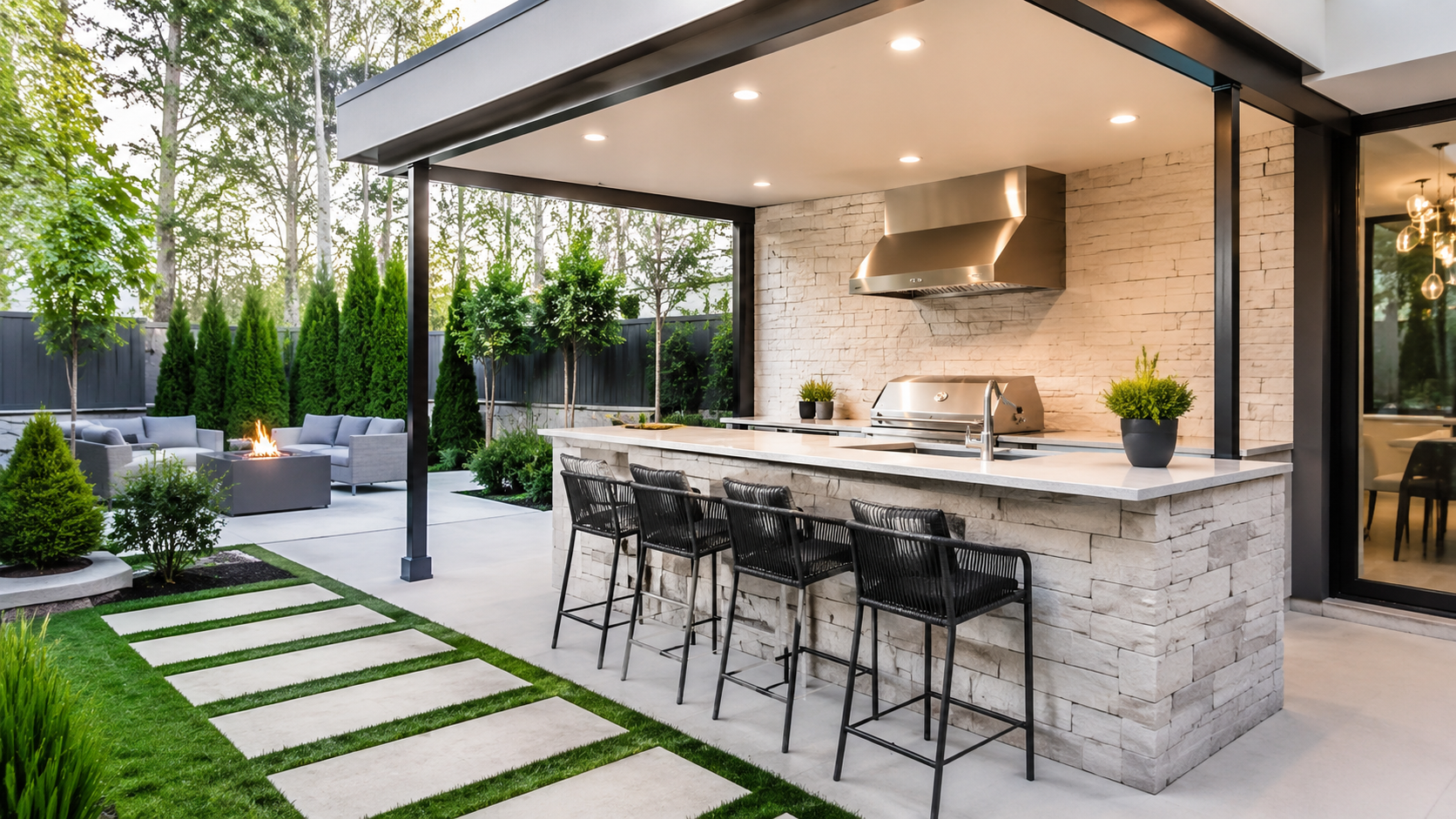
Mixing stone counters with wooden shelving or trim achieves timeless balance — durable yet welcoming. Stone resists heat and weather; wood softens the aesthetic. Repeat each material in at least two spots (for example, wood rafters and stools, stone counter and backsplash) to make the design cohesive. Seal porous surfaces annually to prevent staining. Natural texture layers add dimension so even the simplest layout feels custom.
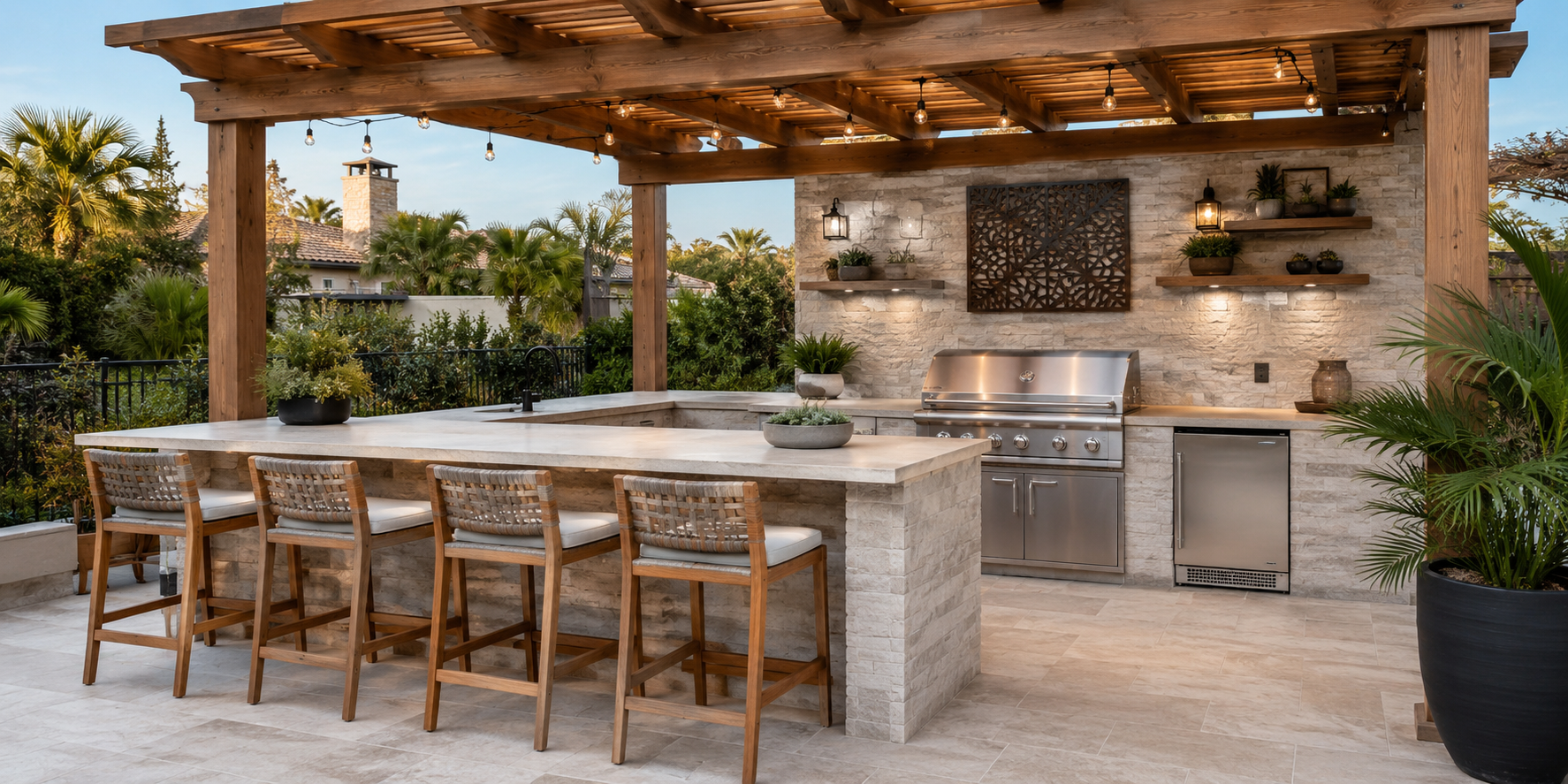
Today’s manufacturers design small-scale grills, side burners, and mini fridges built for tight outdoor kitchens. Choose multi-functional appliances — a combination gas-charcoal grill or a single-drawer fridge for drinks and condiments.
Group utilities along one wall and leave counter space open for prep. Stainless steel remains the most durable, but matte black or enamel finishes blend beautifully with rustic or modern backdrops. Efficiency, not size, defines functionality here.
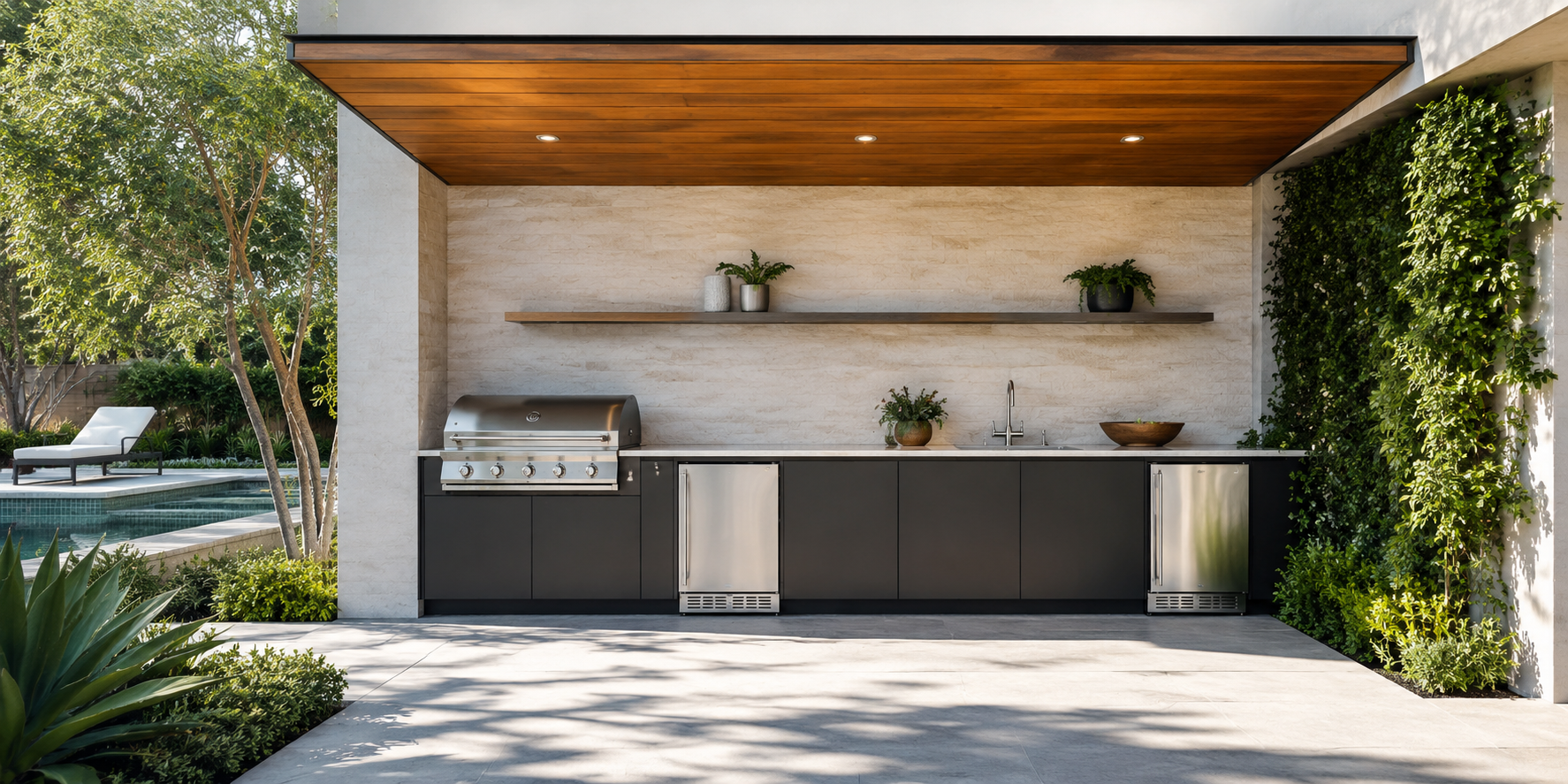
When every inch matters, a fold-down counter is invaluable. Install a hinged panel that flips up for extra prep room and folds flat when not in use. Use durable hinges and support brackets rated for exterior conditions.
Mount the extension near the grill for convenience, and match the surface finish to existing counters so it appears integrated. The simplicity of this move turns minimal square footage into a flexible workspace.
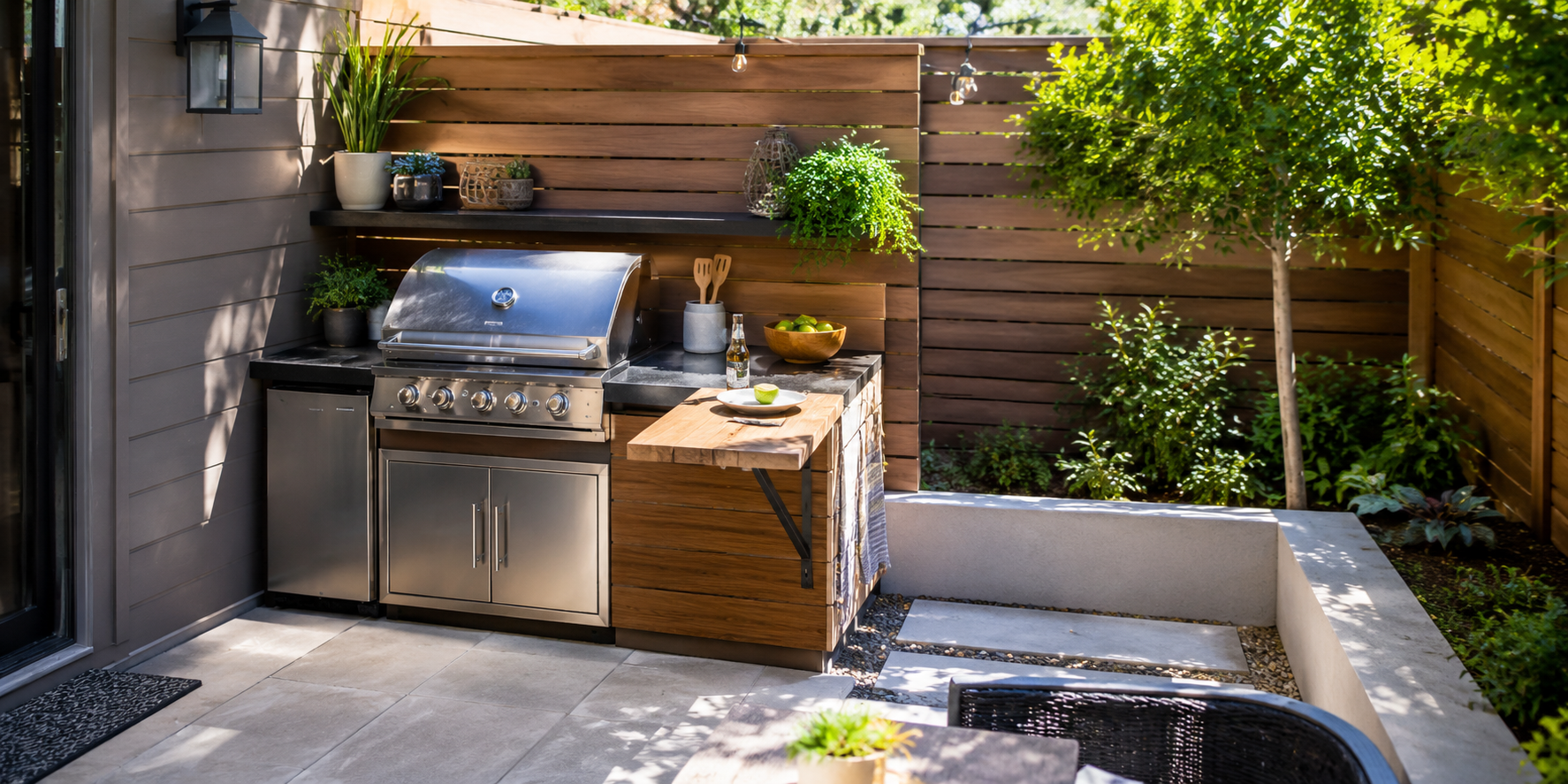
Small doesn’t mean solitary. A narrow bar ledge with two stools instantly transforms a cooking area into a social hub. Use bar-height counters (around 42 inches) and stools made of powder-coated metal or teak for longevity.
Install a shallow shelf or built-in wine cooler below to hold glassware and beverages. Even six square feet can become a relaxing drinks station under the same cover as your grill. Lighting and greenery complete the bistro feel.
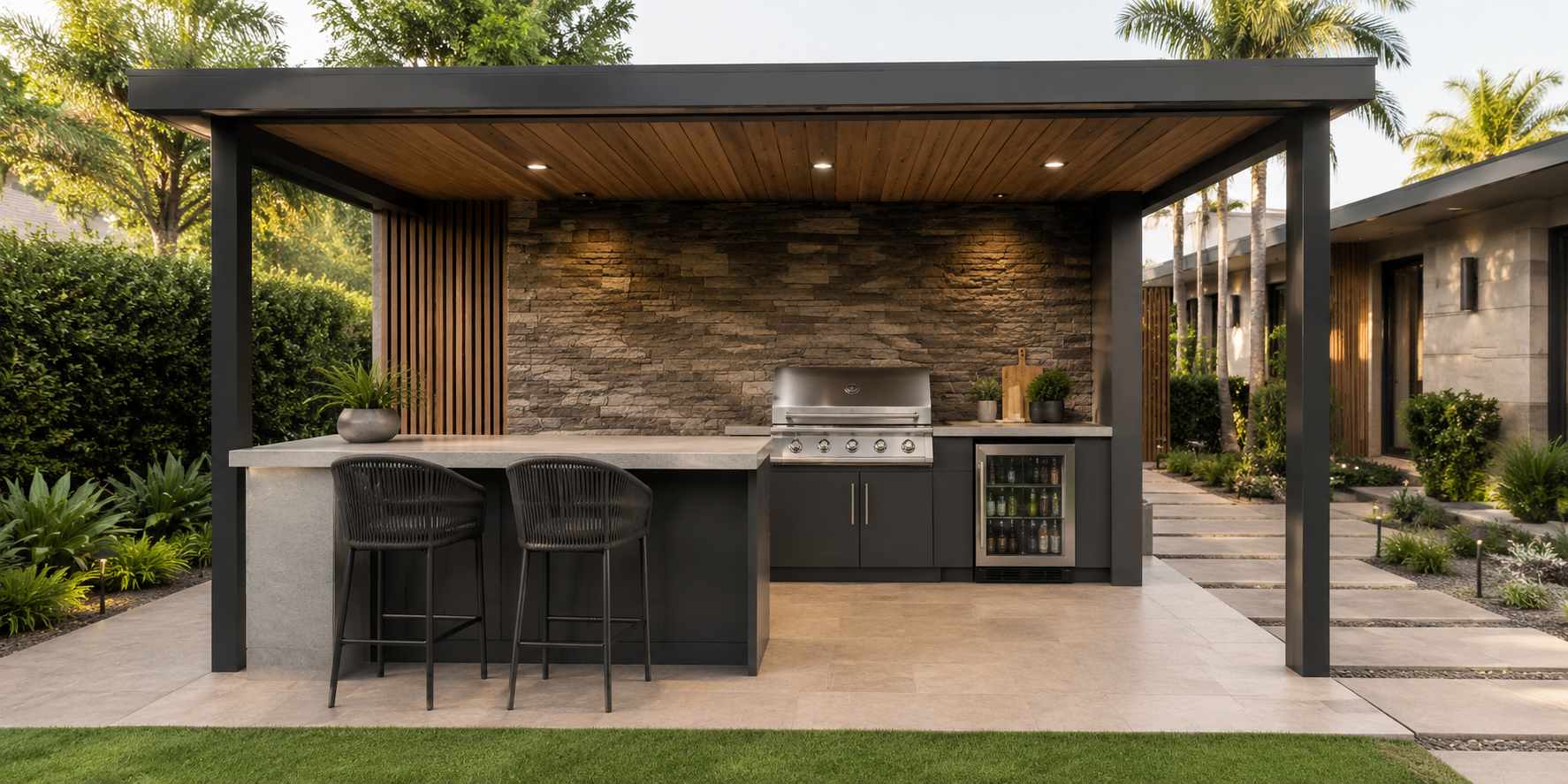
A two-level countertop allows cooking and conversation to coexist in tight footprints. Keep the lower tier at standard counter height (36 inches) for prep and grill access, while the upper tier rises to bar height (42 inches) for guests. This small separation hides clutter and shields cooks from direct view, creating a natural boundary that feels intentional rather than cramped.
Select materials that complement each other—granite below for durability, butcher block or composite above for warmth. Edge the higher tier with subtle LED strip lighting so the bar glows gently after dark.
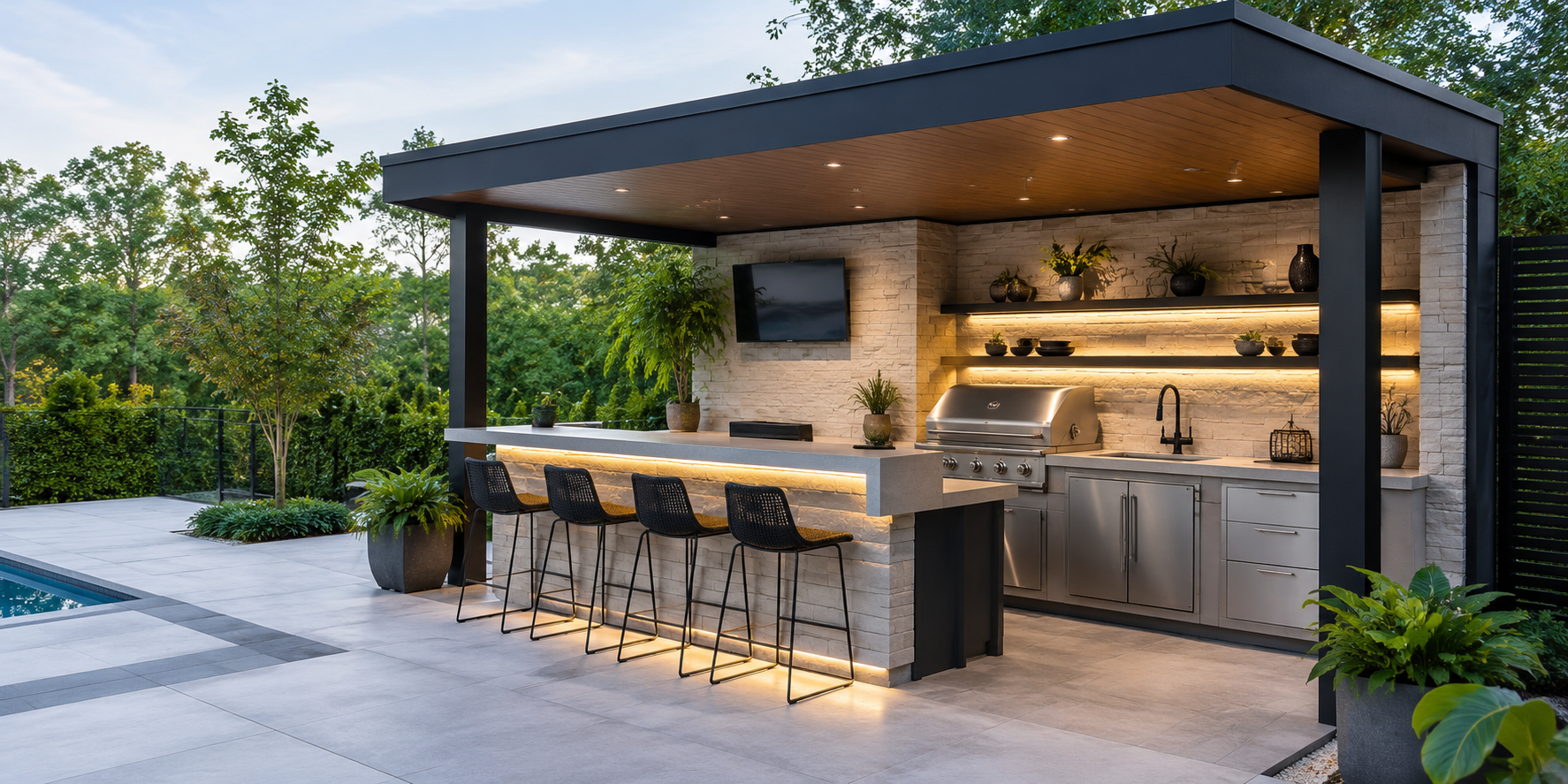
The most timeless outdoor kitchens feel like architectural extensions, not add-ons. Match roof pitch, siding color, or trim detail to your home so the structure appears original. If your house uses brick, echo it in the kitchen base; if it features vertical wood slats, repeat the rhythm on cabinet doors.
Continuity makes a modest space appear larger because the eye flows uninterrupted from house to kitchen. Soft transitions—like planting beds or a pergola beam connecting to the eaves—complete the illusion of unity.
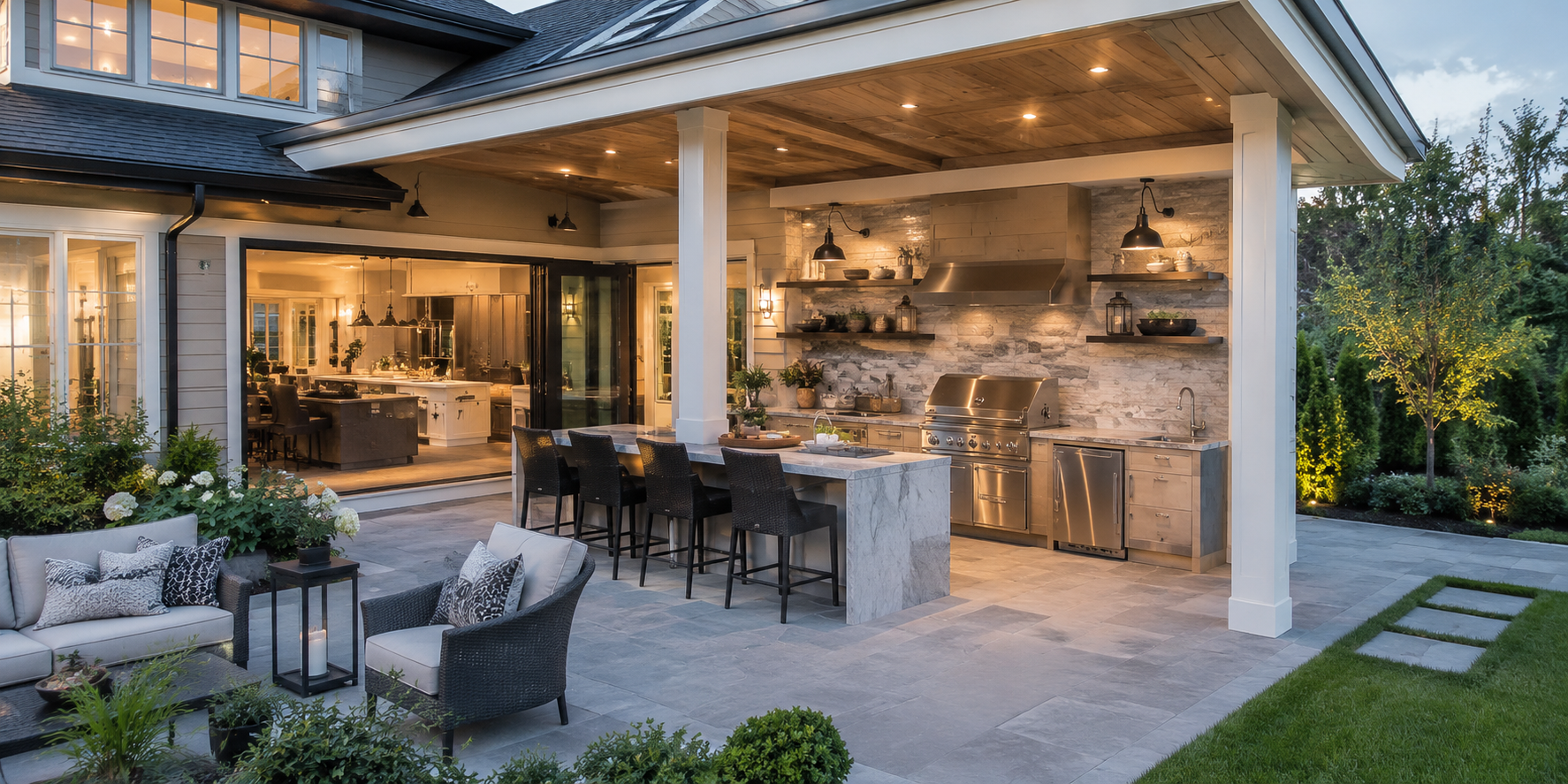
Corners often become wasted voids, but in a compact layout, they’re gold.
Install an angled grill or sink in one corner to open upthe central workspace, or add triangular shelves for spices, oils, and utensils.
Because corners receive less rain under most coverings, they’re ideal for electrical outlets or small appliances such as blenders or air fryers. Using corners efficiently reduces clutter and helps maintain circulation paths—crucial when several people share the space.
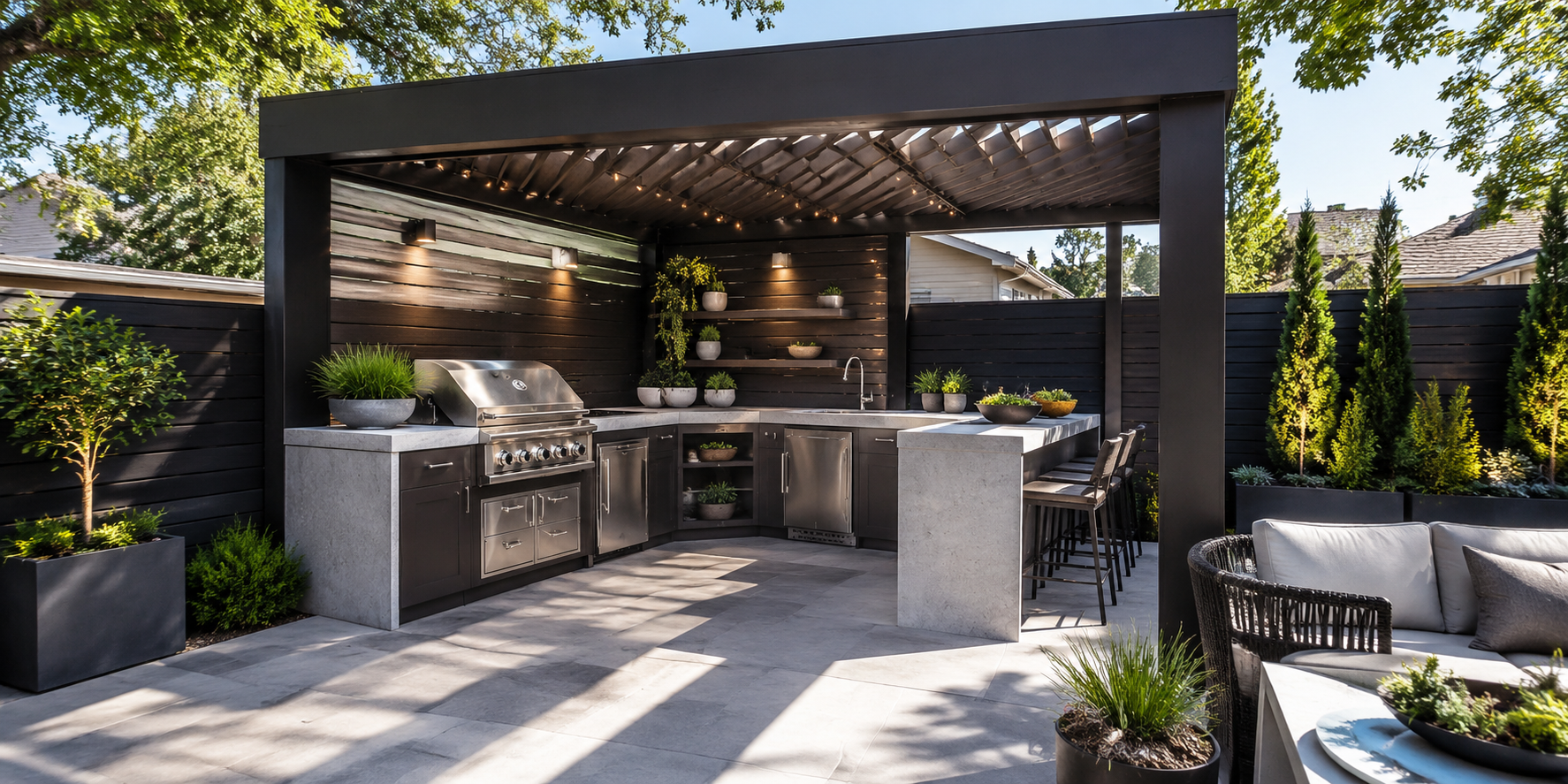
Even with open sides, covered kitchens need deliberate airflow. Install a range hood or vent fan rated for exterior use above built-in grills; this prevents smoke from staining ceilings. If electricity access is limited, mount a quiet ceiling fan to disperse heat and bugs alike. Cross-ventilation matters too—leave at least one open wall or screened section to draw in fresh air.
Balanced ventilation keeps the space comfortable for year-round use and prolongs the life of finishes.
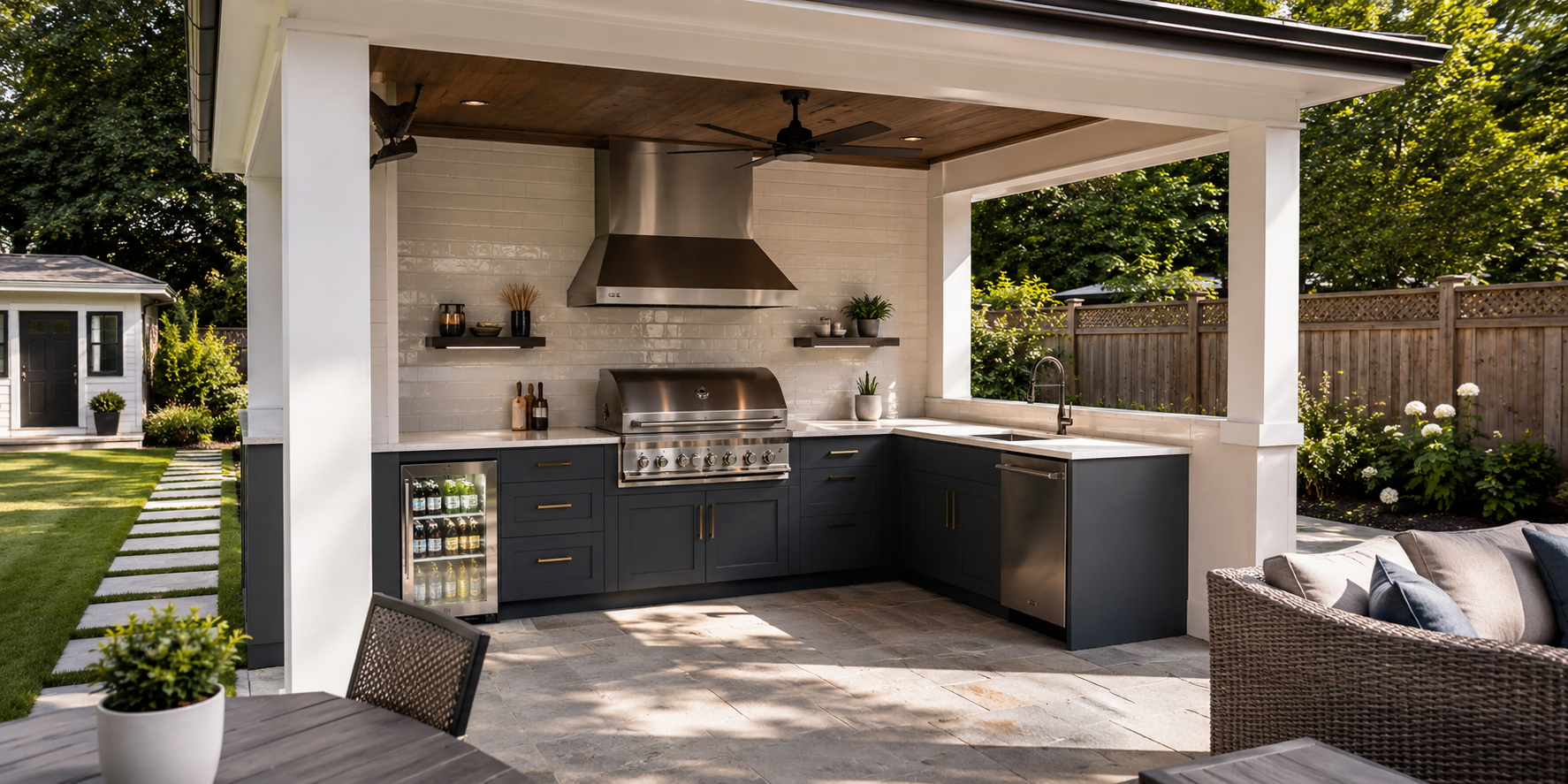
Plants soften the hard surfaces of stone and metal. Hang wall planters or install a vertical herb garden near the prep zone—parsley, basil, and mint thrive under partial cover.
Trailing vines across beams blur the line between structure and landscape, while potted succulents on shelves require almost no maintenance.
Green elements absorb glare, cool the air, and infuse fragrance that complements cooking aromas. They also photograph beautifully, enhancing share-worthiness for Pinterest audiences.
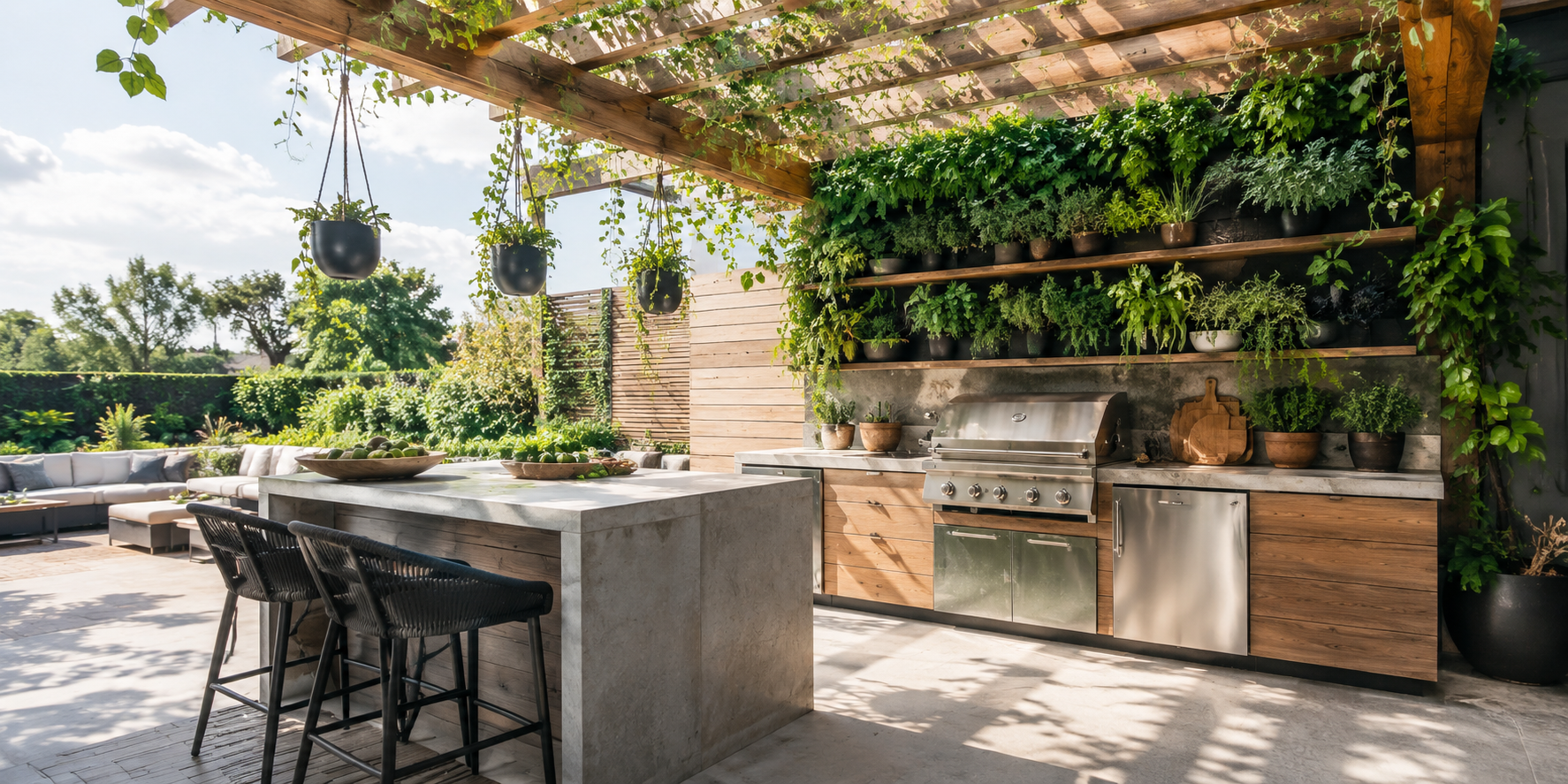
Efficiency defines functionality. Fit pull-out drawers for grilling tools, magnetic strips for knives, and vertical racks for cutting boards. Add a narrow drawer just below the counter for spices and condiments—small conveniences that prevent constant trips indoors. Weather-sealed bins beneath counters keep charcoal or pellets dry.
Choose uniform containers in muted colors so open shelving stays visually calm.
When storage looks intentional, even tiny kitchens maintain high-end polish.
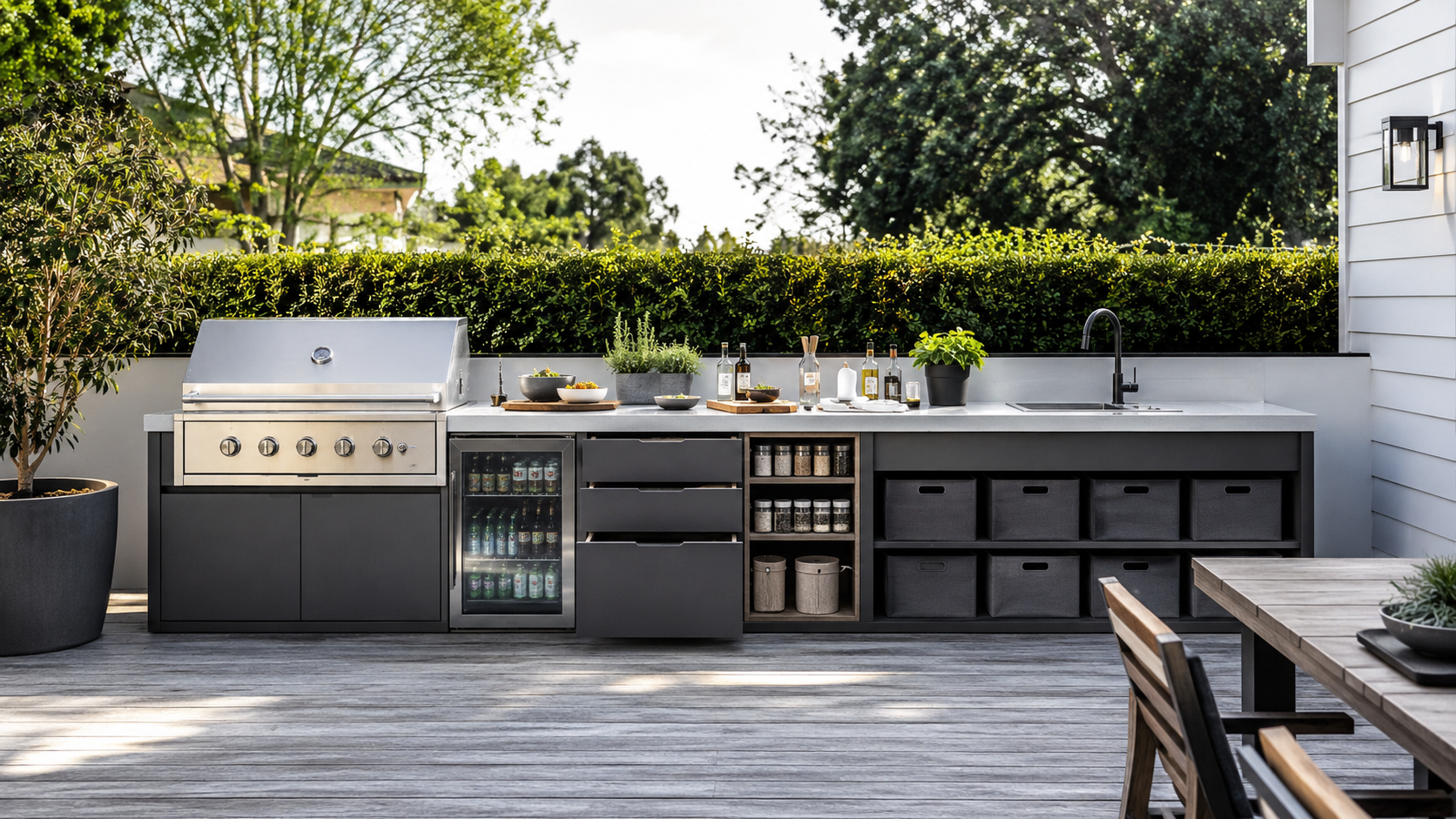
Outdoor materials face relentless sun and moisture. Opt for powder-coated metals, marine-grade plywood, and quartz-based composites.Cushions should use solution-dyed acrylic fabric that resists fading and dries quickly after rain. Matte finishes hide fingerprints and glare better than gloss. Consistent upkeep—rinsing salt, sealing grout, covering appliances—extends lifespan dramatically. A durable finish schedule protects your investment and keeps luxury aesthetics intact for years.
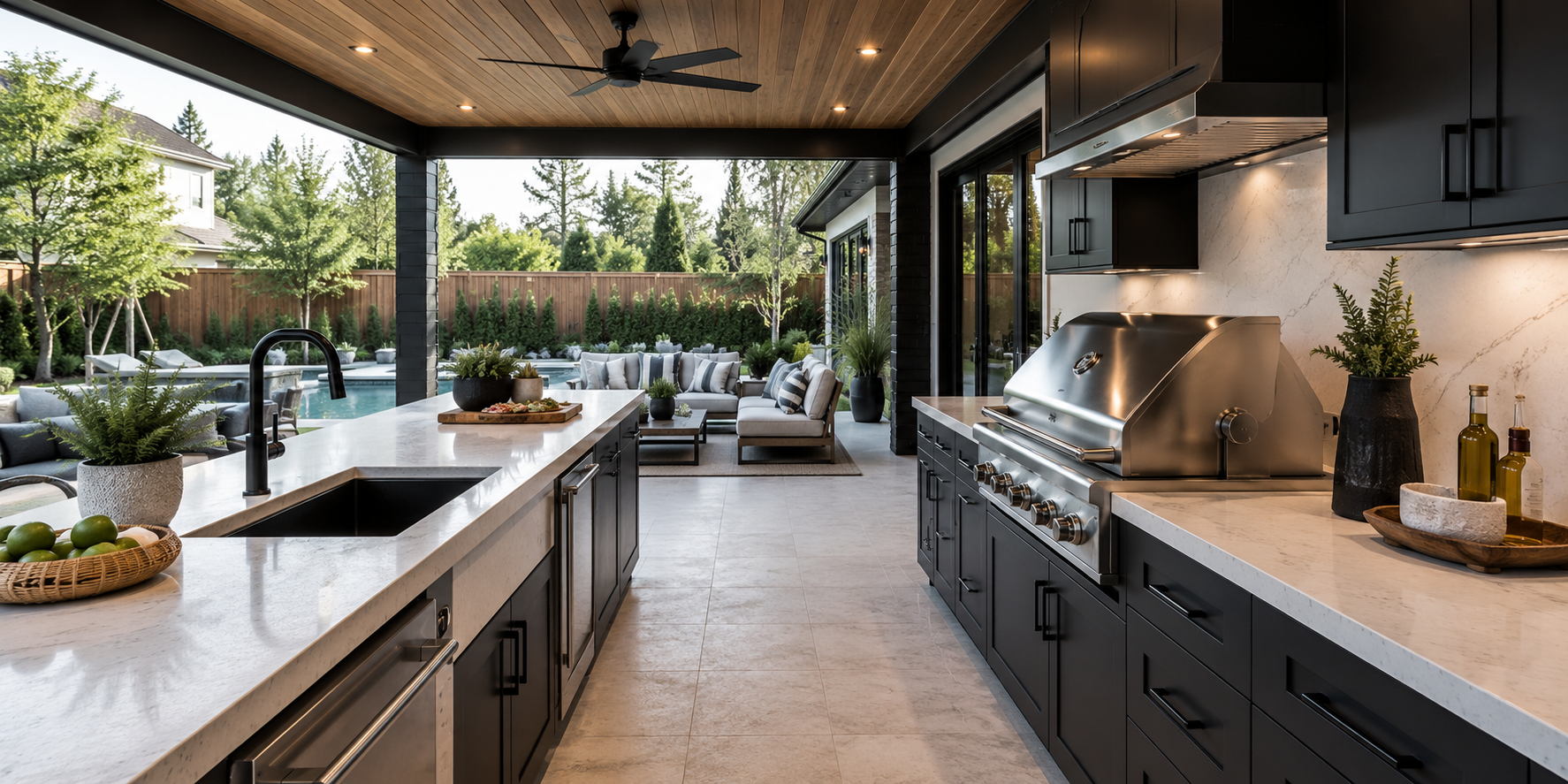
Beyond task lighting, ambience defines mood. Suspend small pendants above the bar, weave string lights along rafters, or embed LED strips under counters. Use indirect light to highlight materials—stone glows warmly under grazing illumination, while stainless steel reflects sparkle.
Complement illumination with understated décor: woven lanterns, ceramic vases, or framed tile backsplashes. The combination of soft light and tactile accessories turns a functional kitchen into an inviting evening retreat.
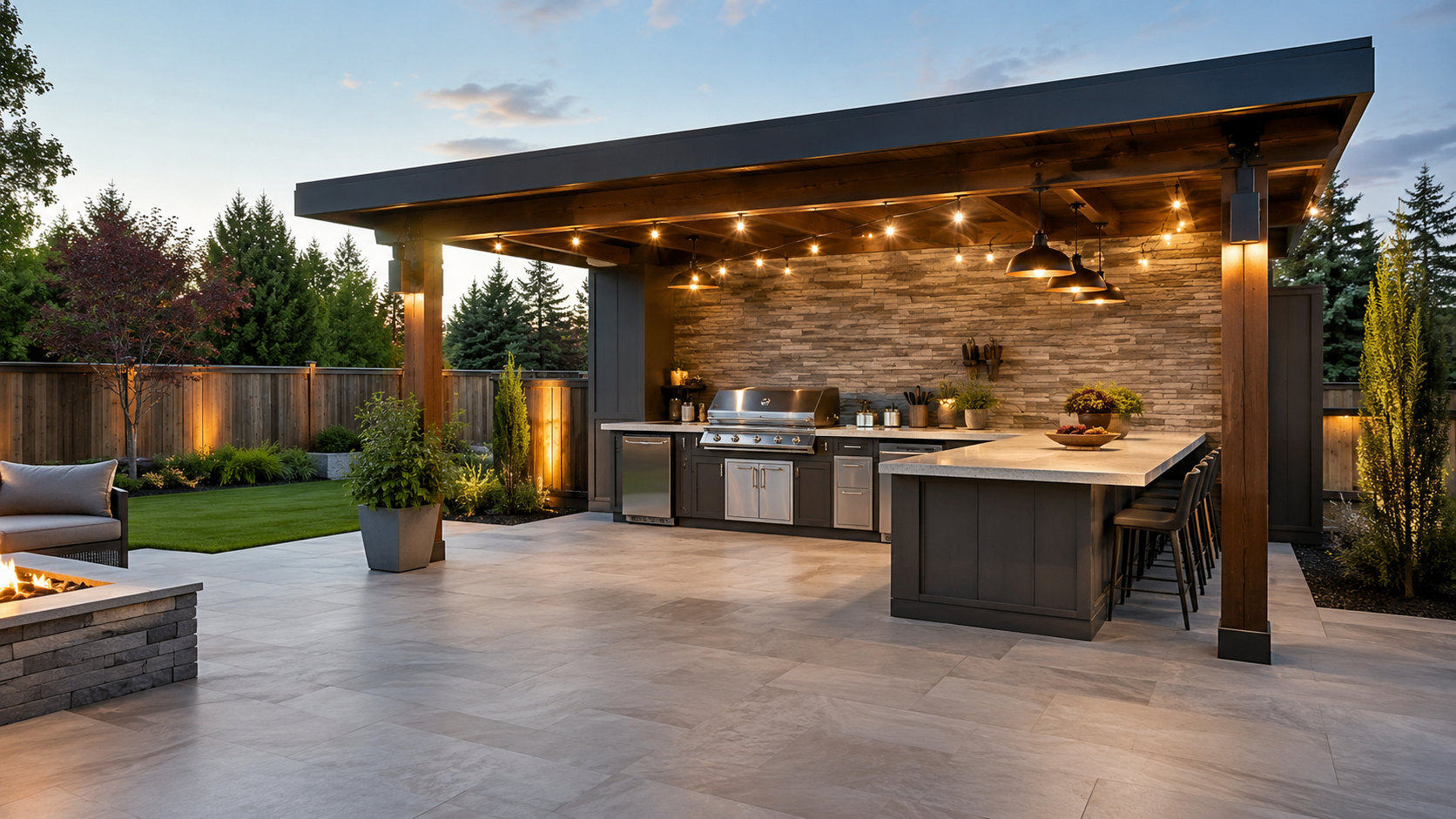
Extend usability with climate control. Infrared heaters mounted under rafters ward off chill; retractable screens block insects and wind without closing the space visually. In warmer months, ceiling fans and misting lines drop temperatures by several degrees.
Choose neutral hardware so these systems integrate discreetly into the structure rather than reading as gadgets.
The ability to adapt to weather keeps your kitchen active from early spring through late fall, maximizing enjoyment and resale appeal.
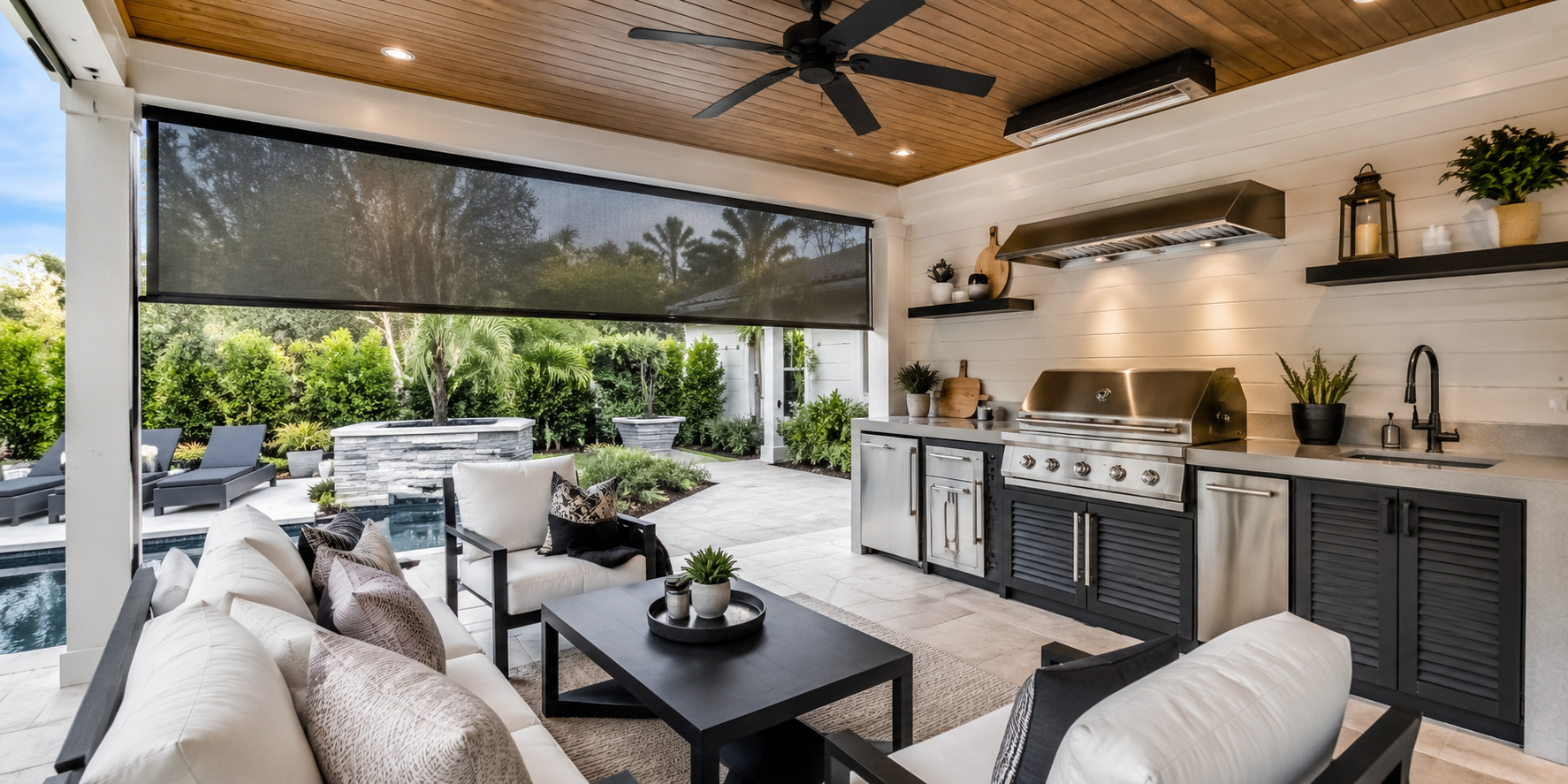
In compact backyards, the connection between functions is key. Align the outdoor kitchen with adjacent seating rather than isolating it—bar counters that face lounge chairs or firepits encourage conversation. Use matching flooring materials to link zones visually; a continuous tile or decking pattern makes the whole terrace appear larger.
Maintain at least three feet of clearance behind stools and chairs so movement feels effortless.
When flow works, the kitchen becomes the heart of outdoor living rather than a detached workstation.
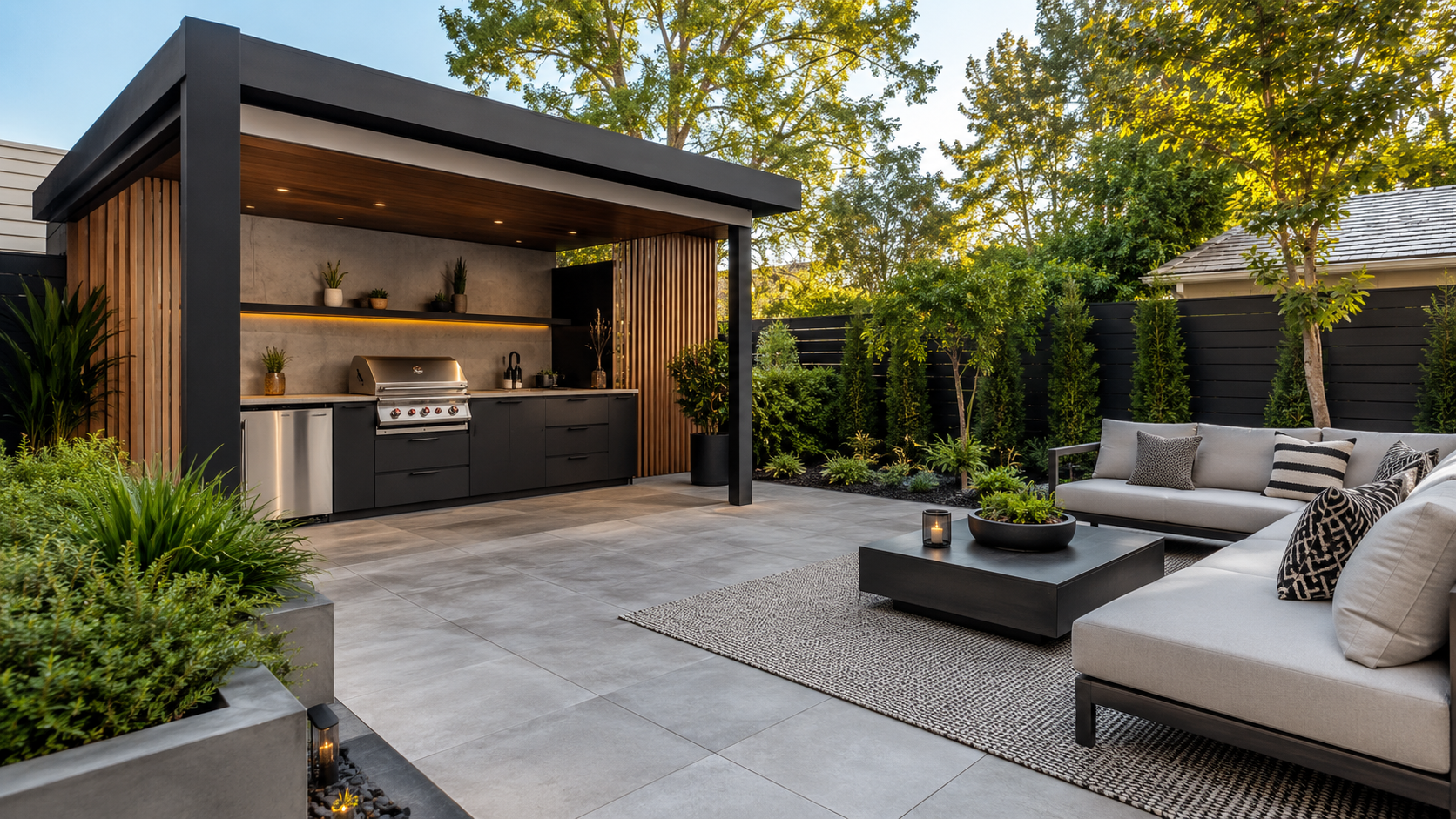
Compact Scale, Expansive Possibility. A small covered outdoor kitchen proves that luxury isn’t measured in square footage—it’s measured in experience. With thoughtful proportions, layered lighting, durable materials, and seamless transitions, you can grill, prep, and dine comfortably in spaces once considered too tight for entertaining.
Each of these 19 ideas balances design elegance with everyday practicality, turning modest patios and balconies into functional extensions of the home. Add the scent of herbs, the glow of warm light, and the sound of conversation, and even the smallest covered kitchen becomes the most memorable room outside your walls.
G2G Team
06-01-2026
Let’s Build
Contact us todayGet daily tips and tricks for making your best home.
2025 Green to Gorgeous