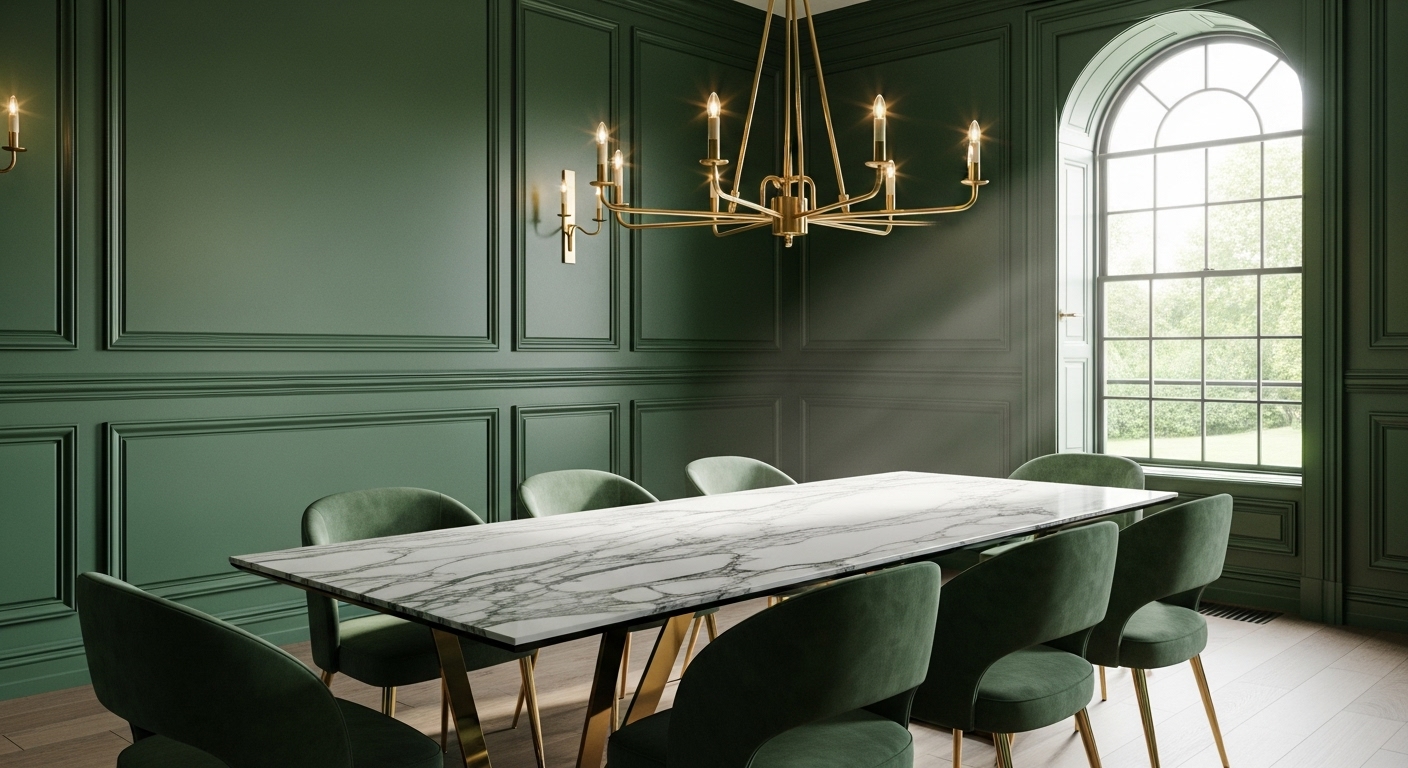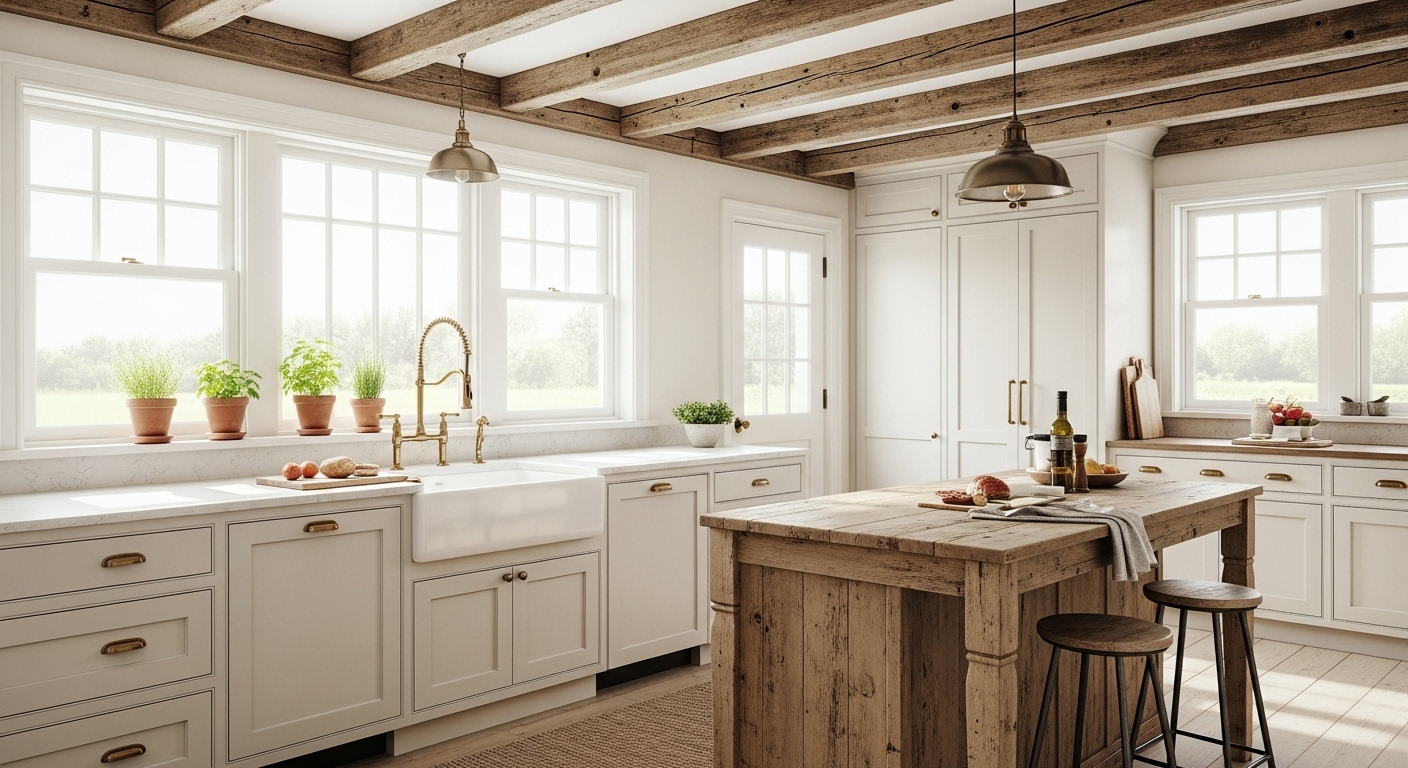
What if your kitchen could feel like a storybook scene—where the scent of fresh herbs mingles with the glow of morning light across weathered wood? That’s the quiet beauty of the farmhouse kitchen. It’s not about flash or perfection; it’s about warmth, craftsmanship, and the comfort of home.
A farmhouse kitchen feels timeless because it celebrates authenticity. You’ll find soft textures, honest materials, and cabinetry that looks like it’s been loved for generations. But this beloved style has evolved—today’s farmhouse kitchens blend rustic charm with modern practicality, striking a balance between lived-in comfort and refined design.
The heart of that transformation lies in your cabinets. They’re not just storage—they’re the backbone of your kitchen’s personality. Whether you prefer classic Shaker simplicity, weathered wood textures, or bold contrast tones, there’s a way to make farmhouse style uniquely yours.
In this guide, we’ll explore 17 farmhouse kitchen cabinet ideas that mix tradition and modernity—each crafted to inspire you to create a kitchen that feels inviting, functional, and filled with charm.
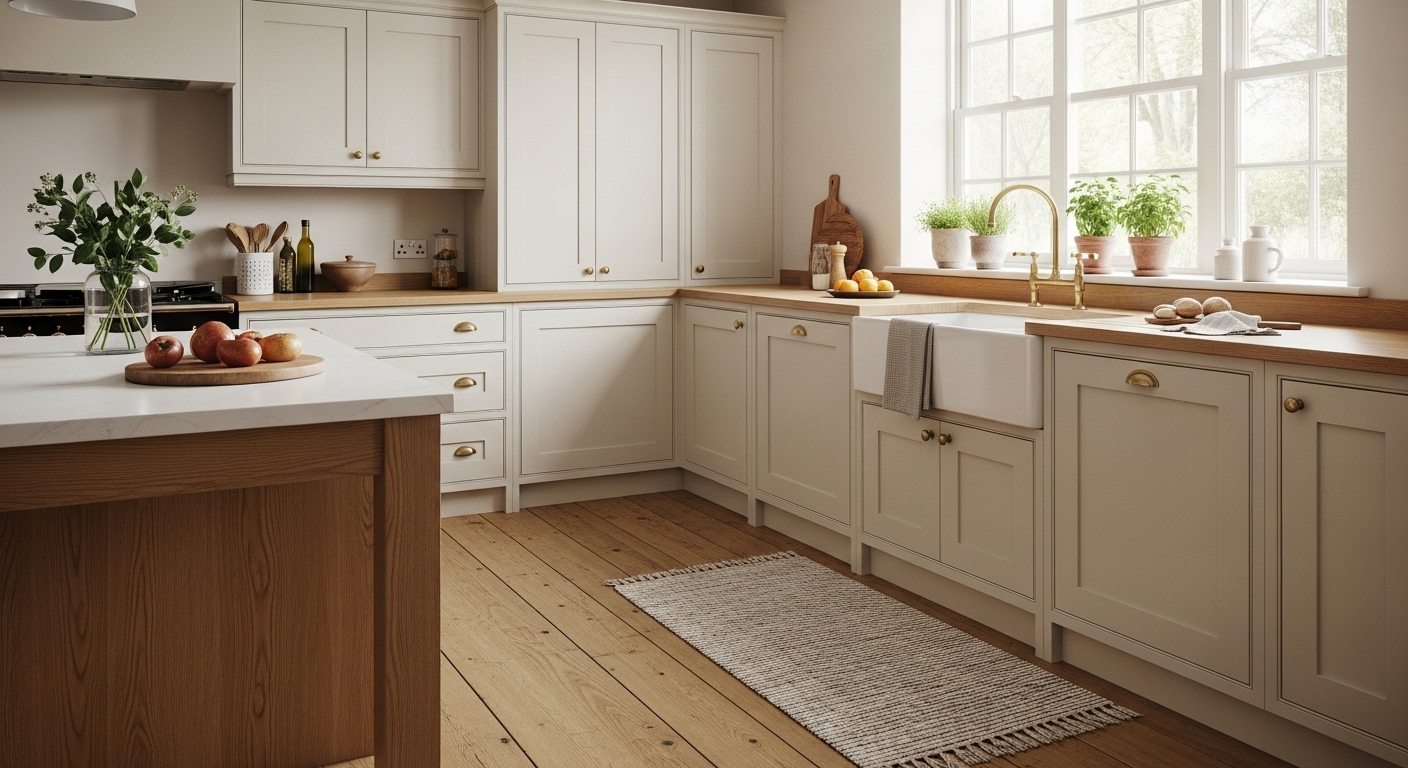
Shaker cabinets are the farmhouse staple. Defined by their clean lines and recessed panels, they bring timeless simplicity and quiet elegance to any kitchen. Imagine creamy-white cabinets that glow softly in the morning light, paired with brushed-brass handles and warm oak countertops. The balanced proportions of Shaker doors bring visual calm, making the kitchen feel organized and harmonious.
Why it works: Their minimalist style makes them versatile—they look as beautiful in a traditional cottage as in a modern farmhouse.
Pro Tip: Pair white Shaker cabinets with warm textures—woven rugs, matte metal hardware, or natural wood stools—to keep the look grounded and inviting.
Open shelving transforms ordinary storage into everyday art. Instead of hiding your dishes, it lets you display them beautifully while keeping essentials close at hand.
Picture reclaimed wood planks mounted on matte-black brackets, lined with stacks of white ceramic bowls and clear glass jars filled with grains. A potted basil plant adds a fresh pop of green. The result feels light, unpretentious, and genuinely homey.
Why it works: Open shelving embraces functionality while offering visual rhythm and texture—perfect for smaller kitchens that need breathing room.
Pro Tip: Use repetition for cohesion—limit your palette to two or three colors for your displayed dishes and containers.
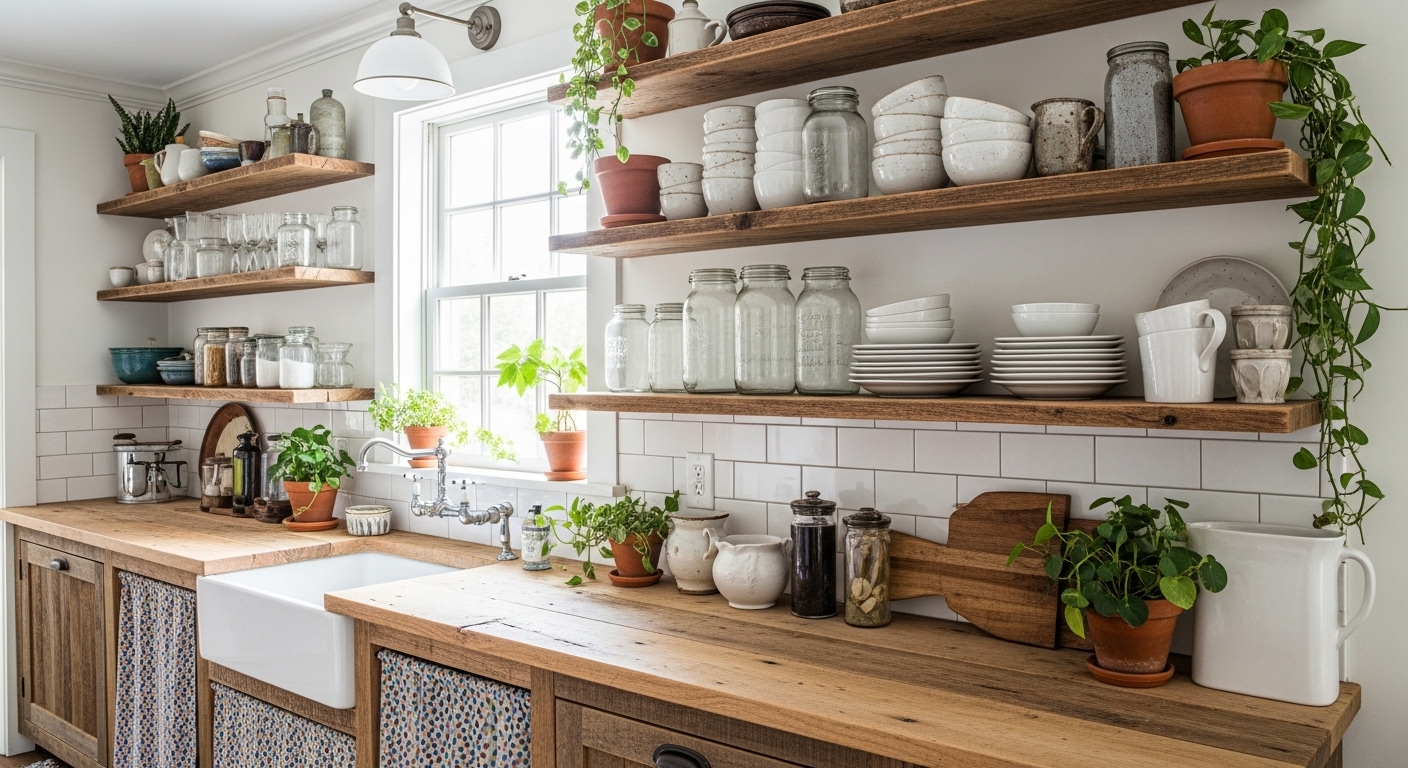
For farmhouse charm with a modern edge, go two-tone. This design pairs light upper cabinets with darker lower ones, grounding the space while maintaining an open feel. Think crisp white uppers contrasted with deep forest-green bases, tied together with warm brass pulls. The look feels structured but not stiff—a blend of tradition and trend.
Why it works: Contrast creates depth, making your cabinetry feel intentional and layered rather than uniform.
Pro Tip: Repeat one of your cabinet colors elsewhere—in pendant lights, textiles, or stools—to tie the palette together.
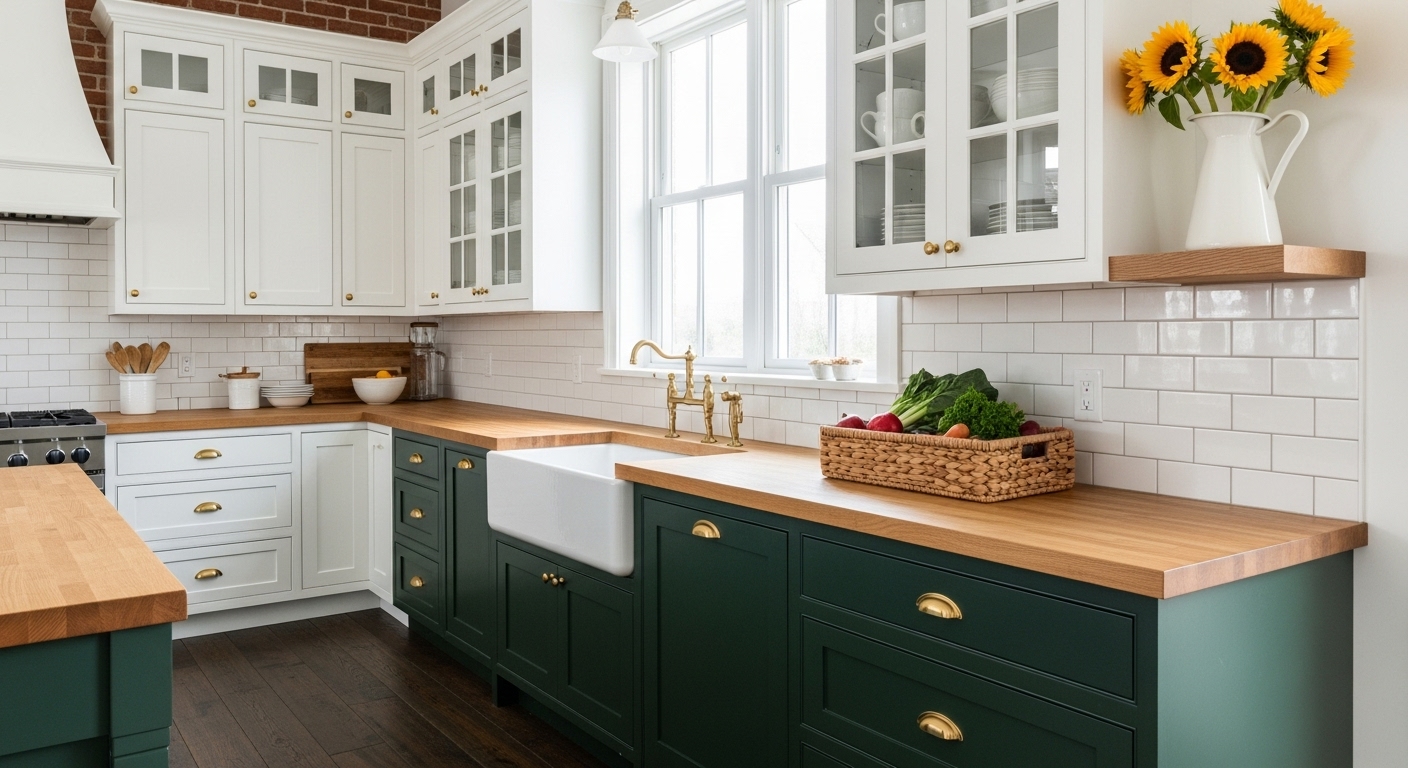
Nothing captures the soul of the farmhouse aesthetic like reclaimed wood. Each knot and imperfection adds a sense of history, transforming your kitchen into a living piece of art. Imagine rustic oak cabinets with visible grain, paired with matte-black hardware and stone countertops. The patina of the wood tells its own story—a narrative of use, resilience, and authenticity.
Why it works: It balances rustic warmth with natural beauty, bringing texture that machine-made materials can’t replicate.
Pro Tip: Seal reclaimed wood with a clear matte finish to preserve its texture while protecting it from spills and stains.
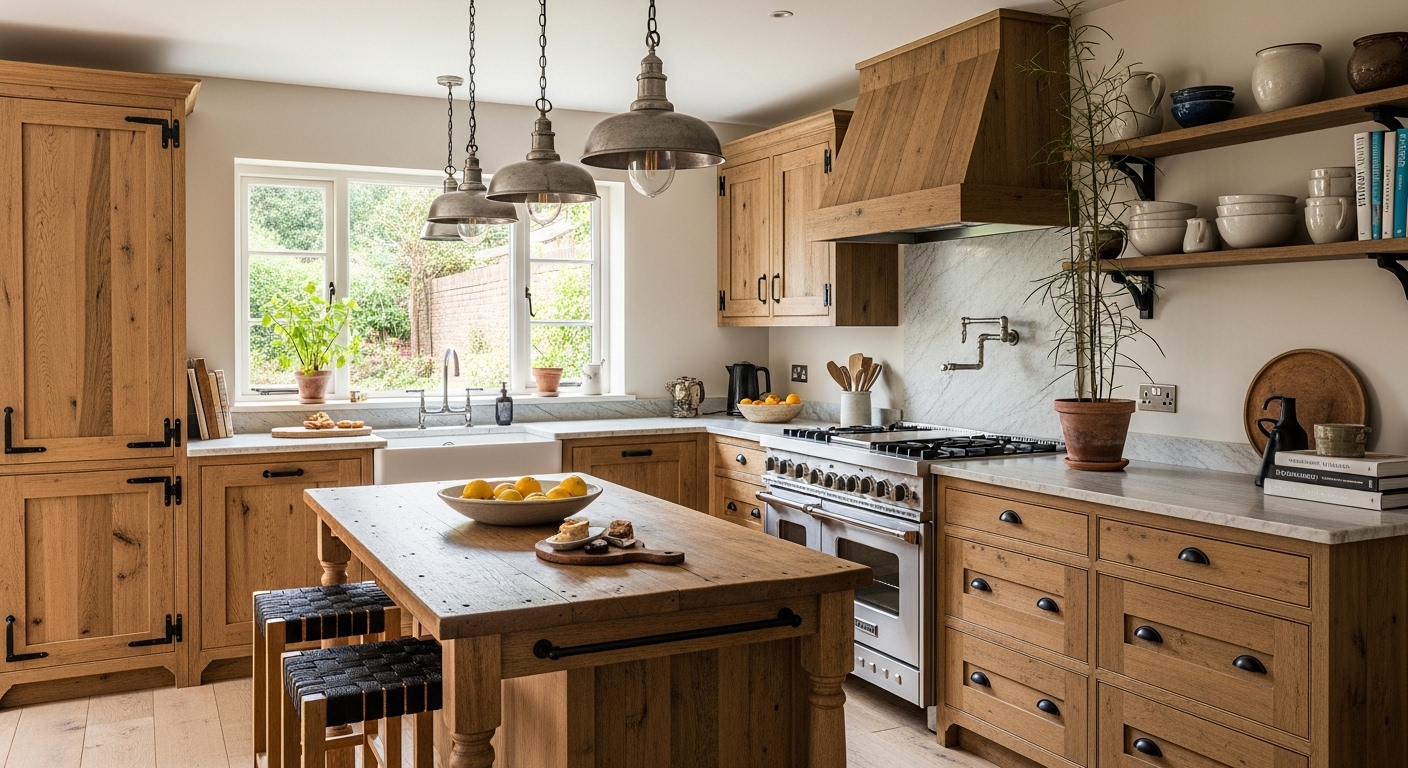
Glass-front cabinets give you the charm of open shelving with the practicality of closed storage. They make your kitchen feel brighter and more spacious while showcasing curated dishware or collectibles. Visualize tall cabinets with frosted glass panes, framed in warm cream wood. Behind them, neatly arranged bowls, mugs, and woven baskets glow softly under interior lighting.
Why it works: Glass reflects light, visually expanding smaller kitchens while adding subtle sophistication.
Pro Tip: Use soft LED lighting inside the cabinets to enhance their depth and create a cozy evening ambiance.
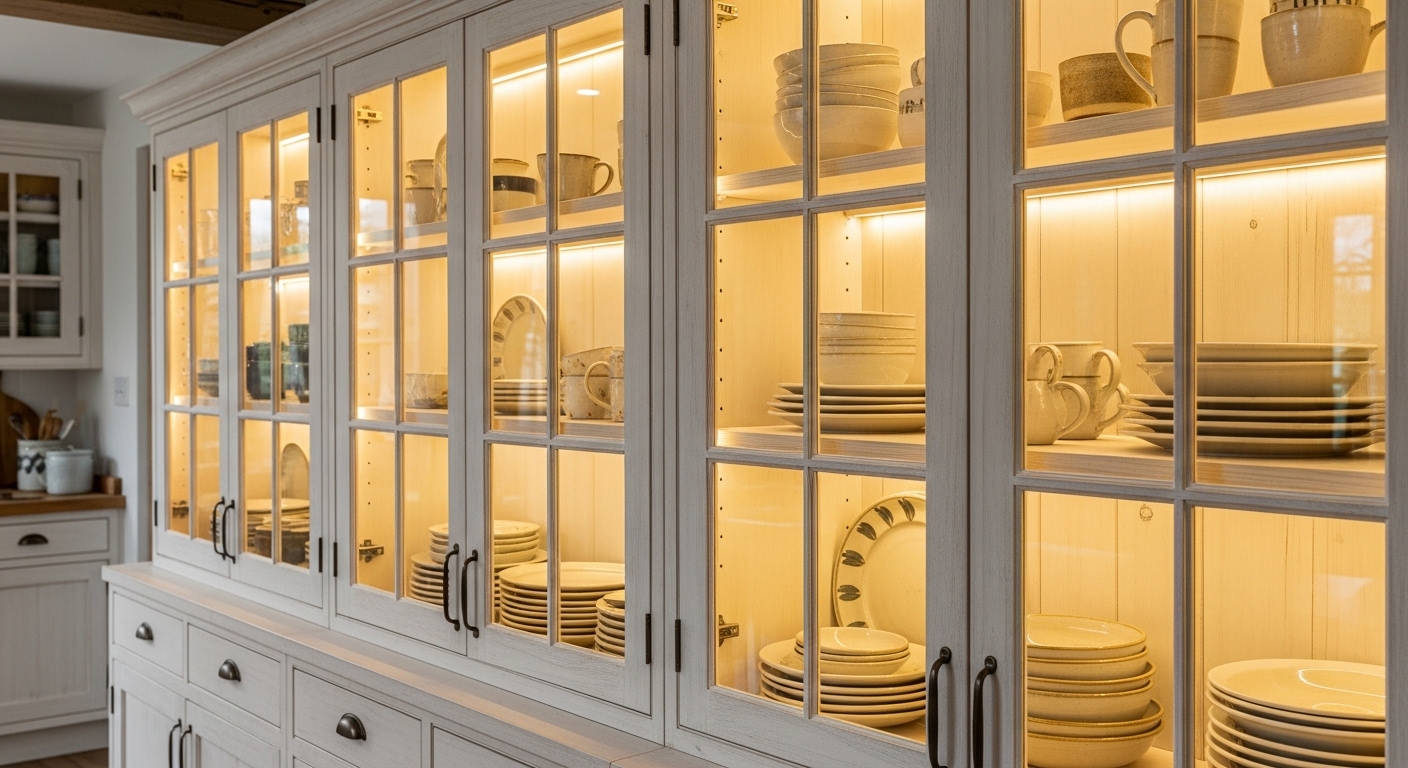
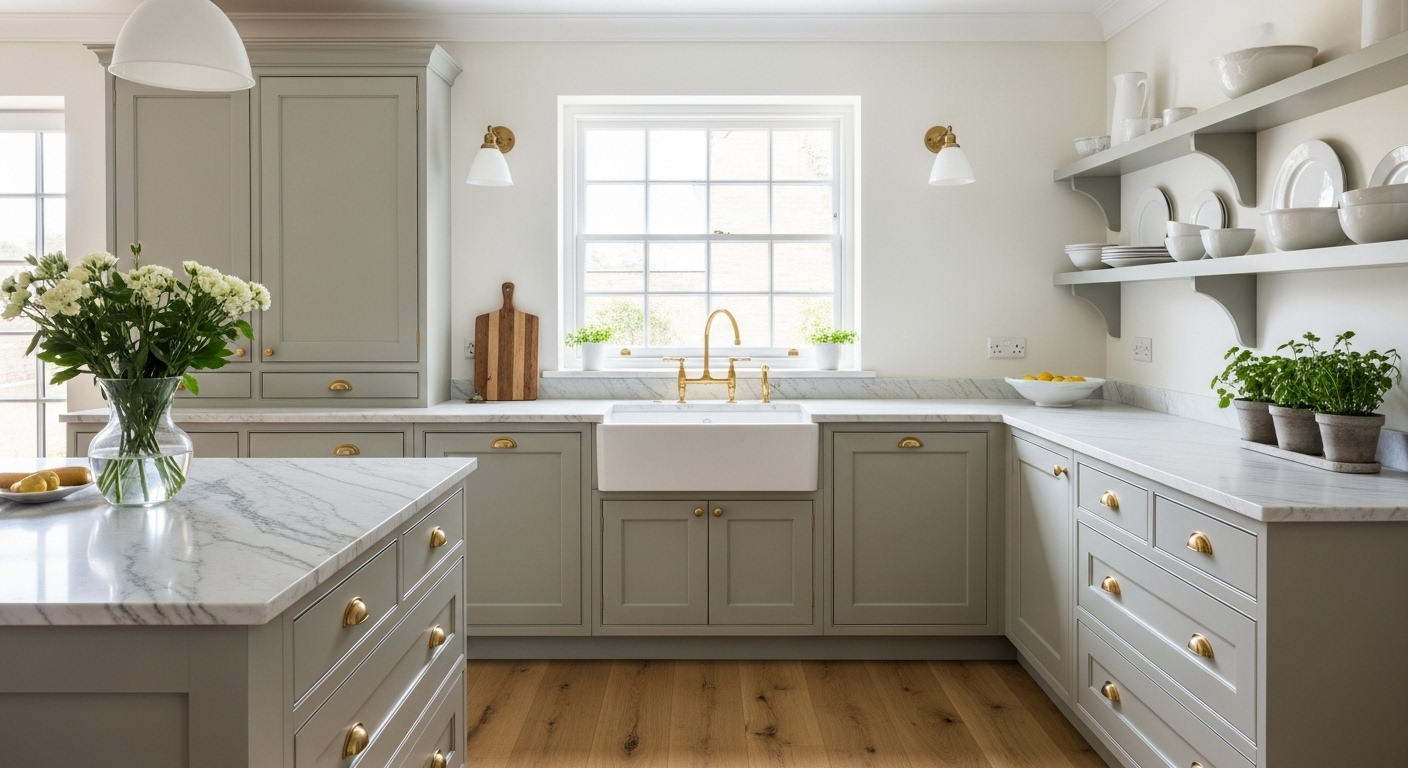
Few colors say “farmhouse” like muted green. Sage tones evoke calm, freshness, and connection to nature—ideal for a kitchen that doubles as a sanctuary. Picture soft sage cabinets paired with white marble counters, brass fixtures, and woven accents. The effect feels earthy yet refined—a palette that ages gracefully.
Why it works: Green bridges rustic and contemporary design, grounding the kitchen while adding
Freshness.
Pro Tip: Balance the hue with warm lighting or natural wood accents to keep it from feeling cold.
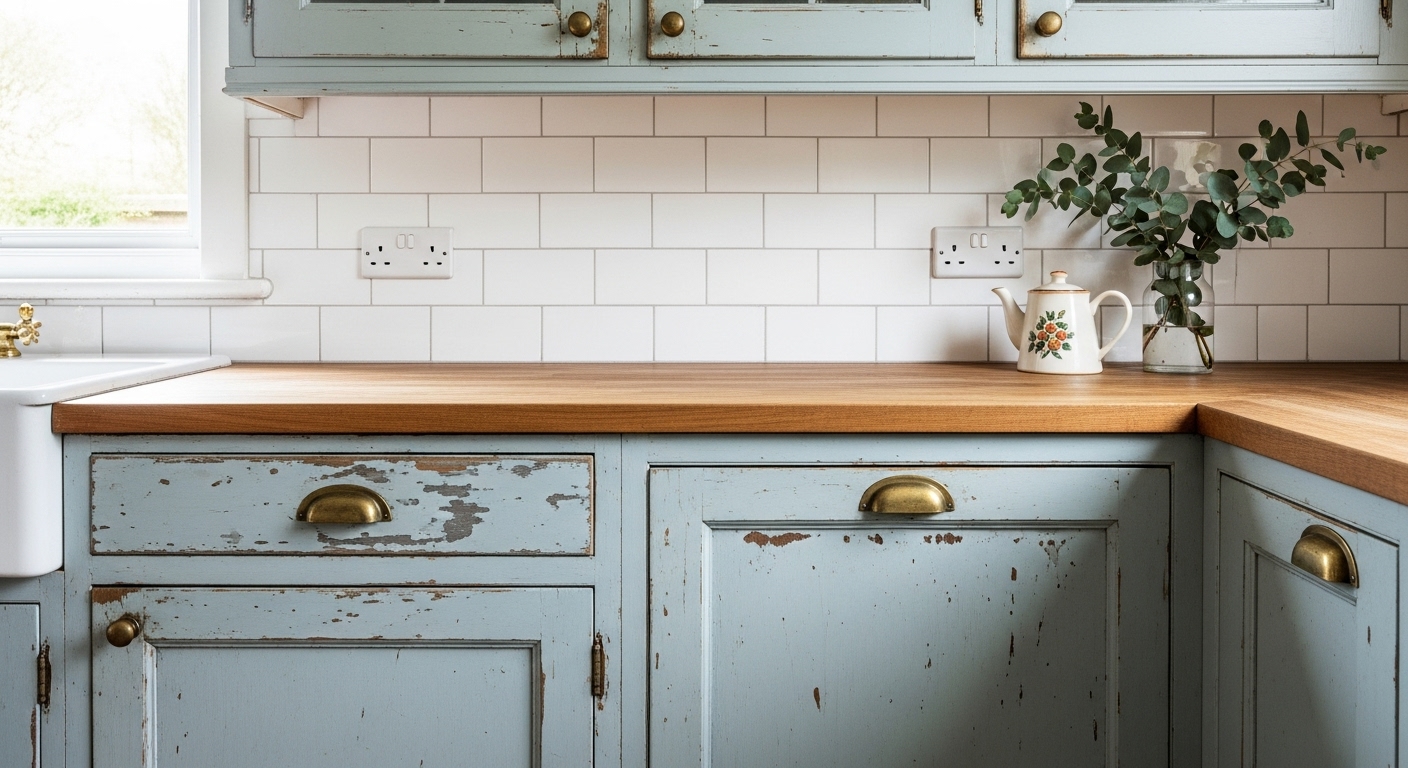
Distressed or chalk-painted cabinets evoke the charm of vintage furniture—soft edges, hand-rubbed paint, and a sense of time well spent. Imagine cabinets in faded gray-blue with brushed edges revealing warm undertones beneath. They instantly soften the space and tell a story of age and love.
Why it works: Distressed finishes give visual depth and nostalgia, balancing sleek modern appliances beautifully.
Pro Tip: Limit distressing to accent pieces (like an island or hutch) to avoid overwhelming the space.
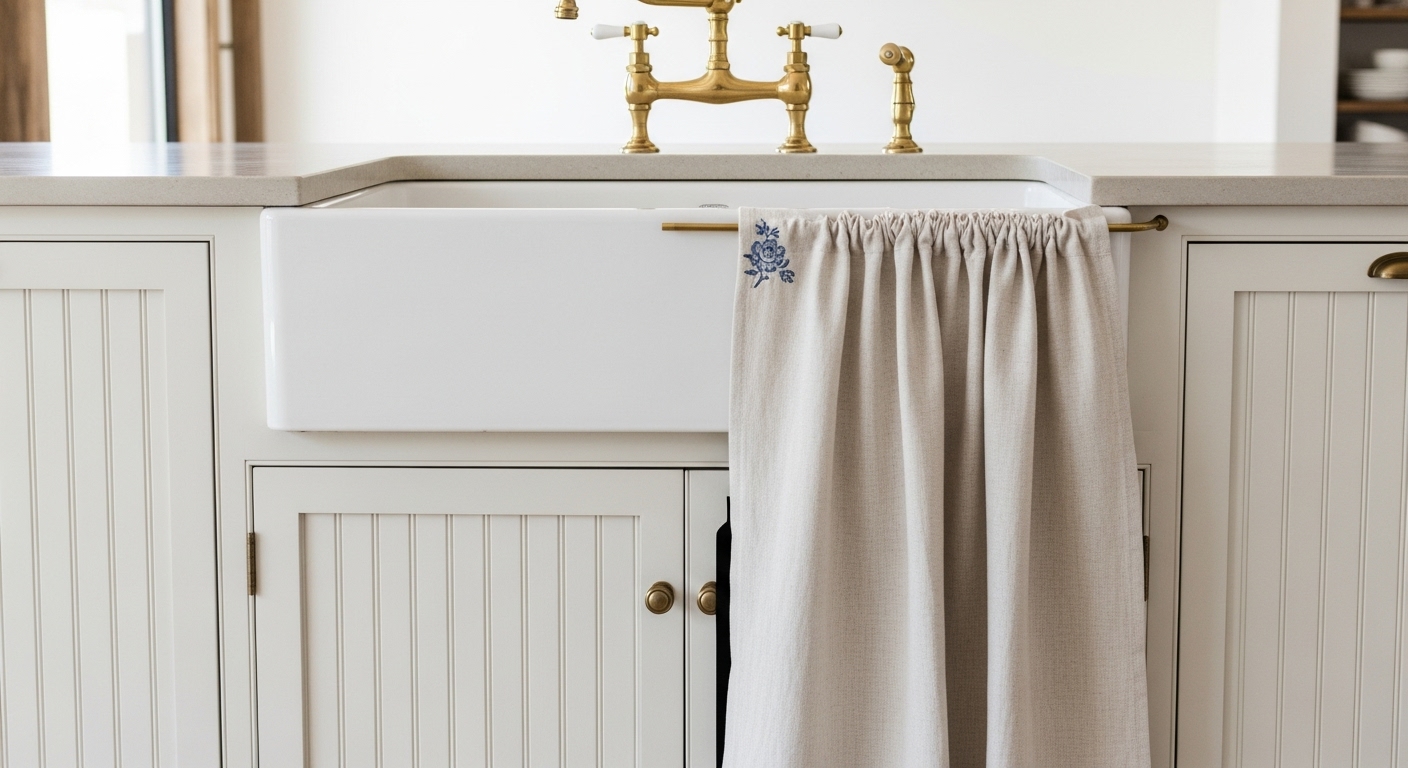
The farmhouse sink cabinet anchors the kitchen both visually and emotionally. Wide, deep, and durable, it’s as practical as it is iconic. Think a crisp white fireclay sink framed by beadboard cabinetry, with brass fixtures and a linen skirt for old-world charm. The sink’s generous proportions make washing up feel like a meditative act.
Why it works: The apron-front sink adds instant farmhouse character and a touch of nostalgia.
Pro Tip: Use your sink cabinet as a focal point—add lighting or décor around it to enhance its presence.
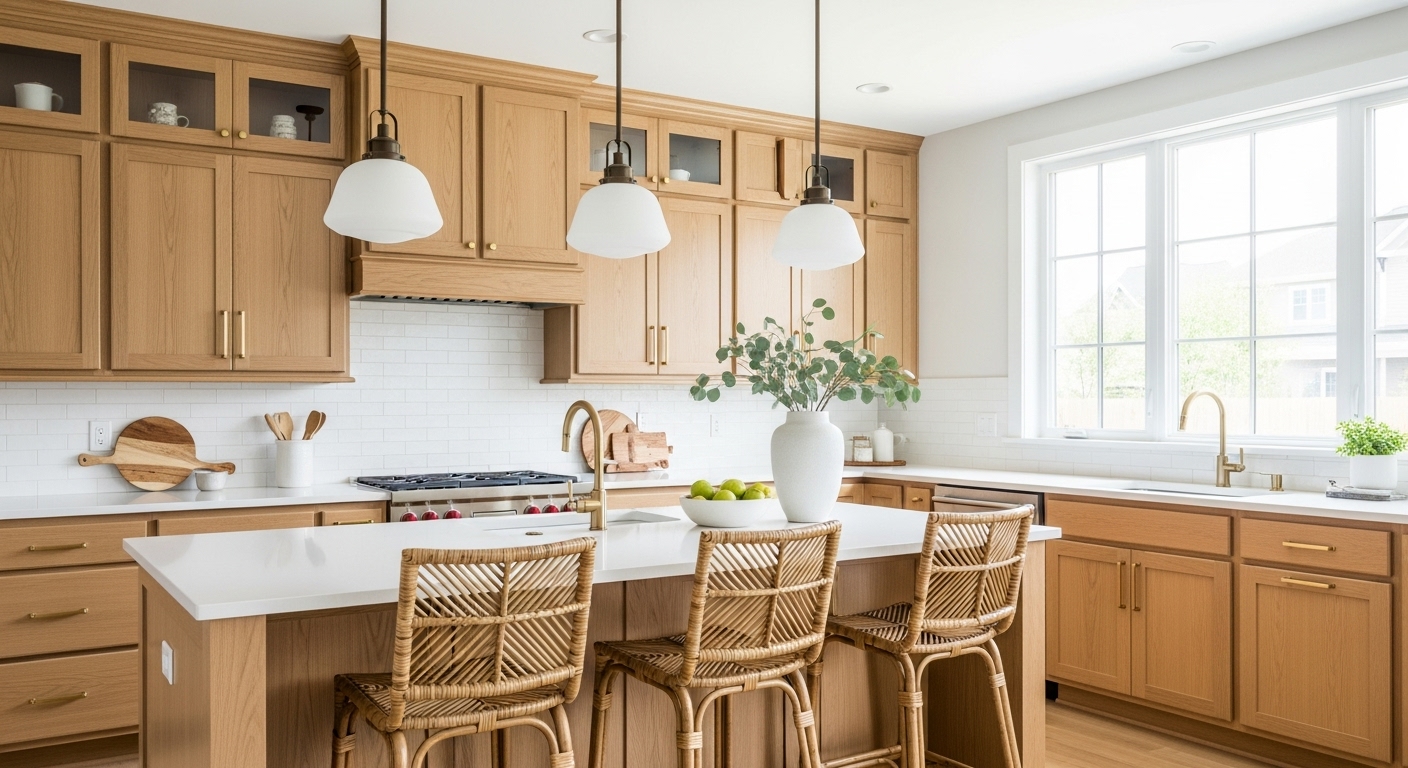
Natural oak has made a beautiful comeback in modern farmhouse kitchens. Its honey tones and subtle grain patterns bring softness and glow. Picture flat-panel oak cabinets with matte finishes, paired with sleek quartz countertops and brushed-gold handles. The warmth of the wood balances cooler metals and stones, creating a harmonious blend.
Why it works: Oak’s organic hue softens contemporary lines, keeping the space inviting.
Pro Tip: Choose a matte finish to enhance oak’s texture while reducing glare.
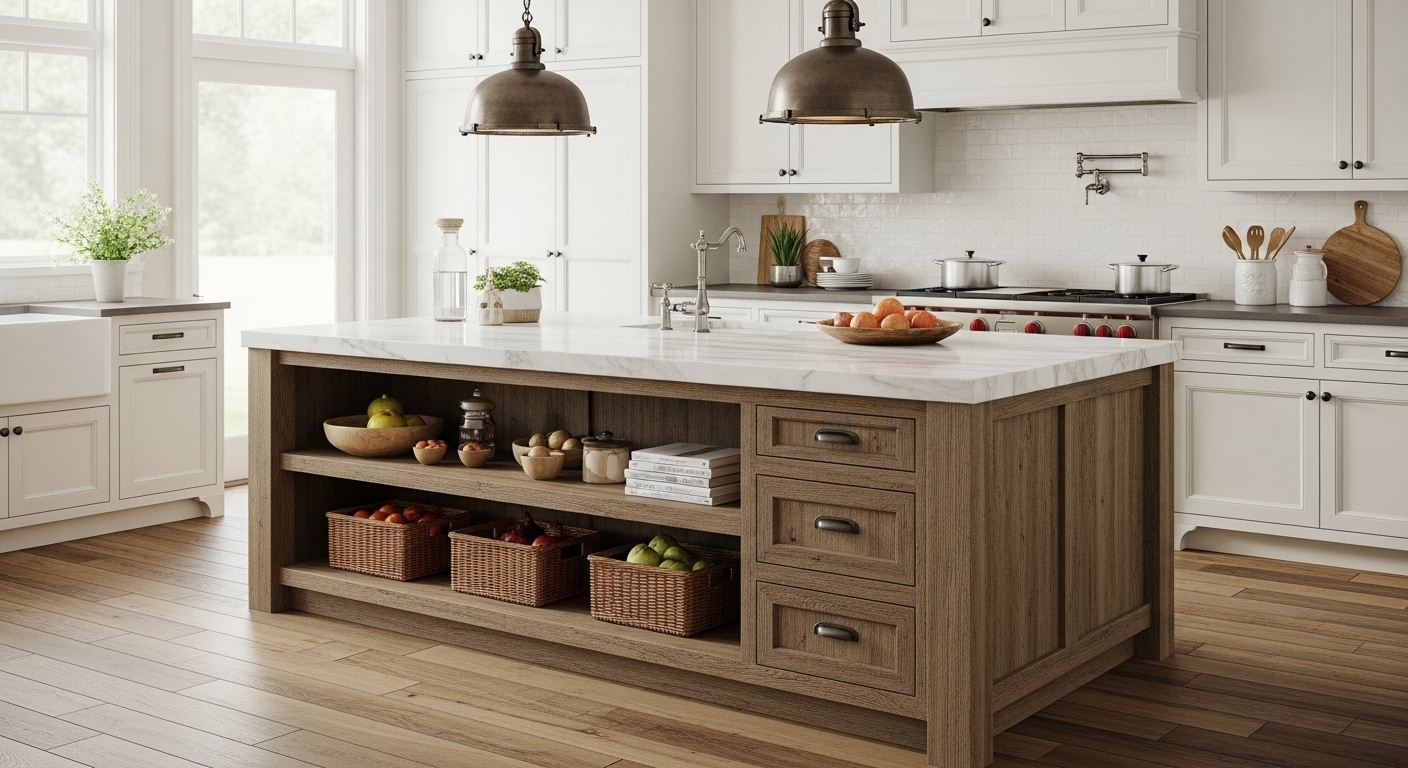
A freestanding farmhouse island feels like a beloved heirloom. Whether crafted from reclaimed pine or painted in a soft hue, it becomes the kitchen’s centerpiece. Imagine a weathered wood island topped with marble, open shelves filled with baskets, and stools tucked beneath. It invites conversation as much as it provides workspace.
Why it works: It introduces contrast and character, often becoming the soul of the room.
Pro Tip: Use an island in a contrasting finish to your main cabinets for depth and visual layering.
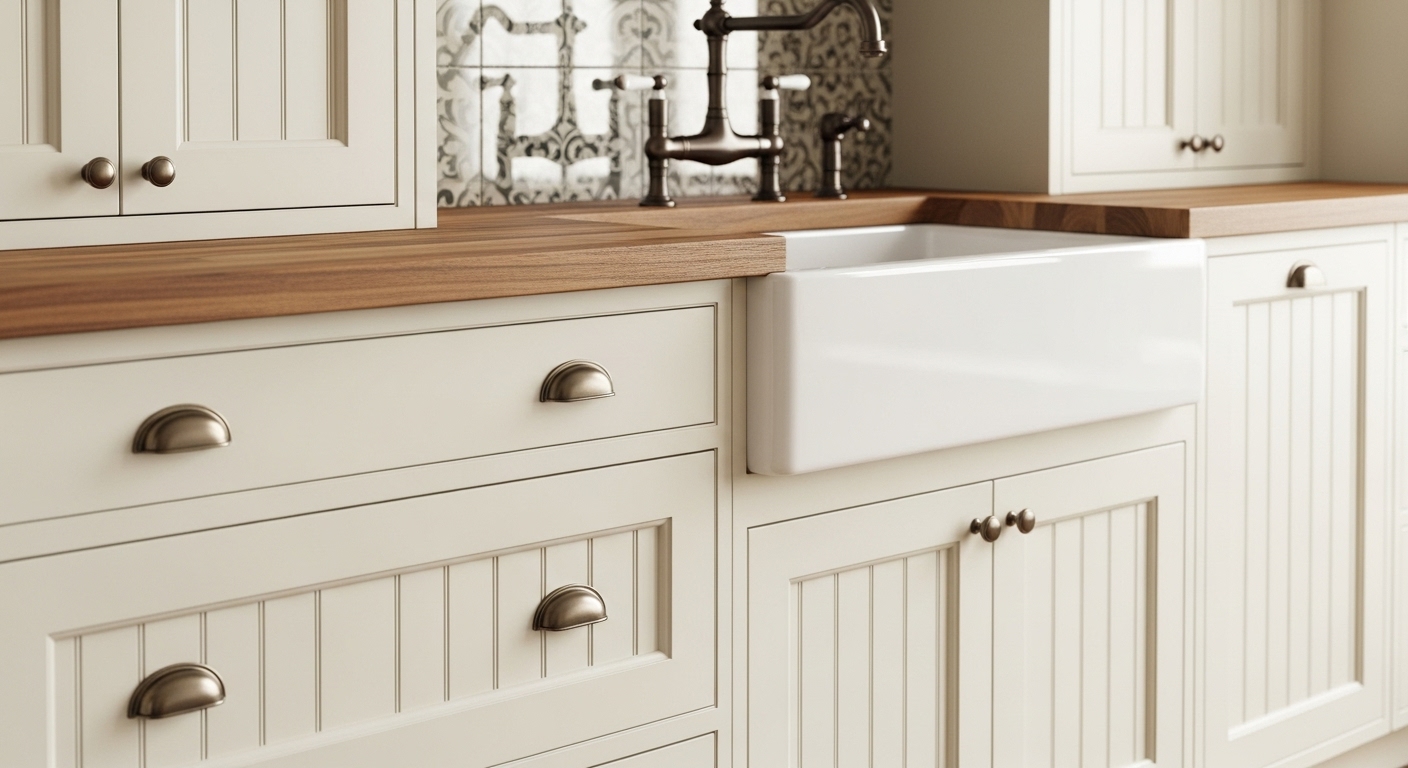
Beadboard cabinets add vertical rhythm and cozy texture. They nod to early farmhouse pantries and bring movement to plain surfaces. Visualize cream cabinets with narrow beadboard grooves, paired with bronze handles and warm light. The effect is tactile and timeless.
Why it works: Texture breaks up monotony, adding depth without clutter.
Pro Tip: Use beadboard selectively—on cabinet ends, islands, or backsplashes—to add dimension subtly.
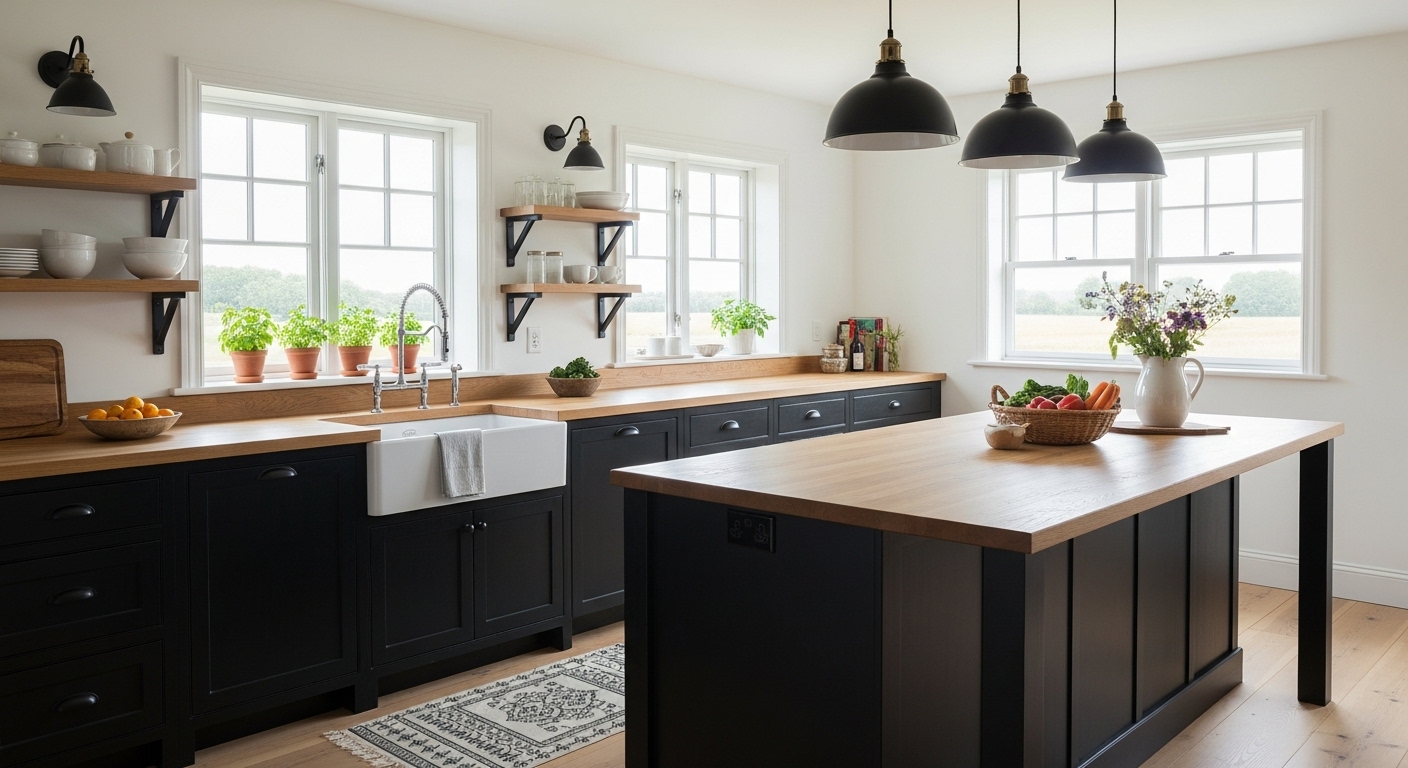
For those craving a bolder edge, matte black cabinetry delivers modern sophistication within a rustic setting. Imagine black lower cabinets offset by white uppers and warm wood beams above. The result is sleek, balanced, and undeniably stylish.
Why it works: Black grounds a room—it adds weight, contrast, and drama while keeping the aesthetic mature.
Pro Tip: Pair with natural elements like butcher block or rattan to avoid harshness.
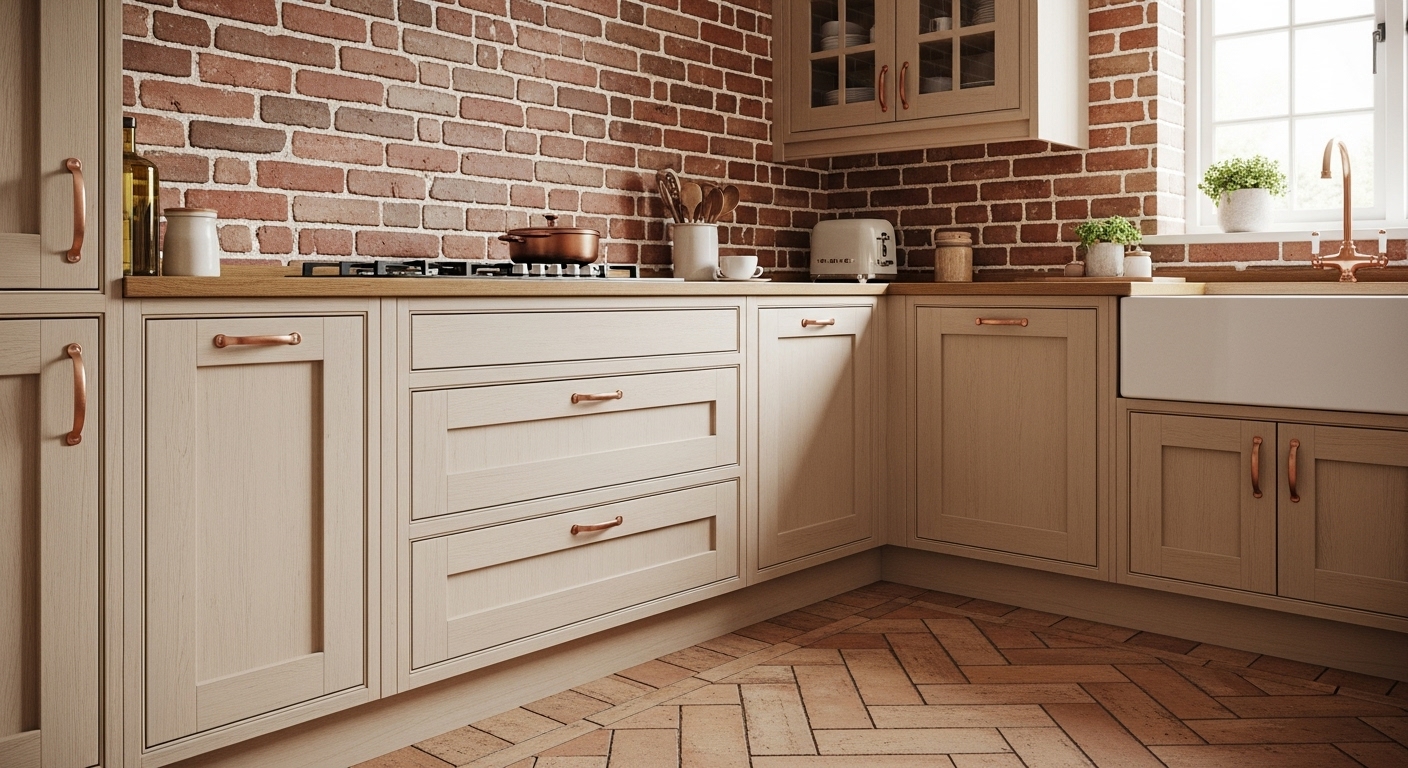
Buttermilk tones are the secret to capturing that golden farmhouse warmth. Unlike stark white, they glow softly under any light. Picture creamy cabinets against a backdrop of brick or terracotta tile, the gentle warmth creating a sunlit serenity.
Why it works: Warm neutrals flatter every design element—from wood floors to metallic fixtures.
Pro Tip: Choose satin finishes for a subtle sheen that reflects natural light beautifully.
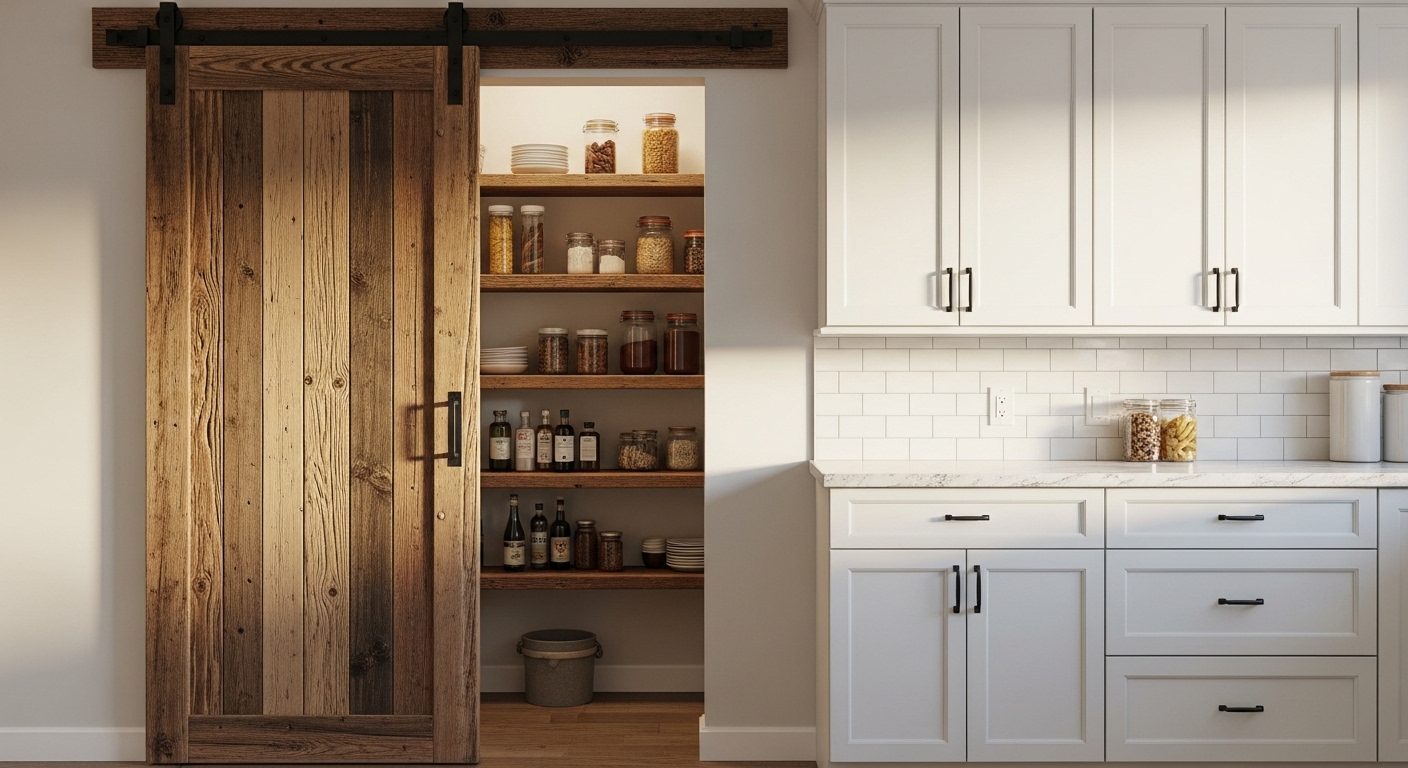
The sliding barn door isn’t just trendy—it’s timeless. It hides clutter while adding sculptural movement. Envision a reclaimed wood door on a black steel track, revealing shelves stocked with mason jars and woven baskets. It’s practical farmhouse elegance at its finest.
Why it works: Combines utility with visual drama—ideal for pantries or utility areas.
Pro Tip: Paint or stain your door to contrast with cabinetry; it becomes an instant focal point.
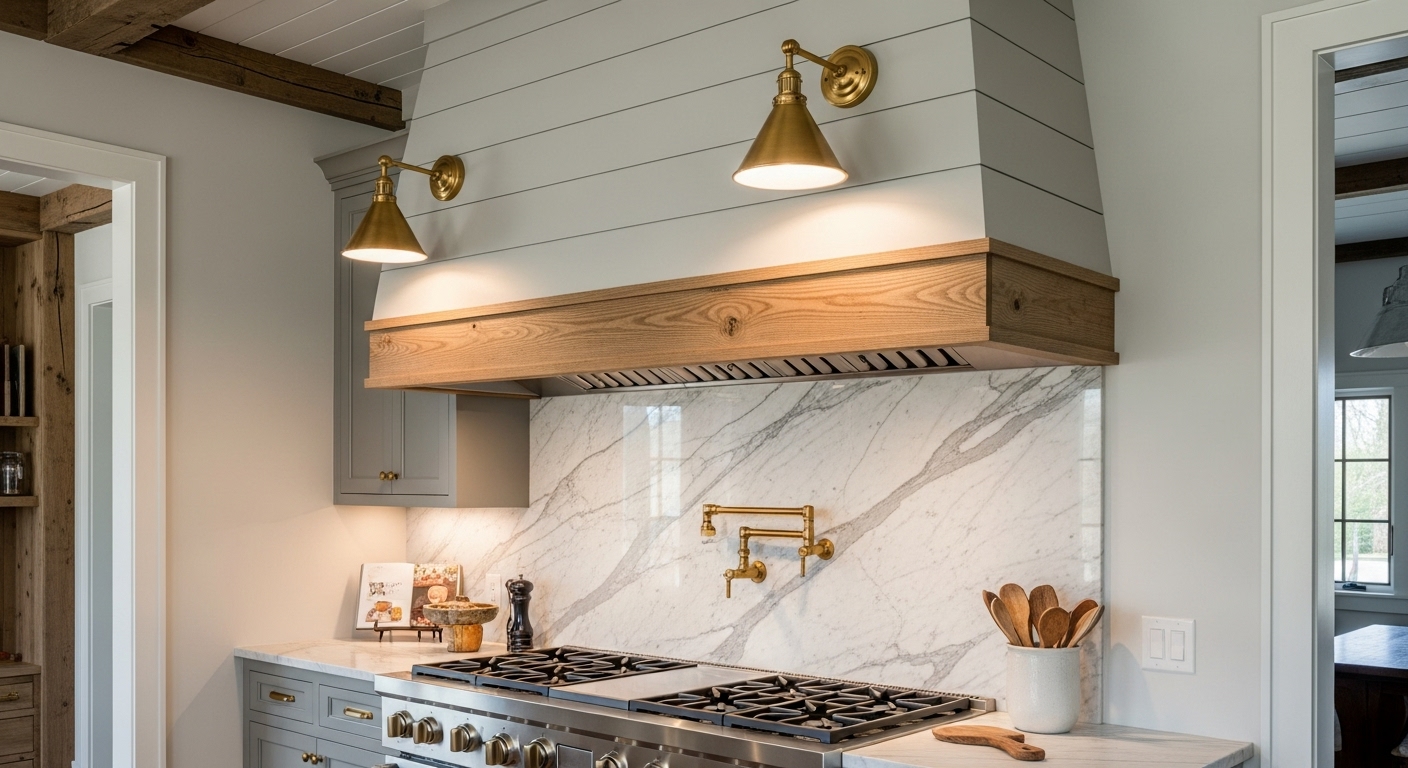
Range hoods are often overlooked, yet they command attention. A custom wood or shiplap hood ties cabinetry together and adds architectural gravitas. Think a whitewashed wooden hood with subtle molding, centered above a gas range with brass knobs. It’s understated grandeur—the mark of a thoughtful design.
Why it works: It merges beauty and utility, turning a functional element into a statement piece.
Pro Tip: Add an accent color or trim to the hood that echoes your island or hardware finish.
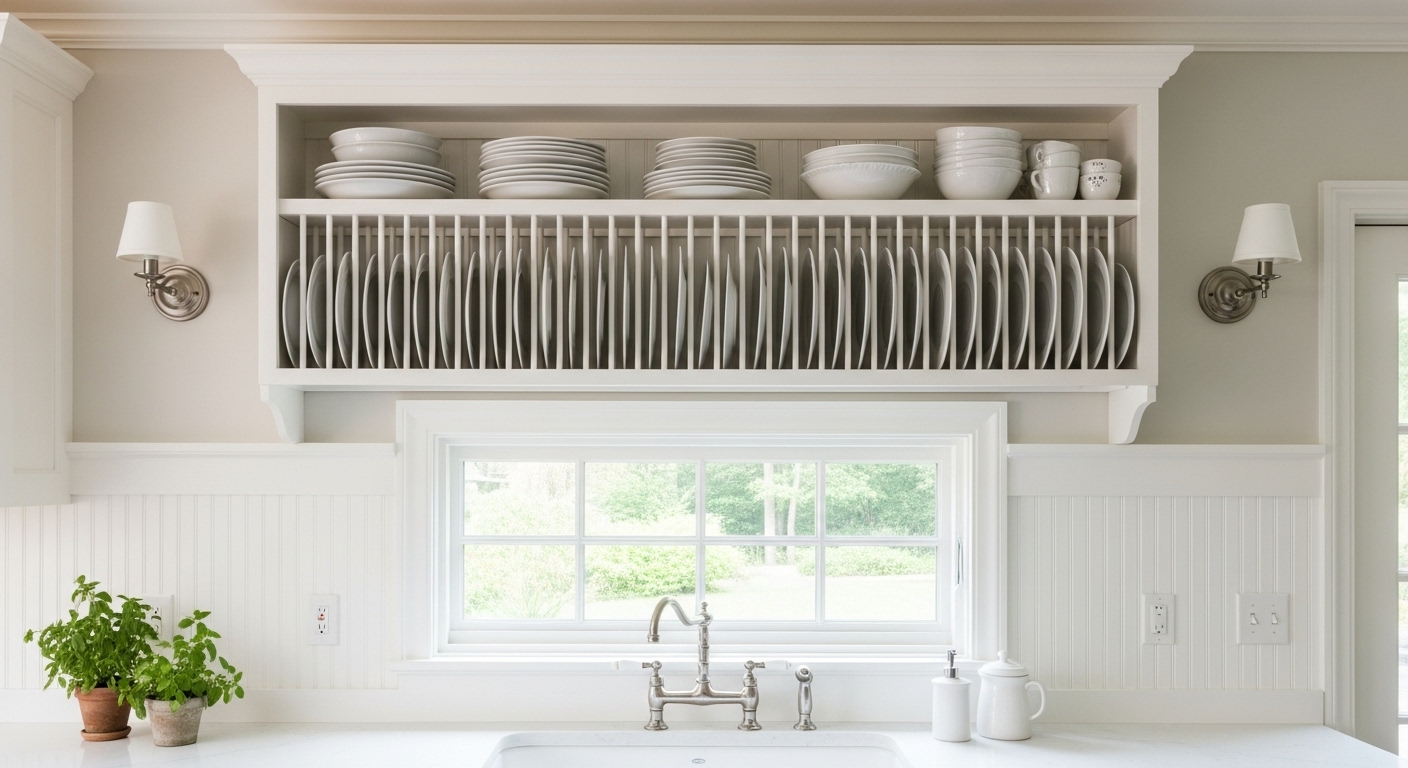
Built-in plate racks recall kitchens from another era—functional, graceful, and personal. They invite storytelling through display. Imagine neatly arranged stoneware plates on open wooden slats above the sink, framed by cabinetry painted in soft gray.
Why it works: It combines function and nostalgia while freeing up cabinet space.
Pro Tip: Use it for decorative trays, cookbooks, or cutting boards to modernize the classic idea.
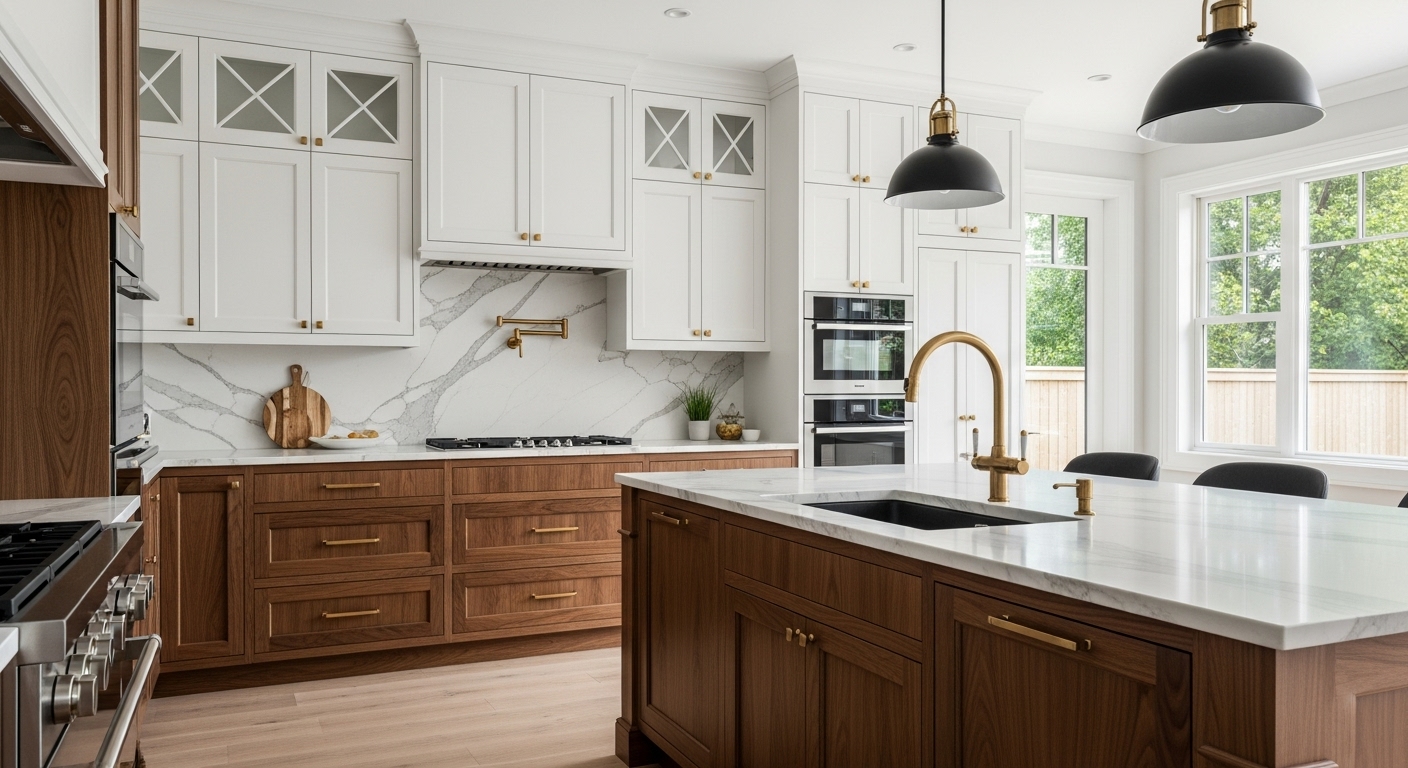
The most captivating farmhouse kitchens feel collected over time. Mixing painted and natural wood finishes creates depth and a story of evolution. Visualize white uppers with walnut lowers, hardware blending brass and matte black, and open shelving in reclaimed pine. Every contrast feels deliberate yet harmonious.
Why it works: Mixed finishes avoid monotony and reflect personality—nothing feels overly designed.
Pro Tip: Keep undertones consistent (warm with warm, cool with cool) to maintain cohesion.
Crafting warmth that lasts. Farmhouse kitchen design isn’t about recreating someone else’s nostalgia—it’s about building your own. It’s where worn textures meet fresh finishes, where function finds warmth, and where every cabinet tells a story.
Whether you love the honesty of reclaimed wood, the crispness of Shaker profiles, or the calm of sage tones, farmhouse cabinetry gives you permission to slow down and appreciate craft in a modern world.
The best kitchens aren’t perfect—they’re personal. They evolve as life unfolds. So, mix finishes, choose materials that feel good under your fingertips, and let your cabinets be more than storage—let them be part of your home’s soul.
Let’s Build
Contact us todayGet daily tips and tricks for making your best home.
2025 Green to Gorgeous