3 MIN READ
Interior
Written By
G2G Team
Published
May 26, 2026
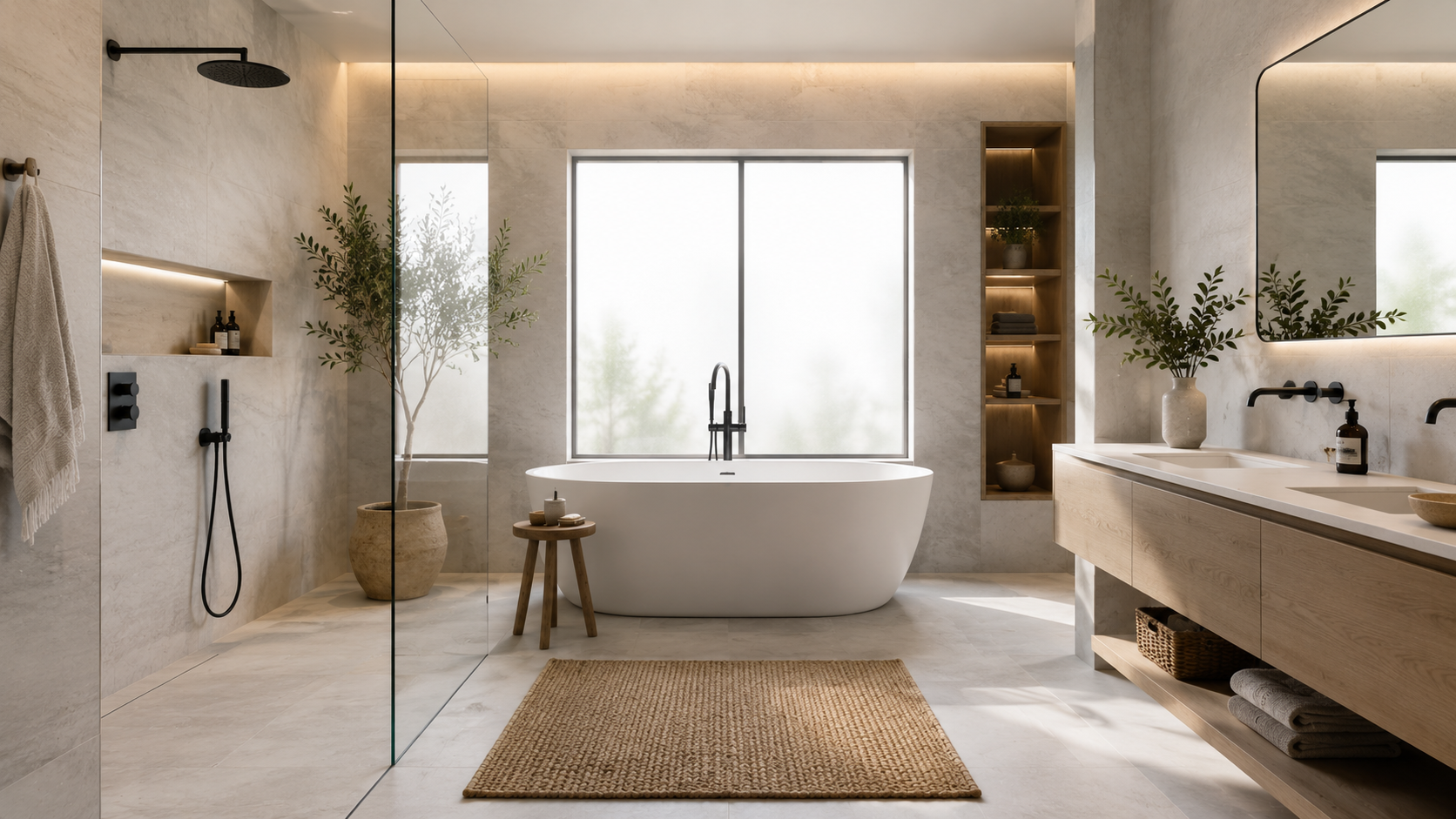
Have you ever walked into a bathroom and felt instantly calm—like the space itself helped you breathe easier? That’s the quiet power of minimalist design. In a world filled with visual clutter and endless distractions, a minimalist bathroom becomes a retreat—a sanctuary where simplicity meets luxury. Minimalism doesn’t mean sterile or boring. It’s about creating balance, embracing open space, and focusing on the essentials. By combining functionality with natural materials and subtle textures, you can design a bathroom that feels refreshing and timeless.
In this detailed guide, we’ll explore 13 minimalist bathroom ideas that bring simple elegance to life. Whether you’re renovating a master ensuite or refreshing a guest powder room, these ideas will help you create a clean, tranquil space that feels like your own private spa.
Minimalism starts with geometry and precision. The key is to emphasize clean lines—whether it’s in your vanity, bathtub, or tile layout. Choose rectangular sinks, frameless mirrors, and linear fixtures that guide the eye effortlessly across the space. Avoid ornate detailing or bulky cabinetry. Instead, opt for flat-panel doors, wall-mounted faucets, and recessed shelving. These elements create visual flow and reduce unnecessary visual noise. When every feature feels deliberate, your bathroom naturally exudes sophistication.
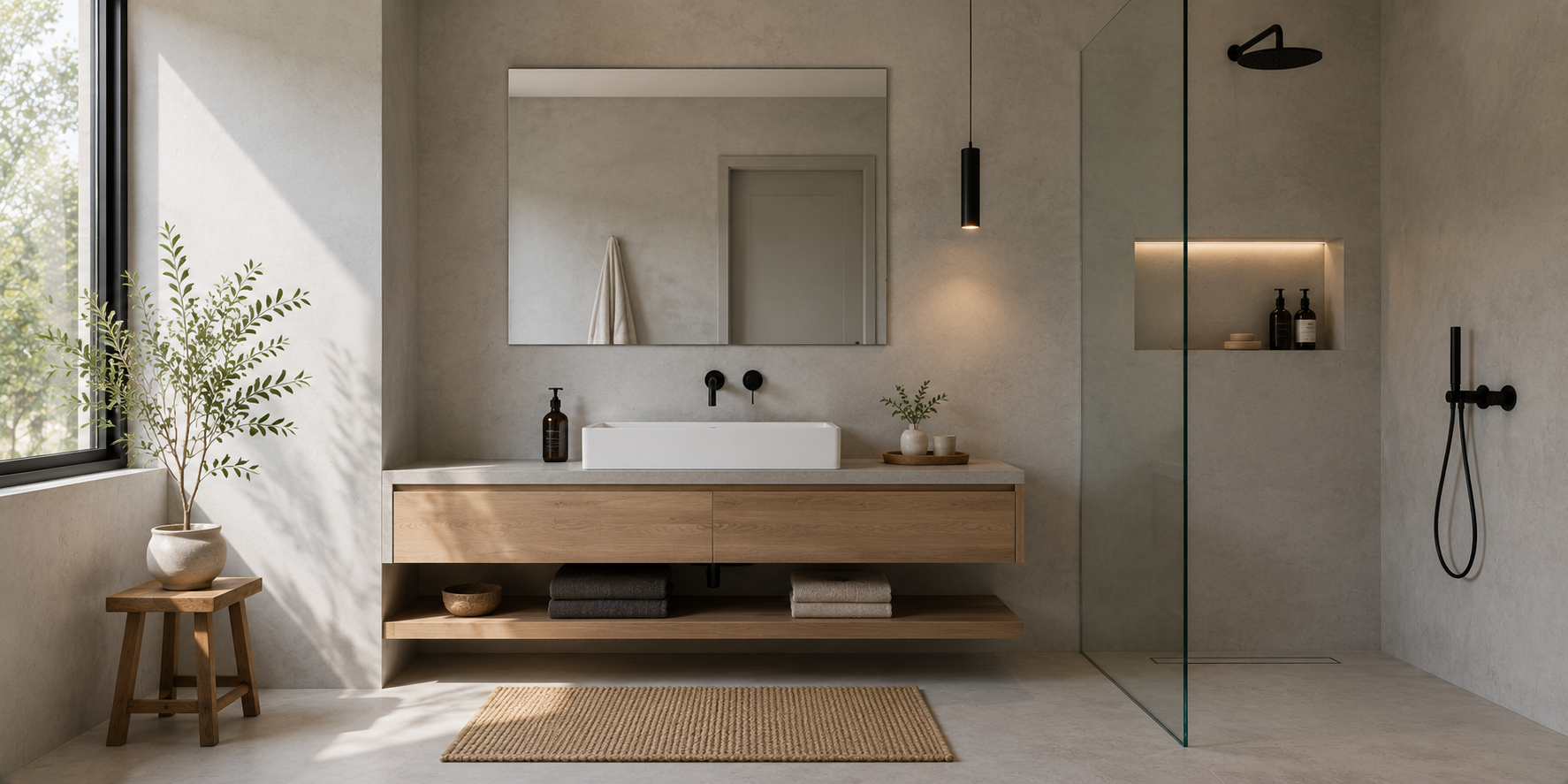
Color simplicity is one of minimalism’s most defining features. A monochromatic scheme—built around whites, beiges, grays, or soft neutrals—sets the foundation for a calm and cohesive environment. White, for example, maximizes light and makes small bathrooms appear larger. Shades of gray add depth without overwhelming. If you prefer warmth, choose soft taupe or pale sand tones. The goal is subtle variation, not contrast. You can introduce visual interest through texture rather than color—think matte tiles against glossy ceramics or a natural stone vanity against painted walls.
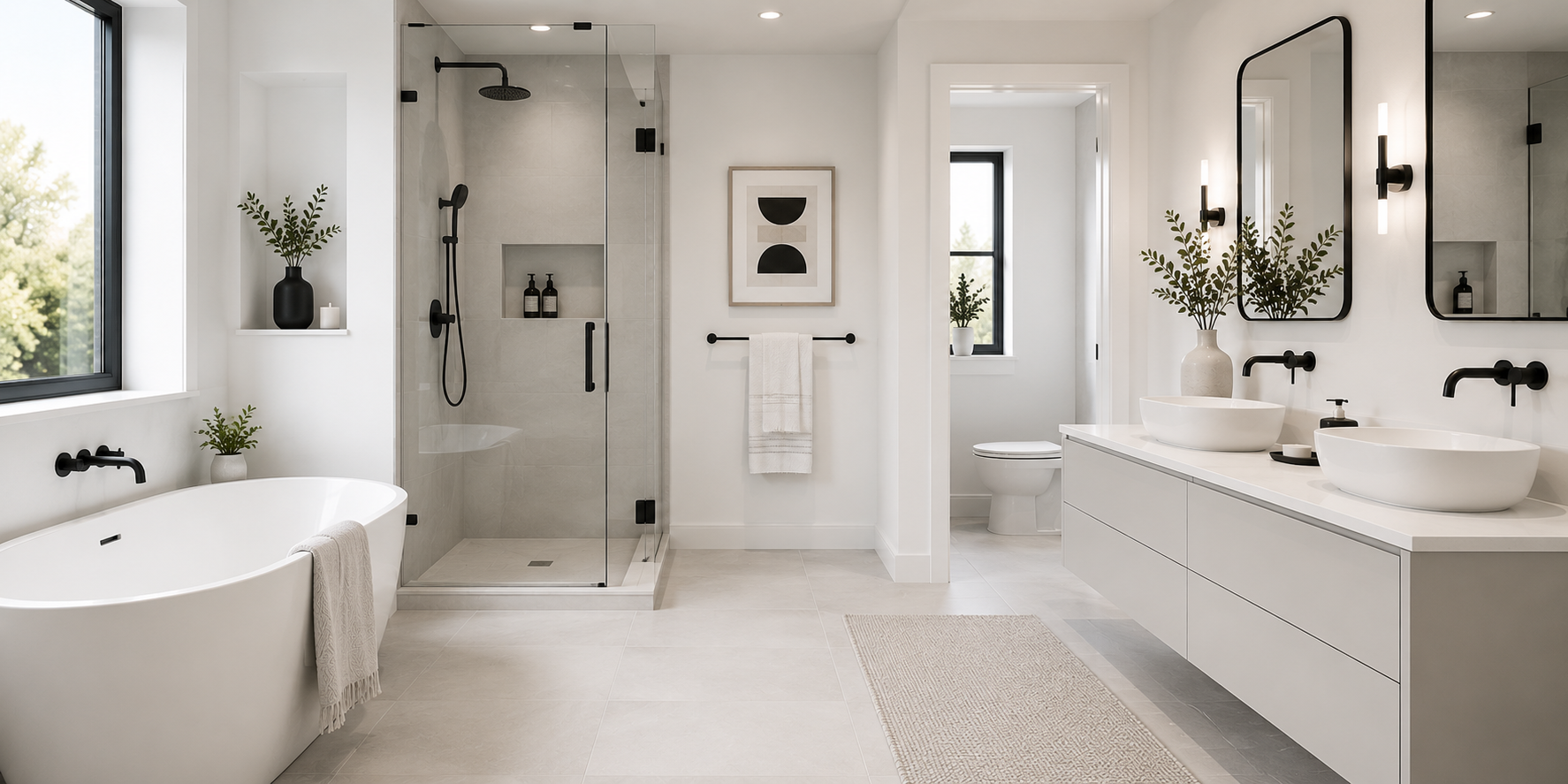
Nothing enhances simplicity like natural light. Sunlight amplifies neutral tones and highlights clean architectural details. If possible, incorporate large windows, skylights, or frosted glass panels that allow light while preserving privacy. In smaller bathrooms, replace heavy curtains with sheer blinds or omit window coverings entirely. Consider reflective surfaces—polished tiles or mirrors—to bounce light around and create an airy atmosphere. If natural light is limited, install soft LED lighting with a warm temperature (2700–3000K) to mimic daylight without harsh shadows.
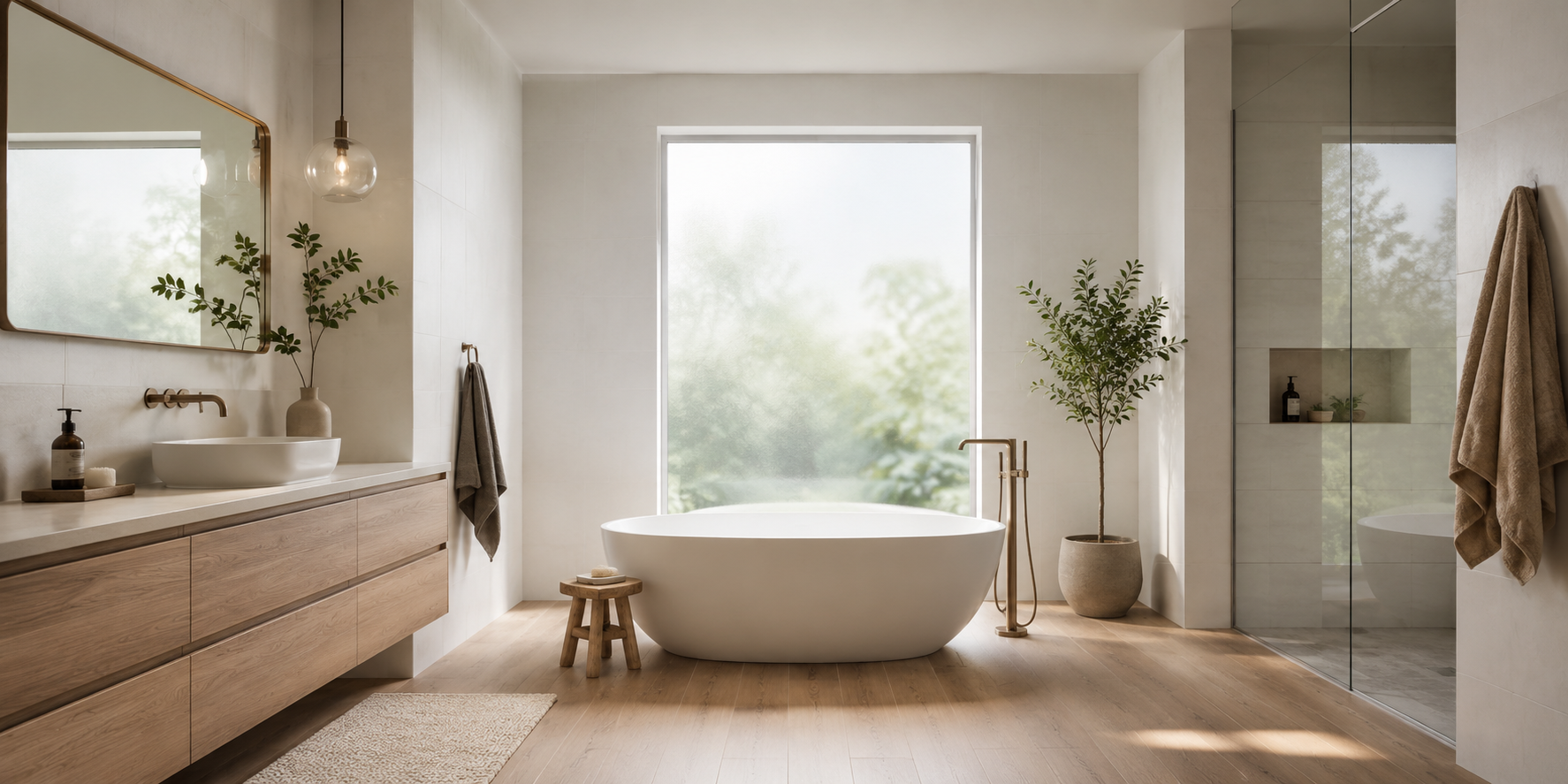
Floating vanities are practically the definition of modern simplicity. By exposing floor space beneath, they make your bathroom feel larger and lighter. Wall-mounted faucets and toilets follow the same principle—reducing visual weight and maintaining an uncluttered look. Opt for sleek materials like matte lacquer, stone composite, or light oak veneer for your vanity. Pair with an integrated basin or simple rectangular sink for a seamless flow. The key is continuity: no unnecessary breaks in sightlines. Every component should appear to “float” in harmony with the space.
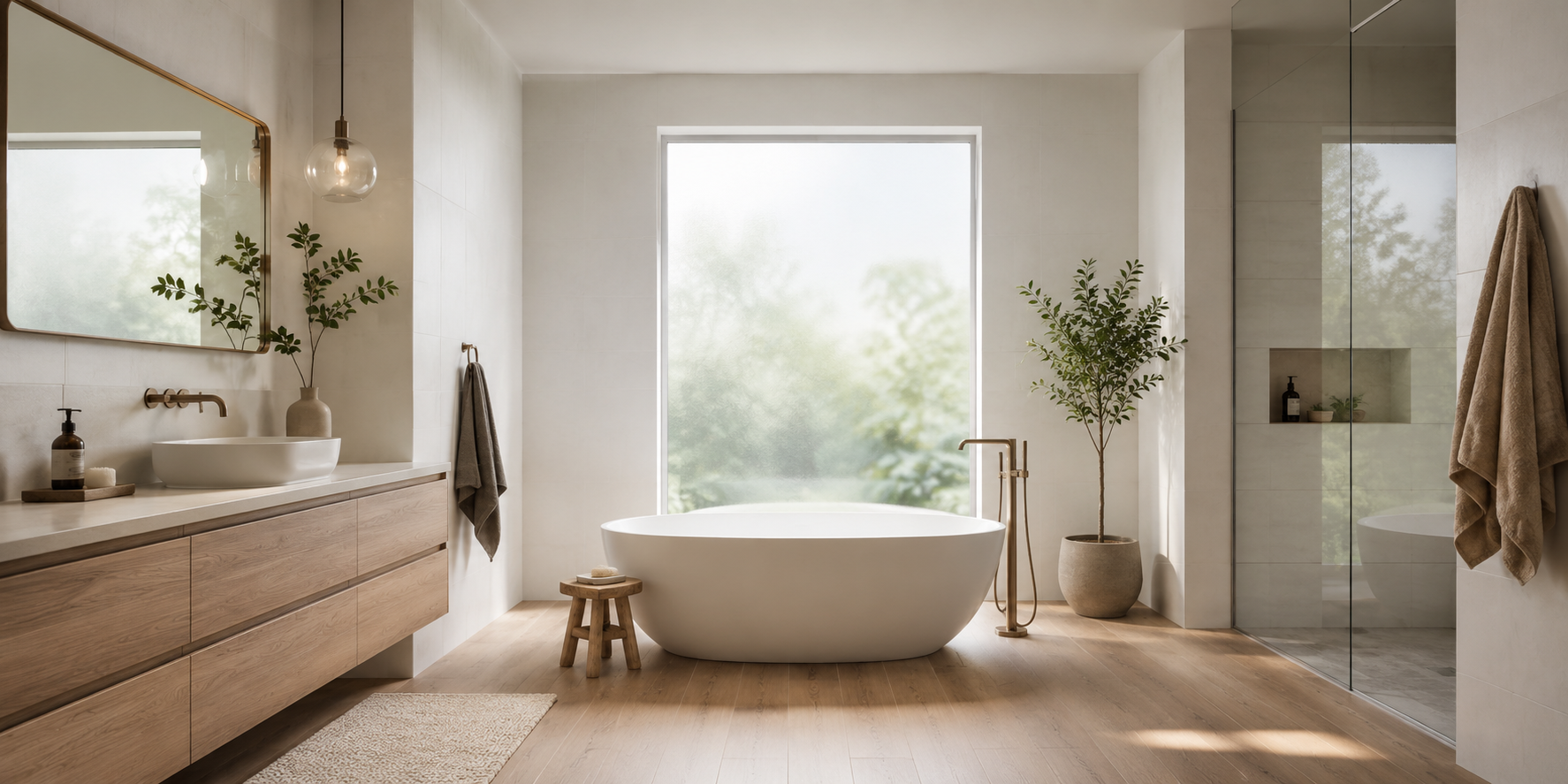
Minimalism often gets mistaken for coldness—but introducing natural textures adds warmth and life. Think light wood vanities, stone basins, linen towels, and woven baskets. These organic elements soften the crisp edges of modern design. Natural materials not only add texture but also provide longevity. A limestone countertop or wooden accent shelf feels timeless, grounding your space in authenticity. The contrast between soft neutrals and tactile finishes creates quiet luxury.
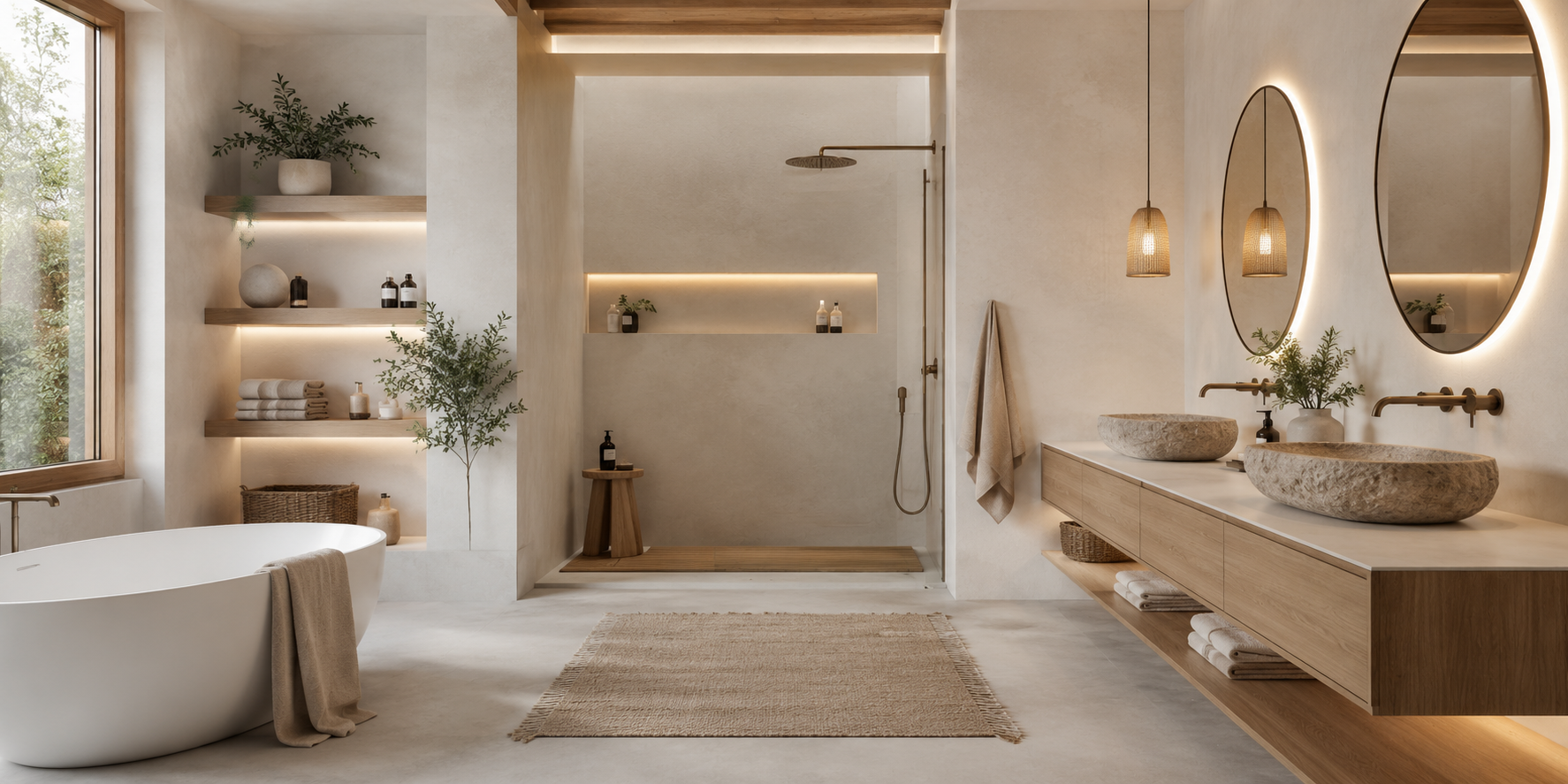
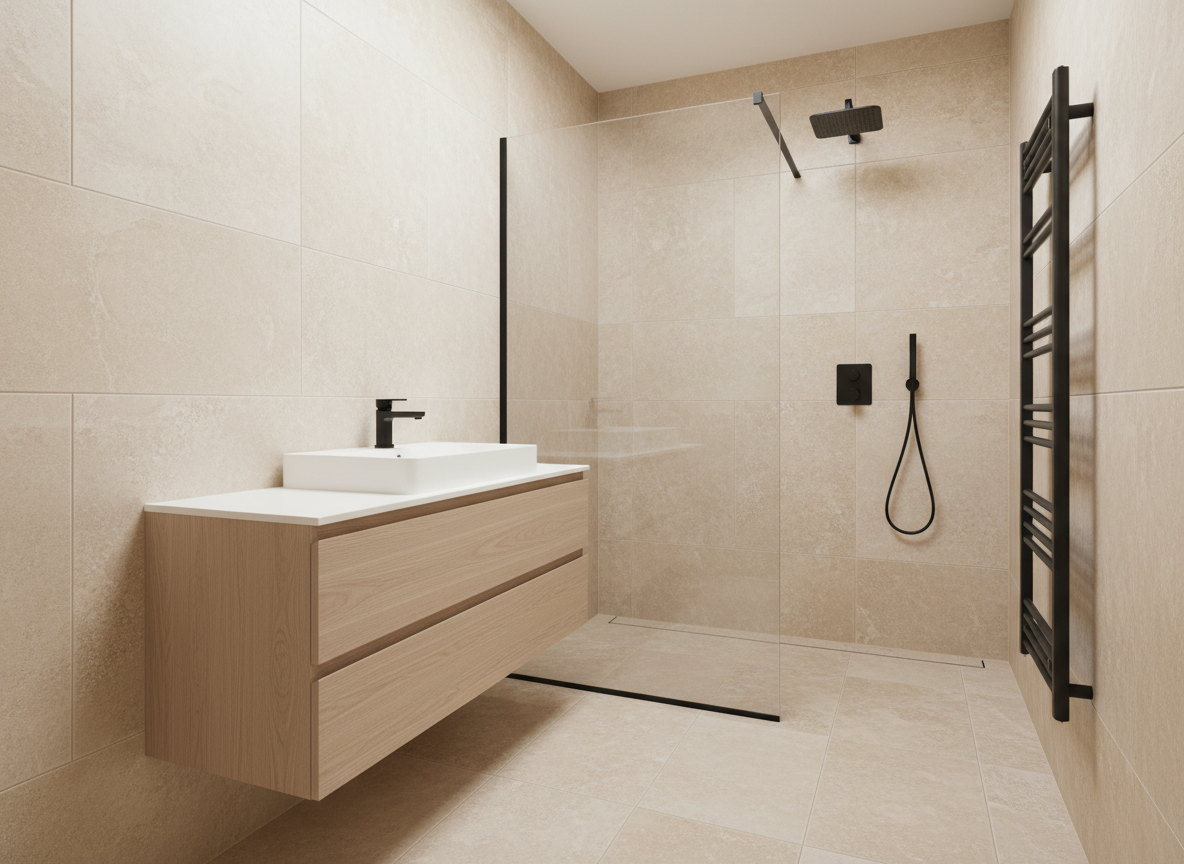
Complex tile patterns can make a small bathroom feel chaotic. Instead, choose large-format tiles or continuous wall panels that minimize grout lines and create seamless visual flow. Vertical tiles can elongate walls, while horizontal layouts can make rooms appear wider. For added depth, use matte finishes rather than high-gloss. Consider extending the same tile across both floor and wall surfaces—this trick blurs boundaries and enhances spatial continuity. If you want a subtle accent, try one feature wall with slightly different texture or tone rather than switching materials abruptly.
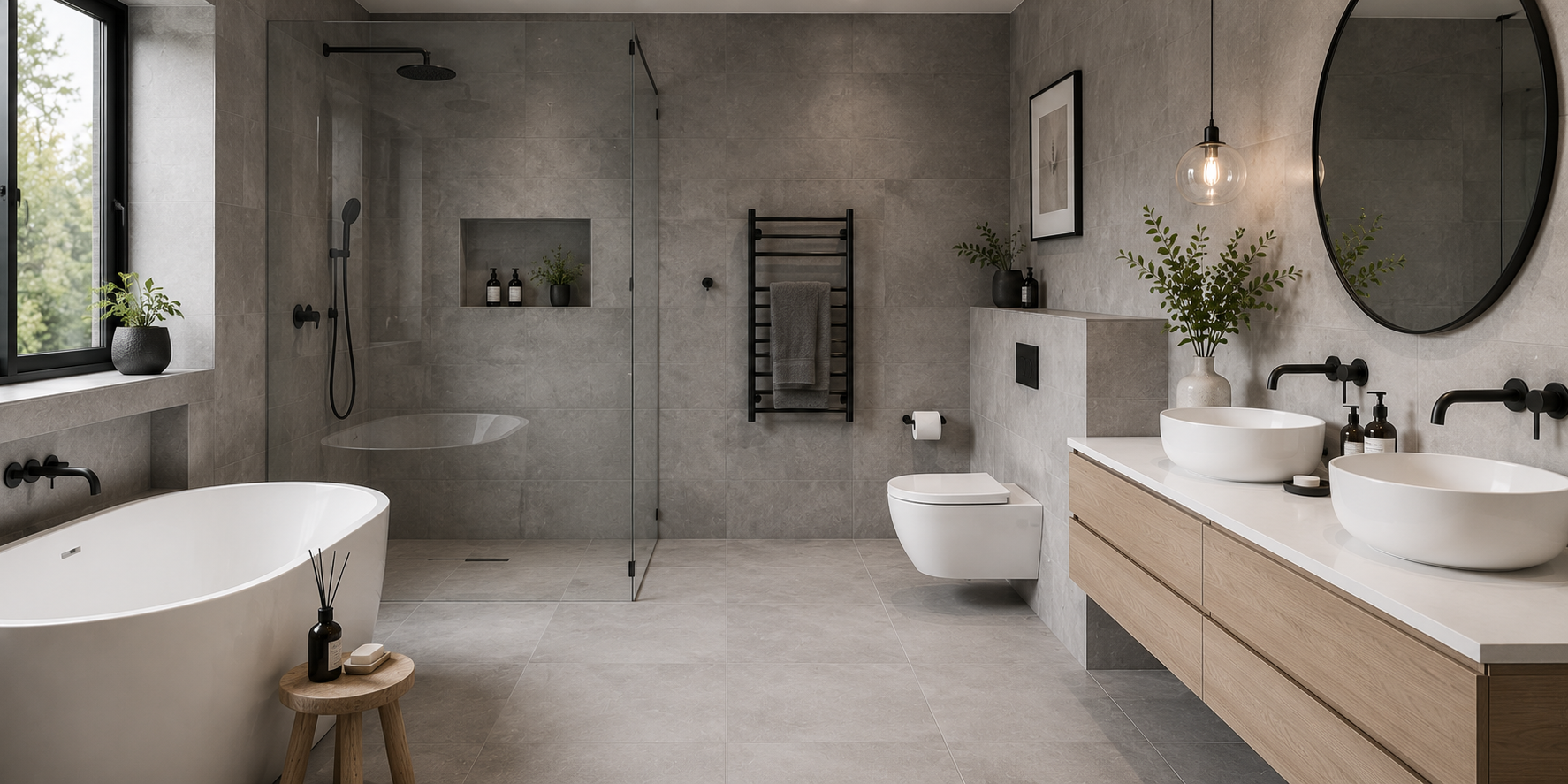
Minimalism thrives on visual calm, which means every item must have a place. Replace open shelving with hidden storage to maintain clean sightlines. Use drawers with built-in organizers for toiletries, and hide electrical outlets within cabinets to keep surfaces clear. Even the smallest accessories—soap dispensers, toothbrush holders, tissue boxes—should follow the same aesthetic. Choose uniform finishes, neutral tones, and minimal branding to create harmony. The less you see, the more luxurious the space feels.
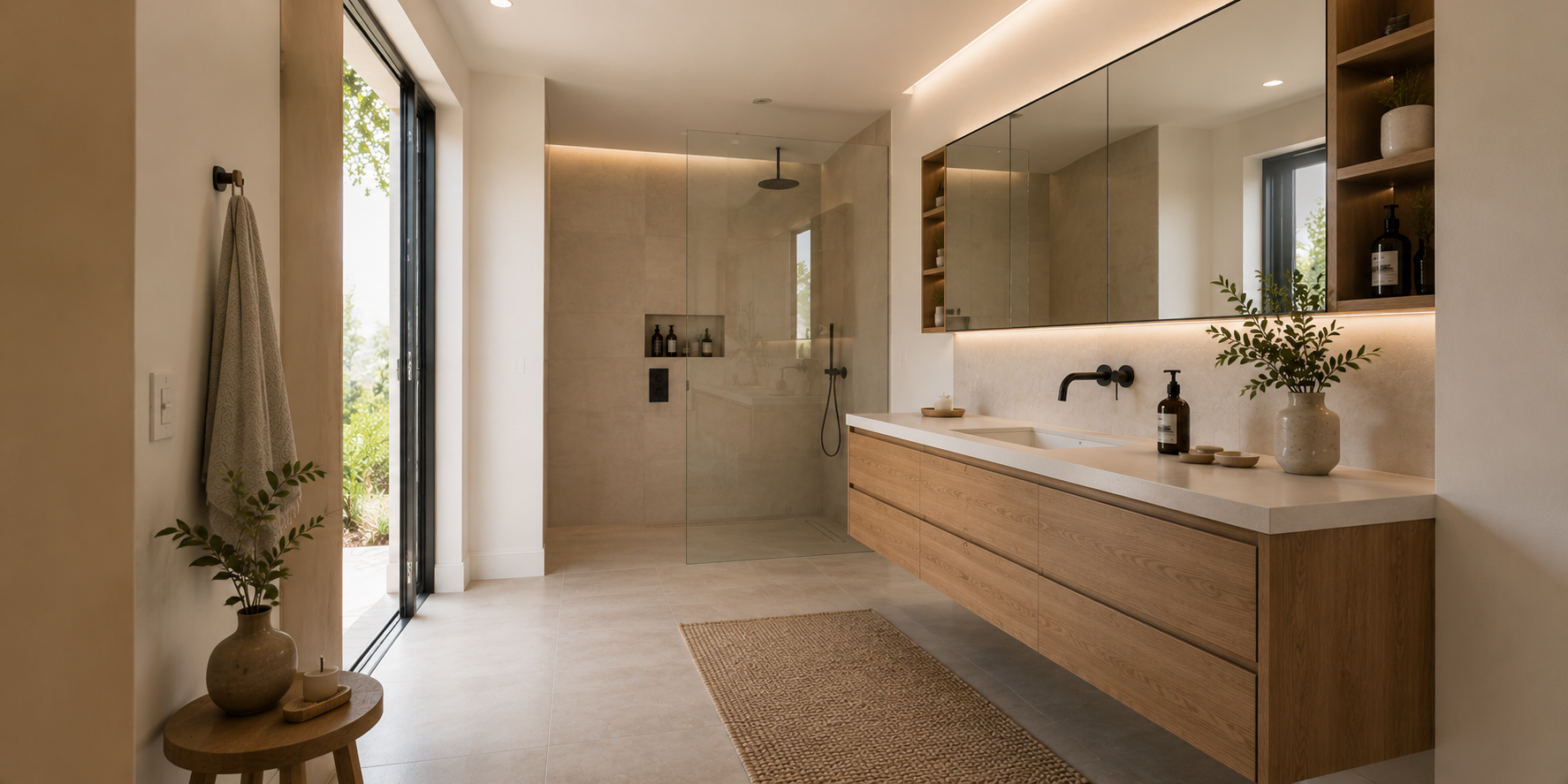
While minimalism emphasizes restraint, one standout feature can create identity. It could be a sculptural freestanding bathtub, a statement pendant light, or a textured stone wall. The idea is to let this single design element shine while keeping everything else understated. This focal point anchors the room and prevents it from feeling bland. Just ensure the statement piece aligns with your color palette and materials for cohesion.
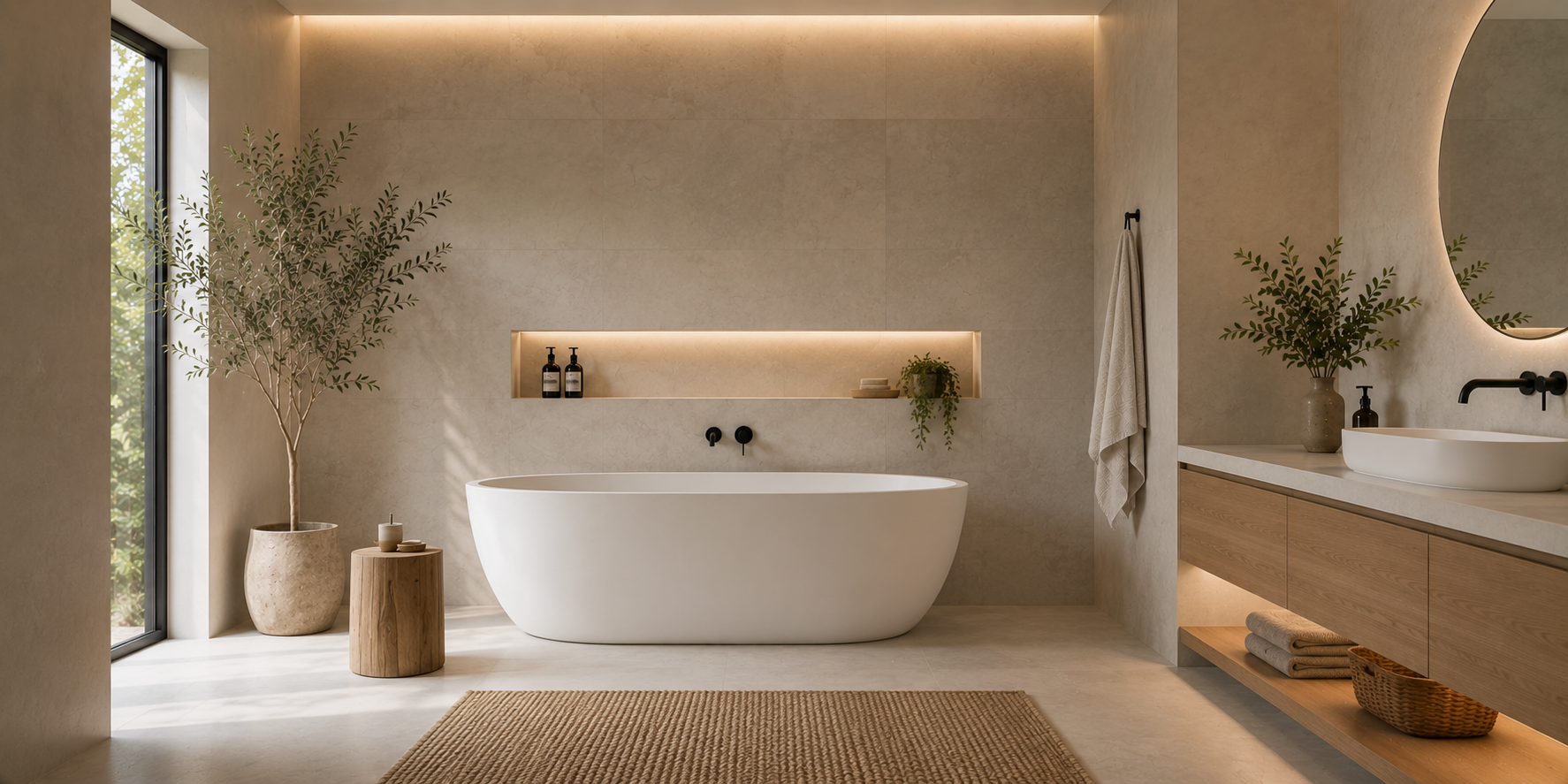
Transparency is essential to minimalist design. Frameless glass showers, clear dividers, or partial glass panels allow light to flow freely and reduce visual barriers. Avoid bulky frames or frosted patterns; instead, choose ultra-clear tempered glass with hidden hardware for a crisp look. If privacy is needed, opt for soft satin etching or partial frosting. Glass also pairs beautifully with stone and metal, maintaining modernity while preserving balance.
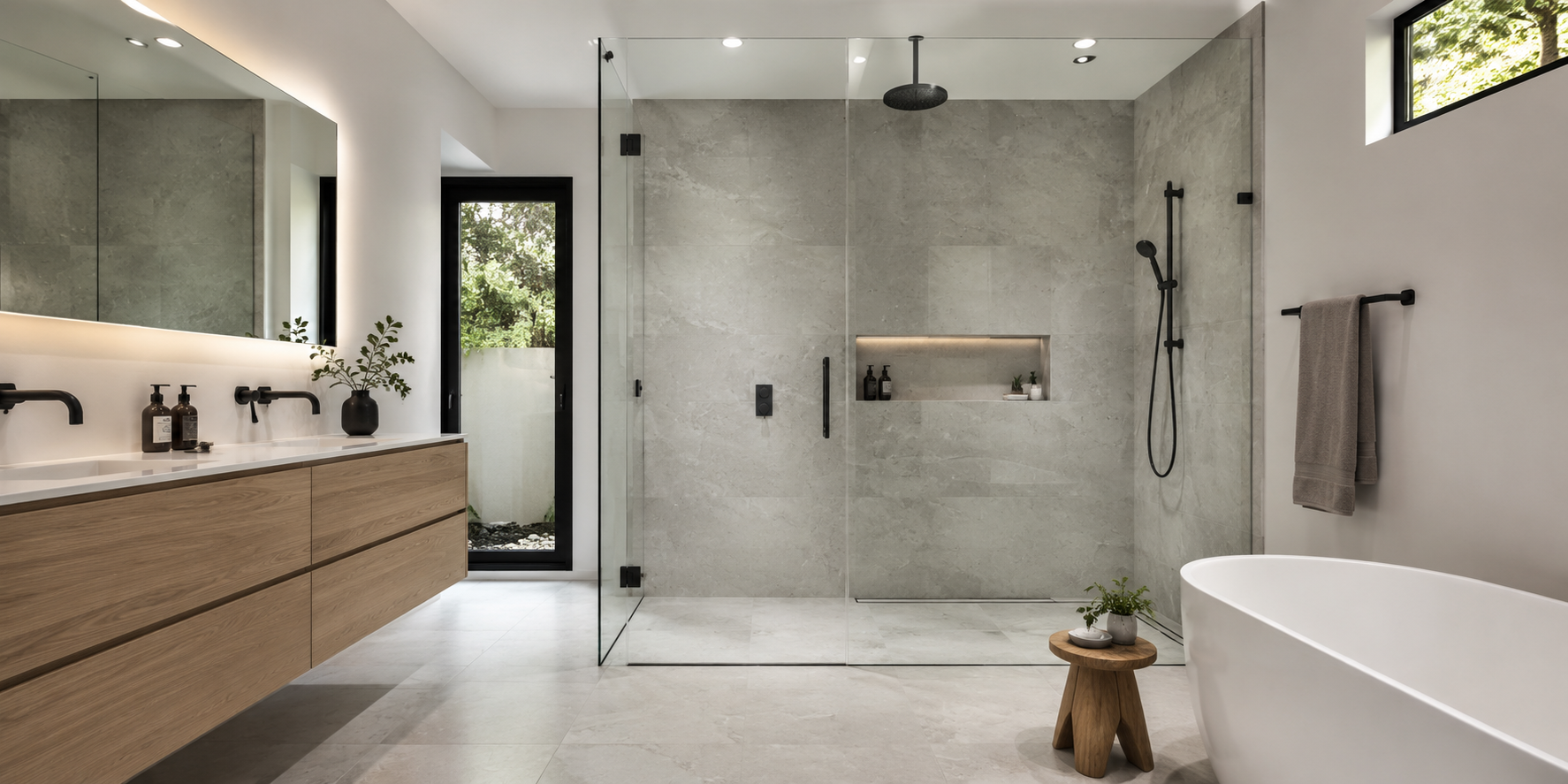
In minimalist bathrooms, fewer elements mean every detail counts. Prioritize quality fixtures that feel good to use and look refined. Choose faucets, showerheads, and handles in matte black, brushed nickel, or polished chrome finishes for a timeless effect. Soft curves and sleek lines complement the minimalist ethos. When possible, coordinate all hardware finishes—door handles, towel bars, and taps—for uniformity. High-quality materials may cost more upfront, but their longevity ensures lasting elegance.
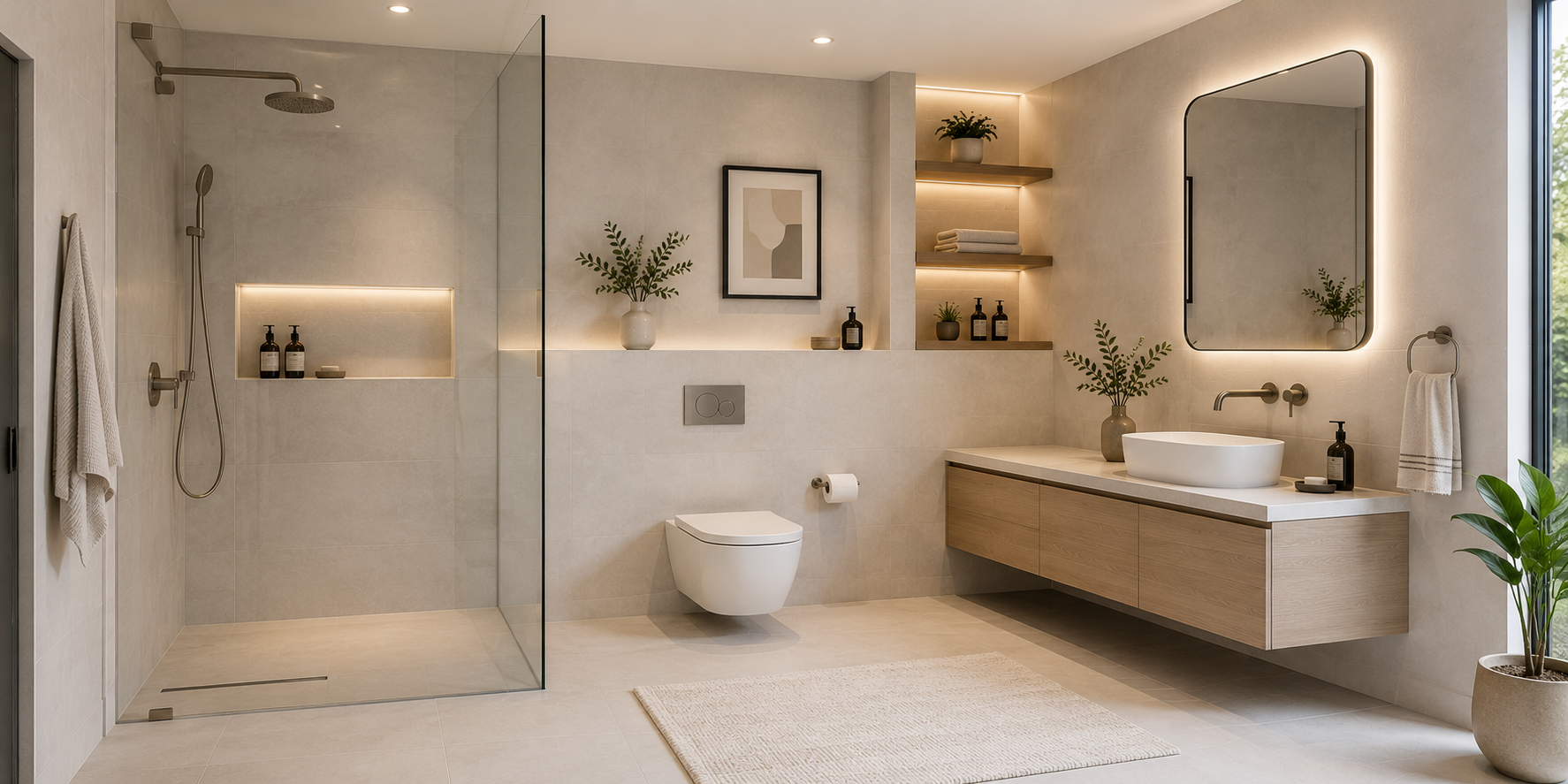
Lighting in a minimalist bathroom should be layered, functional, and soft. Combine ambient light from ceiling fixtures with task lighting around mirrors and accent lighting along walls or vanities. Avoid harsh overhead glare—diffused LED strips or concealed lights behind mirrors create an inviting glow. The best minimalist bathrooms use light as architecture, not decoration. Consider warm white (2700K) for relaxation or cool white (3000K) for a crisp, spa-like environment.
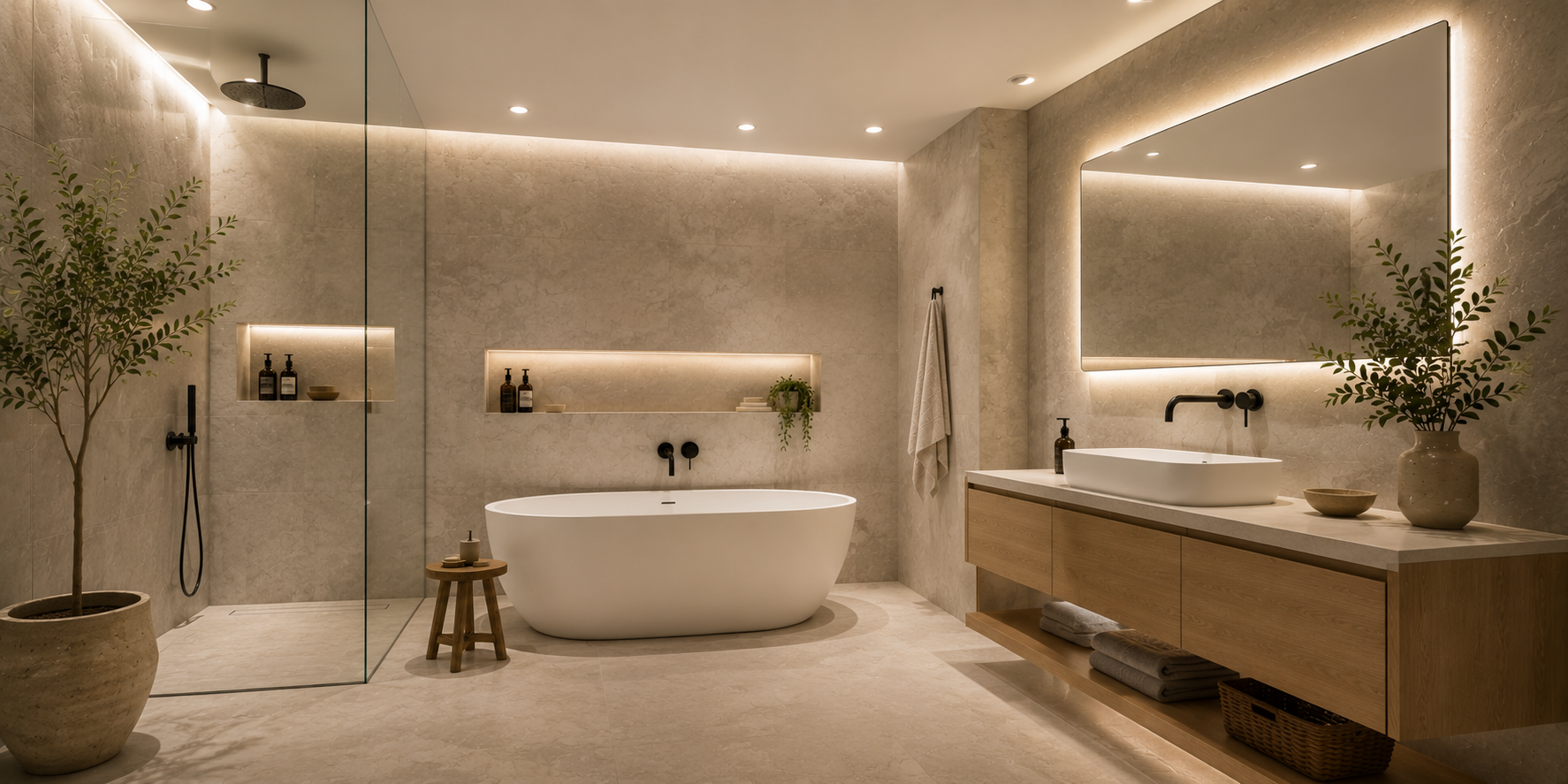
Minimalist bathrooms aren’t just about looks—they’re about intelligent use of space. Use wall niches for toiletries in showers, under-sink drawers for hidden storage, and mirrored cabinets that double as design elements. Floating towel racks, slim vanities, and recessed shelving ensure functionality without bulk. Every inch matters—especially in smaller bathrooms. When storage is integrated into the design, your bathroom remains peaceful and clutter-free.
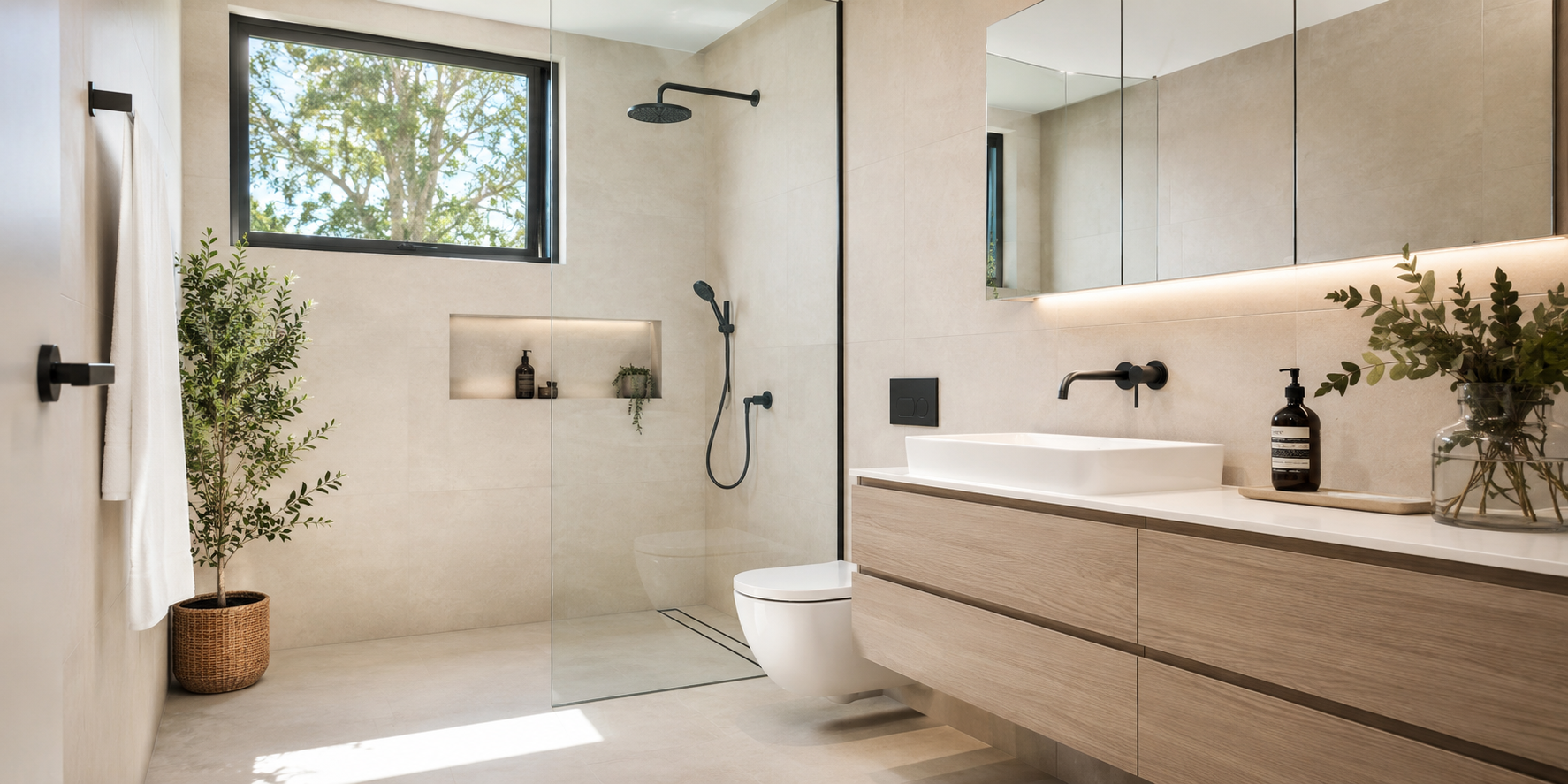
Even the most minimalist spaces need life. A small indoor plant—like a fern, orchid, or snake plant—adds organic vibrancy and helps purify the air. Keep accessories minimal but meaningful: a linen hand towel, a ceramic soap dish, or a small candle with a natural scent. The secret is balance: personal touches should enhance calmness, not disrupt it. A minimalist bathroom should reflect your lifestyle—refined, restful, and rooted in intentional design.
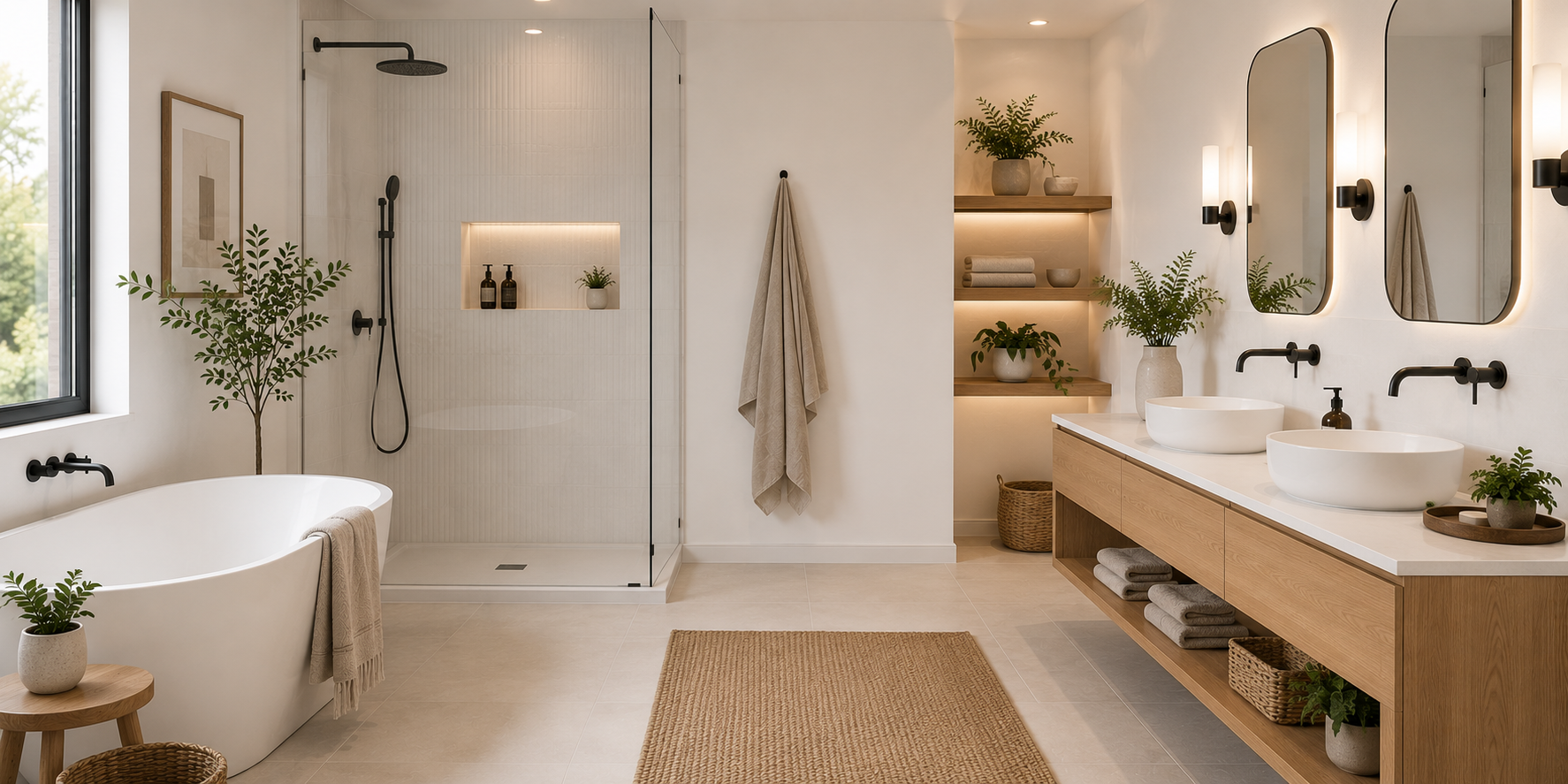
Before adding any element, ask: “Does this serve a purpose?” In minimalism, function leads form. Avoid purely decorative items that clutter your visual space.
Choose materials that age beautifully—natural stone, porcelain, quartz, or sealed wood. They maintain beauty with minimal upkeep.
Too much gray or white can feel cold. Balance it with warm textures—wood, woven baskets, or soft lighting—to achieve harmony.
Minimalism requires upkeep. Smooth surfaces, easy-to-clean grout, and clutter-free counters keep the bathroom looking pristine.
Minimalist design doesn’t have to be expensive. Try these cost-effective tricks:
Even with modest changes, you can achieve a minimalist transformation that looks high-end.
A minimalist bathroom isn’t about subtraction—it’s about intention. Every tile, fixture, and color should serve a purpose and contribute to serenity. The best minimalist designs feel effortless, timeless, and deeply personal. With these 13 minimalist bathroom ideas, you can create a sanctuary that feels luxurious without excess. Clean lines, neutral tones, natural materials, and thoughtful lighting all work together to form a space that calms the senses.
In a busy world, your bathroom can be more than functional—it can be a daily reminder to slow down, breathe, and embrace simplicity in its most elegant form.
G2G Team
05-26-2026
Let’s Build
Contact us todayGet daily tips and tricks for making your best home.
2025 Green to Gorgeous